In Bali, you can build a daily prayer. This Canang Sari offering-making workshop in Bali turns what you see on streets and dashboards into a real, hands-on craft, with Tri Hita Karana harmony woven into the story.
I love that you learn by doing, not by watching from the side—starting with the woven leaf base and finishing with a complete offering you’ll take into a nearby temple. I also like the clear, friendly pace: it feels creative, cultural, and easy for both adults and kids.
One thing to consider: it is a hands-on class, so if you have limited mobility you’ll want to know it is not suitable for wheelchair users.
In This Review
- Key Things to Know Before You Go
- What a Canang Sari Really Means in Bali
- Your 2-Hour Workshop Flow: From Ceper Leaf Base to Finished Offering
- 1) Start with the ceper base (the woven foundation)
- 2) Build up the offering with symbolic ingredients
- 3) Arrange flowers with deity direction symbolism
- 4) Put it together from start to finish
- Tri Hita Karana: The Harmony Lesson You Can Actually Remember
- The Ceremony Moment: Taking Your Offering to a Nearby Temple
- Price and Value: Is $38 Worth It for a Bali Workshop?
- Who This Is Best For (And Who Might Feel Uncomfortable)
- What You’ll Get Beyond the Craft Table
- Practical Tips to Make Your Canang Sari Day Go Smoothly
- Should You Book This Canang Sari Offering Workshop?
- FAQ
- FAQ
- How long is the Canang Sari offering-making workshop in Bali?
- What is the price per person?
- What will I learn to make?
- Does the workshop include a ceremony?
- Is the workshop taught in English?
- What’s included in the ticket price?
- Is the workshop family friendly?
- Are alcohol and drugs allowed?
Key Things to Know Before You Go
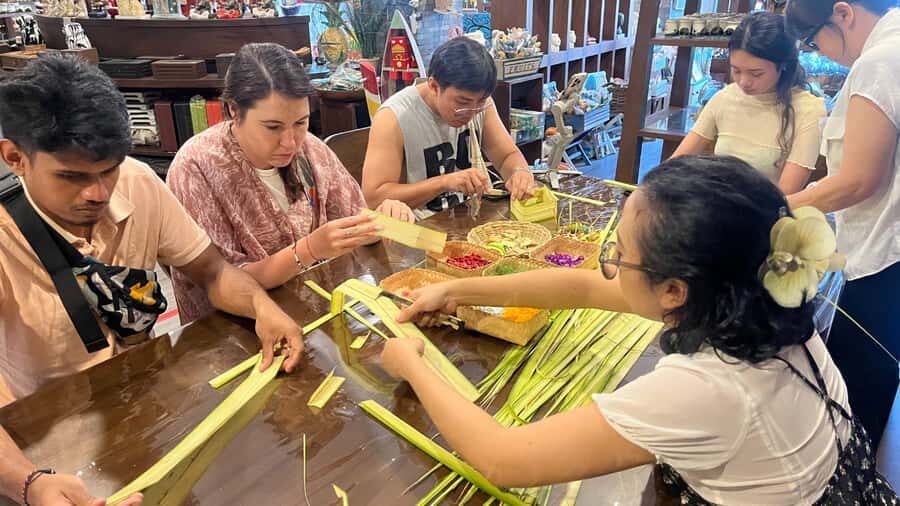
- You’ll weave the ceper base from young coconut or banana leaves
- Color and direction matter when you arrange the flowers and their symbolism
- Tri Hita Karana comes to life through the daily practice of making offerings
- You’ll participate in a ceremony, not just craft at a table
- Family friendly energy makes it fun without turning it into a joke
- You get materials, refreshments, and a souvenir included in the price
What a Canang Sari Really Means in Bali
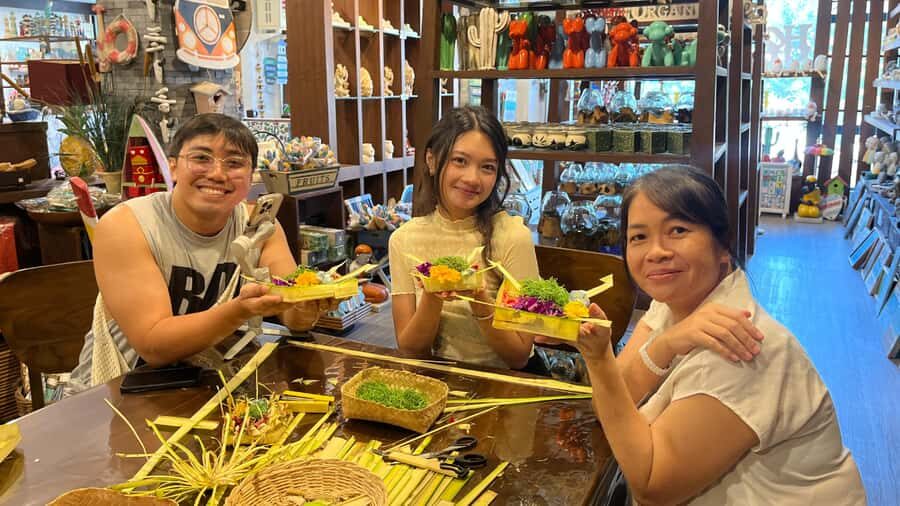
A Canang Sari is a small, daily offering made with palm leaves and filled with items like flowers and incense. In Balinese Hindu life, it’s not an occasional event. It’s routine devotion. You’ll see them everywhere: at temples, at homes, along streets, and even placed on things people use every day.
The workshop frames the meaning in a way that’s practical. You’re not just learning a craft trick—you’re learning why this ritual is done. The philosophy centers on Tri Hita Karana, a Balinese principle focused on harmony between humans, nature, and the divine. When you connect that idea to a physical offering you’re building with your hands, the whole practice stops feeling like vague spirituality and starts feeling like a daily method for keeping balance.
And yes, the craft is genuinely satisfying. You’ll make something small, neat, and purposeful. Not every travel activity gives you an object you can explain afterward in plain language.
You can also read our reviews of more tours and experiences in Kuta.



Your 2-Hour Workshop Flow: From Ceper Leaf Base to Finished Offering
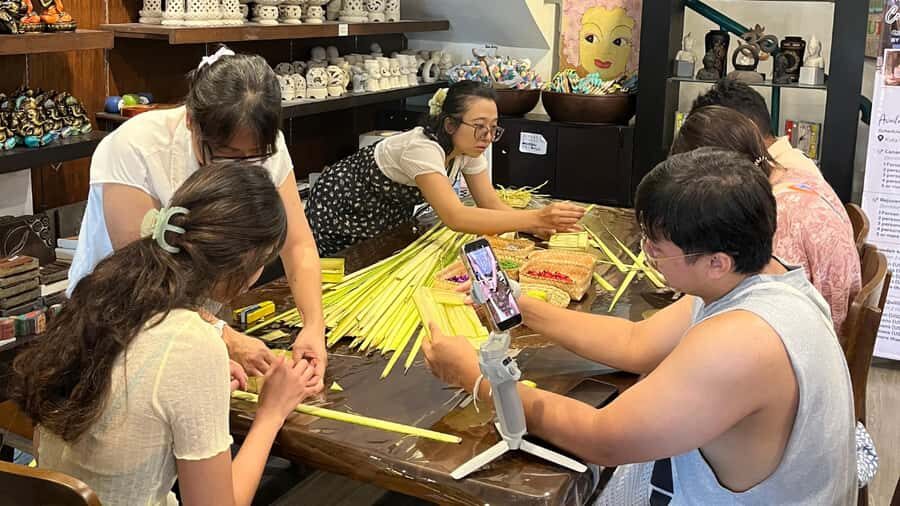
This is a 2-hour session, paced so you can learn the steps without feeling rushed. You’ll be guided throughout by a local expert, with instruction in English. The format is perfect if you want culture you can touch, not just culture you observe.
1) Start with the ceper base (the woven foundation)
You’ll learn to weave the base—called the ceper—using young coconut leaves or banana leaves. This is where the class starts to feel meditative. The weaving is detailed work, but it’s also learnable. You’re following the method from step one, which matters because the base sets up everything that comes after.
If you’re the kind of person who gets frustrated when craft projects turn messy, don’t worry too much. The materials are provided, and the point is to learn the process, not to produce a prize-level leaf sculpture.
2) Build up the offering with symbolic ingredients
Next comes filling and arranging. The workshop focuses on a complete Canang Sari: palm basket, colorful flowers, and other components included in the materials. You’ll also be adding items such as incense as part of the offering set-up.
This matters because Canang Sari isn’t just “flowers in a basket.” It’s a structured offering with meaning. The way it’s put together is the message.
3) Arrange flowers with deity direction symbolism
Then you move into the flower arrangement part. You’ll learn that the colors and directions you choose are tied to Hindu deity symbolism. This is one of the most interesting parts of the session because it gives you a way to read what you’ll see around you in Bali later.
After class, when you spot offerings on a sidewalk or temple step, you’ll have a better sense that people aren’t placing items randomly. They’re making a carefully composed sign of gratitude and devotion.





4) Put it together from start to finish
The best part is that you don’t just try one step and call it done. You create the offering from the beginning, complete it, and learn how it fits into the ritual. One review highlighted that the process runs from start to finish, then the finished offering goes to the temple nearby—so you see the craft’s purpose right away.
Tri Hita Karana: The Harmony Lesson You Can Actually Remember
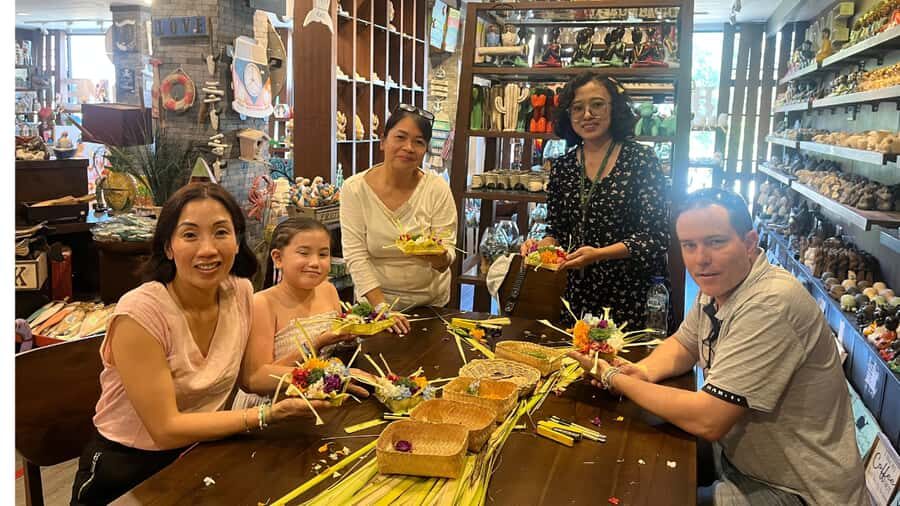
Tri Hita Karana can sound like a phrase you’d forget after a brochure. Here, it sticks because the teacher connects the philosophy to what you’re making.
You’ll learn that Canang Sari offerings are used to maintain spiritual balance—including harmony with the divine and also attention to other spiritual forces believed to be lower or closer to daily life. The workshop explains why offerings show up so often: they’re part of how Balinese Hindus keep relationships balanced between:
- humans
- nature
- the divine
What makes this valuable for you as a traveler is that it changes how you experience Bali’s everyday visuals. Instead of seeing offerings as decoration, you start seeing them as a communication system: gratitude, respect, and ongoing relationship maintenance.
And because the class is interactive, you’re encouraged to ask questions and hear stories from locals about daily rituals. Even if you only catch part of the context, you’ll walk away with a better mental model than you had when you arrived.
The Ceremony Moment: Taking Your Offering to a Nearby Temple
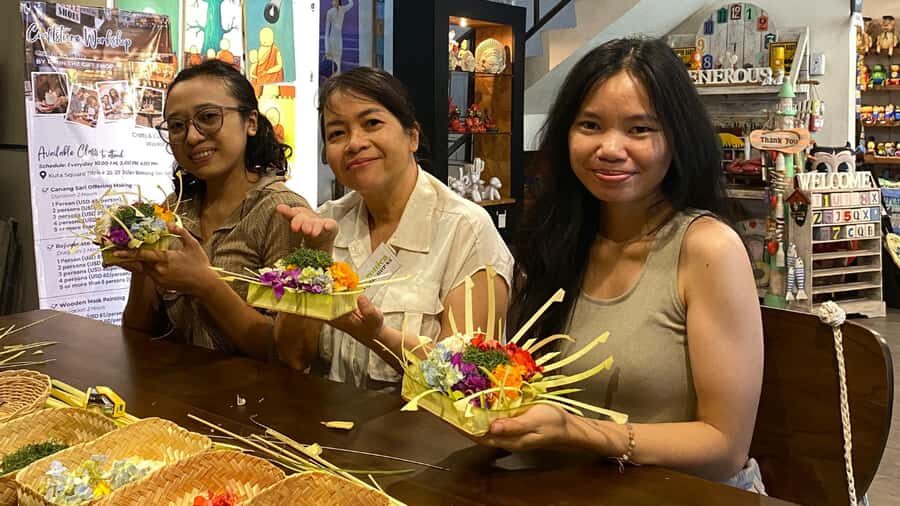
This workshop doesn’t stop at craft tables. Part of the experience includes participating in a traditional offering ceremony. In practice, that’s the moment where the offering becomes more than something you made.
One of the standout details from participant feedback: after creating the offering, people bring it to a temple next to the workshop area. That short “real world” step is worth a lot. It gives you a satisfying closure. You can see the purpose immediately, and you understand why the instructions focused on structure, symbolism, and respectful placement.
The ceremony also helps you get the correct vibe. You’re not treating it like a souvenir-making station. It’s a living practice.
Price and Value: Is $38 Worth It for a Bali Workshop?
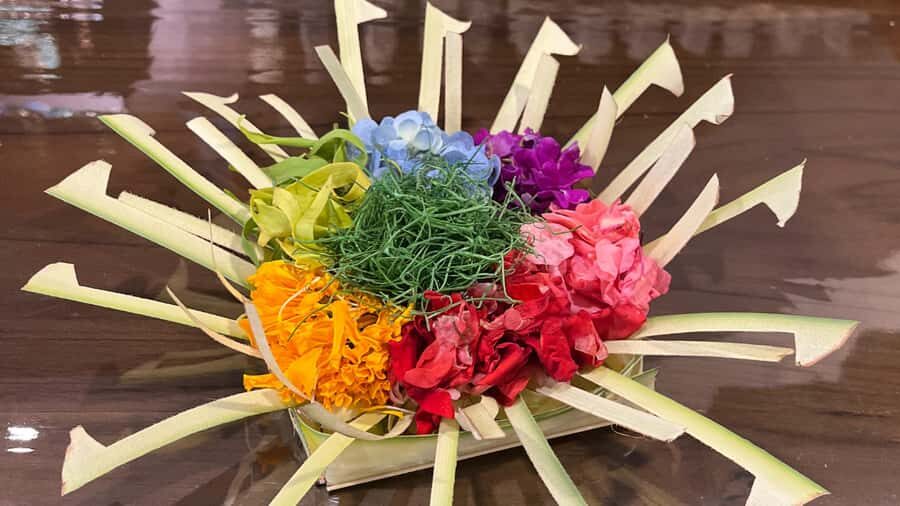
At $38 per person for a 2-hour session, the biggest question is value. In this case, the math works because the price covers real inputs:
- all materials needed to make the offering
- guidance by a local expert
- participation in a traditional ceremony
- refreshments
- a souvenir
Many paid activities in Bali charge you for the basics and then add on the parts you assume should be included. Here, the essentials are bundled. You’re not hunting down supplies, and you’re not paying separately for the cultural piece.
Also, you leave with an object. That’s not just a nice-to-have. It’s a memory anchor you can explain later, which usually makes the experience feel more meaningful than a one-time show.
Who This Is Best For (And Who Might Feel Uncomfortable)
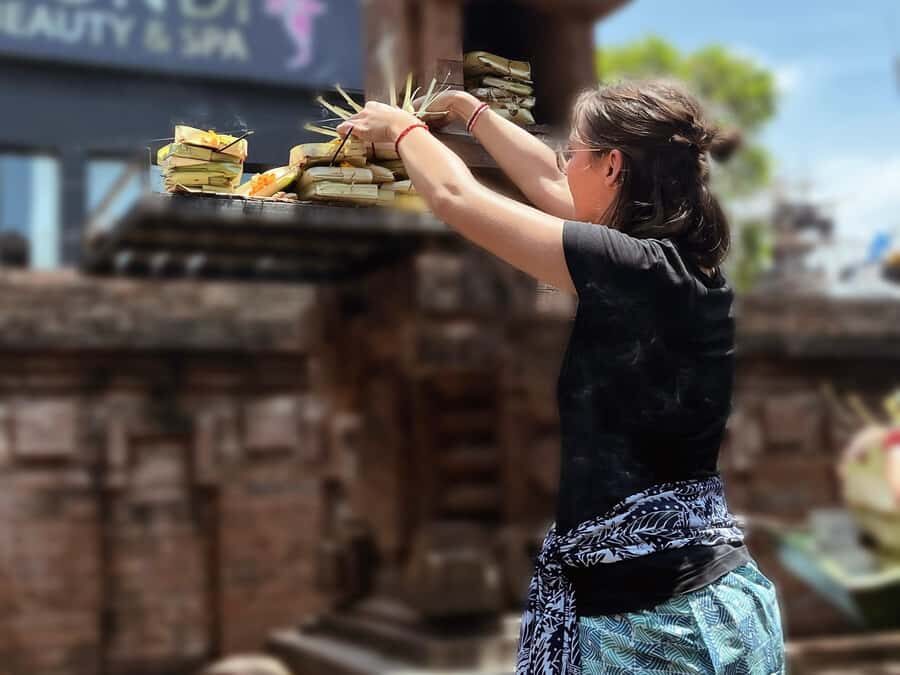
This workshop fits especially well if you:
- want hands-on culture in Bali
- like crafts but also want meaning behind the steps
- travel with kids who enjoy making things
- enjoy learning how traditions connect to daily life
Adults typically enjoy the symbolism and philosophy. Kids typically enjoy the weaving and arranging. The class is described as fun for both, and that checks out logically: the steps are simple enough for small hands to participate, but the symbolism and explanation keep it interesting for grown-ups too.
Possible mismatch: if you dislike religious settings or don’t want to participate in a ceremony, you may feel out of place. The activity includes ceremony participation as part of the experience, so it’s not designed to be purely observational.
Also note the workshop is not suitable for wheelchair users, so mobility planning matters.
What You’ll Get Beyond the Craft Table
Even before the offering is finished, the workshop experience includes human touches that make it easier to settle in.
You’ll get a welcome that includes traditional clothing, along with a cold drink and local snacks during the session. It’s a small detail, but it helps you treat the experience as hospitality, not just a class you paid for.
At the end, you receive a souvenir. That means you’ll have both the offering you made and another take-home item included in the workshop.
Practical Tips to Make Your Canang Sari Day Go Smoothly
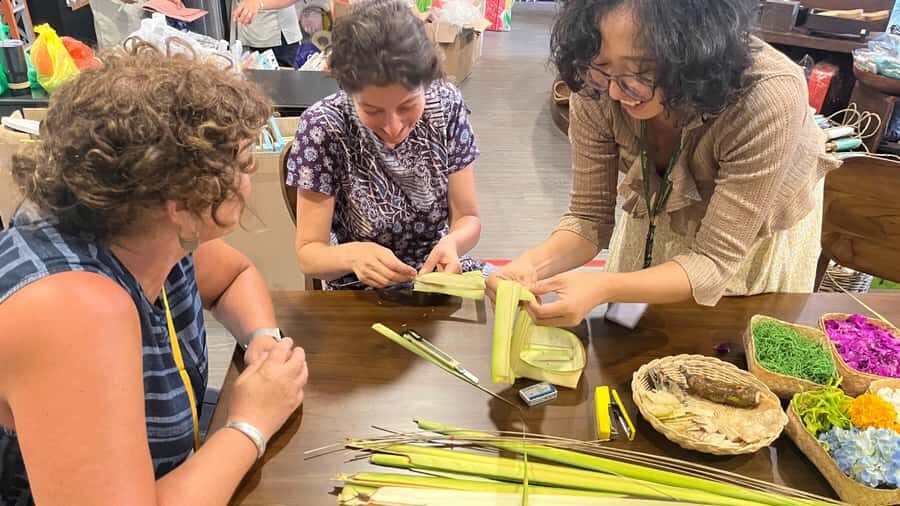
A few practical points will help you enjoy the experience more and stress less:
- Wear comfortable clothes you don’t mind working with. Leaf crafts can be a bit fiddly.
- Pay attention when the guide explains direction/color symbolism. It’s the difference between making something pretty and making something meaningful.
- Ask questions early. If you’re curious about why offerings appear so often, now is the time to clarify.
- Be mindful about rules: alcohol and drugs are not allowed for this activity, so plan accordingly.
- If you’re booking a private or small group option, you’ll usually get a better chance to ask questions and move at your pace.
And one logistics note: the meeting point may vary depending on the option you book. Confirm where to go so you don’t burn time.
Should You Book This Canang Sari Offering Workshop?
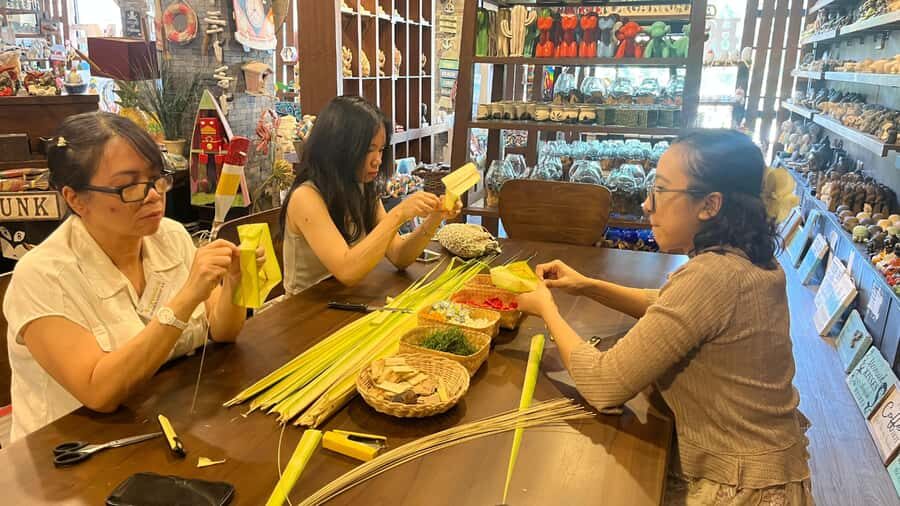
If you want a Bali activity that feels genuine, respectful, and hands-on, I’d say yes. The best reason to book is that the workshop connects craft to meaning: you weave, you arrange with symbolism, you learn Tri Hita Karana, and you participate in a ceremony. That combination is rare.
Skip it only if you want a purely visual cultural experience without participating, or if mobility limitations make it hard for you to join. Otherwise, this is a strong choice for couples, solo travelers, and families who like doing something real instead of just collecting photos.
FAQ
FAQ
How long is the Canang Sari offering-making workshop in Bali?
The workshop lasts about 2 hours.
What is the price per person?
The price is $38 per person.
What will I learn to make?
You’ll learn how to weave the ceper base from young coconut or banana leaves, then arrange flowers in the offering with color and direction symbolism, as part of a complete Canang Sari.
Does the workshop include a ceremony?
Yes. You’ll participate in a traditional offering ceremony as part of the experience.
Is the workshop taught in English?
Yes. The instructor speaks English.
What’s included in the ticket price?
All materials for making the Canang Sari, guidance by a local expert, participation in the traditional offering ceremony, refreshments, and a souvenir are included.
Is the workshop family friendly?
Yes. It’s described as enjoyable for both adults and kids.
Are alcohol and drugs allowed?
No. Alcohol and drugs are not allowed for this activity.
If you want, tell me your travel dates and whether you’re going as a couple, solo, or family, and I’ll help you pick a sensible time of day and what to plan around before and after the workshop.