Ten hours in Bali can feel like a mini greatest-hits reel. This day tour mixes Balinese dance, village crafts, waterfall views, and a proper mountain lunch with Batur Volcano scenery.
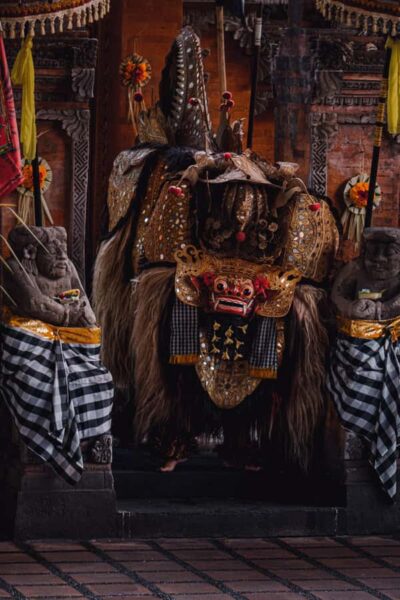
What I like most is the stage energy at Batubulan Village: you get the Barong and Kris Dance, not just a quick look from the outside. You also get real village culture stops at places like Celuk (gold and silver smiths) and Tohpati (batik crafts), which makes the day feel more hands-on than just temples and photos. One thing to consider: it’s a packed schedule, so several stops are brief, and you’ll be on the road for a lot of the day.
In This Review
- Key highlights worth clocking
- A 10-hour Ubud and Batur route that stays efficient
- Batubulan: Barong and Kris Dance without the museum vibe
- Celuk and Tohpati: craft stops that explain Bali’s hands
- Celuk Village for gold and silver smithing
- Tohpati Village for batik weaving and writing
- Puseh Batuan Temple and Gunung Kawi Sebatu: sacred sites with real walking
- Puseh Batuan Temple (a Trinity temple)
- Gunung Kawi Sebatu’s rock-cut tombs
- Tegenungan Waterfall: the straightforward nature break
- Temen Village to Kintamani: plantations, then lunch with Batur views
- Tampaksiring, Tegallalang, and Puri Saren Ubud: finishing with iconic Bali
- Tampaksiring and luwak coffee
- Tegallalang rice terrace
- Ubud at Puri Saren Ubud
- Guides and comfort: why this tour often feels easy
- Price and value: is $65 a smart deal?
- Who should book this tour?
- Should you book this Bali Full Day Tour – Ubud and Batur Volcano?
- FAQ
- How long is the Bali Full Day Tour – Ubud and Batur Volcano?
- How much does the tour cost?
- Is pickup offered, and do I get a ticket on my phone?
- Is this tour private or shared?
- What stops are included in the day?
- Are admissions included?
- What is the cancellation policy?
Key highlights worth clocking
- Barong and Kris Dance at Batubulan Village for pure Balinese performance energy
- Celuk and Tohpati crafts: gold/silver smithing and batik work you can actually watch
- Temples with strong “walk-and-look” moments like Puseh Batuan and Gunung Kawi Sebatu’s rock-cut tombs
- Tegenungan Waterfall as a clear, straightforward nature break (about a 15 m/15-meter scale)
- Batur Volcano lunch at Kintamani with coffee/plantation time before you eat
A 10-hour Ubud and Batur route that stays efficient
This is one of those Bali days that tries to do a lot without wasting time bouncing between totally different areas. The day is built around north-and-central Bali: you start around Ubud’s orbit, then swing toward Kintamani/Batur for a lunch break, and finish back around Ubud highlights like Tegallalang rice terraces and Puri Saren Ubud.
The tour is private (only your group), which matters more than you might think. You’re not stuck waiting for a dozen different hotel pick-ups or coordinating with strangers at each stop. That said, it’s still a full day—about 10 hours—so you’ll want to dress for long driving and a few stairs.
Practical tip: bring a small day bag with water, sunscreen, and a light layer. Some stops are shaded; others are open. And if your plan includes photographing religious sites, it helps to have a respectful pace—slow down when people are praying or performing.
You can also read our reviews of more tours and experiences in Kuta.



Batubulan: Barong and Kris Dance without the museum vibe
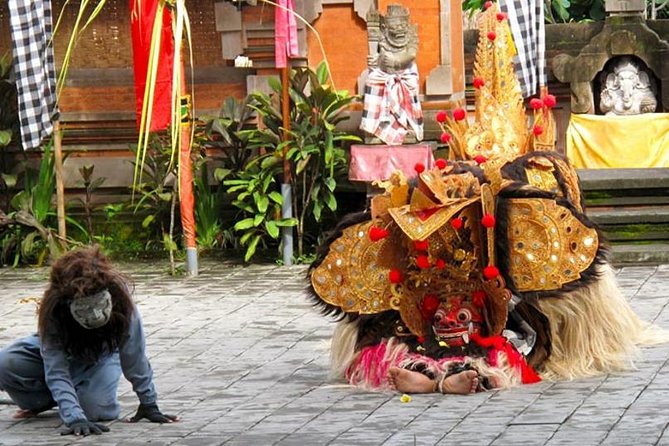
Batubulan Village is known for performance, and this stop leans hard into that. You’ll spend about an hour there, and the focus is the Barong and Kris Dance. This isn’t about learning in a classroom first—it’s about watching a living tradition unfold.
What makes it worthwhile is the rhythm: you see costuming and movement designed for an audience, not a staged photo backdrop. If you’ve only seen dance clips online, watching it in person is a different experience. The drama comes through fast.
One more good thing: because the tour is structured with a performance early on, it helps you get into the Bali tempo before the temples and plantations. After this, the rest of the day feels more connected.
Celuk and Tohpati: craft stops that explain Bali’s hands
Two of the best-value parts of the day are the craft villages, because they show you skills that are practical and still used every day.
Celuk Village for gold and silver smithing
Celuk Village is the center of gold and silver smith work. The stop is about an hour, long enough to look around and see how artisans think about detail. Even if you don’t buy anything, it’s interesting to understand the “why” behind the shiny pieces you’ve been seeing in Bali shops. You get the impression of work that takes patience, not mass production.
Tohpati Village for batik weaving and writing
Then you head to Tohpati Village, known for batik products, including traditional motif design and batik writing. The schedule gives you about an hour here too, which is key—batik work takes time to appreciate. You’ll see how motifs and materials vary, and you’ll likely notice how pricing can jump based on complexity (the tour description notes ranges from tens of thousands up to millions of rupiah).
If shopping is on your mind, go with a simple mindset: don’t pressure yourself to buy right away. Treat the first craft stop as your “comparison time.” By the time you reach the batik area, you’ll know what details you care about.




Puseh Batuan Temple and Gunung Kawi Sebatu: sacred sites with real walking
Temple visits are where Bali can either feel rushed or meaningful. This tour tries to hit the middle: short stops, but with enough time to understand the setting and take in the surroundings.
Puseh Batuan Temple (a Trinity temple)
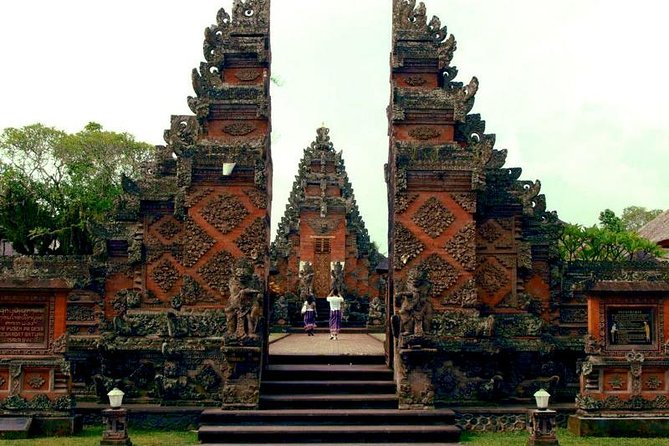
At Puseh Temple at Batuan Village, you’ll get around 30 minutes. The description highlights it as one of the old Trinity temples. Even in a short visit, you’ll feel that the site is about function and devotion, not just sightseeing. It’s a good breather after the craft villages, because temple time slows you down.
Quick respectful note: keep voices low and follow any guidance about where to stand.
Gunung Kawi Sebatu’s rock-cut tombs
Gunung Kawi Sebatu is where the scenery turns more dramatic. These are 11th-century tombs carved into the rock face of the gorge of the Pakerisan River area. The approach involves a step descent through rice terrain scenery, and that means you should plan for steps and uneven ground.
This is the stop that can be the difference between a great day and an annoying one, depending on your comfort with stairs and your shoes. I’d wear supportive footwear you don’t mind getting dusty.
You only get about 30 minutes here, so it helps to decide in advance what you want: photos, a slower look at carvings, or just the walk down and up. You won’t have time to do everything at full speed.
Tegenungan Waterfall: the straightforward nature break
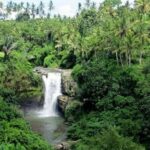
Tegenungan Waterfall is one of those Bali stops that’s easy to understand. You’ll spend about 45 minutes, and it’s described as roughly 15 meters high, with good water flow.
The appeal here is the simplicity: you’re not decoding a temple layout or hunting for a craft process. You’re getting a clear nature pause. The risk is the usual tourist reality—water areas can get slippery and crowded if you’re there during peak hours. You can still have a calm moment, you just need to watch your footing and not expect a long quiet sit.
For a better experience, treat it like a reset. After several cultural stops, it’s the day’s physical “exhale.”
Temen Village to Kintamani: plantations, then lunch with Batur views
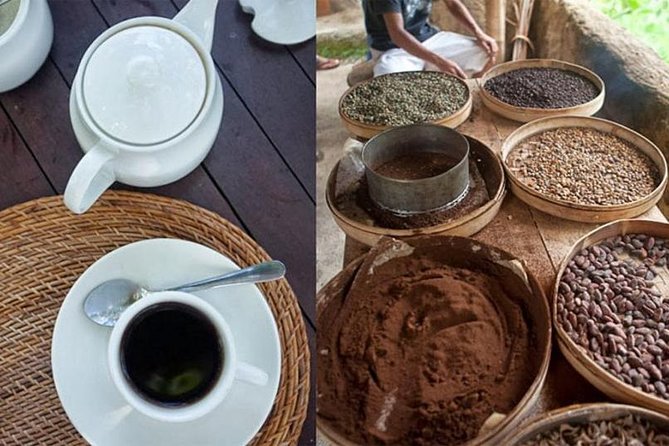
This is the part of the day that gives you the biggest payoff for your time. You head toward Temen Village where you explore coffee, cocoa, vanilla, and clove plantation areas. The tour schedule gives about 1 hour here.
Why this matters: Bali’s agriculture is part of daily life, not just a tourism theme. Even if you don’t buy anything, you’ll get the feel of how different crops connect to what you taste later.
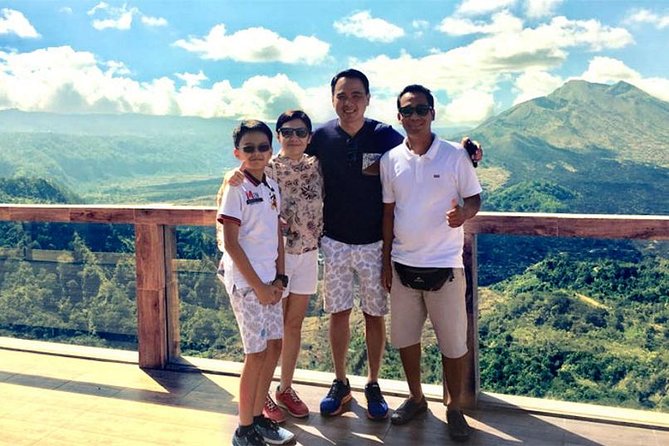
Then you move to Kintamani Village for lunch with views over Batur Volcano and Lake. The lunch piece is described as happening while you overlook the volcano, and it’s one of the best reasons this tour earns its spot. A scenic lunch in Bali beats another meal eaten in a car-fed schedule.
Two practical tips:
- If you’re sensitive to heat, time your photos with the light. Volcano areas can be bright and contrasty.
- If you’re planning to sample coffee later, don’t overdo it right before lunch.
Tampaksiring, Tegallalang, and Puri Saren Ubud: finishing with iconic Bali
After Batur/Lunch, the day shifts back toward Ubud’s famous sights and culture zones.
Tampaksiring and luwak coffee
At Tampaksiring, you’ll explore coffee and cocoa plantations and enjoy luwak coffee. This stop is listed as free in the tour schedule. That doesn’t mean you have to do anything beyond what’s offered, but it gives you the option to try a local specialty if that’s your thing.
Because luwak coffee has a strong reputation, it’s smart to approach it like a curiosity, not a must. If you like coffee experiences, you’ll enjoy it; if you don’t, use the plantation time for a calmer look instead.
Tegallalang rice terrace
Then comes Tegallalang Rice Terrace, one of Bali’s best-known views. It’s listed as about 30 minutes and free. Even in a short stop, the terraces give you a sense of how water and farming shape the island’s visual identity.
The main consideration is crowding and time. You won’t have time to wander everywhere, so pick one or two vantage points and spend your time there rather than sprinting.
Ubud at Puri Saren Ubud
Finally, you reach Ubud and Puri Saren Ubud. The tour notes that respected dance groups perform several nights a week in the outer courtyard of the principal palace at the northeast corner of the central crossroad.
Even when there isn’t a dance performance during your visit, the palace setting helps you understand why Ubud became the cultural center it is. You’re standing in a place where dance is part of the rhythm, not a one-off show.
Guides and comfort: why this tour often feels easy
The day runs smoothly when the driver and guide are good—and this operator’s guides are specifically praised for that in past experiences.
Names that come up include Putu (described as a kind guide and an ace photographer) and Bayu (also described as kind and helpful). While your exact pairing may vary, the pattern is clear: you’re not just getting a ride. You’re getting a guide who can steer you toward the right moments and help you frame photos without turning it into a frantic scavenger hunt.
Comfort also matters on a long day, and the experiences shared mention well-equipped, new, comfortable vehicles. That’s not a small detail. It affects whether you enjoy the later stops or start counting minutes halfway through the afternoon.
Price and value: is $65 a smart deal?
At $65 per person for about 10 hours, this tour is priced like a budget-friendly way to stack several major Bali experiences in one shot.
Here’s what helps the value:
- Pickup offered (so you’re not wrestling transport from place to place)
- Mobile ticket
- Key stops have admission tickets included (including Batubulan, Celuk, Tohpati, Puseh Batuan, Tegenungan Waterfall, and Gunung Kawi Sebatu)
- Several big-name photo stops are free in the schedule (Tegallalang rice terrace and Ubud’s Puri Saren, plus Tampaksiring noted as free)
The trade-off is that you’re packing a lot into one day. You’re paying for efficiency, not for long stays. If you want a slow Ubud week or you’re the type who likes to linger for an hour in every village, you may find a full circuit day a bit rushed.
Who should book this tour?
This tour is a great fit if you:
- want a first-time Bali overview without planning multiple days
- enjoy culture plus scenery in the same day
- prefer a private group so you can move at a pace that suits your questions
- like crafts and temple visits as more than quick photo stops
You might want to rethink if you’re:
- uncomfortable with stairs and uneven paths (Gunung Kawi Sebatu includes a step descent)
- planning this as your only day in Bali and have zero buffer for delays
- hoping for lots of downtime
Should you book this Bali Full Day Tour – Ubud and Batur Volcano?
Yes, if you want a well-structured day that mixes performance, hands-on village crafts, temples, a waterfall reset, and a scenic lunch near Batur Volcano. It’s also a strong choice for value because admission is included on many of the main stops.
I’d say book it if your priority is variety and you’re okay with shorter visits. If your dream Bali day is one or two places with long, slow exploring, you might get more satisfaction from splitting this into separate half-days or adding an extra Ubud day.
FAQ
How long is the Bali Full Day Tour – Ubud and Batur Volcano?
The tour runs for about 10 hours.
How much does the tour cost?
It costs $65.00 per person.
Is pickup offered, and do I get a ticket on my phone?
Pickup is offered, and you receive a mobile ticket.
Is this tour private or shared?
It’s a private tour/activity, so only your group participates.
What stops are included in the day?
The schedule includes Batubulan Village for Barong and Kris Dance, Celuk Village (gold and silver smiths), Tohpati Village (batik products), Puseh Batuan Temple, Tegenungan Waterfall, Gunung Kawi Sebatu Temple, Temen Village and lunch in Kintamani with views of Batur Volcano and Lake, Tampaksiring (coffee/cocoa and luwak coffee), Tegallalang rice terrace, and Ubud at Puri Saren Ubud.
Are admissions included?
Many stops list admission tickets as included, while a few stops are noted as free in the schedule.
What is the cancellation policy?
You can cancel for a full refund up to 24 hours in advance of the experience’s start time. If you cancel less than 24 hours before, the amount paid is not refunded.