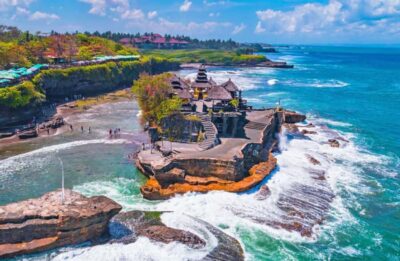
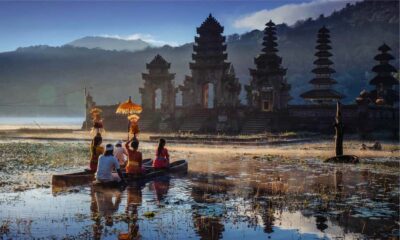
Bali Spiritual is what happens when you trade crowds for quiet mountain life and a real purification ceremony. I love that it’s rooted in a rural village near Mt Batukaru, not a scripted tourist bubble, and I also love the hands-on farm + garden stops that connect food, plants, and daily faith. One thing to consider: the temple visit has strict rules around pregnancy and menstruation, and you’ll also be up early for a full 9-hour day.
You’ll start the morning with a scenic drive and a flower stop, then move into cooler jungle air for a blessing led by a local priest. By the time you reach the waterfall at the end, the day feels balanced: spiritual, practical, and genuinely scenic.
In This Review
- Key things I’d circle on your planning list
- Rural Bali near Mt Batukaru: where the pace actually slows down
- Balikaru garden and Rindik time: plants, jamu herbs, and making music
- Puri Belulang purification blessing: what you’ll do and what to respect
- Warung Balikaru lunch: Nasi Campur Tumpeng in the middle of real village life
- Rice planting, animals, and Trigona honey: lessons that stick
- Belulang hot springs and Pengempu waterfall: the quiet nature finish
- Price and logistics: is $86 actually good value?
- Who this tour suits best (and who should think twice)
- Should you book this Bali spiritual day?
- FAQ
- What’s the duration of Bali Spiritual: Blessing Ceremony, Pristine Nature, Transfer?
- Is hotel pickup and drop-off included?
- What time does the pickup usually happen?
- What happens during the purification and blessing ceremony?
- What is included for lunch?
- Are there any restrictions for temple entry?
- How big is the group, and what languages are available?
Key things I’d circle on your planning list
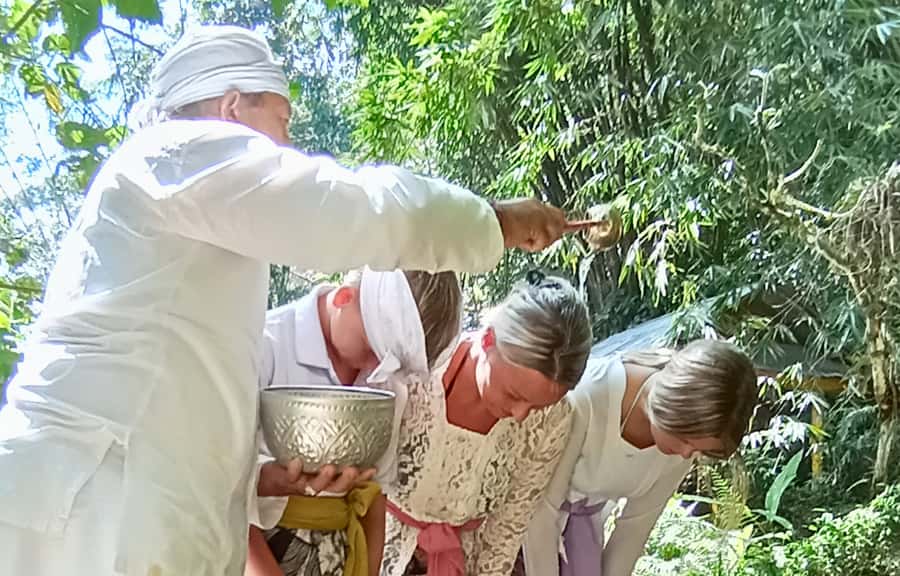
- Jungle temple purification with a Mangku priest and river water pouring over you
- Small group (max 6), so your guide can actually explain what you’re seeing
- Warung Balikaru lunch featuring Nasi Campur Tumpeng with red rice
- Farm visits that teach rice rhythms, animal care, and Trigona stingless honey
- Belulang hot springs + Air Terjun Pengempu for a calm nature finish
Rural Bali near Mt Batukaru: where the pace actually slows down
This day starts early, with hotel pickup in an air-conditioned vehicle around 7am. Pickup covers a wide area, from places like Ubud, Sanur, Seminyak, Canggu, and Denpasar to the south and east, but the key is simple: you must give your pickup location so they can route you correctly. Expect transfer time to run from about 45 minutes to 2 hours, depending on where you’re staying.
Once you’re on the road, the vibe shifts fast. You’re leaving the busy zones and heading toward the foot of Mount Batukaru, where the air feels cooler and the scenery turns greener. The drive includes a short colorful flower stop and at least one photo stop—more than a quick roadside photo, it sets the tone. This tour is about slow watching: rice terraces, village paths, and the kind of morning quiet you don’t find in central Bali.
Then you arrive in a small mountain village and meet the Balikaru family. That welcome matters. In rural Bali, hospitality is a community thing, not a performance. You’re not just transported from place to place—you’re invited into daily life.
You can also read our reviews of more tours and experiences in Jatiluwih.
Balikaru garden and Rindik time: plants, jamu herbs, and making music
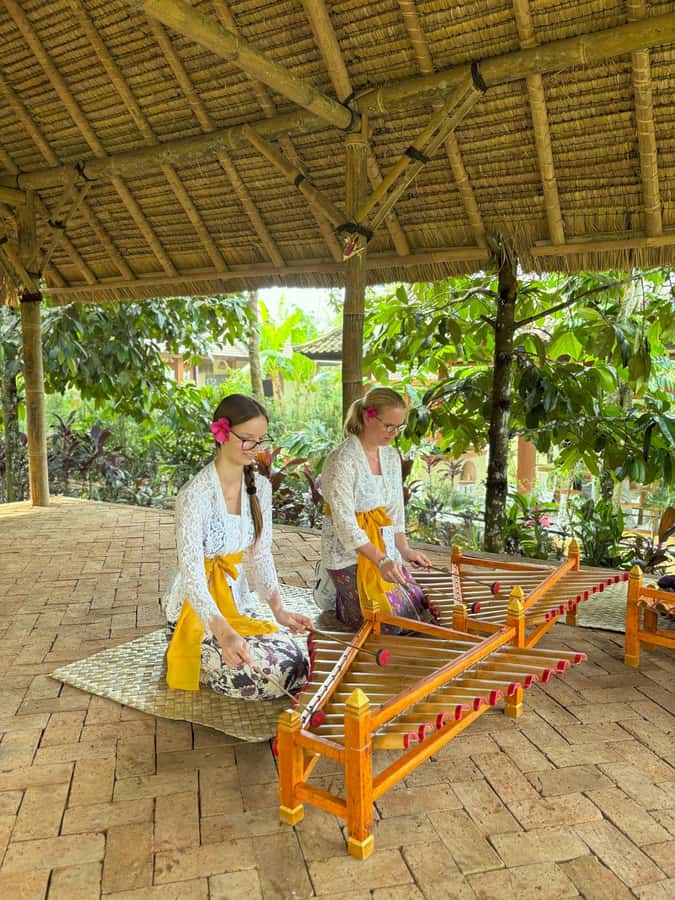
Before any ceremony, you get a guided walk through the Balikaru garden. The garden is home to more than 40 species of tropical plants, and the guide points you toward the herbs and spices behind Balinese cooking. You’ll also hear about jamu, Indonesia’s ancient herbal wellness drink. Even if you don’t consider yourself a herbs person, this stop makes the rest of the day make more sense.
A welcome drink follows, and it’s not random juice. The flavors come from ingredients like lemongrass, cloves, and galangal—scents you’ll recognize even if you can’t name them. You’ll get a calm, refreshing taste that fits the mountain setting and gives your body a little reset before the spiritual part.
Then comes a fun, tactile moment: learning to play the rindik, a traditional Balinese bamboo instrument. The point isn’t virtuoso performance. It’s connection. When you’re making sound with the same kind of instrument you’ll hear in village rituals, you start to understand the rhythm behind everyday Balinese culture.
Puri Belulang purification blessing: what you’ll do and what to respect
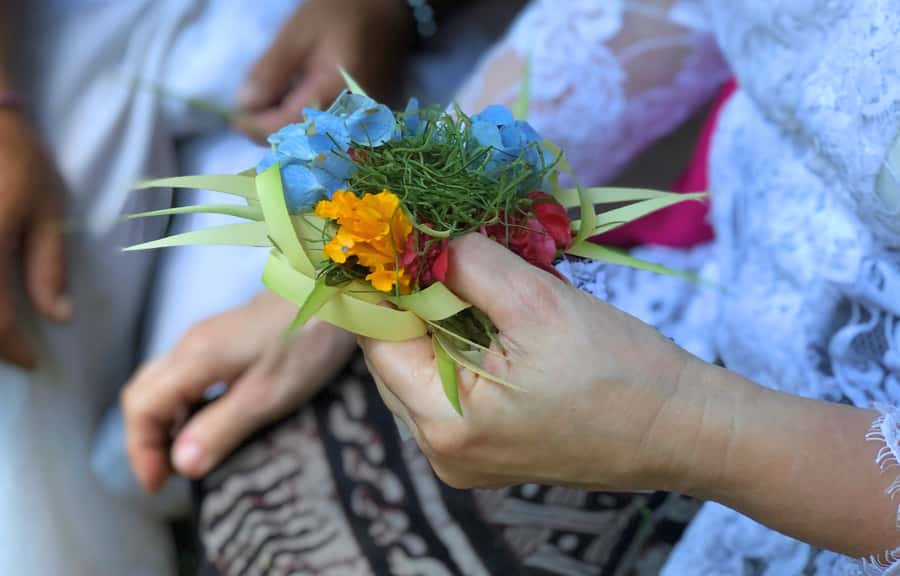
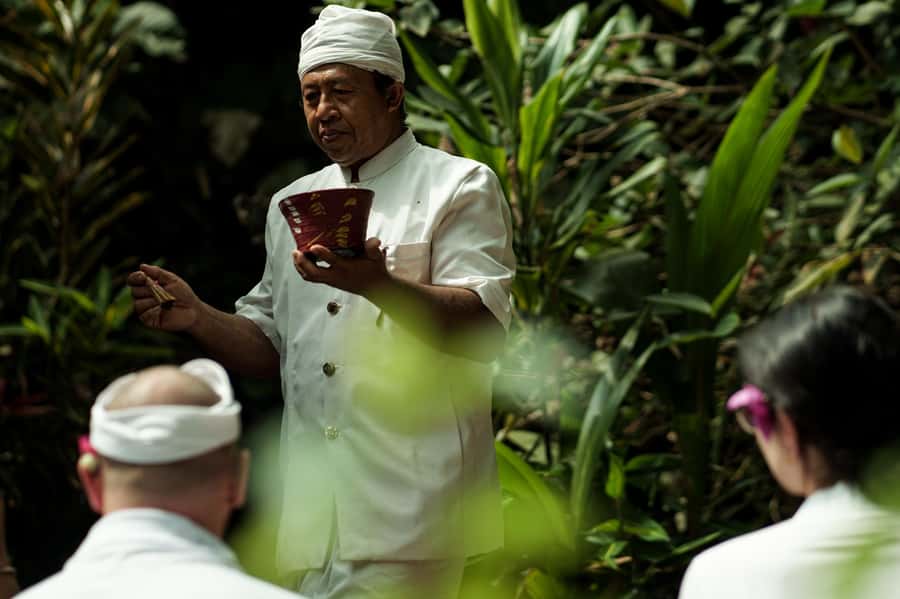
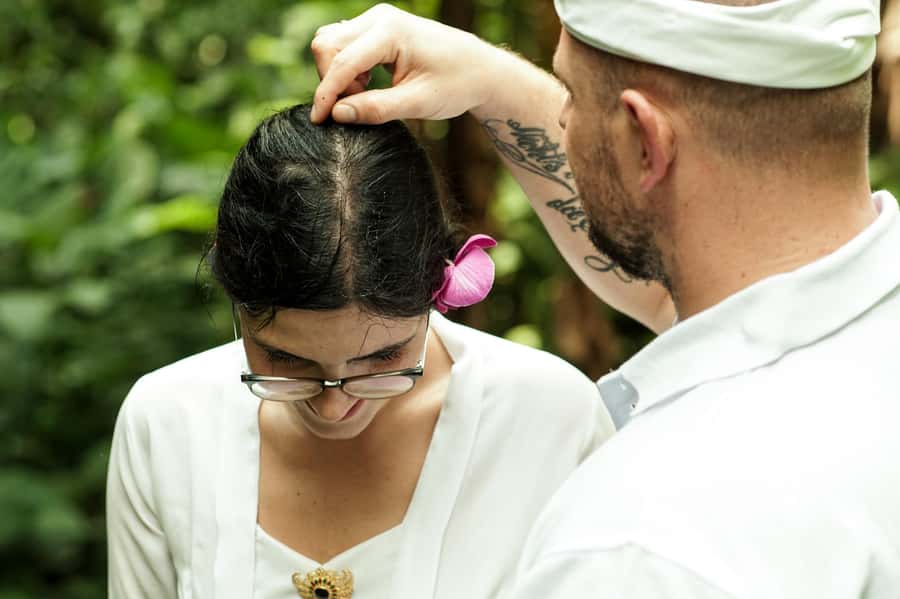
The spiritual core of the day happens at a secluded jungle temple by a tranquil river. This is the heart-and-mind part, led by a local Balinese priest (Mangku). If you’re expecting a performance for tourists, you’ll probably feel the difference right away: it’s quiet, focused, and symbolic.
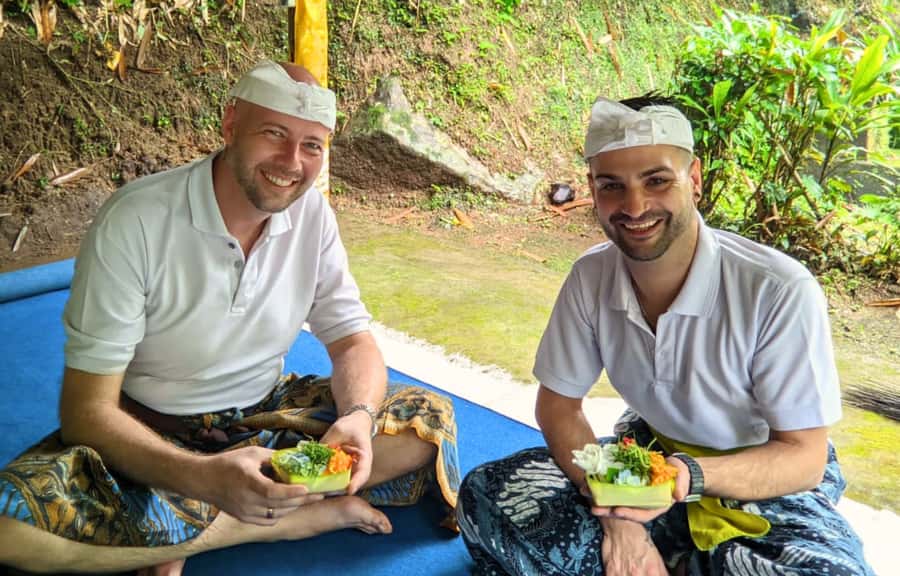
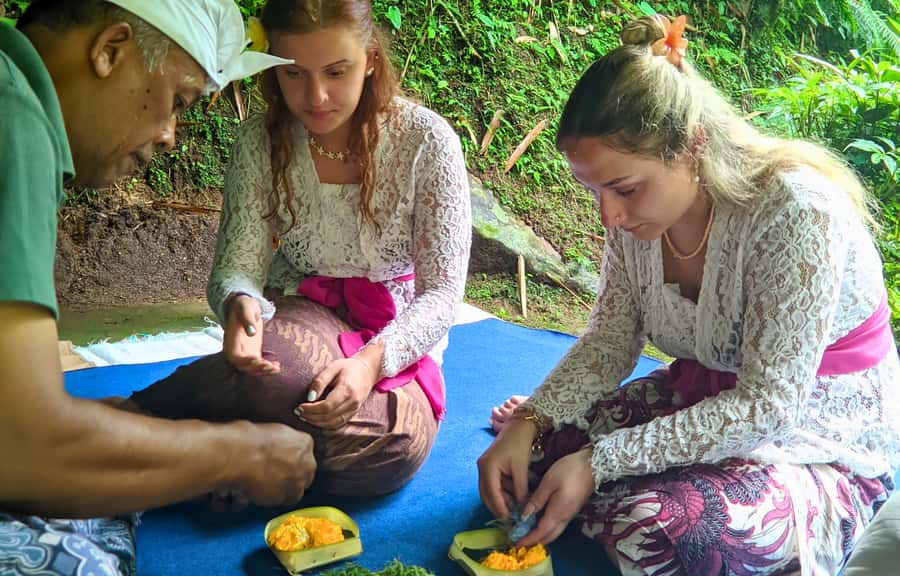
You’ll prepare small flower offerings and learn what they mean, then follow along with the priest’s flow. Temple clothes and the offering materials are provided (rental), so you can concentrate on learning rather than scrambling for supplies. Incense scents hang in the air, and you’ll hear sacred bells during key steps.
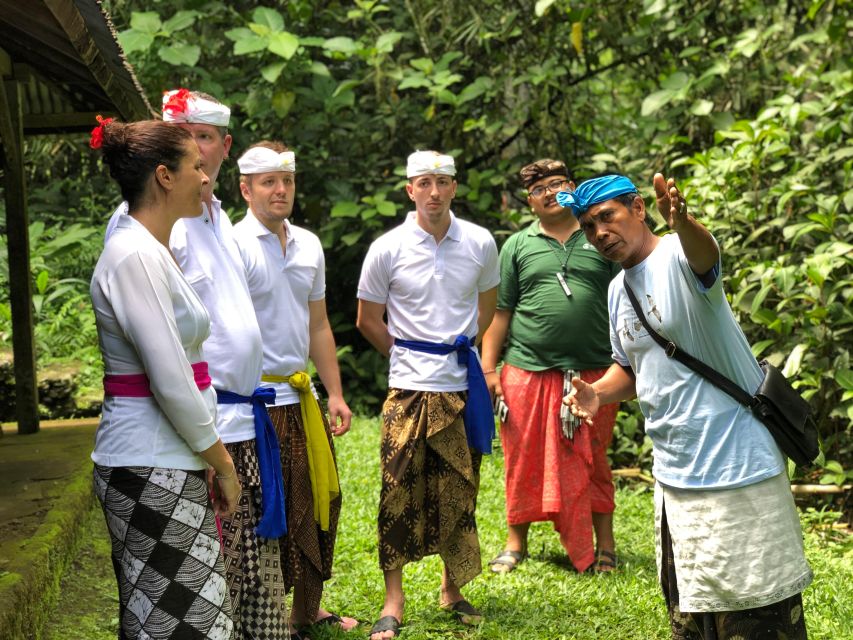
Your guide plays an important role here. They translate more than just words. They explain gestures and mantras, so the ritual stops being a mystery sequence and starts becoming an actual language of meaning.
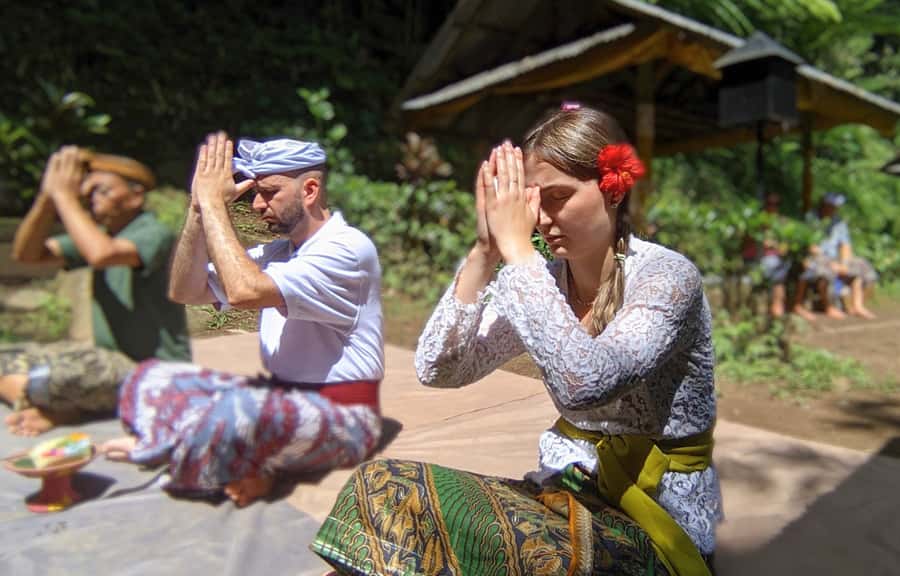
Then comes the river-water moment: cool water poured over you as part of the purification and blessing. A lot of people describe the feeling as calm and renewed, and that reaction is easy to understand. The day up to that point has been walking, watching plants, and settling into the rhythm. The ceremony completes the shift.
A major consideration: this temple experience has strict rules. Pregnant women and female guests during their menstruation are not allowed to enter temples. It’s worth planning for this before you book. It’s not negotiable, and it’s respectful to treat it as part of how the tradition works. Also note the tour isn’t suitable for wheelchair users.
Warung Balikaru lunch: Nasi Campur Tumpeng in the middle of real village life
After the ceremony, you’ll eat a homemade lunch at Warung Balikaru. The meal is Nasi Campur Tumpeng: red rice (tumpeng-style) served with vegetables, meat, and fragrant spices. The visual is part of the pleasure—red rice has a way of looking festive even before you taste it—but the best part is that it’s not designed to be photographed. It’s designed to be eaten.
This is one of those stops where food becomes context. In Bali, a lot of culture is carried through cooking and daily offerings. If the ceremony was about purification, lunch becomes the practical follow-through: nourishment, shared space, local ingredients, and the kind of comfort meal you’d actually find in a village kitchen.
You’ll have about 1.5 hours here, so it’s not a rushed lunch break. Use that time to ask simple questions about spices, cooking, or how herbs fit into daily routines.
Rice planting, animals, and Trigona honey: lessons that stick
The afternoon shifts from sacred to agricultural, and that balance is one of the tour’s strengths. You’ll get to join a farmer planting rice and experience the rhythm of rural Balinese life. You don’t need farming skills. You just need patience and a willingness to do things slowly.
Next is the Balikaru farm, where the animals are part of the education. You may meet ducks and geese, and you’ll likely spend time with Manis, a gentle cow that loves visitors when it comes to feeding. It’s straightforward, but it’s also real. You see animals treated as daily companions, not background scenery.
Then you learn about Trigona bees—stingless bees—and how their honey works. Stingless honey is rarer than the honey most people know, and the tour notes the honey’s health benefits. Even if you don’t treat it like a miracle product, it’s still a fascinating look at how local people harvest resources from the natural environment around them.
This farm section is where the day stops feeling like a highlight reel and starts feeling like a connection. You’ll come away thinking in systems: plants feed animals, animals fit into the household, and gardens connect to cooking and rituals.
Belulang hot springs and Pengempu waterfall: the quiet nature finish
Before the waterfall, you’ll do a short village walk and visit Belulang Hot Springs. Villagers bathe in natural sulfur water, and if you want, you can follow their tradition and take a dip. Even if you skip the swim, plan to spend a few minutes just soaking in the simple scene. Hot springs tend to bring out the human side of a place—people doing an everyday wellness habit.
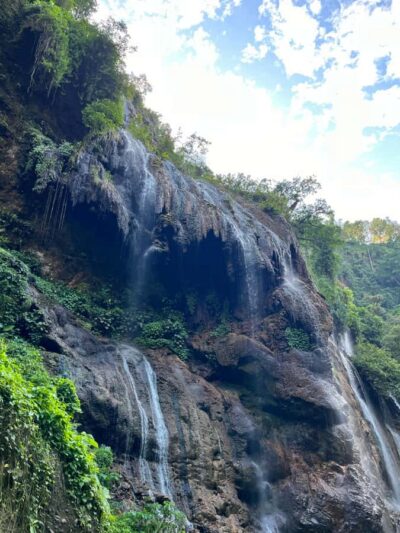
Then it’s onward to Air Terjun Pengempu. This waterfall stop is about 45 minutes with time for photos and a visit around the tropical forest setting. The key here is mindset: treat it like a calm pause, not a sprint. If weather is wetter than expected, the waterfall can be slippery and muddy, so wear shoes that handle real ground.
One practical note from real-world experience: weather can affect the day, especially in jungle areas. If it rains, your best bet is to stay flexible and focus on the moments you can control—your pace, your photos, and your attention to the surroundings while everything stays green and alive.
Price and logistics: is $86 actually good value?
For $86 per person over about 9 hours, the value comes from what’s bundled. You’re not just paying for a driver and a couple of viewpoints. You’re paying for:
- transfers in an air-conditioned vehicle
- an English-speaking guide
- a temple ritual with a Mangku priest, including offering materials and temple clothes
- a homemade lunch at Warung Balikaru
- guided garden and farm visits (including animal time and stingless honey learning)
- a waterfall stop
- a Balikaru gift and purification memories, including a personal photo mailed to you
The small group size (limited to 6) also matters. It’s easier for your guide to slow down and translate what’s happening during the ceremony. With fewer people, you can get your questions answered without feeling like you’re waiting your turn.
Your main “logistics cost” is time. Pickup is around 7am, and transfer varies based on where you’re staying. If your idea of a perfect Bali day is late starts and zero schedule pressure, this one may feel long. But if you want a meaningful day that mixes spirituality and nature without getting trapped in crowds, it’s a strong use of your time.
Who this tour suits best (and who should think twice)
This is a great fit if you want Bali Spiritual: Blessing Ceremony, Pristine Nature, Transfer and you care about what’s happening beyond the photo. You’ll enjoy it most if you’re curious about Hindu ritual symbols, comfortable participating respectfully, and interested in how rural communities grow food and use herbs.
It’s also a good choice for couples or milestone trips. Some guests book this kind of blessing for special occasions because the setting is quiet and personal. If you like that idea, plan to treat the day as a shared story, not just a checklist.
Think twice if any of these apply:
- You’re pregnant or traveling with someone who can’t enter temples during menstruation.
- You need wheelchair accessibility. This tour isn’t suitable for wheelchair users.
- You get impatient with early mornings and a full day schedule.
If you’re the type who likes your days to have one clear emotional center plus a nature payoff at the end, you’re in the right place.
Should you book this Bali spiritual day?
I’d book it if your Bali trip includes at least one day where you learn something real and respectful. The combination of a jungle purification blessing, a village lunch, and farm + nature stops is a balanced day. It’s not just scenic. It has meaning, and it has hands-on parts.
Before you click, do two things:
1) Confirm your pickup location clearly so you don’t lose time finding the start point.
2) Read the temple-entry rules and plan accordingly for anyone in your group.
If you want a calm, small-group day near Mt Batukaru—plus a ceremony you’ll remember for its symbolism and your own participation—this one earns its high rating.
FAQ
What’s the duration of Bali Spiritual: Blessing Ceremony, Pristine Nature, Transfer?
The tour runs for 9 hours.
Is hotel pickup and drop-off included?
Yes. Pickup and transfer are included by air-conditioned vehicle, and pickup is offered within a 50 km east and south radius of Belulang village. You’ll need to specify your pickup location when booking.
What time does the pickup usually happen?
Pickup is around 7am, depending on how far your hotel is from the village. You’ll receive the detailed pickup time one day before the tour.
What happens during the purification and blessing ceremony?
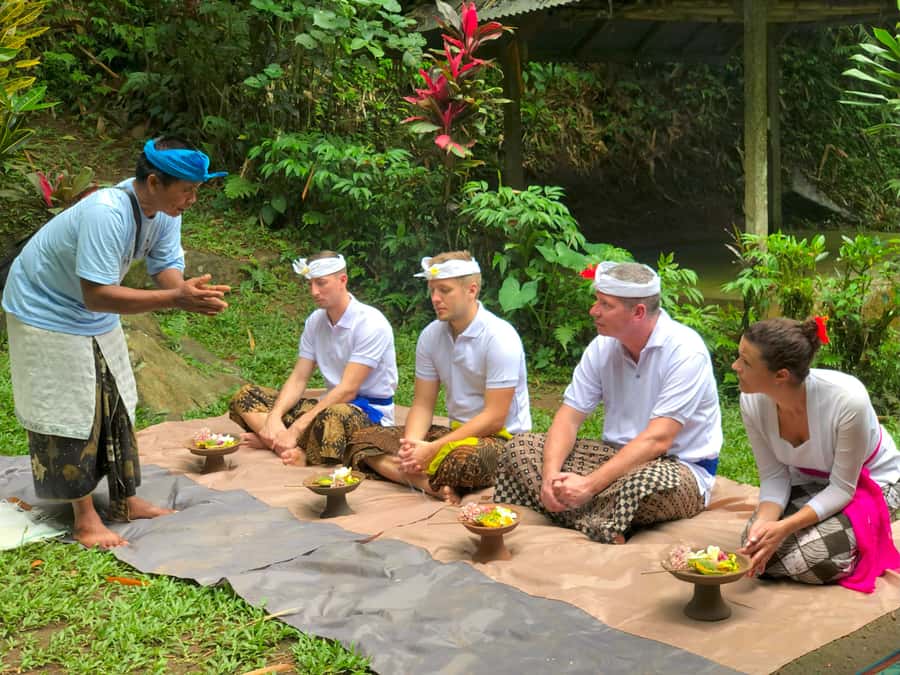
You’ll participate in a purification/blessing ceremony led by a Balinese temple priest (Mangku). You prepare flower offerings, wear temple clothes, follow the priest’s ritual steps with guidance and translation, and water is poured over you as part of the blessing.
What is included for lunch?
Lunch is a homemade Balinese meal at Warung Balikaru, featuring Nasi Campur Tumpeng with red rice, served with vegetables, meat, and spices.
Are there any restrictions for temple entry?
Yes. Pregnant women and female guests during menstruation are not allowed to enter temples.
How big is the group, and what languages are available?
The group is small, limited to 6 participants. The guide speaks English, and other languages may be available with a surcharge (Italian, French, German).