Three days to become an open-water diver. This PADI Open Water Course in Bali is built for total beginners, then ramps you up fast with real-world coaching at Padang Bai and Tulamben. You’ll practice the core skills you’ll use for your whole scuba life, with instruction from friendly pros like Gede Ariawan and Muli.
What I like most is the small group size (up to 3 travelers) and the way the course walks you through the full progression: knowledge work, pool training, then four open-water sessions. I also appreciate the practical logistics that reduce stress—hotel pickup and drop-off, air-conditioned minivan transport, plus lunch and drinks included. One thing to keep in mind: this is medically screened training, and you’ll need to complete a health questionnaire before you’re allowed to participate.
In This Review
- Key Highlights You’ll Care About
- Kuta, Sanur Pickup: Getting to Neptune Without Making It Complicated
- Price and Value: What $530 Actually Covers
- Your 3 Days at a PADI Open Water Course: The Real Skill Progression
- Day 1-ish: Knowledge Development That Makes the Gear Make Sense
- Day 2-ish: Pool Training for Skills and Confidence
- Day 3-ish: Four Open-Water Sessions in Padang Bai and Tulamben
- Padang Bai and Tulamben Sessions: Why Two Locations Can Be Better Than One
- Instructors, Guides, and the Kind of Support That Changes Everything
- What’s Included On the Ground (and What You Should Plan For)
- Health Requirements: The Part You Should Read Twice
- Who This Course Suits Best in Bali (And Who Should Rethink)
- Booking Timing and Staying Organized
- Should You Book This PADI Open Water Course in Kuta?
- FAQ
- How long is the PADI Open Water Course?
- Where does the course start in Bali?
- What is included in the $530 price?
- What is not included?
- Is there a minimum age?
- How deep does this certification allow you to go?
- Do I need to pass a health check?
Key Highlights You’ll Care About
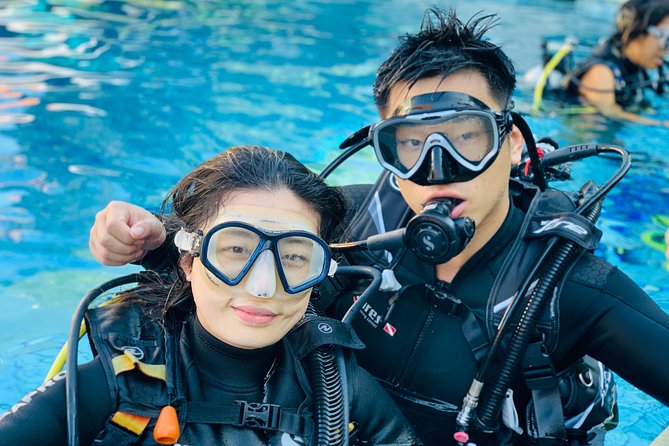
- Small group learning (maximum 3 travelers) means more attention and less waiting around.
- All-in basic day-to-day costs are covered: taxes/fees, transport, lunch, snacks, and water.
- Complete PADI flow across 3 days: knowledge development, pool practice, then four open-water sessions.
- Two training areas in Bali: Padang Bai and Tulamben, with experiences matched to skill building.
- Real coaching names you may recognize: instructors and guides such as Gede Ariawan, Muli, Julian, Sia, and Agus show up in the center’s past course stories.
Kuta, Sanur Pickup: Getting to Neptune Without Making It Complicated
This course is marketed for Kuta, but your actual start point is in Sanur (Denpasar area). The meeting point is at Jl. Suka Merta, Sanur Kauh, Denpasar Selatan, Kota Denpasar, Bali 80228, and the center’s opening hours run 7:00 AM to 6:00 PM.
The good news: you’re not stuck figuring out rides. Hotel pickup and drop-off are included, and you’ll travel by air-conditioned minivan. That matters in Bali, where a few extra transfers can turn a simple course into a time sink. If you’re staying around Kuta, Seminyak, Legian, or nearby areas, you’ll probably find the pickup route manageable and straightforward.
You can also read our reviews of more tours and experiences in Kuta.

Price and Value: What $530 Actually Covers
At $530 per person, this is not a bargain-feel course—but it’s also not a stripped-down experience. The included package covers:
- All taxes, fees, and handling charges
- Bottled water, lunch, snacks, and coffee/tea
- Driver/guide and a professional guide
- Hotel pickup and drop-off
- Transport by air-conditioned minivan
What’s not included is souvenir photo material (you can purchase photos separately). That’s a normal scuba-course add-on, but it’s smart to plan for the possibility so you don’t get surprised later.
Also worth noting: the experience uses a mobile ticket, and it’s typically booked about 11 days in advance on average. If you’re traveling during a busy period, earlier booking helps lock in your preferred dates.
Your 3 Days at a PADI Open Water Course: The Real Skill Progression
The PADI Open Water Course is three phases over about 3 days. Even if you’re brand new, the structure is meant to build confidence in layers instead of throwing you straight into the deep end.
Day 1-ish: Knowledge Development That Makes the Gear Make Sense
You’ll start with knowledge development, where you learn the theory and safety rules that guide every practical skill. This is where you stop memorizing facts and start understanding why the equipment works the way it does.
A helpful tip: one past course story notes that theory can be done online in advance using the PADI website. If your schedule allows, completing the theory portion early can make the on-site days feel less like cramming and more like coaching.
Day 2-ish: Pool Training for Skills and Confidence
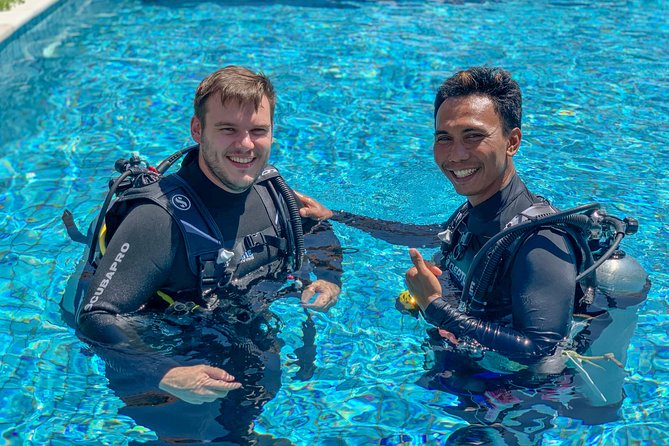
Next comes pool training. This is where you practice core skills in a controlled setting—good for learning buoyancy basics, comfort with regulators, and how to move with calm control rather than panic kicks.
One recurring theme from the course experiences is how patiently instructors coach skill areas like buoyancy control. If you’re not a strong swimmer, that pool time is often the difference between staying calm and feeling overwhelmed.



Day 3-ish: Four Open-Water Sessions in Padang Bai and Tulamben
Finally you complete four open-water training sessions split between Padang Bai and Tulamben. This is where you apply what you learned in the pool, with the safety framework and guidance you need as you build toward independence.
PADI certification from this course qualifies you to scuba to a maximum depth of 18 meters. That limit matters: it sets expectations for what you’ll be able to do after you’re certified, and it shapes the way your training is conducted now.
Padang Bai and Tulamben Sessions: Why Two Locations Can Be Better Than One
Instead of only training in one spot, this course uses two Bali locations: Padang Bai and Tulamben. That variety can help you learn how your skills translate across different conditions and entry experiences.
Here’s how to think about it practically:
- Padang Bai often gives you a more straightforward on-ramp for applying your skills in open water.
- Tulamben can add a different feel to the experience, which is useful when you’re trying to become a confident diver rather than just completing a checklist.
Your schedule across the course phases is designed so you don’t just arrive and hope for the best. The pool skills are meant to transfer into open water, so you’ll see your comfort grow session by session.
Instructors, Guides, and the Kind of Support That Changes Everything
A course like this lives or dies on instruction quality. The best part of this operator’s track record is how they support beginners with patience and professionalism, even when someone is nervous or not naturally comfortable in the water.
In multiple course stories, instructors and leaders include names like Gede Ariawan, Muli, and Julian, with support from guides such as Agus and an instructor named Sia. While every course team is slightly different, the consistency is the teaching style: clear explanations, calm pacing, and real attention to the exact skill you’re working on.
One specific point that stands out from those experiences: buoyancy control can be taught and corrected. If you’ve heard that scuba is hard or stressful, this kind of coaching is what turns it into a skill you can learn rather than a performance you’re afraid of failing.
What’s Included On the Ground (and What You Should Plan For)
This course takes care of a lot of day-to-day items, including lunch, snacks, coffee/tea, and bottled water. That’s not just comfort—it helps you stay focused. Being hungry and tired is an easy way to make technical training feel harder than it is.
You’ll also have a driver/guide plus a professional guide, which usually means smoother transitions between classroom, pool, and open-water locations.
What to plan for yourself:
- A swimsuit and towel for pool days
- Basic sun protection (Bali sun is no joke)
- A flexible attitude if you’re tired between sessions—three days of skills adds up
And remember: photo souvenirs aren’t included. If you want them, budget separately.
Health Requirements: The Part You Should Read Twice
Scuba training has medical rules for good reasons. Before you go, you must complete a health questionnaire, and some conditions can prevent participation.
Key points you should know from the course requirements:
- Respiratory and circulatory systems must be in good health
- All body air spaces must be normal and healthy
- Avoid participation with issues like asthma, heart conditions, coronary disease, epilepsy, or severe medical problems
- A current cold or congestion can be a no-go
- Don’t scuba if you’re under the influence of alcohol or drugs
- Scuba training within 18 hours of flying is not recommended
Also, the minimum age is 10 years, so this can work for older kids who are ready for structured instruction and safety rules.
If you have any medical uncertainty, it’s worth asking your doctor ahead of time. This isn’t about fear. It’s about getting you safely into the water so you can actually complete the course.
Who This Course Suits Best in Bali (And Who Should Rethink)
This is a smart choice if:
- You want a true certification route with a clear structure
- You’re new and need coaching in knowledge, pool skills, and open-water sessions
- You want smaller group attention (up to 3 travelers)
- You value good logistics so your Bali trip doesn’t get derailed
It may be less ideal if:
- You can’t meet the health requirements or you’re dealing with current respiratory congestion
- You recently flew and can’t realistically wait the recommended time before training
- You’re expecting a laid-back activity with no formal learning steps (this is a course)
Overall, it’s built for people who want the real foundation—not just a fun time in the water.
Booking Timing and Staying Organized
This course is commonly booked about 11 days in advance, which suggests it tends to fill up. If you’re planning around a tight Bali itinerary, don’t wait until the last minute.
You’ll receive confirmation at booking time, and the experience is set to run with a maximum group of 3 travelers. That small cap is part of the appeal, because it supports more hands-on coaching during skills practice.
Should You Book This PADI Open Water Course in Kuta?
If you’re serious about earning scuba certification in Bali, this course is a solid pick because it combines a full PADI structure with practical support and a small-group teaching style. The center’s course stories repeatedly highlight patience, clear coaching, and a professional approach—exactly what you want when learning to manage buoyancy, breathing, and safety routines.
My advice: book it if you’re ready for three focused days and you can meet the medical screening requirements. If you’re healthy, comfortable with the idea of learning skills step-by-step, and you want your certification to feel like training—not luck—this is the kind of course you’ll be glad you did.
FAQ
How long is the PADI Open Water Course?
The course runs for about 3 days.
Where does the course start in Bali?
The start point is at Jl. Suka Merta, Sanur Kauh, Denpasar Selatan, Kota Denpasar, Bali 80228, Indonesia, at the Neptune scuba center.
What is included in the $530 price?
The price includes taxes and fees, bottled water, lunch, coffee and/or tea, snacks, driver/guide, professional guide, hotel pickup and drop-off, and transport by air-conditioned minivan.
What is not included?
Souvenir photos are not included (you can purchase them separately).
Is there a minimum age?
Yes, the minimum age is 10 years.
How deep does this certification allow you to go?
After certification, you can scuba safely to a maximum depth of 18 meters.
Do I need to pass a health check?
Yes. You must complete a health questionnaire before diving. Some conditions (like asthma, heart conditions, epilepsy, a current cold or congestion) may prevent you from participating, and scuba within 18 hours of flying is not recommended.