You will learn faster with one coach. A private surf lesson in Kuta means focused feedback, not waiting your turn.
This Rip Curl School of Surf session is built to take you from first rides to more confident wave control, with basics like paddling and popping up plus safety and etiquette. You also get pickup within the coverage area and a full kit so you can show up, suit up, and go.
What I like most is the 1-on-1 format. The instructor can assess your level, correct your technique, and give you tips you can actually use right away. Another big plus: the lesson includes surf gear plus a fresh-water shower setup and bottled water, so the whole experience feels easy to fit into a Bali day.
One consideration: the schedule can shift with surf and weather conditions, and early pickup timing may vary depending on where you start. If you’re the type who hates uncertainty, build in a little buffer for the 8:00 am start.
In This Review
- Key highlights worth knowing before you paddle out
- Kuta and Legian Launch Time: Why an 8:00 am start helps
- Private Coaching That Targets Your Weak Spots Fast
- What You Train: Paddling, Pop-Up, Stance, Turning, and Ocean Smarts
- Classroom Cues to Beach Break Waves: How the lesson plays out
- Gear, Rash Guard, Zinc, and the Shower You’ll Appreciate More Than You Think
- Reef Trip Options in Sanur: When conditions change the plan
- Price and Value: What $84.28 Buys You in Real Terms
- Who Should Book This Private Lesson (and who might want group classes)
- Practical Tips to Make Your Lesson Feel Easier
- Should You Book This Private Surf Lesson in Kuta?
- FAQ
- How long is the private surf lesson?
- What level of surf can I learn from?
- Is pickup included?
- What equipment is provided?
- What’s included for hygiene and comfort?
- What should I bring?
- What’s the cancellation policy?
Key highlights worth knowing before you paddle out
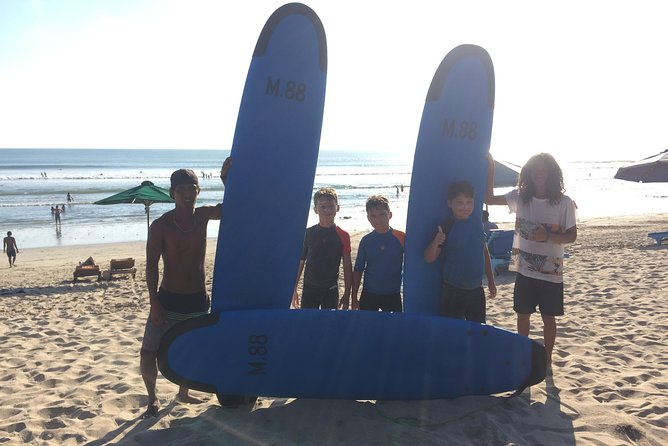
- True private lesson (one student, one instructor): you get hands-on coaching instead of group demos.
- Technique + safety + etiquette in one session: paddling, pop-up, stance, turning, and ocean rules are part of the plan.
- You’re not bringing gear: surfboard, leash, helmet, and reef booties on reef trips (when needed).
- Shower and changing rooms are included: fresh water, soap, shampoo, towel, plus lockers.
- The equipment kit includes skin protection items: imported zinc plus a Rip Curl rash guard and leggings.
- There’s a liability-insurance layer: one million USD liability coverage is included.
Kuta and Legian Launch Time: Why an 8:00 am start helps
The lesson meets at Legian Beach with a 8:00 am start. That early timing is usually a smart move in Bali because the ocean is often calmer to start the day, and the light helps you spot what your body is doing when you paddle and stand.
If you’re staying in the pickup coverage area, they’ll pick you up and return you after the session. In practice, this matters because surfing is one of those activities where logistics can eat your motivation. Having transport arranged (instead of sorting rides while you’re already excited and half-stressed) makes the experience feel smoother from the start.
Also, because the group size is capped at one traveler, you’re not competing with other people for your instructor’s attention. You can ask questions without feeling rushed, and the coach can spend more time watching your timing on the pop-up and your turning mechanics on each attempt.
You can also read our reviews of more tours and experiences in Kuta.


Private Coaching That Targets Your Weak Spots Fast
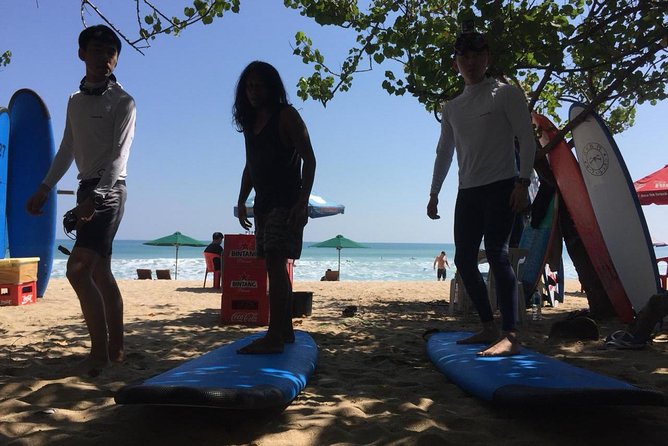
This isn’t a generic surfing talk. The lesson is structured around fundamentals, but it’s coached to your level. The flow is designed so your instructor can assess you, then focus on what’s most likely to create progress quickly—whether that’s catching more waves, improving your bottom turn, or learning faster cutbacks.
In a private setup, small corrections matter. For example, you can work on:
- paddling position and where your weight sits on the board
- how you pop up (timing and hand placement)
- your wave riding stance so you don’t feel unstable after standing
You’ll also get ocean knowledge and safety coaching, plus etiquette so you know how to share the lineup and avoid risky situations. That last part sounds boring until you’re actually out there and realize how much confidence comes from understanding the flow of the surf.
One detail I really respect from the teaching approach: they don’t just show you. They aim to get you feeling comfortable in the ocean and able to surf beach break waves after the course. That’s a key distinction. Many lessons stop at first attempts; this one focuses on moving you toward repeatable wave riding.
What You Train: Paddling, Pop-Up, Stance, Turning, and Ocean Smarts
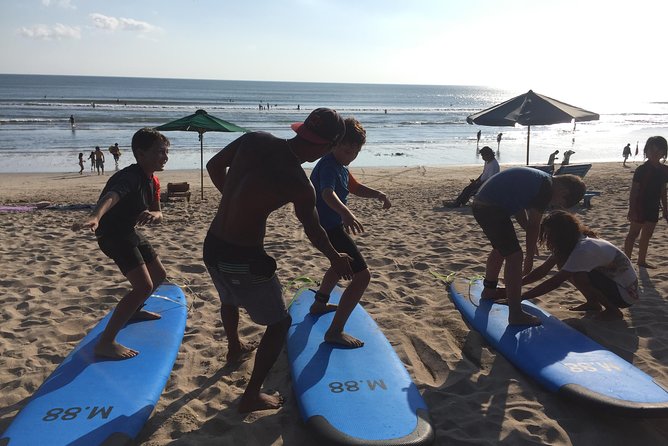
Your session covers core surfing skills with a clear progression:
- Basic technique: paddling, popping up, stance, and riding.
- Turning your board on the wave: learning how to change direction, not just go straight.
- Ocean knowledge and safety: reading conditions and staying safe.
- Surfing etiquette: how to act around other surfers and manage priority.
- Comfort in the water: so you’re not panicking when waves get a little different.
This matters because surfing isn’t only physical. It’s also decision-making. Knowing what the ocean is doing—how waves break, what currents feel like, and what situations to avoid—helps you avoid the classic beginner loop: paddle hard, miss timing, stand up, wobble, repeat with frustration.
And because it’s private, you get feedback that connects directly to what you just tried. If your pop-up timing is off, you can fix it on the next wave instead of waiting for the session to move to the next demo.
If you’re more experienced, you can still benefit. One intermediate surfer described getting solid insights for what they wanted to improve, and they even mentioned receiving photos of their sessions. Photos aren’t listed as a guaranteed inclusion, but it’s a good sign that the program can go beyond coaching into feedback you can review.
Classroom Cues to Beach Break Waves: How the lesson plays out
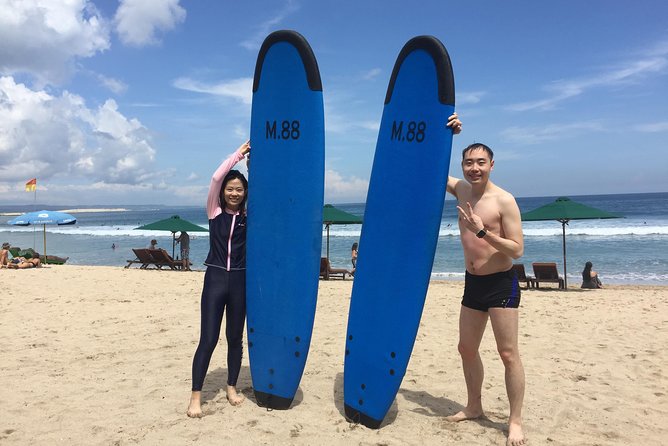
The program is designed to go from theory to beach practice. You’ll likely start with guidance before getting into the water, which is helpful because you can understand the goal before you’re cold, tired, and trying to remember steps.
Once you’re in the surf, expect a steady mix of:
- coaching your paddling so you can position for waves
- repeated attempts at the pop-up until your body learns the timing
- stance adjustments as you ride
- practical turning instruction so you can steer rather than just survive
The target outcome is that you’ll be surfing beach break waves afterward. Beach break is a great place to build confidence because it’s often more forgiving for beginners than harsher reef conditions.
One more practical note: the lesson includes ocean safety and etiquette. That’s not just good manners—it’s part of protecting your session. When you understand the rules and the flow of the water, you waste less time in awkward resets and more time actually learning.
Gear, Rash Guard, Zinc, and the Shower You’ll Appreciate More Than You Think
One of the best value parts of this lesson is that it’s not gear-only. It’s the whole package so you don’t scramble on the day.
Included items:
- Surf board and leg rope
- Surf helmet
- Reef booties for reef trips (when used)
- Imported zinc
- Rip Curl rash guard and leggings
- Bottled water
- Private changing rooms and lockers
- Shower facilities with fresh water, soap, shampoo, and towel
Why this matters: surf days can be rough on your skin and hair. Having zinc and a rash guard means you’re not improvising sun and friction protection, and the shower setup means you can actually feel human afterward—clothes back on, not salt-caked and sticky.
Also, helmets and reef booties (for reef trips) are part of staying safe. If the day’s conditions push you toward harder environments, it’s a relief to know the safety gear is included rather than something you have to rent last minute.






Reef Trip Options in Sanur: When conditions change the plan
This program includes reef boat usage for reef trips in Sanur. That doesn’t mean you’ll automatically do a reef break, but it does mean the operator is set up to handle different surf conditions and choose appropriate spots.
Reef surf changes the stakes. Even if you’re a confident beginner, reef environments can be less forgiving. That’s exactly why having reef booties and a helmet in the included kit matters.
If your session does lean toward reef breaks, expect the lesson to emphasize safety even more, plus technique that fits that environment. Turning and stance also become more important because you don’t want to get pushed into a bad line.
If you want a safer first surf experience, ask the instructor during the initial assessment what kind of waves you’ll likely focus on that day. With private coaching, you can often shape expectations early.
Price and Value: What $84.28 Buys You in Real Terms
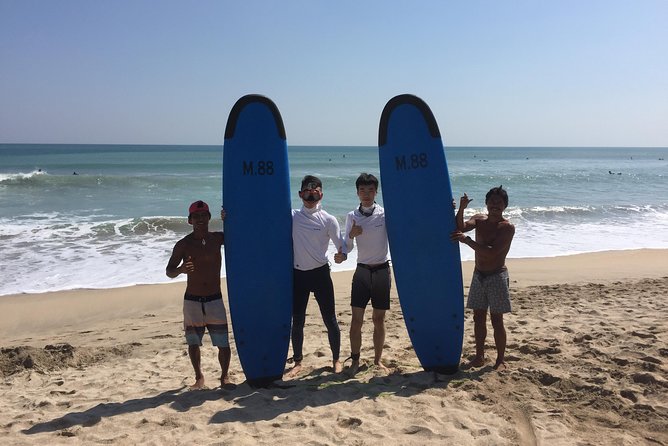
At $84.28 per person for about 1 hour 30 minutes, the price works best when you compare it to what private instruction usually costs and what else you’re getting.
Here’s the value math that matters:
- Private coaching: one instructor to one student. That speed of feedback is usually what you’re paying for.
- Equipment included: board, leash, helmet, and reef booties when relevant.
- Skin and comfort add-ons: zinc, rash guard, leggings.
- After-surf recovery: shower supplies, towel, and lockers.
If you tried to recreate the day yourself, you’d likely pay for equipment rental, transport, and then still need instruction. This package bundles most of that into one price and reduces the hassle cost.
That said, there’s no way around one truth: surf is weather-dependent. If the sea state changes, the session may shift to keep things safe. That’s not a deal-breaker, but it’s part of what you’re buying.
One more practical point from real experiences: pickup timing can be smooth, but in at least one case it wasn’t. To protect your morning, be ready for the possibility of small delays, especially if you’re picked up from farther out.
Who Should Book This Private Lesson (and who might want group classes)
This is a strong fit if you:
- are starting out and want corrections immediately (not later)
- want focused attention for technique issues like popping up and turning
- travel with kids or family and want the instructor to adjust to each person’s level
- are already intermediate and want a coach to target specific improvements
It can also work well for single adults who just want quiet learning time. With only one student per session, you’ll have a more personal pace.
You might choose a group lesson instead if:
- you’re purely chasing the social vibe
- you don’t care about individual feedback
- you want to watch others more than work on your own timing
But if you’re serious about progress—and you don’t want to waste waves waiting—private usually wins.
Practical Tips to Make Your Lesson Feel Easier
A few things I’d do before you go:
- Bring a swimsuit (it’s not included), and expect the rash guard/leggings to go over your base layer.
- Wear comfortable beach-ready footwear if you’re walking around the meet-up area.
- If you’re booking pickup, give your pickup location clearly when they confirm with you.
- Mentally plan for early morning energy: 8:00 am is early, even on vacation.
During the lesson, listen closely when the instructor talks about etiquette and safety. Those rules help you stay in the water longer with less stress.
And when you pop up, don’t fight your balance in a panic. The goal is to stand into control and let the stance and turning cues do their job.
Should You Book This Private Surf Lesson in Kuta?
If you want the quickest path from paddling confusion to confident wave riding, I’d book it. The private 1:1 attention, the clear set of skills (paddling, pop-up, stance, turning), and the added comfort value (zinc, rash guard, shower, lockers) make it feel like a complete surf experience rather than a simple activity.
Skip or reconsider only if you:
- can’t handle early mornings
- hate any chance of weather-related schedule changes
- are outside the pickup coverage area (so you’d be responsible for transport)
If you’re ready to learn properly and you’d rather get coached than figure it out alone, this is a solid choice for Bali.
FAQ
How long is the private surf lesson?
It runs for about 1 hour 30 minutes.
What level of surf can I learn from?
The lesson is designed to improve your surfing at different levels, and the instructor can assess your ability during the session.
Is pickup included?
Pickup and transfer back to your hotel are included if you’re within the coverage area.
What equipment is provided?
You get the surfboard and leg rope, plus a surf helmet. Reef booties are provided during reef trips.
What’s included for hygiene and comfort?
There are private changing rooms and lockers, and shower facilities with fresh water, soap, shampoo, and a towel. Bottled water is also included.
What should I bring?
Bring your swimsuit (like a bikini or boardshorts). You also should have a moderate physical fitness level for surfing.
What’s the cancellation policy?
You can cancel for free up to 24 hours in advance for a full refund. If it’s canceled due to poor weather, you’ll be offered a different date or a full refund.