A wreck, a pool, and your scuba basics in 3 days. This PADI Open Water course (by Bali Diving Academy) is built for real first-timers, with online theory through PADI e-learning and guided underwater training in small groups (up to 6). I like the professional, safety-first setup—the academy highlights a 100% safety track record and instructors who are certified, insured, and used to local reefs and habitats (including well-regarded trainers like Astama and Benny Wiratno Bunadji). I also like the practical structure: Day 1 is pool work in Sanur, Day 2 is Sanur Bay, and Day 3 shifts to Padang Bai or Tulamben.
One thing to consider: Day 3 depends on conditions, so your exact sites can change, and there’s an optional Nusa Penida add-on (with its own price). Also, you’ll need to fit the PADI e-learning theory in before or during the course days, so plan for that up front.
In This Review
- Key things that make this course worth your time
- Sanur to shipwrecks: the 3-day PADI Open Water rhythm
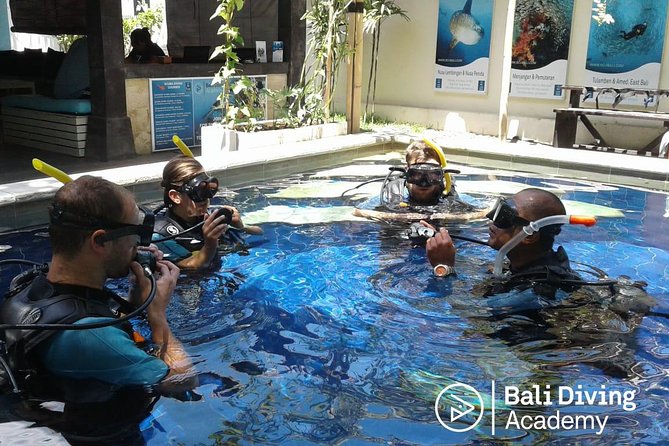
- Day 1 pool session in Sanur: where confidence gets built
- Day 2 in Sanur Bay: two open-water sessions with real coaching
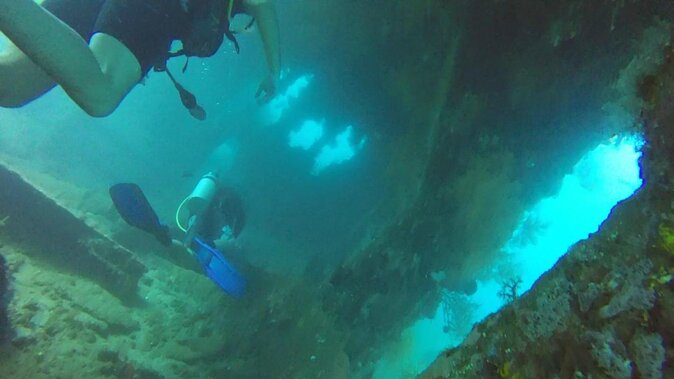
- Day 3 in Padang Bai or Tulamben: USS Liberty and real-world navigation
- Nusa Penida on Day 3
- Safety and teaching style: what “100% safety” really means here
- What $480 buys you (and how to judge the value)
- Where the itinerary can feel tight (and how to plan around it)
- Who this course is best for
- Should you book it?
- FAQ
- How long is the course?
- Where does the course start and what time do you meet?
- Is theory included, and can I do it before I arrive?
- What happens on Day 1?
- What happens on Day 2?
- Where do the open-water sessions happen on Day 3?
- Is the USS Liberty Shipwreck included?
- What’s included in the price, and what’s not?
Key things that make this course worth your time
- Small groups (max 6): less waiting, more individual coaching.
- PADI e-learning theory included: you can complete it before you arrive or during the 3 days.
- Sanur pool training Day 1: confined-water practice before open water.
- Two open-water sessions Day 2 in Sanur Bay: structured, guided progression.
- Day 3 site flexibility: Padang Bai or Tulamben, with USS Liberty shipwreck included as a standout stop.
- Strong instructor reputation: names like Astama, Benny Wiratno Bunadji, and others are repeatedly linked with patient, professional teaching.
Sanur to shipwrecks: the 3-day PADI Open Water rhythm
If your goal is a real, internationally recognized scuba certification without dragging it out for weeks, this is a solid format. The course runs about 3 days and is paced like a training ladder: learn the basics first, then prove them in controlled conditions, then apply them in open water.
You start at 9:00 am from the Bali Diving Academy meeting point in Sanur (the corner of Jl. Sekuta Gg. Kalpataru). You’ll get hotel pickup and drop-off, plus lunch. The day-to-day plan is clearly split into a pool session in Sanur and then open-water sessions across Sanur Bay and the east-coast area (Padang Bai or Tulamben).
What I like for you here is the balance between “guided coaching” and “time actually in the water.” A 3-day course can feel intense, but the schedule is built around practice, not just talking. You’re also capped at 6 travelers, which matters when you’re learning a technical sport and you need corrections fast.
You can also read our reviews of more tours and experiences in Kuta.

Day 1 pool session in Sanur: where confidence gets built
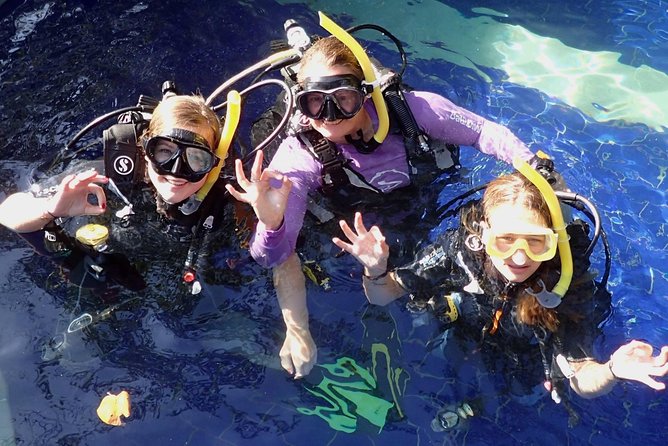
Day 1 happens in Sanur with a pool session (called confined water dives in the course outline). This is the part that makes everything easier later, because it’s where you handle the basics in a controlled setting before you have to think about currents, open-water depth, and a wider range of conditions.
Here’s the value of doing it this way: the course is the first certification level, and it’s meant to teach you the core ideas and principles of scuba—both theory and practice. The theory is handled online through PADI e-learning and reviewed with your instructor. Then the pool session is where that theory gets turned into muscle memory.
I’d expect your instructor to be strict about fundamentals, because the academy repeatedly emphasizes safety procedures and proper equipment standards. In reviews tied to this academy, instructors like Astama are described as patient and professional, and that kind of teaching style is exactly what you want on Day 1. If you get nervous, the pool is where you can settle your breathing and focus on comfort with gear—before you’re out where there’s less room for mistakes.
Day 2 in Sanur Bay: two open-water sessions with real coaching
Day 2 is where you switch from “learning” to “doing.” You’ll do two open-water sessions in Sanur Bay, still with a certified PADI instructor leading you.
Sanur Bay is a smart choice for an Open Water course because it keeps the overall experience grounded in practical learning. You’re not jumping straight into the most complicated conditions. Instead, you’re building familiarity with what it feels like to move underwater with full equipment, guided by someone who knows the local environment.
This is also the day you’ll benefit most from small-group training. When a group is limited (max 6), the instructor can watch closely and spot issues early. That matches the academy’s promise: guided by certified professionals who are familiar with reefs and habitats, not just teaching from a checklist.
From a value angle, Day 2 is doing heavy lifting for your money. You’re spending a full day moving from pool basics into open-water application, and that’s what turns a certification course into a skill you can reuse later.
Day 3 in Padang Bai or Tulamben: USS Liberty and real-world navigation
Day 3 is where the course gets memorable. Depending on day-of conditions, you’ll do two open-water sessions in either Padang Bai or Tulamben.
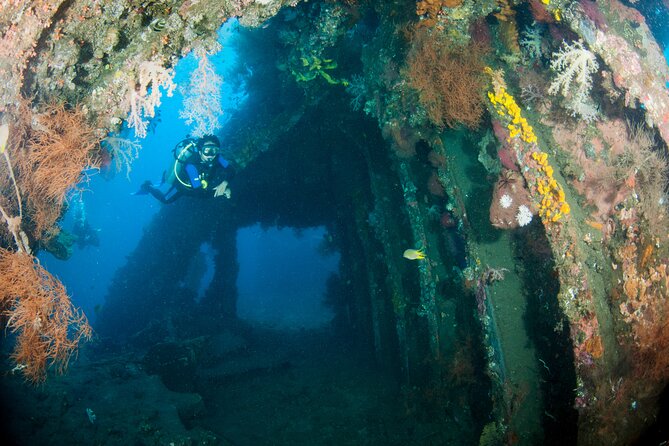
What makes this day special is the included stop at the USS Liberty Shipwreck. The USS Liberty is the kind of landmark that makes training feel less abstract. Even if you’re still learning your control underwater, a wreck gives the experience a clear structure—something you can orient around and understand as part of the dive environment.
Tulamben and Padang Bai also give you a different feel than Sanur. By the time you reach Day 3, you’ve already done Day 1 fundamentals in the pool and Day 2 open-water sessions in Sanur Bay. That means you should be less focused on gear panic and more focused on technique and comfort.
One practical consideration: since the course mentions that Day 3 changes by conditions, don’t build your day around one exact site in your plans. If you’re the type who needs everything locked, you may feel a little less in control. But from a learning standpoint, flexibility is often a benefit—better conditions can mean a smoother training day.
Nusa Penida on Day 3
The course also notes that scuba training in Nusa Penida is possible on Day 3 for price options. The key point for your planning is that it’s not guaranteed in the standard flow. If you want Penida, you’ll need to choose it as an option and confirm what that means for timing and the overall schedule.

Safety and teaching style: what “100% safety” really means here
The academy’s messaging is clear about safety: they highlight a 100% safety track record, certified insured instructors, and professional guidance throughout. They also stress that instructors are familiar with local reefs and habitats—important because first-level certification students don’t just need instruction; they need someone who can read the water and adapt.
In the reviews tied to this academy, a few details show up repeatedly that matter more than marketing language:
- Equipment is described as new and up to code.
- Instructors are described as professional and patient, especially for first-time students.
- Training is described as following PADI courses properly, with records kept.
Names you may recognize from course experiences include Astama (linked with smooth training and safety), Benny Wiratno Bunadji (praised for being easygoing while still professional, with very good English), and other team members referenced as friendly and helpful.
For you, the practical takeaway is this: when the teaching feels calm, you learn faster. And when the gear and procedures are handled confidently, you spend less energy worrying and more energy practicing.
What $480 buys you (and how to judge the value)
At $480 per person for an about-3-day course, you’re paying for far more than “getting in the water.” Included are:
- Lunch
- Use of scuba equipment
- Hotel pickup and drop-off
- PADI manual and certification
- A PADI certified instructor
That’s a meaningful bundle. Equipment rentals can add up fast if you’re piecing together a course through multiple vendors. The pickup/drop-off also matters in Bali, where travel time can quietly eat your morning.
There’s also mention of group discounts and a mobile ticket, which can reduce hassle once you arrive. And since the group max is 6, you’re not paying for a crowd-management situation.
What’s not included is simple: a camera (rental available). If you want underwater photos, plan for that extra cost.
Overall, if you’re comparing alternatives, use this filter:
- Are you getting the full structured 3-day PADI Open Water format?
- Are equipment, manual, instructor guidance, and transfers included?
- Is the class size capped so you get hands-on attention?
Based on what’s included here, this price looks like it’s built to cover the essentials and keep the learning focused.
Where the itinerary can feel tight (and how to plan around it)
A 3-day certification course is intense by nature, even when it’s done well. The schedule is built around:
- Day 1 pool work in Sanur
- Day 2 two open-water sessions in Sanur Bay
- Day 3 two open-water sessions in Padang Bai or Tulamben (with USS Liberty as a named highlight)
- Theory online through PADI e-learning, either before or during the course
So the main “timing” consideration isn’t the physical exertion as much as mental prep. You’ll want to complete the online theory before the schedule gets busy, if you can. If not, you should assume you’ll need time during the 3 days to work through it with instructor review.
Also consider the physical side. The booking info says travelers should have moderate physical fitness. That doesn’t mean “athlete only,” but it does mean you should be comfortable with the basic movement involved in gear setup and staying steady in the water for training sessions.
If you’re someone who gets anxious in new sports, bring that up early. A good instructor (the kind the academy is associated with in multiple accounts) can adapt your pacing and keep the learning calm.
Who this course is best for
This is a strong fit for you if:
- You want the PADI Open Water certification (recognized worldwide) and a clear path to reaching depths up to 18 meters (as the course states).
- You’d rather learn with an instructor who is actively coaching rather than just supervising.
- You want the experience to include a major underwater landmark like the USS Liberty shipwreck.
- You like structure: pool first, then Sanur Bay open-water sessions, then east-coast options on Day 3.
It may be less ideal if:
- You absolutely need one fixed Day 3 location with no weather-based changes.
- You’re trying to “fit this around everything else” with little buffer time for theory and travel.
Should you book it?
If your priority is a well-run first certification in Bali with small-group attention, this is easy to recommend. The mix of online theory + Day 1 pool training + Day 2 open-water sessions in Sanur Bay + Day 3 open water in Padang Bai or Tulamben (including USS Liberty) is a smart learning arc. Add in the academy’s safety emphasis and the repeated praise for instructors like Astama and Benny Wiratno Bunadji, and you’ve got a course that seems designed to reduce stress while still teaching the real skills you’ll need afterward.
Book this if you’re ready to commit to the 3-day rhythm and you can handle the moderate physical fitness requirement. If you’re flexible about Day 3 site changes, you’ll likely enjoy the experience more because you’ll be able to follow the plan that best matches the conditions.
FAQ
How long is the course?
The PADI Open Water Course runs for 3 days (approx.).
Where does the course start and what time do you meet?
You meet at Diving in Bali – Bali Diving Academy in Sanur at 9:00 am. The activity ends back at the meeting point.
Is theory included, and can I do it before I arrive?
Yes. Theory is done online using the PADI e-learning platform, and it’s reviewed with your instructor. You can do it before the course starts or during the 3 days.
What happens on Day 1?
Day 1 is a pool session in Sanur (confined water training).
What happens on Day 2?
Day 2 includes 2 open-water sessions in Sanur Bay.
Where do the open-water sessions happen on Day 3?
Day 3 includes 2 open-water sessions in Padang Bai or Tulamben, depending on the conditions.
Is the USS Liberty Shipwreck included?
Yes. The itinerary includes the USS Liberty Shipwreck as a stop.
What’s included in the price, and what’s not?
Included: lunch, use of scuba equipment, hotel pickup and drop-off, PADI manual and certification, and a PADI certified instructor. Not included: camera (can be rented).