Kuta Beach makes your first wave feel manageable, and that is the whole point here: Galaxy Surf Bali runs lessons from a spot they call the safest learning area. I like the beginner setup in shallow water for people who are not strong swimmers, and I also like that you get free photos and videos each session so you can actually remember what you did. One possible consideration: the intermediate class goes to the lineup, so if you get stressed out when things get farther from shore, you may want to start with the beginner option first.
The session runs about 90 minutes, and it is designed to be practical, not just fun-on-the-water for show. You meet at Galaxy Surf Bali on Jl. Pantai Kuta in Kuta, then you surf and return back to the meeting point when the lesson ends.
If you end up working with coach Sardo, expect very focused, encouraging instruction. People describe him as attentive and good at getting first-timers standing up fast, and that kind of coaching matters when your arms and board suddenly feel like they have a mind of their own.
In This Review
- Key highlights you will feel on the water
- Why Kuta Beach works for learning surfing
- Beginner surf lesson: shallow water, foam waves, and real basics
- Intermediate lesson: lineup etiquette and catching green waves
- Photos and videos: why this matters more than you think
- Price and value: $18.24 for 90 minutes plus media
- How the session runs on the beach (and what the meeting point means)
- Weather, cancellations, and the reality of learning surf
- Who should book Galaxy Surf Bali
- Should you book this Kuta surf lesson?
- FAQ
- Where is Galaxy Surf Bali located?
- How long is the surfing lesson?
- What does the price include?
- Is the beginner lesson suitable for non swimmers?
- What is different about the intermediate lesson?
- What ages can join the beginner surf lesson?
- Is this a private tour or shared with others?
- What happens if the weather is poor?
- What is the cancellation policy?
Key highlights you will feel on the water
- Shallow-water beginner coaching with non swimmers allowed, using foam waves to learn balance and timing
- Intermediate lineup practice focused on paddling, etiquette, passing breaking waves, and catching green waves
- Certified surf life-saving instructors with safety-first ocean knowledge built into the lesson
- Free photos and videos after your session so you can study your own form
- Private group experience so your lesson stays centered on your pace
- Age range from 4 to 60 for beginner lessons, which makes it unusually flexible
Why Kuta Beach works for learning surfing
Kuta has a big, well-known surf scene, but what matters for you is where you start. Galaxy Surf Bali positions its beginner learning area at Kuta Beach, described as the safest place to learn. That focus on safety is not marketing fluff here. It ties directly into how the lesson is structured: beginners stay shallow and learn how to read the water before they chase the bigger stuff.
This also means the experience feels more like training than “figure it out in the ocean.” You get ocean knowledge and safety guidance as part of the beginner lesson, then you move into the physical skills—standing, paddling, and catching—while the water conditions are more forgiving. If you have ever watched someone learn on a beach with strong currents or rough entry, you already know why starting in the right spot changes everything.
And since the location is at Jl. Pantai Kuta, you are not doing a half-day logistics puzzle just to get wet. You can focus on the lesson.
You can also read our reviews of more tours and experiences in Kuta.


Beginner surf lesson: shallow water, foam waves, and real basics
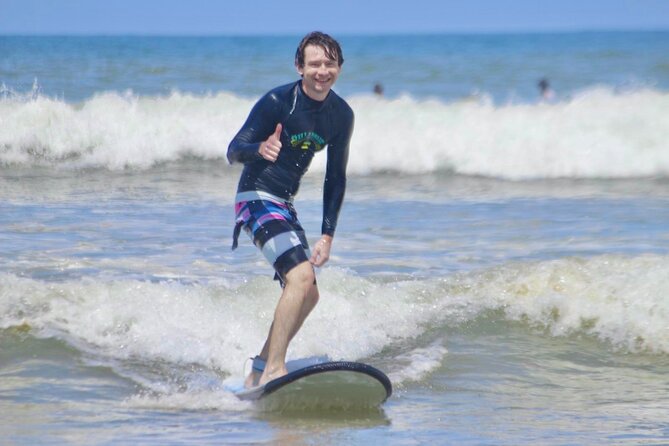
The beginner lesson is the one to pick if you want the full foundation without feeling rushed. It is open to everyone, including non swimmers, with an age range from 4 to 60 years old. In a sport where the first lesson can be nerve-heavy, this matters because it gives you permission to learn without needing prior swimming strength.
This beginner session runs about 90 minutes and typically follows a straightforward progression:
1) Ocean knowledge and safety
You get taught the basics of how the ocean works for surfers, plus safety rules that keep you out of trouble before you even touch the “move fast and catch waves” part. That is huge if you’re new, because it reduces panic. Panic wastes energy. And energy is what you need for paddling and standing.
2) Board fundamentals: standing up
You learn how to stand on the board. For first-timers, the hard part is not only the balance—it is also the timing between paddle, pop-up, and wave shape.
3) Paddling and catching foam waves
Instead of starting with high-stakes wave setups, you practice with foam waves in shallow water. Foam waves are ideal for learning the rhythm of paddling toward the wave, getting the board oriented, and then catching the wave at a moment you can actually manage.
4) Putting it together: ride attempts with coaching
The lesson is built so you are not just doing drills in isolation. You repeatedly try to stand and ride. That’s where good coaching shows. The instructor’s job is to correct your body position and help you understand what to do next time.
What you will likely notice: shallow-water learning tends to feel less intimidating, but you still get plenty of time to try. This is how you build muscle memory instead of collecting a few shaky moments and calling it progress.
Intermediate lesson: lineup etiquette and catching green waves
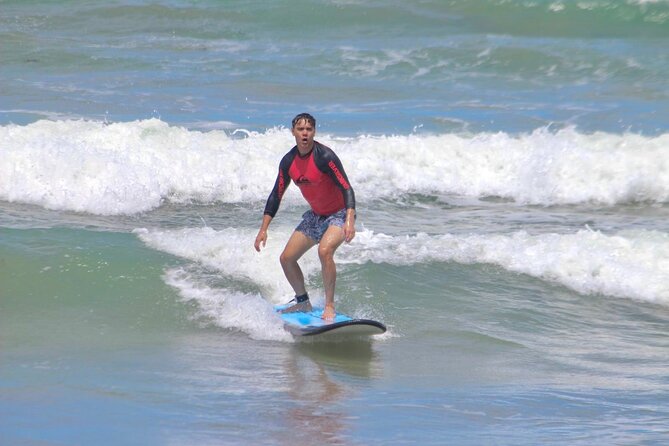
The intermediate option is for you if you can already paddle, pop up, and feel like you understand what happens when waves approach. This session takes you out to the line up and focuses on catching green waves—the kind that require more positioning, paddling control, and wave-reading than beginner foam-wave work.
Just as important as the wave type is the skill list. The intermediate lesson covers:
- Surfing etiquette
If you have ever been unsure about where you should be so you do not interfere with other surfers, this is where that gets taught. It keeps you safe and also helps you understand the flow of the lineup.
- Paddling technique
You work on paddling with purpose, not just paddling to keep busy. In the lineup, technique affects how quickly you get into position and how well you stay stable.
- Passing breaking waves
Passing breaking sections is part of the real surf experience, and it is often the moment where confidence drops. The lesson teaches how to get through those areas efficiently.
- Positioning in the lineup
You learn where you should be relative to waves so you are not constantly late. This is one of the biggest differences between beginner “catch whatever comes” surfing and intermediate surfing where you choose your wave.
- Riding properly, turning, and carving
The intermediate session includes riding skills plus turning and carving turns. That is what changes surfing from straight-line attempts into something more controlled and dynamic.
This course is also a good fit if you want to progress during your Bali trip without cobbling together private coaching plus multiple board rentals. It is built as a single focused session that aims at “what you do next” in your progression.
Photos and videos: why this matters more than you think
A surf lesson can be fun and still leave you confused. Did I angle my board right? Where was my weight? When I stood up, did I turn too early or too late? Without reference, you tend to remember mostly the emotions, not the mechanics.
Galaxy Surf Bali includes free photos and videos at each session while you’re riding. That is a big value add, because it turns the lesson into something you can review.
Here is how you benefit from that, even if you are brand new:
- You can compare your attempts across the session and spot patterns.
- You can show a friend what you did (and get less generic “that’s cool” reactions).
- If you later rent a board to keep practicing, you will have a clearer idea of what to repeat.
A nice bonus from the way the coaching is described: working with coach Sardo has been linked to students gaining confidence by the end of their holiday, including going on to surf Kuta Beach with more control. That matches what good coaching plus visual feedback can do—your improvement accelerates when you can see yourself.
Price and value: $18.24 for 90 minutes plus media
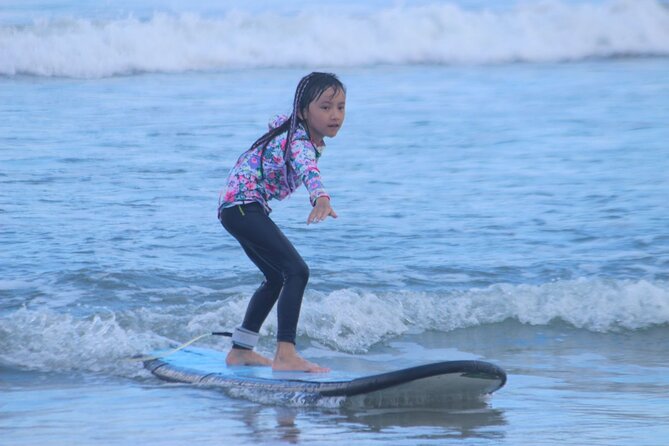
At $18.24 per person for roughly 90 minutes, this is the kind of price that can feel like a bargain in a place where lessons can easily cost far more, especially when you add the cost of “extras.”
The value here comes from three things working together:
- You get a full lesson length for learning basics (or lineup skills).
- You get safety and ocean knowledge taught as part of the session, not tacked on at the end.
- You get free photos and videos, which many surf experiences treat as an add-on.
The fact that it is described as a private tour/activity also matters for value. Even if you are not expecting a tiny one-person lesson, private setups generally help keep the session centered on your group instead of turning it into a conveyor belt. In practical terms, that can mean more useful time with your instructor.
And mobile ticket convenience is the type of detail you appreciate on vacation. Less time worrying about paperwork usually means more time paying attention to the lesson.





How the session runs on the beach (and what the meeting point means)
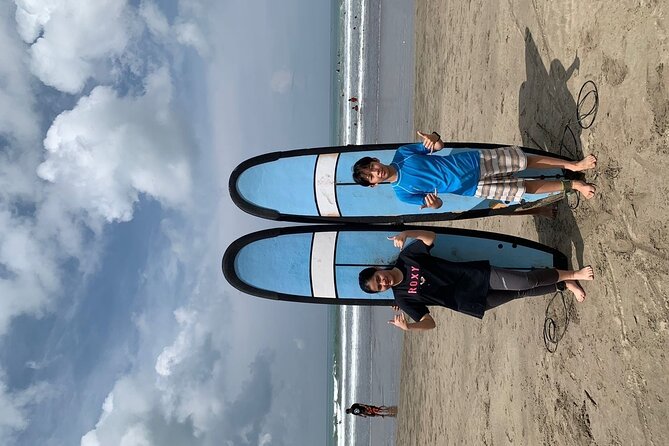
You meet at Galaxy Surf Bali, Jl. Pantai Kuta, Kuta, Kec. Kuta, Kabupaten Badung, Bali 80361, Indonesia. The activity ends back at the meeting point, so you are not dealing with a long wandering route or complicated drop-off logistics.
The lesson itself is the main event, and it is structured around skill goals:
- Beginner: shallow-water coaching, foam waves, standing up, paddling, and catching waves.
- Intermediate: lineup training, etiquette, passing breaking waves, positioning, riding, plus turning and carving.
Because the session is about 90 minutes, you should treat it like a focused block. If you arrive late or distracted, you lose learning time. If you arrive calm, you can absorb the safety stuff, then your body can follow the instruction without feeling like it’s catching up.
Weather, cancellations, and the reality of learning surf
Surf lessons live on one thing you cannot control: weather. This experience is listed as requiring good weather. If conditions are poor and the session is canceled due to weather, you are offered a different date or a full refund.
That policy is worth noting because it aligns with what you care about: you want the right conditions for learning, and you don’t want to show up to get a watered-down lesson.
It is also described as free cancellation, with a window that allows you to cancel up to 24 hours in advance for a full refund. If your Bali schedule is still flexible, that makes planning easier.
Who should book Galaxy Surf Bali
This lesson makes sense for several kinds of travelers:
- True beginners who want structured basics and shallow-water practice, including people who are non swimmers.
- Intermediates who already have paddling and wave-catching basics and want lineup skills plus turning and carving.
- Families and mixed-age groups: the beginner program is for ages 4 to 60.
- People who value visual proof: the free photos and videos are a strong reason to book rather than DIY learning.
It is also described as a private activity, so your group stays together. Service animals are allowed, and the area is near public transportation, which can help if you are moving around Kuta.
If you hate the idea of going farther out or you get anxious when conditions feel more intense, consider starting with the beginner lesson. The intermediate option is built around lineup responsibility and more complex wave navigation.
Should you book this Kuta surf lesson?
Book it if you want structured coaching in a beginner-friendly setup, plus the bonus of free photos and videos. At this price point, it is hard to beat for a 90-minute session that covers more than just “try to stand.”
Pick beginner if you need safety-first guidance, want foam-wave practice, or you are learning as a non swimmer. Pick intermediate if you already feel comfortable with the basics and you are ready for lineup etiquette, passing breaking waves, and catching green waves with turning and carving.
If weather is your weak spot in Bali, keep your schedule flexible. The lesson depends on good surf conditions, and the refund or reschedule approach helps you stay in control.
FAQ
Where is Galaxy Surf Bali located?
The meeting point is Galaxy Surf Bali on Jl. Pantai Kuta, Kuta, Bali 80361, Indonesia.
How long is the surfing lesson?
Both the beginner and intermediate lessons run for about 90 minutes.
What does the price include?
The price is listed as $18.24 per person, and each session includes free photos and videos of you while you ride.
Is the beginner lesson suitable for non swimmers?
Yes. The beginner surf lesson allows non swimmers to join, and it teaches you in shallow water using foam waves.
What is different about the intermediate lesson?
The intermediate lesson takes you out to the line up to catch green waves, and it focuses on paddling technique, passing breaking waves, lineup positioning, etiquette, and riding skills like turning and carving.
What ages can join the beginner surf lesson?
Beginner lessons are listed for ages 4 to 60.
Is this a private tour or shared with others?
It is described as a private tour/activity, meaning only your group will participate.
What happens if the weather is poor?
The experience requires good weather. If it is canceled due to poor weather, you will be offered a different date or a full refund.
What is the cancellation policy?
Free cancellation is available up to 24 hours in advance for a full refund. If you cancel less than 24 hours before the start time, the amount paid is not refunded. Cut-off times use local time.