Two hours can change how you ride a board. In Kuta, you get a beginner-friendly lesson built around real coaching, small numbers, and included gear, plus round-trip hotel pickup that keeps the whole day easy. I like the focused 5:1 instructor ratio and the way the session starts with basics on sand before anyone throws you into the surf. One thing to keep in mind: the course depends on good weather, so if conditions are off, you may need to switch dates.
This is the kind of activity that works even if you have never stood up on a surfboard. You’ll do a short theory block, practice the motion on land, then get pushed into your first waves with hands-on guidance. With a maximum five people per class, you’re not just watching other people learn.
In This Review
- Key things to know before you go
- How the 2-hour beginner lesson actually works
- Small group attention: why 5:1 matters for first-timers
- Hotel pickup across the Badung and Denpasar area
- Gear, comfort, and little extras that save you hassle
- Where you surf: sand basics, then a real push into the waves
- Price and value: what $28 buys you (and what to watch)
- What to bring (and how to avoid a last-minute mess)
- Getting the most out of your first waves
- Should you book this beginner surf course?
- FAQ
- What is the duration of the beginner surfing course?
- Where does pickup and drop-off happen?
- What time does the lesson start?
- How big is the class?
- What surfing gear is included?
- Do I need to bring a swimsuit?
- Is food included?
- Is there a theory lesson before going into the water?
- What facilities are available after the lesson?
- What if the weather is bad?
Key things to know before you go
- Small group = more turns. Max five people in a class, with a regular 5:1 student-to-instructor/assistant ratio.
- Gear is truly handled. Surfboard, leg rope, surf helmet, and reef booties during reef trips are included.
- You start with theory, then sand drills. About 15 minutes of classroom basics before you practice popping up.
- Hotel pickup is included in key areas. Around Badung and Denpasar, including Legian, Seminyak, Canggu, Kuta, Uluwatu, Nusa Dua, and more.
- Comfort after the lesson is part of the deal. Showers with soap and shampoo, towels, lockers, and private changing rooms.
- It is not a food tour. You get water and fruit, but no meal is included.
How the 2-hour beginner lesson actually works
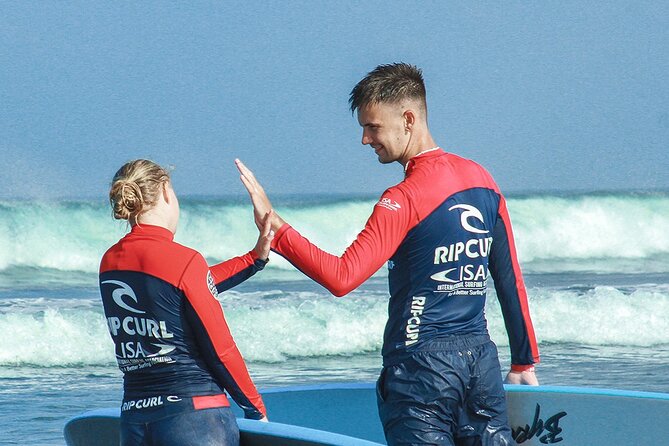
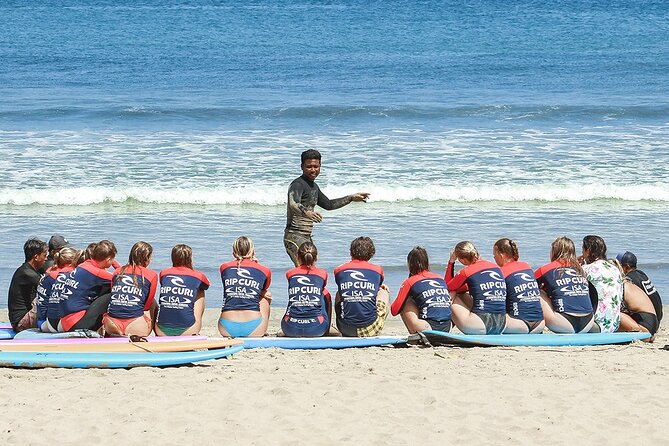
The session starts with a quick theory lesson in the classroom, about 15 minutes. You’ll learn the basics of controlling your board on the sand, then practice key movements like jumping on and getting stable.
After that warm-up, you move into the water. Your instructor helps you get your first waves by physically pushing you into them, which is a big deal for true beginners who would otherwise spend the whole time panicking or paddling without getting any good attempts.
The whole point is simple: get your body used to the surf rhythm fast. Theory explains what to do, the sand teaches you how it feels, and the water is where you get repeated chances with coaching.
You can also read our reviews of more tours and experiences in Kuta.


Small group attention: why 5:1 matters for first-timers
Beginner surfing can feel like a lot at once: reading waves, paddling, timing, then standing without falling. When the group is tiny, your instructor can correct your stance and timing in the moments that actually matter.
I also like the human side of this school from the instructor feedback I saw. People specifically mentioned coaches like Budi as patient and calm, and also praised Rey and Namang for being helpful and positive. That matters because confidence is part of learning, not just technique.
With small numbers, you’re more likely to get quick adjustments, not broad advice that fits nobody exactly. If you’re hoping to progress during a short stay, this format makes that more realistic.
Hotel pickup across the Badung and Denpasar area
The best value here is how little you have to plan. Pickup and drop-off are included from hotels in the listed areas around Badung and Denpasar, which covers a lot of the common Bali base zones (Legian, Seminyak, Oberoi, Canggu, Kuta, Jimbaran, Uluwatu, Nusa Dua, and Sanur).
In practice, that means you can book a start time that fits your morning and then let the transfer handle the logistics. You’ll be confirmed after booking, and the lesson schedule is set one day in advance.
There’s also a clear emphasis on communication and arriving without stress. One review noted WhatsApp contact and a driver who picked them up on time, which is exactly what you want when your morning depends on being ready to suit up quickly.
Gear, comfort, and little extras that save you hassle
You don’t show up and then scramble for rentals. The course includes all-inclusive surfing gear and materials, including a surfboard and leg rope, plus a surf helmet. Reef booties are provided during reef trips, which is important because Bali’s surf can be rough on bare feet.
They also supply a Rip Curl School of Surf rash guard and leggings. That’s not just branding. It helps with comfort in the sun and keeps your skin protected during time in and out of the water.
After surfing, you get shower facilities with fresh water, soap, and shampoo, along with a towel. There are private changing rooms and lockers, so you can change without doing the awkward airport-bag-in-the-corner routine.
On top of that, you get sealed drinking water throughout the course and fresh fruit at the end. One person even mentioned getting watermelon after the lesson, which fits the pattern of small post-surf refuel moments.
Finally, there’s a student study book included during the course, with downloadable soft copies available on the website. That’s useful if you want to remember key cues after your legs stop cooperating.
Where you surf: sand basics, then a real push into the waves
The session is structured to make the learning curve kinder. You’ll first practice controlling the board on sand, including getting used to how it sits under you and how to move your feet.
Then you go into the water, and the instructor pushes you into your first waves. That technique helps you skip the hardest beginner problem: paddling hard at the wrong time and never catching anything.
Depending on conditions, you might surf in areas that require extra protection. Reef trips can include reef booties, so it is worth paying attention to your instructor’s guidance about where you are going and what the water is like.
If you’re new, this setup is especially good. It keeps the focus on getting enough good attempts to build momentum, instead of spending the whole session stuck at the start line.





Price and value: what $28 buys you (and what to watch)
At around $28 for about 2 hours, the headline price is easy to like. What makes it feel fair is that so much is included that beginner surfers usually end up paying for separately: hotel pickup and transfer, a structured 5:1 ratio, surf equipment, shower facilities, towels, and even insurance.
The insurance piece is not a small add-on. The course includes one million USD liability insurance, which helps you feel safer about doing an activity where mistakes happen even when you try your best.
Also, the school provides more than just boards. You get a rash guard and leggings, plus zinc (listed as imported zinc) and sealed water. Those details reduce the friction of being a first-timer.
Now, one reality check: if you care about lesson photos, ask early about costs. Some people felt the picture package felt expensive compared with other schools, especially when they did not expect that extra expense. The course itself is the value, but photo add-ons can change how the final number feels.
What to bring (and how to avoid a last-minute mess)
Good news: you do not need to bring a surfboard or rentals. The course takes care of the gear and safety items.
You do need to bring your swimsuit, meaning a bikini or boardshort. Bring it already packed or worn under your clothes so you can change quickly at the school. You’ll also be provided towels and showers, so you do not need to bring your own towel.
If you’re thinking about sun protection, the course includes imported zinc, and you may notice instructors apply strong face cream or similar products. Still, if your skin is sensitive, consider what you personally need for Bali sun so you can start comfortable.
One more practical note: the lesson is for moderate physical fitness. That does not mean you need to be an athlete, but you should be able to paddle, hop, and stay active for the session.
Getting the most out of your first waves
Your biggest win will come from how you treat the lesson like practice, not performance. Listen for cues about stance and timing, then repeat the same action until it feels automatic.
In a small group, your instructor can correct you quickly. So if you feel confused, ask right away. Beginners often wait, then lose the chance to fix the biggest mistake that day.
Another practical move: mentally separate sand from water. Sand drills teach you how the board feels and how your feet should land. When you hit the water, your job is to translate that muscle memory to the wave moment.
Also, be ready for the fact that conditions can change. If the instructor adjusts where you go or what technique you use, follow along. Getting good at surfing is partly learning how to respond to the sea, not forcing the same plan every time.
Should you book this beginner surf course?
If you want a short, structured surf lesson without doing logistics math, I think this is a strong pick. The combination of small group size, hotel pickup in common Bali areas, all-inclusive gear, and real coaching in the water makes it easier to progress than the typical big-group setup.
Book it if:
- You are a first-timer and want patient instruction.
- You’d rather spend your energy learning than tracking rentals and transport.
- You like having clear structure: theory, sand basics, then waves.
Skip it or choose carefully if:
- You are very sensitive to the final cost once you add extras like photo packages.
- Your schedule is tight enough that a weather-based change could cause trouble.
Bottom line: for a beginner in Bali, this kind of setup is exactly what you want. Show up in your swimsuit, trust the sand drills, and take the push into the waves as the start of your real surf learning curve.
FAQ
What is the duration of the beginner surfing course?
The course is about 2 hours.
Where does pickup and drop-off happen?
Pickup and transfer back to the hotel are included for areas such as Legian, Seminyak, Oberoi, Canggu, Kuta, Jimbaran, Uluwatu, Nusa Dua, and Sanur. Transport outside the coverage area is not included.
What time does the lesson start?
You can choose from four convenient start times. One listed start time is 8:00 am.
How big is the class?
The class size is max five people, and the course runs on a regular 5:1 student-to-instructor/assistant ratio.
What surfing gear is included?
Included gear covers a surf board and leg rope, plus a surf helmet. Reef booties are provided during reef trips.
Do I need to bring a swimsuit?
Yes. You bring your swimsuit (bikini or boardshort). Everything else is provided.
Is food included?
No. Food is not included, but you do get sealed drinking water during the course and fresh fruit at the end.
Is there a theory lesson before going into the water?
Yes. You start with about 15 minutes of theory in a classroom, then you practice basic control on the sand before entering the water.
What facilities are available after the lesson?
You get shower facilities with fresh water, soap, and shampoo, plus a towel. There are private changing rooms and lockers.
What if the weather is bad?
This experience requires good weather. If it is canceled due to poor weather, you’ll be offered a different date or a full refund. Cancellation is free up to 24 hours in advance for a full refund.