Toraja funerals aren’t background noise; they’re the main lesson. This private 4-day trip pairs Tongkonan houses with clifftop graves, guided by an English-speaker and backed up by hotel and meals so you can focus on the culture. One thing to weigh: the schedule is time-heavy, including an 8–9 hour drive each way, so bring patience and good shoes.
I especially like how the stops are chosen for meaning, not just photos: Lemo’s stone grave and its Tau-Tau statues, then the royal tombs at Suaya. I also like that you get a proper base in Rantepao for 3 nights at a 4-star hotel, with meals and entrance fees handled. If you want a laid-back pace, this tour might feel intense.
In This Review
- Key Things You’ll Notice on This Toraja Tour
- Toraja Funerals: Why This Tour Feels Real
- A private guide changes the tone
- One reality check
- Day 1: The Long Ride Out of Makassar and Into Toraja
- Stops that break up the driving day
- Arriving in Rantepao and settling in
- Day 2: Lemo, Suaya, and Kete Kesu’s Tongkonan Houses
- Lemo: stone graves and the Tau-Tau sculptures
- Suaya: royal tombs of Sangalla
- Tampang Allo and a real lunch break
- Kete Kesu village: where Tongkonan houses do the talking
- Rantepao time for shopping and regrouping
- Day 3: Pallawa Steps, Batutumonga Views, and Bori’s Tree-Side Tombs
- Pallawa and the hike toward Lempo
- Batutumonga: lunch with a view
- Bori village: megalithic and baby tombs on trees
- Back to the hotel for dinner and downtime
- Day 4: Returning to Makassar with One More Mountain Stop
- Price and Value: Is $712 Fair for This Much Logistics?
- What to Expect Day-to-Day: Timing, Pace, and Comfort
- Funeral Traditions and Cultural Respect: How to Get It Right
- The Group Fit: Who Should Book This?
- Should You Book This Toraja Cultural Tour?
- FAQ
- Where is pickup, and what time does it start?
- How long is the drive from Makassar to Tana Toraja?
- Is accommodation included?
- Are meals included?
- Are entrance fees included?
- Do I need to pay for Rammang Rammang?
- Is this tour private?
- What language is the guide?
- What about tipping?
Key Things You’ll Notice on This Toraja Tour
- Tongkonan houses at Kete Kesu: toraja architecture you can actually understand, not just glance at
- Clifftop graves and Tau-Tau: stone burial sites with sculpted figures that carry symbolism
- Royal tombs at Suaya (Sangalla): a different scale and tone than common graves
- Tree-side baby tombs at Bori: a detail many people miss, but it tells a big story
- English-speaking guide with context: meaning behind symbols, rituals, and local belief
Toraja Funerals: Why This Tour Feels Real
Toraja culture hits different because it’s not staged for tourists. The whole region is built around how people remember the dead, and how the living keep those bonds strong. On this tour, funerary traditions aren’t a one-hour lecture. You see stone graves, carved figures, village architecture, and tomb styles that reflect beliefs passed down over generations.
I like that the tour treats these sites with care. You’re not bouncing from stop to stop like it’s a checklist. Instead, the day’s route is arranged around understanding: the grave at Lemo, then royal tombs at Suaya, then village life and Tongkonan houses at Kete Kesu, and later the more unusual burial forms around Pallawa, Lempo, and Bori.
You can also read our reviews of more tours and experiences in Makassar.
A private guide changes the tone
This is a private tour, meaning your group follows the plan at your pace and with your guide’s attention. That matters on a subject like funerary culture, where questions come up fast—about symbols, purpose, and why certain places look the way they do. You’ll also benefit from having parking and transport managed for you, especially on longer routes between Makassar and North Toraja.
One reality check
The trip is efficient, but it’s not short-distance touring. You’ll spend serious hours on the road (about 8–9 hours to reach Tana Toraja and similar timing back). If you hate long rides, you’ll feel it. If you can handle a long day, the payoff is that you actually cover the key sites.
Day 1: The Long Ride Out of Makassar and Into Toraja
You start early—pickup at 8:00 AM from your hotel/port/airport in the Makassar City area. Then comes the main event: an 8–9 hour drive to Tana Toraja. The route passes through urban districts, then opens up into views of rice fields and fish pools, plus traditional Bugisnese-style houses built on poles. It’s the kind of journey that sets expectations for the rest of the trip: Toraja isn’t just a destination. It’s a slow shift into a different way of life.
Stops that break up the driving day
The drive isn’t nonstop. You’ll pause for:
- A lunch stop at Pare-Pare, plus a photo stop at Ainun Habibie True Love Monument
- A coffee break in the mountains of Bambapuang, known for The Erotic Mountain (included)
These stops may seem “small” compared to tomb sites, but they matter. They help you stay alert, and they turn the day into a smoother transition rather than a punishment of hours in a van.
Arriving in Rantepao and settling in
In the afternoon or evening, you reach Rantepao, the capital of North Toraja. You check in at your hotel, then you eat dinner at a local restaurant and you get some free time. That balance is smart. You’ll have a heavy cultural day next, so a chance to rest and recalibrate helps a lot.
Day 2: Lemo, Suaya, and Kete Kesu’s Tongkonan Houses
Day 2 is the day of the “wow, so that’s what it looks like” moments. The big reason: you go from grave sites with sculpted figures to royal tombs, then into an ancient village where the architecture is part of the belief system.
Lemo: stone graves and the Tau-Tau sculptures
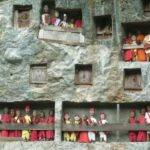
After breakfast, you visit LEMO, a noblemen stone grave on a cliff with Tau-Tau sculptures displayed. These figures aren’t random decorations. They’re part of how the Toraja remember and honor the deceased. You’re standing in a setting that’s dramatic by design, and the guide’s explanations help you see the site beyond the wow factor.
Practical note: clifftop areas mean you should watch your footing. Bring shoes with grip. Even if the route is organized, you’re still moving around outdoor heritage spaces.
Suaya: royal tombs of Sangalla
Next is Suaya, where you’ll see the Royal Tomb of Sangalla. Royal tombs tend to carry a different weight than common graves, and this stop gives you a sense of social structure—who gets certain kinds of burial treatment and what those places communicate.
Tampang Allo and a real lunch break
You also stop at Tampang Allo and have lunch at a local restaurant. This is a good place to refuel, especially since the day is busy and the next highlight is a UNESCO-listed village.
Kete Kesu village: where Tongkonan houses do the talking
After lunch, the tour reaches Kete Kesu Village, recognized for cultural heritage and supported by UNESCO. Here, you see typical Toraja houses called Tongkonan. This is where the tour earns its keep: architecture, burial practices, and village identity all connect.
In plain terms: Tongkonan houses aren’t just buildings. They help define community and status, and they fit into the same worldview that shapes funerary rituals. Seeing them after visiting tomb sites makes the day feel coherent instead of like separate sightseeing stops.
Rantepao time for shopping and regrouping
Later you return toward Rantepao for shopping at a gallery and dinner again at a local restaurant. You’ll also have free time. I like this because it gives you a buffer. If you want a small souvenir or just a quiet hour before dinner, this is when you can do it.
Day 3: Pallawa Steps, Batutumonga Views, and Bori’s Tree-Side Tombs
Day 3 shifts from “major cliff graves” to a more textured mix of village routes, viewpoints, and unusual burial styles.
Pallawa and the hike toward Lempo
You start with the village of Pallawa. The route includes driving up to DERI Village, then hiking to LEMPo. That hike is the main physical moment of the day, and it’s also where the culture feels more local—less monumental, more lived-in.
Wear the same kind of shoes you’d use for uneven paths. You don’t need mountaineering gear, but Toraja terrain can be slippery or muddy depending on weather.
Batutumonga: lunch with a view
You’ll have lunch at Batutumonga Resto. Then you continue on. This kind of stop works well mid-day because it resets your attention: you’re not only moving from one heritage site to another; you get a break with a different angle on the region.
Bori village: megalithic and baby tombs on trees
After lunch, you head to Bori Village, known for megalithic elements and baby tombs on the tree. This is one of those details that makes the tour feel special. The burial approach isn’t uniform, and the variations tell you the Toraja belief system is nuanced and deeply tied to family and life stages.
Even if funerals are your main topic, this kind of stop reminds you Toraja culture doesn’t treat death as an abstract concept. It’s personal, and it’s specific.
Back to the hotel for dinner and downtime
You return to your hotel for dinner at a local restaurant and then you get free time. By day 3, that downtime matters. Your brain will be full of symbols, names, and burial types. A quiet evening keeps the experience from feeling like information overload.
Day 4: Returning to Makassar with One More Mountain Stop
On your final morning, you eat breakfast at the hotel and then head back to Makassar with the same general route. You’ll stop again for coffee at Bambapuang Cafe and have lunch in Pare-Pare.
Finally, you’re transferred to Sultan Hasanuddin Airport. This timing is important because flights can be tough to coordinate when you’re tired. The tour recommends that your flight arrival at Makassar is before 8:00 AM, so you can start on time from the pickup window.
Price and Value: Is $712 Fair for This Much Logistics?
At $712 per person, this tour isn’t a cheap weekend. But it’s also not just a “guide and a car” deal. You’re paying for a lot of heavy lifting:
- Private transport and an English-speaking guide
- Parking and tolls based on the itinerary
- 3 nights in a 4-star hotel (double/twin/triple sharing)
- All meals listed on the schedule (3 breakfasts, 3 dinners, 4 lunches) plus mineral water
- Entrance fees included for the visited sights
The long drive is the big cost driver. You’re getting transport that covers Makassar to North Toraja and back, with breaks and scheduled stops built in. If you tried to replicate this yourself, you’d spend real money just on arranging vehicles, timing, and admission tickets—plus you’d still need a guide to translate the meaning behind what you’re seeing.
So the value comes down to your goal. If you want cultural context and a clean, managed route between multiple Toraja heritage sites, the price starts making sense. If you’re only chasing scenery and don’t care about explanation, you could probably build a simpler trip for less.
What to Expect Day-to-Day: Timing, Pace, and Comfort
The tour is structured. That’s good news if you like clarity, and it’s tough if you want spontaneity.
- Start time: 8:00 AM pickup in Makassar City area
- Drive time: about 8–9 hours each main leg
- Sight pace: multiple stops per day, including outdoor heritage areas
- Food: meals are included and served at local restaurants on the schedule, plus mineral water
Because most travel comfort details aren’t specified beyond hotel grade and included meals, you should plan on normal Southeast Asia travel realities: long days, outdoor walking, and weather changes. If you like having a plan and not thinking about logistics, this format fits.
Funeral Traditions and Cultural Respect: How to Get It Right
You’re visiting funerary sites, tombs, and ritual-linked heritage spaces. That means your behavior should be steady and respectful.
Even with a guide, here’s what you should do:
- Keep your voice low near graves and sculpted figures
- Follow your guide’s cues on where to stand and how to move
- Be patient with the emotional weight of the subject
- Avoid turning serious sites into a quick photo stop where people feel ignored
If you’re sensitive to intense subject matter, remember the tour is designed around education, not shock tourism. Still, funerals in Toraja are real cultural events, not a theme park.
Also note: this tour is private, and your group is small by definition. That tends to reduce the awkwardness of crowding and gives your guide a better chance to explain calmly.
The Group Fit: Who Should Book This?
This tour is a strong match if you:
- Want a focused Toraja experience in 4 days
- Prefer a private, English-speaking guide for context
- Appreciate funerary traditions and cultural symbolism
- Like the idea of staying in Rantepao for a comfortable base
It can also work for couples, small families, or solo travelers who don’t want to deal with arranging intercity transport and admissions. The tour notes that most travelers can participate, but you should still consider the hiking component on day 3.
If you’re traveling with a very young child or someone with limited mobility, the mix of outdoor stops and a day 3 hike may be challenging.
Should You Book This Toraja Cultural Tour?
If you want a Toraja trip that actually connects Tongkonan houses, grave sites, and burial variety into one story, I’d say yes. The included hotel, meals, entrance fees, and long-distance transport remove the main headaches, and the English-speaking guide helps you understand what you’re seeing.
Skip it—or plan differently—if you hate long drives or want a slow pace with lots of free roaming. Also, remember that Rammang Rammang is not included. If you want it, you’ll need to confirm in advance because it requires an additional charge.
Overall, this is the kind of tour where the value is in the route and the explanations, not in flashy extras. You’re coming to learn how Toraja honors the dead—and how that belief shapes everything around you.
FAQ
Where is pickup, and what time does it start?
Pickup is at 8:00 AM, and it’s available only in the Makassar City area (from hotel/port/airport).
How long is the drive from Makassar to Tana Toraja?
The drive takes about 8–9 hours to reach Tana Toraja.
Is accommodation included?
Yes. You get 3 nights at a 4-star hotel in double/twin/triple sharing rooms.
Are meals included?
Yes. Meals and mineral water are included as listed: breakfast (3), lunch (4), and dinner (3).
Are entrance fees included?
Yes. Entrance fee is included for the sights listed on the schedule.
Do I need to pay for Rammang Rammang?
Rammang Rammang is not included. If you want to add it, you need to confirm in advance since it has an additional charge.
Is this tour private?
Yes. It’s a private tour/activity, so only your group participates.
What language is the guide?
The tour includes an English-speaking guide.
What about tipping?
Tipping for the guide, driver, and bellboy is not included, and you should budget for it if you plan to tip.