A night hike to an active volcano is never ordinary. Kawah Ijen is one of the few places on Earth where you might see blue flames from crater fumes, then watch the world change color at dawn over a giant acid lake. The whole experience is built around tight timing, local guides, and the kind of safety briefing that matters when you’re walking in the dark.
I love how the trip treats your comfort and logistics as part of the adventure: you get a private room with hot water and Wi‑Fi, plus a shower after the hike so you’re not scrambling for basic recovery. I also like that the crater work is explained in human terms, not just science, with guides who have real experience around sulfur mining and the best way to move at altitude.
One consideration before you go: the blue flame show depends on real-world volcanic and atmospheric conditions, so you can leave without seeing it. Also, this hike is moderate to demanding and not a good fit if you have mobility limits.
In This Review
- Key Highlights Worth Booking For
- Kawah Ijen at Night: What the Trek Really Feels Like
- Bali to East Java: The Long Transport Day That Sets You Up
- Tip for motion sickness and tired roads
- Entering the Crater: Blue Flames and Sulfur Miners
- Dawn at the Acid Lake: Why Sunrise Is the Point
- Dinner and Breakfast: Fueling Your Night, Not Just Feeding You
- Your Room in East Java: Real Rest Before and After
- Gear, Safety, and Guide Support That Actually Matters
- Price and Value: Is $112 Worth One Volcano Day?
- Who This Is For (And Who Should Skip It)
- Should You Book This Kawah Ijen Blue Flames Tour?
- FAQ
- Where are the pickup points in Bali?
- What time does the tour start from Seminyak or from the Ubud/Mengwi area?
- How long does the tour last?
- Is the blue flame phenomenon guaranteed?
- What meals are included?
- Do I get accommodation, and is it private for solo travelers?
- What hiking equipment is provided?
- Can I shower after the hike?
- What should I bring, and what’s not allowed?
Key Highlights Worth Booking For
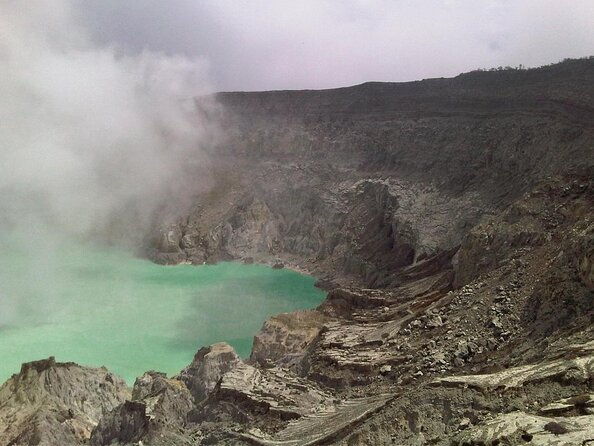
- Night ascent to the crater at 2,370 meters with guided timing and flashlight use
- Blue flames possibility plus the charged feeling of seeing a living volcanic system
- Sulfur miner labor views from inside Kawah Ijen, with guidance on safe movement
- Sunrise over the largest acid lake where colors build slowly and feel surreal
- Javanese dinner and breakfast prepared by a local family as part of the rhythm of the trip
- Practical gear provided: gas mask, flashlight, and wool gloves
Kawah Ijen at Night: What the Trek Really Feels Like
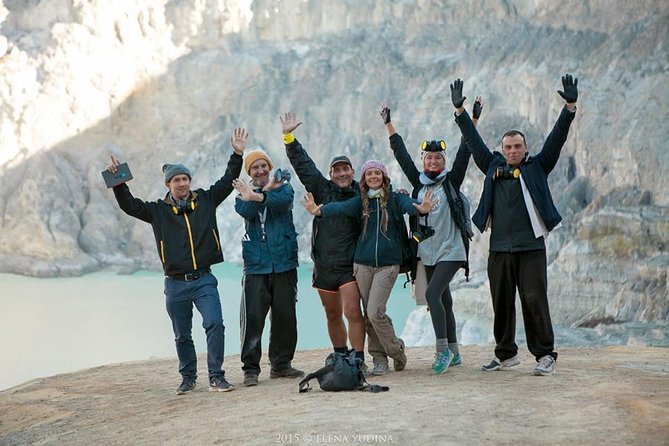
This tour is designed for the most intense hours of the volcano experience, and that starts after you’ve left Bali behind. You rise into the dark, and you’re walking with a purpose: night footing, cold air up high, and that constant awareness that the crater environment is active. You’ll be given a gas mask, a flashlight, and wool gloves for the sulfur smell and the cold.
The physical side is real. Even when you take your time, you’re moving on rocky, uneven ground at night. Ijen’s trail can test your ankles and stamina, so pace matters more than speed.
If you’re the kind of traveler who likes nature but also likes structure, this works well. The guide-led approach keeps you from wandering, and it helps with timing so you don’t miss the crater windows and dawn moments.
You can also read our reviews of more tours and experiences in Bali.
Bali to East Java: The Long Transport Day That Sets You Up
The trip is long by design, with a round-trip ferry between Bali and Java included. Depending on where you start, your pickup is either at Gusto Gelato & Caffé (Seminyak/Kerobokan area) or at Indomaret Mengwitani (Mengwi/Ubud side). You leave Bali at 1:00 PM from Seminyak or 2:00 PM from the other pick-up zone.
Then you hit the ferry crossing (about 75 minutes) and continue by van. There’s an overnight stop in East Java, with time to rest before your crater hike. This is a big deal because your body is going to need energy later, and the cold and exertion are easier when you’ve actually slept.
The “adventure” part is that you’re not just doing a quick day tour. It’s a full travel corridor experience: roads, the ferry crossing, and a scheduled rest window that keeps the plan possible.
Tip for motion sickness and tired roads
A winding-road note comes up often enough to take seriously: if you get motion sickness, bring your meds. The drive segments can be twisty, and you’ll want your head clear for the night hike.
Entering the Crater: Blue Flames and Sulfur Miners
Here’s the core reason people do this: Kawah Ijen is one of the world’s rare blue flame sights, tied to sulfur gases and the right conditions. The important part is also the honest part—blue flames are not guaranteed. The phenomenon depends on volcanic and atmospheric factors, so you’re going for a chance at something rare, not a guaranteed ticket into a movie scene.
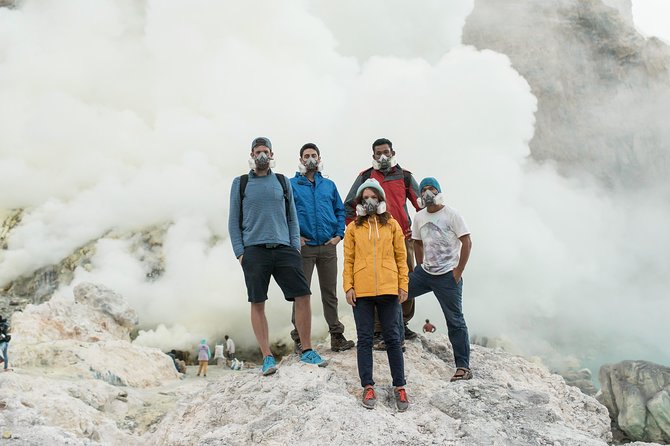
Even if the flames are faint or absent, the crater itself is unforgettable. You’ll descend into a mineral world where sulfur fumes shape everything: the air, the ground, and how you breathe. That’s why the gas mask isn’t optional fluff. It’s the difference between tolerable and miserable.
This is also where you get the human element. Inside Kawah Ijen, you’ll see and learn about the work of sulfur porters—people hauling heavy loads through a harsh environment. The guide explanations matter here. With guides who’ve worked around the crater (names you might hear include Hari/Hary, Pur, and others), the story comes with practical details: where it’s safer to step, how to pace, and what the crater conditions mean for your visibility and comfort.
Photo moments happen here too, and that’s not just for vanity. At Ijen, photos are often about capturing the scale—smoke, minerals, headlight beams, and that eerie crater depth. Many guides also help with taking pictures, which saves you from doing the awkward fumbling-with-a-phone thing when your hands already have to manage warmth and footing.
Dawn at the Acid Lake: Why Sunrise Is the Point
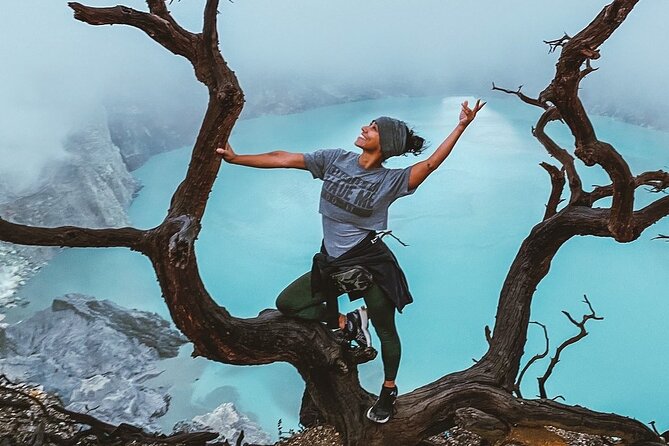
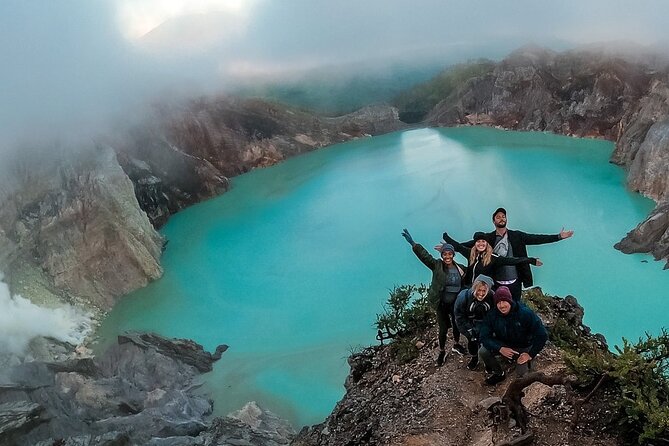
The crater work leads directly into the dawn phase. At first, it’s dark and cold; then the sky starts to brighten, and you’re standing at the edge of a large, turquoise-tinted acid lake. Sunrise at Ijen works because it doesn’t feel staged. The colors change gradually, and you’re watching a living system in real time.
This is also the moment when you get your “human relief” feeling—your hike has a finish line, and the payoff is right there. The quiet after the effort is part of why people remember this segment for years.
And yes, crowds can happen at a popular sunrise viewpoint. That’s exactly where being on a guided schedule helps. You’re not guessing where to stand or when to move; you’re getting directed so you can see the key moments without turning the whole morning into a sprint.
Dinner and Breakfast: Fueling Your Night, Not Just Feeding You
One of the smarter parts of this tour is the meal rhythm. You get a local Javanese dinner early in the journey when you’ve just crossed into East Java, and then a homemade Javanese breakfast when you’re done with the crater portion.
This isn’t just about calories. Dinner on this schedule means you’re not hunting food late at night or eating something that sits badly when you’re about to hike. It also gives you a cultural anchor: you’re eating what locals eat, prepared by a family connected to the area.
Dietary support can be good. Some participants report accommodations for vegan and gluten free needs, and others note vegetarian options depending on what’s available. The practical takeaway: tell your provider your dietary needs ahead of time so the kitchen can plan.
After the hike, breakfast becomes the “reset button.” You’ll likely be chilled and tired, and a warm meal helps you recover before the long ride back.
Your Room in East Java: Real Rest Before and After
Between the transport and the volcano, you’re given a place to rest. The tour includes accommodation in a private room, even if you’re solo. The room is described as clean and comfortable, with hot water and Wi‑Fi.
You also get room access and shower availability after the hike. That’s one of those details you don’t fully appreciate until you’re staring at a sweaty, dusty mess and realizing you’d rather not reinvent your evening. Here, you can wash up and feel human before heading back.
If you’re traveling solo, the private room matters. You still join the group for the hike and crater time, but you sleep with your own space, not on someone else’s schedule.
Gear, Safety, and Guide Support That Actually Matters
You’re not going out empty-handed. The included gear—gas mask, flashlight, and wool gloves—is there for the two biggest problems on this hike: sulfur fumes and cold night conditions. If you forget warm layers, you’ll also have help: you can bring warm clothes, and you may be able to borrow a jacket, gloves, and a beanie depending on availability.
The guide setup is a major reason this experience earns strong marks. In practical terms, it means:
- You get a safety briefing that isn’t vague.
- You’re paced by people who know where steps get slippery.
- You’re supported when visibility drops or if someone falls behind.
The guide names that come up include Hary/Hari and Pur, and many guides are also described as having mining experience. That background tends to show up in how they talk about crater conditions, where they stand during key moments, and how they handle questions on the fly.
One more real-world tip: pack light. Large bags are not allowed on the trek. A small backpack for essentials is the right idea.
Price and Value: Is $112 Worth One Volcano Day?
At $112 per person, you’re paying for more than “a hike ticket.” You’re getting:
- Pickup and drop-off from Bali
- Round-trip ferry between Bali and Java
- A private room in East Java
- Dinner and breakfast
- Kawah Ijen National Park entrance
- English-speaking professional guide support
- Hiking equipment (gas mask, flashlight, wool gloves)
If you tried to DIY this, you’d likely spend time piecing together transport, timing, entry logistics, and a reliable guide for the crater. That’s hard to do well without local knowledge and without taking on extra risk in a demanding environment.
The value question really comes down to your expectations. If you only care about guaranteed blue flames, the price feels risky. If you’re open to the broader crater story—fumes, miner labor, and that acid lake sunrise—then this is priced like a complete, structured adventure.
Who This Is For (And Who Should Skip It)
This is a great match if you:
- Want a night-to-dawn volcano experience with real guidance
- Like structured logistics when you’re going far from your home base
- Are comfortable hiking on uneven ground in the dark
- Enjoy seeing the human side of places, like sulfur mining, not just the view
It’s not a good fit if you:
- Have mobility impairments (access is limited)
- Have significant breathing issues. Even with a gas mask, sulfur smoke can sting. If your lungs are sensitive, think carefully.
- Hate cold, because warm layers are part of surviving the night hike.
Solo travelers often do well here because you still get mixed groups or small-group handling plus your own room for sleep.
Should You Book This Kawah Ijen Blue Flames Tour?
If your dream is a single, once-in-a-lifetime volcanic night with a chance at blue flames, and you’re okay with the fact that nature sets the terms, I’d book it. The best selling points are the guide support, the included equipment, the private room, and the way the schedule is built around sunrise over the acid lake.
Before you commit, check yourself on the two main realities: this is physically demanding, and the blue flame show is not guaranteed. If those don’t scare you, you’ll probably leave with more than photos—you’ll leave with the memory of sulfur fumes, headlamp beams, and a slow sunrise at the edge of a truly strange body of water.
FAQ
Where are the pickup points in Bali?
You’ll be picked up either at Gusto Gelato & Caffé (Jalan Mertanadi – Seminyak, Kerobokan) or at Indomaret Mengwitani (Jalan Raya, Mengwitani, Mengwi).
What time does the tour start from Seminyak or from the Ubud/Mengwi area?
Pickup is at 1:00 PM from Seminyak and 2:00 PM from Canggu–Mengwi–Ubud (Indomaret Mengwitani).
How long does the tour last?
The duration is between 20 and 28 hours, depending on your departure and arrival points.
Is the blue flame phenomenon guaranteed?
No. The blue flame depends on volcanic and atmospheric conditions, so it’s not guaranteed. The team does what they can to maximize the chance.
What meals are included?
The tour includes a traditional Javanese dinner and a Javanese breakfast.
Do I get accommodation, and is it private for solo travelers?
Yes. You get accommodation in a private room, including for solo travelers, with hot water and Wi‑Fi.
What hiking equipment is provided?
You’ll be provided with a gas mask, flashlight, and wool gloves.
Can I shower after the hike?
Yes. Room access and a shower are available after the hike.
What should I bring, and what’s not allowed?
Bring a passport or ID, comfortable shoes, and warm clothes (plus a small backpack for personal items). Large bags or luggage are not allowed, and alcohol and drugs are not allowed.