Your hands tell stories here.
In this Balinese dance class in Ubud, you’ll learn more than steps. You get coached through hand-and-finger gestures, footwork, and facial expressions, while your instructor explains how dance links to Hindu beliefs, local legends, and temple ceremonies.
What I like most is the hands-on teaching. I love how instructors such as Made, Madi, Brojes, and Bojest break the movement down, correct what you’re doing, and keep it moving so you actually improve during the 2 to 3.5 hours.
One consideration: the class is described as not suitable for people with mobility impairments. If you use a mobility aid, double-check whether the space and movements will work for your body and comfort level before you book.
In This Review
- Key things you’ll notice fast
- How the class works in Ubud: private group, English coaching, real practice
- The Welcome dance focus: hand gestures, footwork, and facial expression
- Costumes and makeup: why the outfit changes the performance
- Music and rhythms: timing your hands to the beats
- Storytelling and symbolism: moving like the myth matters
- What to wear, bring, and expect in the 2–3.5 hours
- Value on Bali: why this beats a quick dance show
- Should you book this Balinese dance class in Ubud?
- FAQ
- Is this Balinese dance class in Ubud suitable for all levels?
- How long is the Balinese dance class?
- Is the class private or shared?
- What language is the instructor?
- Where is the meeting point?
- Do I need to bring anything?
- Will I get pickup from my hotel?
- Can I take photos or videos?
- Is wheelchair access available?
- Are there start times and can I choose?
- What are the cancellation and payment options?
Key things you’ll notice fast
- Welcome dance instruction with practical, step-by-step coaching for all levels
- Meaning behind gestures, so you’re not just copying shapes with your hands
- Facial expression training, because Balinese dance tells stories with your face too
- Costume and makeup context, helping you understand character and emotion
- Music-first rhythm work, so your timing improves alongside the choreography
- Private group feel, which makes it easier to ask questions and get corrections
How the class works in Ubud: private group, English coaching, real practice
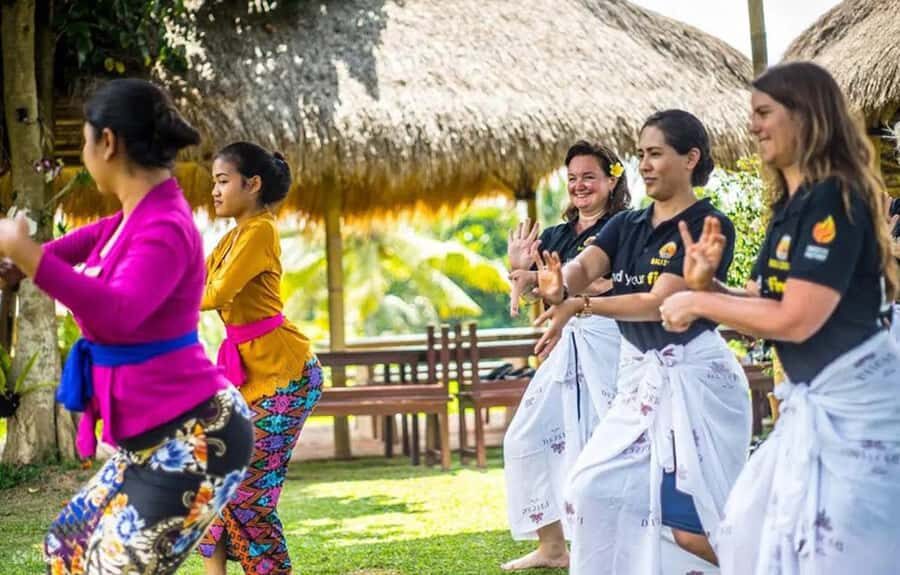
This is a private group Balinese dance class, led by an English-speaking instructor. The class runs 2 to 3.5 hours, which is a good length for learning a full set of basic choreography without turning it into an all-day project.
You have an option for pickup. If pickup is offered for your booking, you wait in your hotel lobby about 10 minutes before your scheduled pickup time. If you’re meeting directly, the meeting point is listed as Ubud Healing I Beji Healing Waterfall, with coordinates -8.523427963256836, 115.1999282836914. Either way, plan to arrive about 10 minutes early so you’re ready when the class starts.
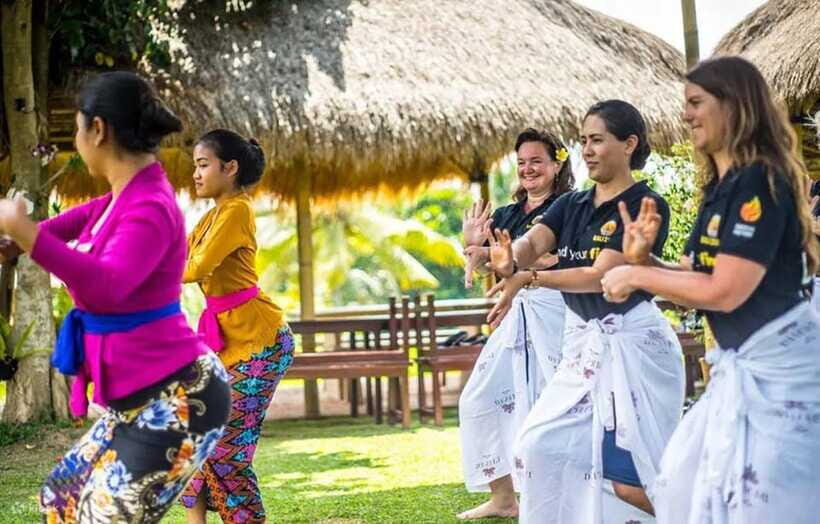
This is not a sit-and-watch performance. The format is movement coaching: your instructor demonstrates, then you repeat, then you refine. Several people highlight how the teacher corrects details and keeps teaching until it clicks, which matters a lot in Balinese dance, where small hand positions and eye focus change the meaning.
You can also read our reviews of more tours and experiences in North Kuta Bali.


The Welcome dance focus: hand gestures, footwork, and facial expression
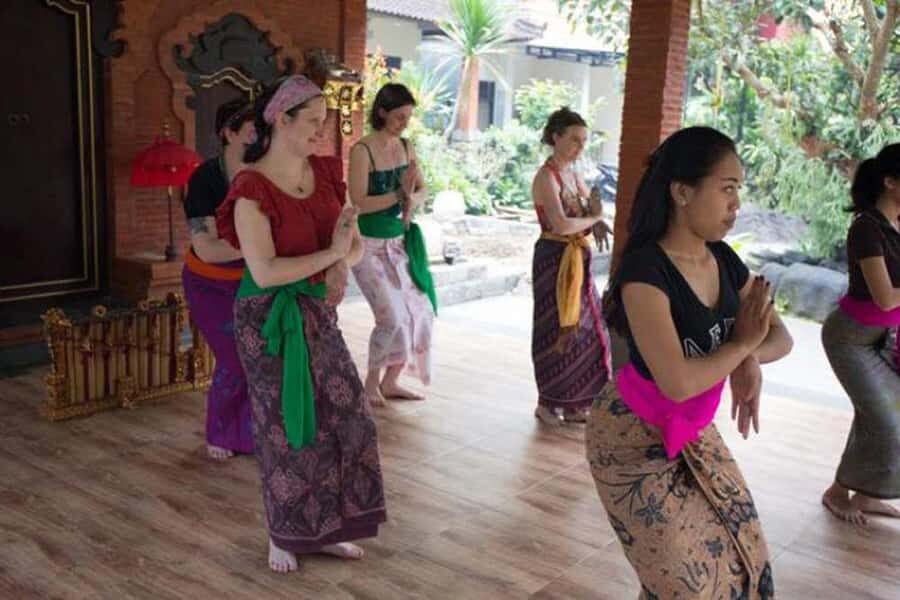
Most classes like this center on a starter choreography often called the Welcome dance. You’ll practice posture and alignment first, then move into footwork and graceful body lines. That part feels simple at the start, then it gets challenging when you have to keep the whole shape while your hands do their own job.
Balinese dance storytelling lives in the details. You’ll work on intricate hand and finger gestures and learn how to move them with intention, not just accuracy. Your instructor also guides your facial expressions, which can feel strange if you’ve never performed before, but it’s also where the dance starts to feel alive.
A big plus is that this style is taught in a way that suits beginners. People mention it’s doable even if you have no prior dance background, as long as you’re willing to repeat. Expect some moments where you’ll think, I’m doing it wrong, and then the teacher corrects one specific thing and suddenly your body understands the pattern.
Costumes and makeup: why the outfit changes the performance
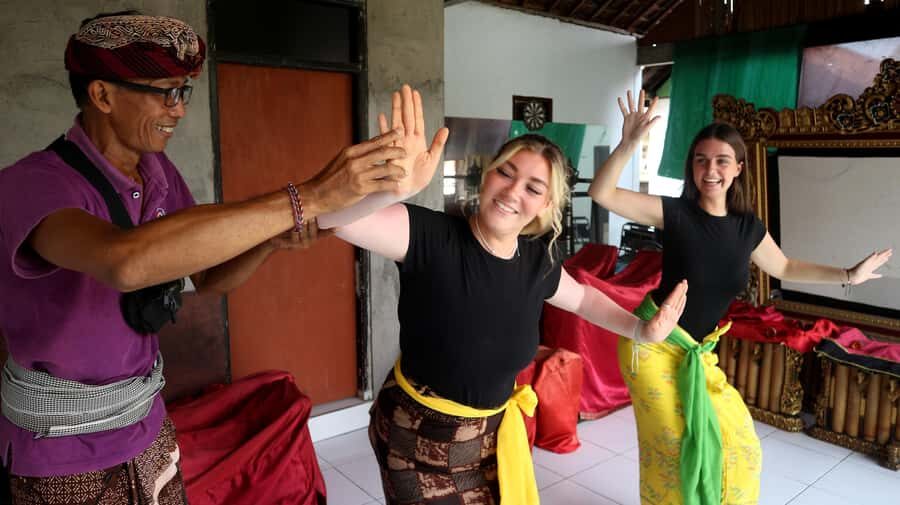
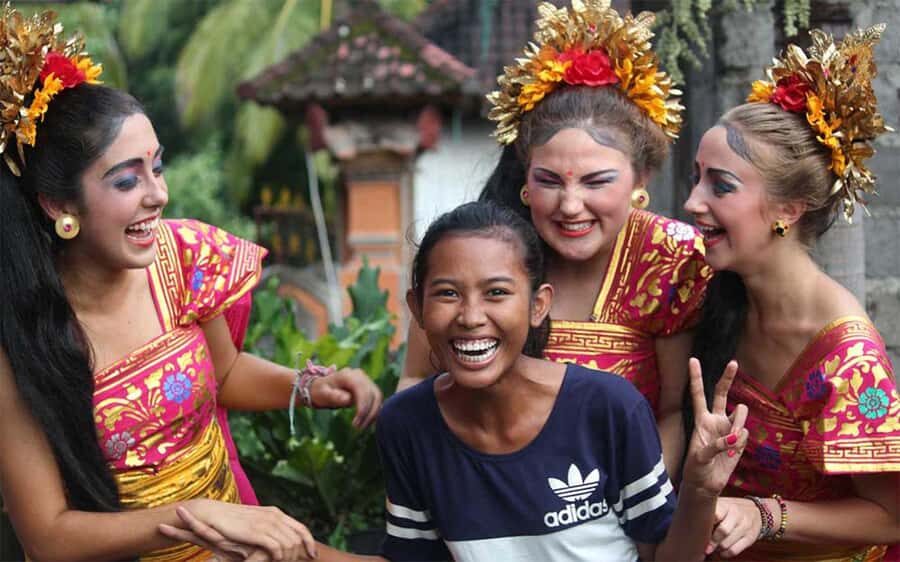
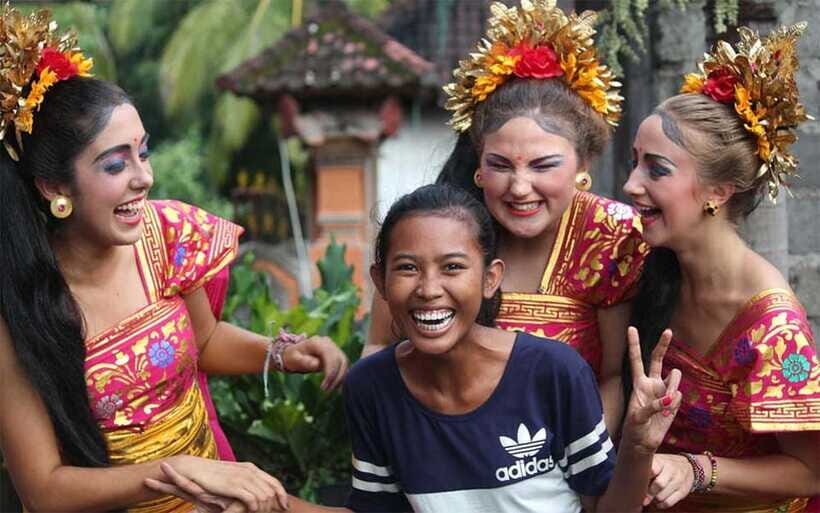
Part of the class experience is learning what dancers wear and what it means. Balinese dancers typically use colorful, intricate costumes with accessories and patterned details, plus makeup designed to boost expressions and represent different characters or emotions.
What this gives you as a student is context. When you understand why the makeup and costume are there, you stop treating it like a souvenir moment. You start realizing the dance is a performance language. Your eyes, your hands, and even the way you hold your shoulders are part of the character you’re portraying.
One review mentions the chance to try on a traditional costume, which is a fun reality check. When you wear the outfit, you feel how it affects movement and how dancers can move with confidence even in clothing that looks delicate or “just for photos.”
Music and rhythms: timing your hands to the beats
Balinese dance isn’t just counted in your head. You’ll learn about the unique rhythms and melodies that accompany different dance styles. Then you’ll practice synchronizing your movements with the music.
This is one of the most practical parts of the class. If you’ve ever tried to learn choreography without the soundtrack, you know it doesn’t feel right. Here, the rhythm gives your body a reference point, and your hands and feet start landing together instead of drifting.
People also call out that they had the chance to try the music and rhythms, which helps you understand why a gesture lands exactly when it does. Even if you can’t name every instrument, you’ll feel the pulse, and that makes the choreography easier to repeat.
Storytelling and symbolism: moving like the myth matters
Balinese dance is described as a blend of storytelling, spirituality, and physical expression. The dances you study typically connect to Hindu culture, local legends, and religious ceremonies, including stories drawn from Hindu epics.
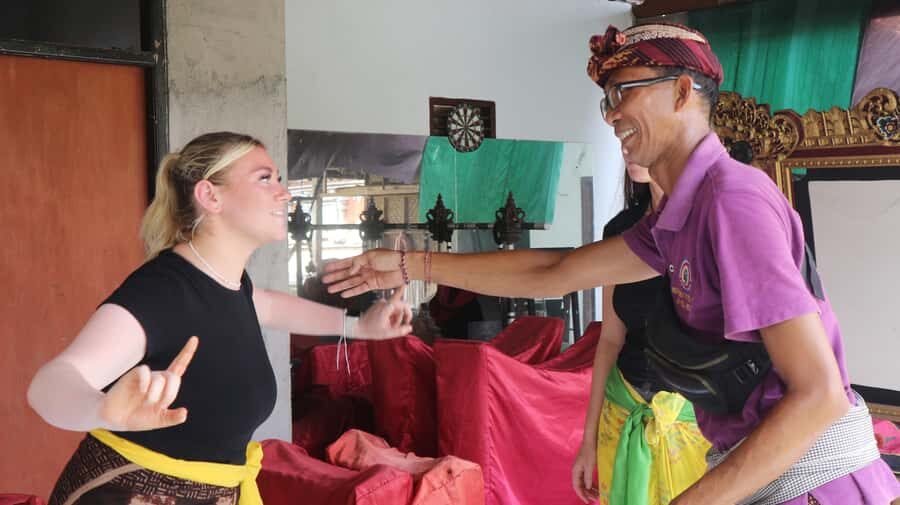
The most helpful teaching piece is that your instructor explains the significance of movements and gestures. In other words, you learn what the dance is communicating. That changes the class from “learn steps” into “understand a language.”
Here’s the takeaway I think you’ll appreciate: the meaning is carried through small actions. A hand shape can signal a character or emotion. Body angles can suggest direction or intent. Eye focus and facial expression can underline the story beat. Once you grasp that, your mistakes turn into clues, not failures.


What to wear, bring, and expect in the 2–3.5 hours
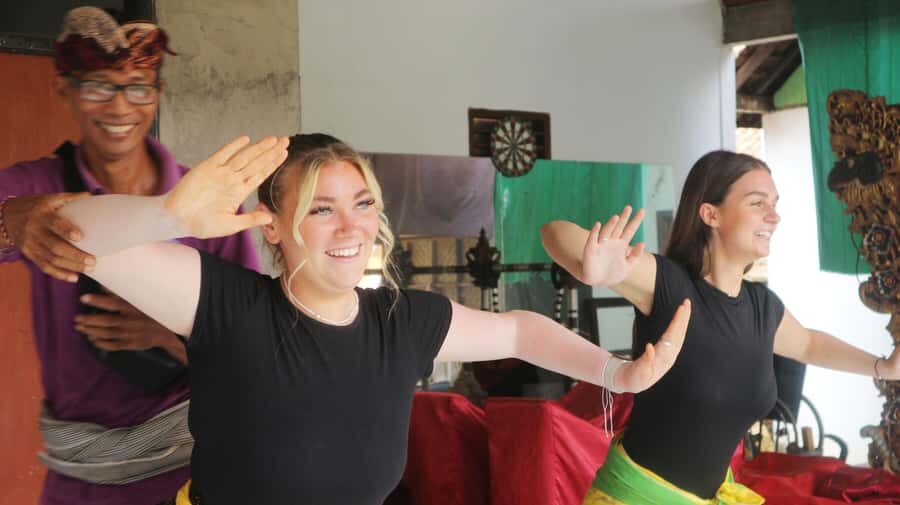
This class asks for comfortable movement. Bring sandals, water, and comfortable clothes that let you bend, squat slightly, and move your arms without restriction. You don’t need dance shoes, but you do need fabric that doesn’t fight your body.
Arrive early, as mentioned, to set up without rushing. Also note that professionals photography is allowed. That’s useful if you’re traveling with a camera setup, and it also tells you the class environment is set up for capturing the experience.
One more expectation: it’s not a casual stretch session. Even if your goal is cultural appreciation, the teaching is still physical. People describe it as hard work in the best way. You’ll repeat sections, you’ll get coached, and you’ll likely feel yourself improving as you go.
Value on Bali: why this beats a quick dance show
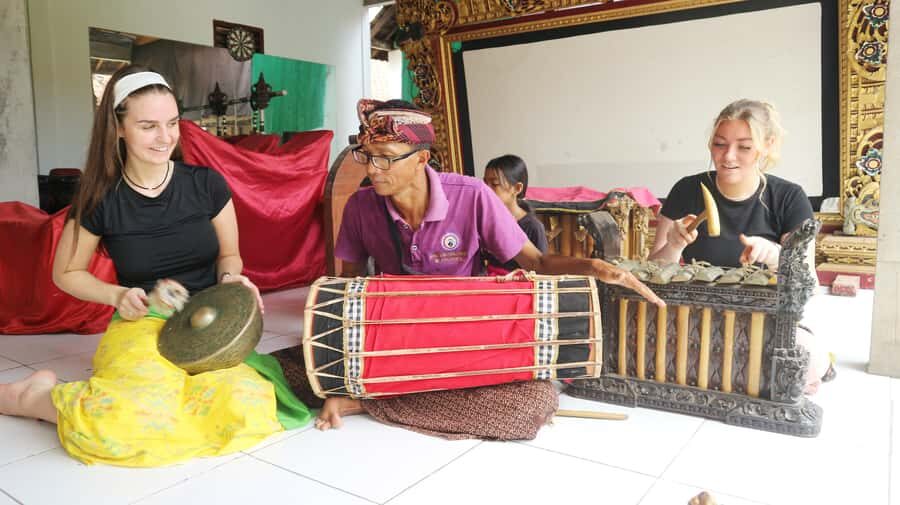
If you’re in Bali and you’re choosing between a show and hands-on class time, this is the smarter bet for most people. A performance can be beautiful, but a class teaches you how the performance is built: technique, gestures, rhythm timing, and the meaning behind it.
This also supports real travel value. You’re in a private group setting, so you can ask questions and get personal correction. That reduces the frustration you get in larger group workshops where you spend half your time copying instead of understanding.
There’s also a nice “Bali connection” bonus when pickup happens. Some people mention the drive came with friendly, cultural conversation, including references to the local area and traditions. One booking specifically notes a drive of about one hour from Kuta, with the driver sharing stories. Even if your route is different, the point is clear: you’re not only getting a class, you’re getting cultural context.
Finally, the names people mention for instructors matter because it signals consistency in teaching style. Folks specifically praise teachers like Made, Madi, Brojes, and Bojest for patience, clear explanation, and turning corrections into progress. That’s what you want for a short class: real learning, not just performance admiration.
Should you book this Balinese dance class in Ubud?
Book it if you want a cultural activity you can do in one half-day and actually learn from. It’s a great fit for all levels, including beginners, as long as you’re open to repetition and correction. You’ll walk away with a real choreography you can understand, plus a better sense of why Balinese dance matters in daily life and religious celebration.
Skip or carefully check suitability if you’re dealing with mobility limitations. The activity notes it’s not suitable for people with mobility impairments, even though it also lists wheelchair accessibility. If you need flexibility in movement or seating, contact the operator directly and ask how the class is set up in practice.
If you love Bali for its arts, spirituality, and everyday rituals, this class is a strong way to connect. You’ll leave knowing what your hands are saying—and that’s a lot more memorable than watching from the back row.
FAQ
Is this Balinese dance class in Ubud suitable for all levels?
The activity is described as for all levels. It includes technique coaching and is taught by an English-speaking instructor.
How long is the Balinese dance class?
The duration is 2 to 3.5 hours. Starting times depend on availability.
Is the class private or shared?
It’s a private group experience.
What language is the instructor?
The instructor speaks English.
Where is the meeting point?
The meeting point is listed as Ubud Healing I Beji Healing Waterfall at coordinates -8.523427963256836, 115.1999282836914.
Do I need to bring anything?
Bring sandals, water, and comfortable clothes.
Will I get pickup from my hotel?
Pickup is optional. If pickup is arranged, you wait in the hotel lobby about 10 minutes before the pickup time.
Can I take photos or videos?
The activity says professionals photography is allowed.
Is wheelchair access available?
The activity lists wheelchair accessible, but it also states it is not suitable for people with mobility impairments. If this applies to you, confirm with the operator how the class is handled on the day.
Are there start times and can I choose?
You can check availability to see the starting times for the 2 to 3.5 hour class.
What are the cancellation and payment options?
It offers free cancellation up to 24 hours in advance for a full refund, and it also supports reserve now & pay later.