Dinner turns into a ritual here. In Canggu, a traditional megibung meal mixes Balinese food with a real slice of local ceremony. You’ll dress for the occasion and sit down to share a table the Balinese way.
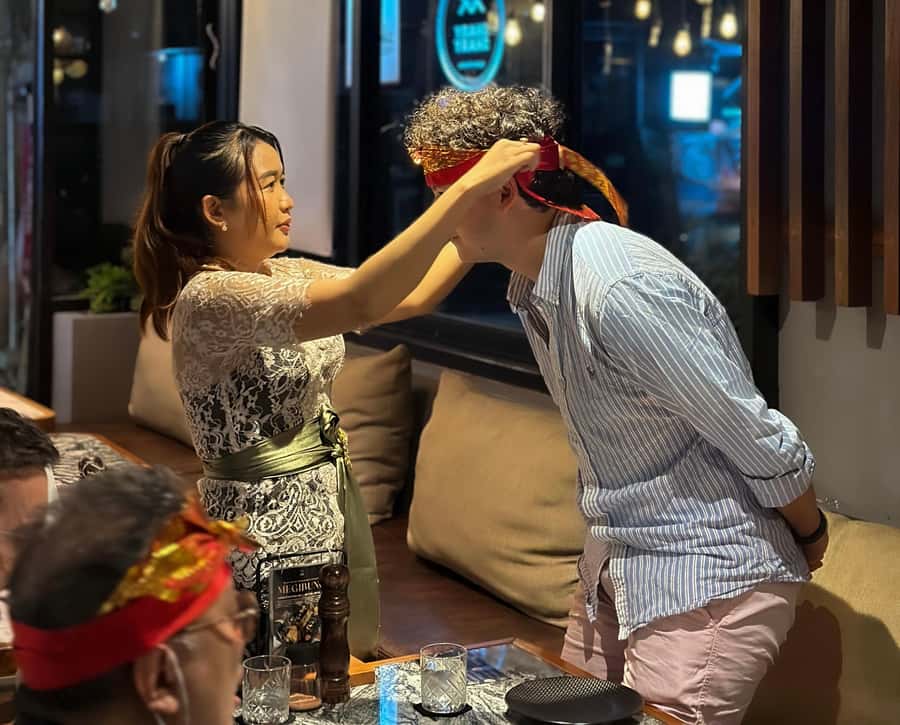
I especially like the traditional attire part. You get to wear an udeng (headpiece) and a selendang (sash), which makes the whole evening feel intentional, not just like another dinner booking.
One thing to consider: this experience isn’t suitable for food allergies. If you need strict dietary accommodations, you’ll want to think carefully before booking.
In This Review
- Why a Megibung Dinner in Canggu Feels Like More Than Food
- Key Takeaways Before You Go
- The Two-Hour Flow: What Happens After You Arrive
- 1) Put on the Balinese attire
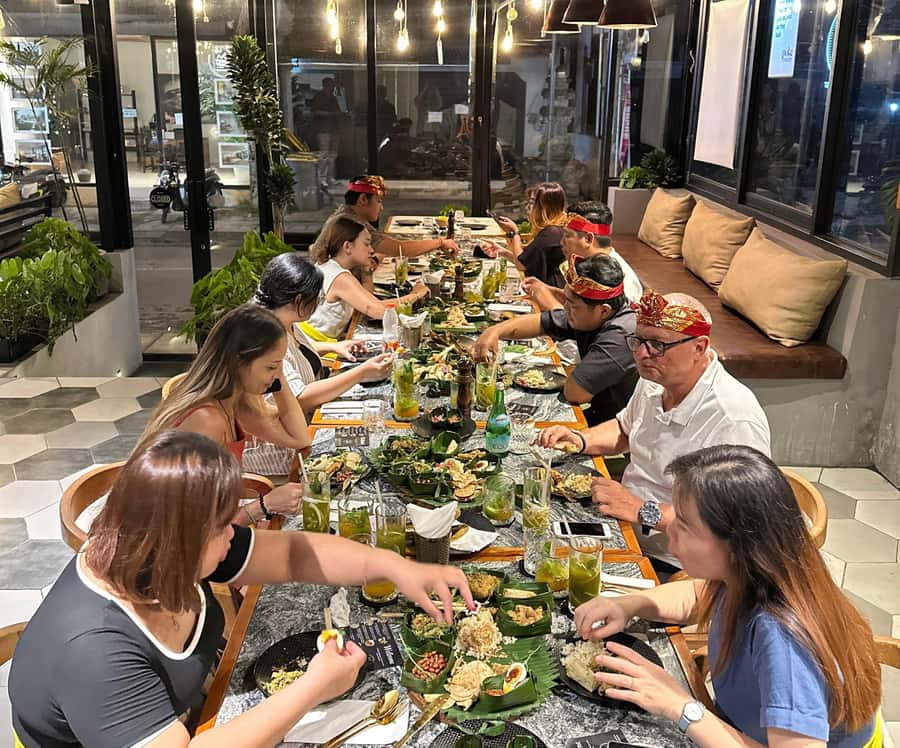
- 2) Sit down for the megibung feast
- 3) Choose your eating style: hands or traditional utensils
- 4) Work through the variety of Balinese dishes
- Dressing for Dinner: Udeng and Selendang Without the Guesswork
- Why this small step changes your experience
- What to wear
- What Megibung Taught Me About Communal Dining
- The table format helps you try more
- It’s social, but not forced
- The Food Side: Balinese Flavors, Fresh Ingredients, and Hands-On Choices
- Eating with your hands: when it’s worth it
- What’s not included: alcohol
- Price and Value: Is $21 Worth It?
- Who Should Book This Megibung Dinner (and Who Might Skip It)
- Practical Tips for a Smooth, Respectful Evening
- Bring comfortable clothing and shoes
- Follow the simple rules
- Decide on how you want to eat before you start
- Expect English and Indonesian support
- Is the Private-Group Setup a Plus?
- Should You Book This Megibung Dinner in Canggu?
- FAQ
- How much does the Canggu megibung dinner cost?
- How long is the megibung dinner experience?
- What traditional items are included when I arrive?
- Can I eat with my hands?
- Is wine or alcohol included?
- What languages are spoken by the host or greeter?
- Can I cancel, and can I book without paying right away?
- Is it suitable for wheelchair users or people with food allergies?
Why a Megibung Dinner in Canggu Feels Like More Than Food
A megibung dinner is built around community. Instead of each person ordering their own plate, you sit for a shared feast where multiple Balinese dishes arrive on large serving platters for everyone at the table. That setup changes how you eat. You’re not rushing. You’re looking, tasting, passing food, and talking through the meal.
In Canggu, this tradition also feels extra practical. It’s a contained two-hour experience, so you get a meaningful cultural dinner without losing an entire evening to logistics. And because it’s designed as a communal meal, you’re gently nudged into interaction—whether you’re traveling solo or coming with friends.
The best part is that the food isn’t treated like background. The meal focuses on Balinese dishes made with fresh ingredients, served in a variety that keeps the experience interesting the whole way through.
Key Takeaways Before You Go
- Wear the udeng and selendang: it helps you match the cultural tone of the dinner
- Share large platters: megibung is communal by design, not just a marketing label
- Eat hands-on if you want: there’s an option for traditional utensils too
- Expect a wide mix of Balinese dishes: variety is part of the format
- Skip this if you have food allergies: it’s not suitable for allergy needs
- Rules matter: smoking and flash photography are not allowed
You can also read our reviews of more tours and experiences in North Kuta Bali.


The Two-Hour Flow: What Happens After You Arrive
This is a straightforward evening, and that’s good. You won’t be bouncing around town or trying to follow a long schedule. The whole event is built to keep you on track for a smooth 2 hours.
1) Put on the Balinese attire
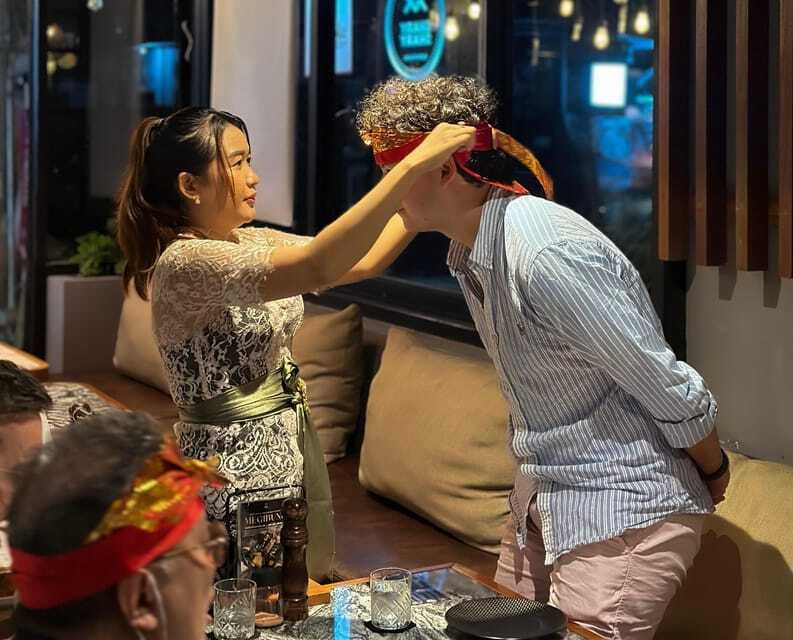
When you arrive, you don traditional Balinese attire as part of the experience. Each guest will wear an udeng headpiece and a selendang sash. The point isn’t costume-faking. It’s about joining the evening in a respectful, visible way.
Practical note: wear comfortable clothes and shoes you can stand in. You may spend some time getting ready and settling into the seating area.
2) Sit down for the megibung feast
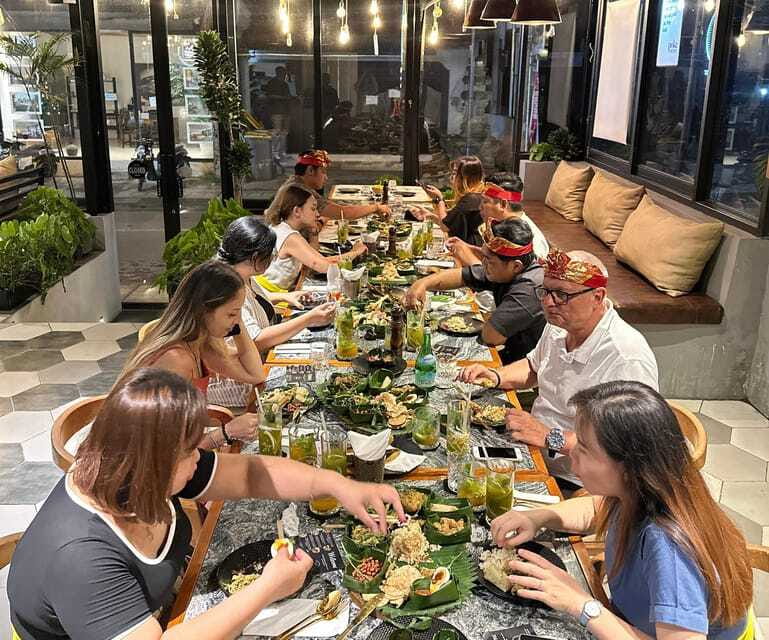
After dressing, you’re seated for the meal. This is where megibung comes to life. Dishes are brought out for sharing, typically on large platters that encourage everyone to eat from the same table center.
This part matters more than you might think. When food is arranged for sharing, you stop treating dinner like an individual task. You start treating it like a group rhythm. You’ll likely spend time tasting several items instead of going straight to one favorite.
3) Choose your eating style: hands or traditional utensils
During the dinner, you have the option to eat using your hands or traditional utensils. The menu is the same either way, but your experience changes based on how you prefer to eat.
If you choose hands-on, go slow at first. Use small bites, and pay attention to how the table is sharing food. If you prefer utensils, you can keep it simple and focus on flavor and variety.


4) Work through the variety of Balinese dishes
You’ll be served a selection of traditional Balinese dishes. The experience is built around fresh ingredients and a mix of tastes, so you get more than one flavor track across the meal.
Because this is a shared setup, you’ll probably sample things you wouldn’t pick from a menu on your own. That’s often the real value of megibung: it makes you try more.
Dressing for Dinner: Udeng and Selendang Without the Guesswork
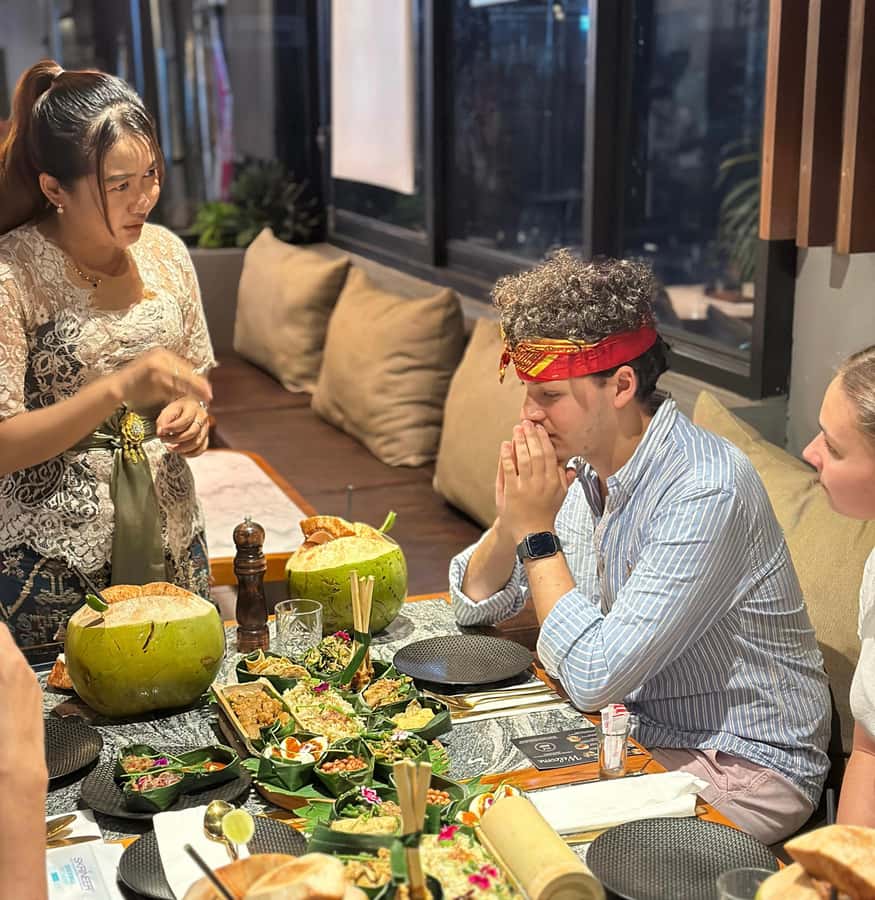
I like that the cultural clothing is handled for you. You’re not left to figure out how to wear anything, and you’re not expected to improvise. You simply put on the udeng and selendang provided as part of the activity.
Why this small step changes your experience
Food traditions often come with rules around respect and setting. Wearing the attire shifts your mindset fast. It tells your body this is not just dinner—it’s a cultural meal with its own rhythm.
Also, it’s a great way to get better photos without turning the evening into a photoshoot session. Just remember: flash photography isn’t allowed. If you want pictures, plan for natural light and be discreet.
What to wear
Keep it comfortable. This is still Bali—hot, humid, and active enough to benefit from breathable clothes and supportive footwear. Closed-toe shoes aren’t required by the info you provided, but comfortable shoes are.
What Megibung Taught Me About Communal Dining
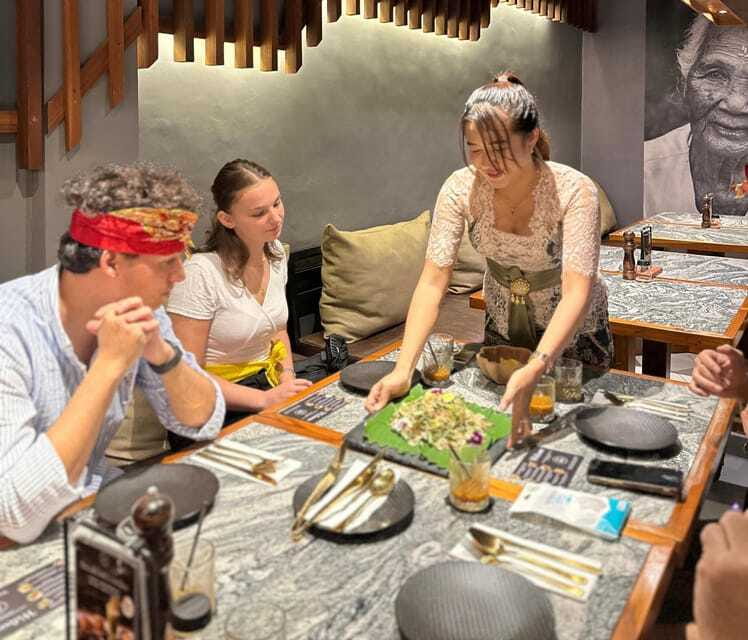
Megibung isn’t only about sharing food. It’s about sharing time and attention. When everyone eats from shared platters, the group naturally slows down. You notice more. You talk more. You ask for another taste instead of finishing your own portion and moving on.
The table format helps you try more
A solo meal in a restaurant usually pushes you toward a safe choice. Megibung flips that. You’re surrounded by multiple dishes, so your plate becomes a sampler.
That’s also why variety is part of the deal here: the selection of Balinese dishes on the platters is meant to keep the meal interesting for the full two hours.
It’s social, but not forced
You’ll be dining communally, yes, but the structure isn’t complicated. You don’t need to be the loudest person in the room. The food does the talking. Share, taste, and keep going.
If you’re worried about feeling awkward, this is exactly the kind of meal where it helps to have a calm pace. You’re not performing. You’re eating.
The Food Side: Balinese Flavors, Fresh Ingredients, and Hands-On Choices
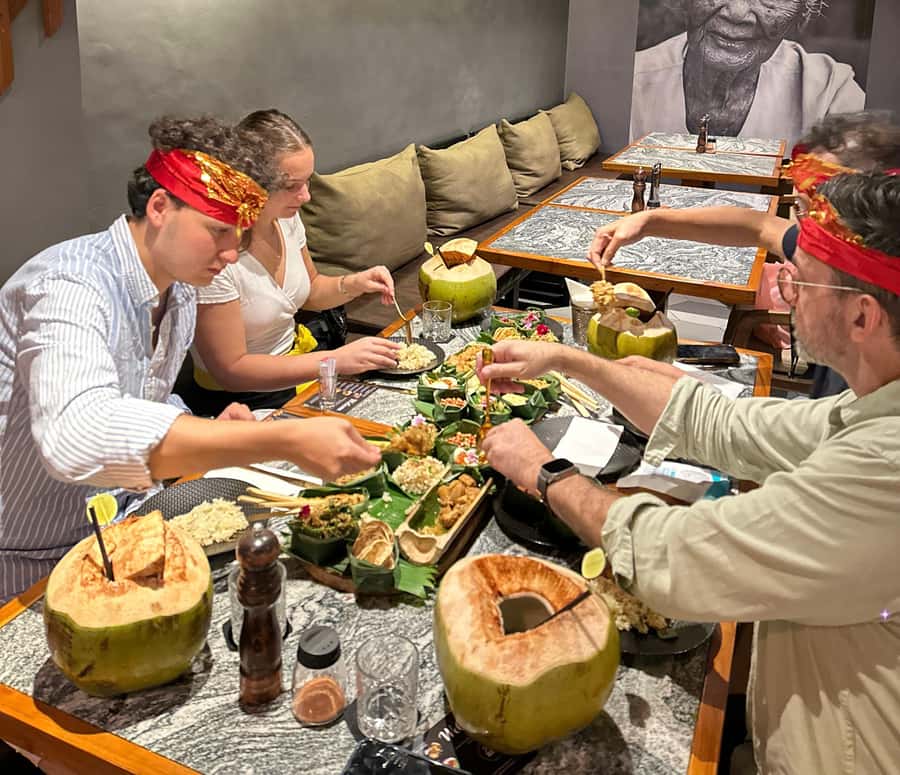
This is where the experience earns its popularity. The dinner centers on a selection of traditional Balinese dishes made with fresh ingredients. You get multiple dishes rather than one main dish, so the meal feels like a full Balinese table, not a single entrée.
Eating with your hands: when it’s worth it
Eating with your hands can be a fun way to connect with the food tradition. It’s also a skill you can approach lightly—no need to treat it like a high-pressure test.
Use it as a way to slow down. Taste, then take another bite. You’ll likely feel more aware of textures and spice levels when you’re handling the food yourself.
If you’d rather not, that’s fine. The option for traditional utensils means you can participate in the communal meal without changing your comfort level.
What’s not included: alcohol
Wine and alcohol aren’t included. That’s not a dealbreaker for many people, but it matters if you’re trying to pair dinner with drinks.
If you want alcohol, you’ll need to plan that separately.
Price and Value: Is $21 Worth It?
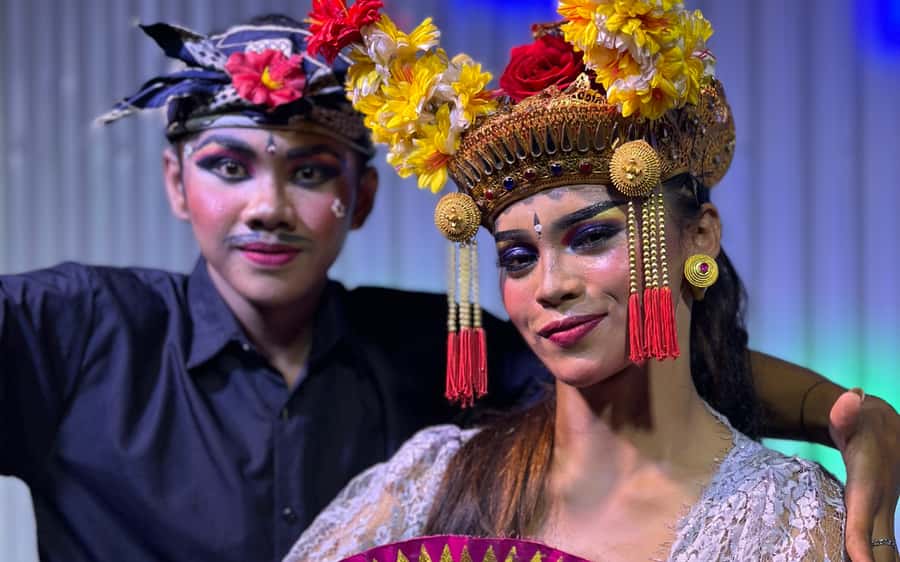
$21 per person is a solid price for what you’re getting: traditional attire plus a structured megibung dinner experience for about two hours.
Here’s the value equation I’d use:
- You’re paying for more than food. You’re paying for the cultural setup—udeng and selendang—and the guided format of the communal meal.
- The experience is time-efficient. Two hours is long enough to make it feel complete, but short enough to fit into a Canggu evening without wrecking your schedule.
- You get variety. A meal with multiple Balinese dishes tends to feel more satisfying than a one-plate dinner where you’re guessing whether you’ll like everything.
So if you’re the type who enjoys cultural dining formats—and wants something more interactive than a typical restaurant table—this price makes sense.
Who Should Book This Megibung Dinner (and Who Might Skip It)
This works best if you want a culturally specific dinner that’s simple to join.
You’ll probably love it if you:
- enjoy traditional food experiences that encourage sharing
- like being part of the setting (not just watching it)
- don’t have food allergy needs
- are comfortable with the communal style of dining
You might skip it if you:
- have food allergies (this isn’t suitable)
- use a wheelchair (not suitable)
- need flash photography for specific reasons (flash isn’t allowed)
- need a nightlife-style drinks pairing (wine & alcohol aren’t included)
Practical Tips for a Smooth, Respectful Evening
A few small things will make this go easier.
Bring comfortable clothing and shoes
You’ll be getting dressed and settling in, so comfort matters more than style. If you’re planning to go straight from another activity, choose something you can move in.
Follow the simple rules
Smoking isn’t allowed. Flash photography isn’t allowed. These rules help keep the moment respectful and focused.
Decide on how you want to eat before you start
You have a choice: hands or traditional utensils. If you’re not sure, watch for the table flow after the meal begins. You can also switch your approach as the meal goes on, depending on what feels easiest.
Expect English and Indonesian support
A host or greeter is available in English and Indonesian. If you have questions about how the meal works, you can ask.
Is the Private-Group Setup a Plus?
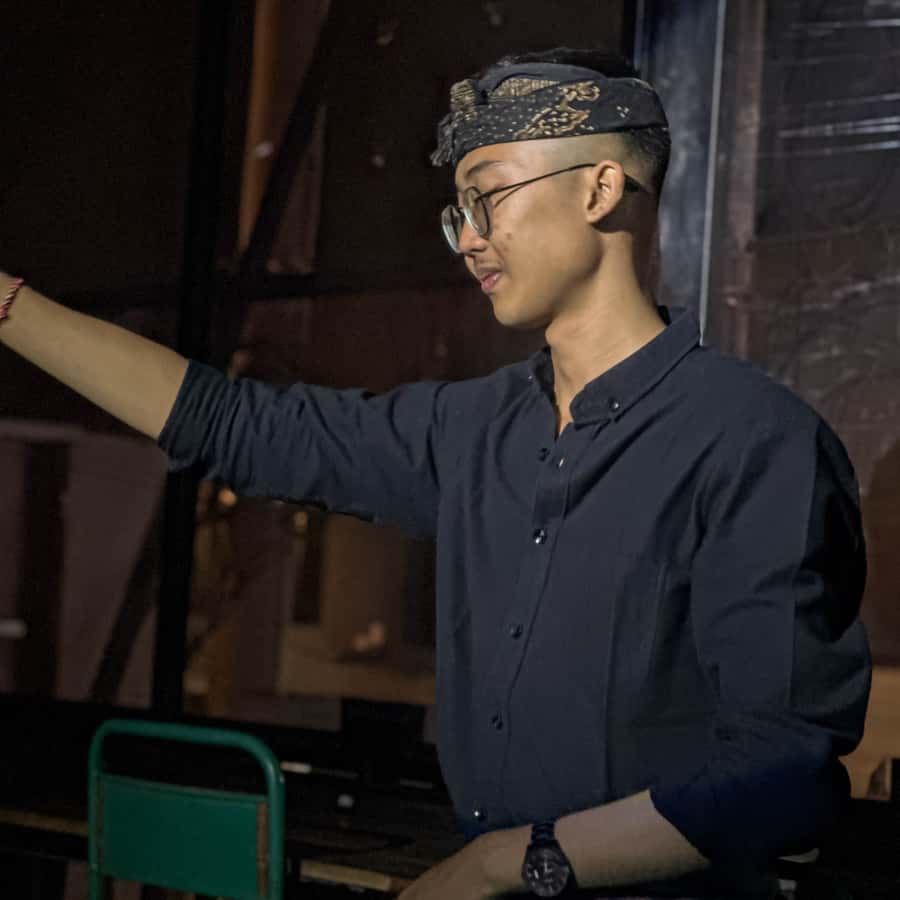
This activity is listed as a private group. That can be a big deal if you hate the feeling of being squeezed into a crowd while trying to enjoy a cultural meal.
Private-group dinners often help you feel more relaxed around the table. You can focus on the food and the pacing without competing for attention.
If you’re traveling with friends or family, it’s also a nice way to do something shared without turning it into a group-tour scramble.
Should You Book This Megibung Dinner in Canggu?
If your goal is an authentic Balinese dining tradition that’s structured, social, and not complicated, I’d say yes. The value is strong at $21, and the included cultural elements—especially the udeng and selendang—make it feel like more than just a restaurant meal.
Book it if you’re excited to share dishes, try different Balinese flavors, and participate in the hands-on option. Skip it if you need allergy-friendly menu guarantees or have accessibility needs noted for wheelchair users.
If you want one reliable, culture-forward dinner in Canggu that won’t swallow your night, this megibung format is a smart choice.
FAQ
How much does the Canggu megibung dinner cost?
It costs $21 per person.
How long is the megibung dinner experience?
The duration is 2 hours. Starting times can vary, so you’ll need to check availability.
What traditional items are included when I arrive?
You’ll wear traditional Balinese attire, including an udeng (headpiece) and a selendang (sash).
Can I eat with my hands?
Yes. You have the option to eat with hands or with traditional utensils.
Is wine or alcohol included?
No. Wine and alcohol are not included.
What languages are spoken by the host or greeter?
The host or greeter speaks English and Indonesian.
Can I cancel, and can I book without paying right away?
You can cancel up to 24 hours in advance for a full refund. You can also use reserve now & pay later, so you pay nothing today.
Is it suitable for wheelchair users or people with food allergies?
No. It’s not suitable for wheelchair users or people with food allergies. Smoking isn’t allowed, and flash photography isn’t allowed.