A full day of temples, volcano views, and dance.
This private Bali Temple Tour is built for people who want more than beach time, with a route that climbs from the coast up toward the Ubud area and on to Mount Batur and Mount Agung. Two things I really like: the unforgettable Barong & Kris dance (held daily at 9:30 in Batubulan) and the way the tour stacks major sites with solid context from an English-speaking driver-guide, not just stop-and-snap sightseeing.
The main trade-off is time. It’s about 11 hours, and the schedule is packed, so your lunch can run late depending on traffic and show timing.
In This Review
- Key highlights you should know before you go
- Start time 8:00am and the real rhythm of an 11-hour temple circuit
- Batubulan Barong & Kris dance at 9:30am: the show is the anchor
- Puseh Batuan Temple: why Bali has more than one kind of sacred space
- Goa Gajah (Elephant Cave): a famous temple stop with a calm approach
- Gunung Kawi tombs: 11th-century stonework and stair-step reality
- Coffee plantation time plus Mount Batur and its crater lake
- Besakih Temple: Bali’s biggest temple complex on Mount Agung slopes
- Price and value: $111.85 for a private car, entry fees, and lunch
- Who should book this Bali temple tour (and who should skip it)
- Should you book?
- FAQ
- What time does the tour start?
- How long is the Bali Temple Tour?
- Where does the tour take place?
- How much does the tour cost?
- Is this tour private?
- What’s included in the price?
- Is pickup offered?
- Do I get a mobile ticket?
- Which stops are on the itinerary?
- Is the Barong & Kris dance at a fixed time?
- What if the weather is bad?
Key highlights you should know before you go
- 9:30 Barong & Kris dance in Batubulan: a daily performance you’ll plan around, so you start early.
- Puseh Batuan Temple’s temple variety: a stop that explains why Bali’s sacred spaces multiply by community and caste.
- Goa Gajah (Elephant Cave): a famous temple site accessed via a route that includes a stone bridge approach.
- Gunung Kawi tombs and the Pakerisan River gorge: 11th-century carvings reached through steep steps over rice terrain.
- Kintamani + Mount Batur: time for coffee planting and crater-lake views before heading onward.
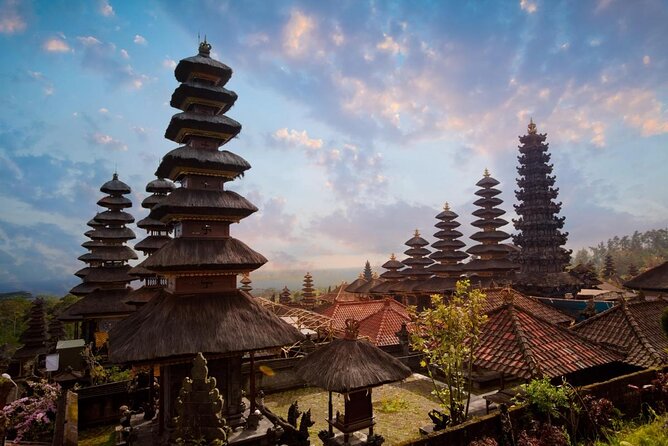
- Besakih on Mount Agung’s slopes: Bali’s biggest temple complex, dating to around 1007 A.D.
Start time 8:00am and the real rhythm of an 11-hour temple circuit
This tour starts at 8:00am from the Kuta area, and that matters. You’re not just doing one temple. You’re chaining together six big stops, plus the drive time between them, with an included private car and an English-speaking driver-guide.
The upside is efficiency. If you tried to stitch this kind of day together on your own, you’d spend serious time figuring out routes, parking, and timing. The downside is simple: the day is long. You should treat it like a single, structured outing rather than a flexible sampler. If you love early mornings, you’re in luck. If you want a slow day, this schedule will feel like homework.
One more detail that affects your comfort: you’re likely to be moving between stops for most of the daylight hours, so bring water, wear shoes you trust on uneven temple paths, and plan for warm weather.
You can also read our reviews of more tours and experiences in Kuta.

Batubulan Barong & Kris dance at 9:30am: the show is the anchor
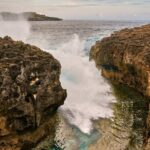
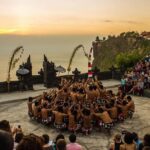
Your first major highlight is Barong & Kris dance at Batubulan. The performance has a very specific daily timing: every morning at 9:30 sharp, and it’s tied to a trance-style theme involving the Barong and Kris characters.
This is the anchor point of the itinerary. Because the show is time-sensitive, the early start is not random—it’s how the day keeps its shape. You’ll typically get to this area with just enough breathing room to find your spot and settle before the performance begins.
What makes this dance stop special is how it sets your lens for the rest of the day. The tour isn’t just saying temples are impressive. It’s showing that Bali’s spiritual life includes performance, symbolism, and dramatic storytelling—so when you reach sites like Goa Gajah or Besakih, you’re reading them with more context.
Practical considerations: the dance is one hour in the schedule, and your body may still be adjusting to heat and travel right after pickup. If you’re sensitive to crowds or noise, arrive calmly and focus on the center action rather than trying to keep swapping viewpoints.
Puseh Batuan Temple: why Bali has more than one kind of sacred space
After Batubulan, the tour moves to Puseh Batuan Temple in Batuan Village. This stop is described as a Trinity temple, and what you’re really learning here is a concept: Bali’s religious life can generate multiple related temple spaces for different groups.
The tour explanation you’ll hear connects temple presence to social and spiritual needs—specifically, the idea that there’s a healthy population of different religious sects and castes here, and each group requires its own complete set of temples. It’s a great moment to understand why Bali’s map of sacred places looks the way it does: temples aren’t just one-per-village monuments. They can be part of a living system.
Why I like this stop for visitors: it breaks the habit of treating temples like scenery. You start noticing the logic behind the layout and the roles of different shrines.
The caution is also simple: the visit is scheduled for about 30 minutes, so you’ll get an overview rather than a slow, study-your-way-through experience. If you love spending long periods observing details, you may wish you had more time here. Still, for a day packed with major sites, this is a strong “meaning first” stop.
Goa Gajah (Elephant Cave): a famous temple stop with a calm approach
Next up is Goa Gajah, also called the Elephant Cave Temple. This is a shorter visit—scheduled around 30 minutes—but it’s a recognizable name for a reason. The site is tied to the cave temple idea, and the approach route has its own landmark detail: the description notes it’s about a mile due east from southern Peliatan, and the road crosses a stone bridge.
Even if you don’t spend long here, the travel through the approach gives you a sense of how the site sits in the landscape, rather than feeling like it dropped into a parking lot.
What to do during your short time: keep your pace steady, watch for where people gather for entry, and take a moment to notice architectural features before you start taking photos. When time is tight, your best strategy is to slow down for 30 seconds at a time. You’ll remember the temple more than the camera bursts.
The drawback for some people: 30 minutes doesn’t leave room for a long wander. So if you’re the type who likes to browse until your energy runs out, temper expectations. Think “see it, understand it, move on.”
Gunung Kawi tombs: 11th-century stonework and stair-step reality
Then comes Mount Kawi (Gunung Kawi), a stop that’s special for two reasons: age and access. These are described as 11th-century tombs, carved into the rock face of the gorge of the Pakerisan River.
You don’t reach them by strolling. The schedule notes a step descent through scenic rice terrain. That means this stop is more physical than Goa Gajah. If you have knee issues or hate uneven steps, this is the moment to take extra care.
The best way to enjoy Gunung Kawi is to treat it like a short hike with a payoff. Give yourself time to feel the change from open views into the gorge setting, because the experience is partly about the transition. And once you’re there, spend time looking at the stonework from different angles if you can. The carvings are the main story.
Time-wise, you get about 30 minutes. That’s usually enough to see the tombs, but not enough for a “slow photographer” day. Bring sturdy footwear and expect humidity.



Coffee plantation time plus Mount Batur and its crater lake
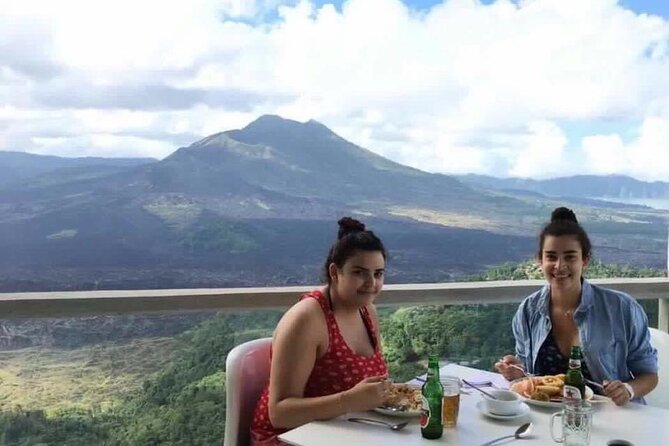
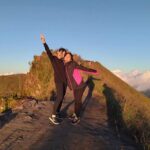
Your next stop is Mount Batur / Kintamani, scheduled for about 1 hour. The tour includes a stop to explore a coffee plantation, then moves you toward Batur volcano viewpoints and the area’s crater-lake concept (the village is described as part of the Batur Volcano and crater lake setting).
Even if you’re not a coffee fanatic, this segment helps break up the temple-heavy day. It also gives you a chance to trade dramatic stonework for dramatic geology. Mount Batur is the kind of scene that makes the earlier stops feel less like isolated photo ops and more like part of a bigger island story.
How you’ll likely experience this hour: a blend of explanation and viewpoint time, with the coffee plantation serving as the “soft landing” before volcano views. The tour keeps it efficient, so you won’t have time to redo your photos 20 times or linger through a long tasting.
A consideration: volcanic areas can shift in weather quickly. If it’s hazy or rainy, the crater-lake views might be less crisp. The tour provider also notes the experience requires good weather overall, with rescheduling or a full refund if conditions are poor.
Besakih Temple: Bali’s biggest temple complex on Mount Agung slopes
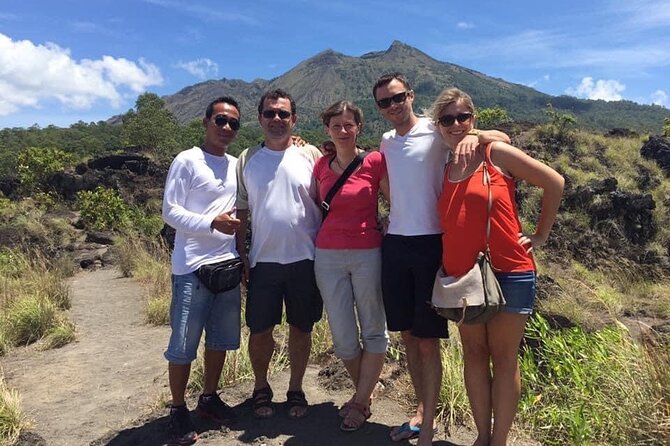
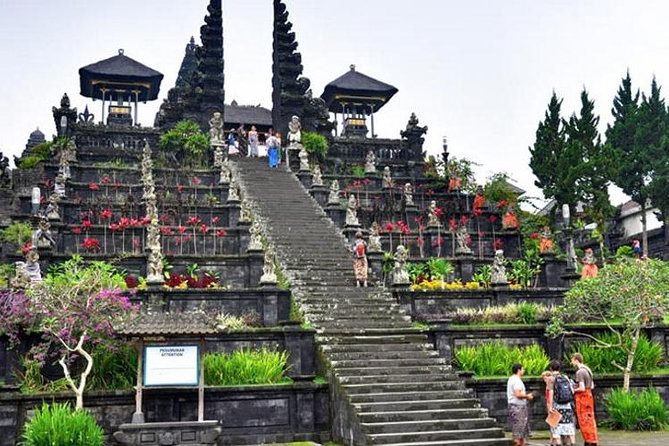
The final major temple stop is Besakih Temple (Pura Besakih), described as Bali’s largest and most famous temple complex. It sits high on the slopes of Mount Agung, and it’s estimated to have been established around 1007 A.D..
You’re given about 1 hour here, which is a fair chunk of time considering how much else you’ve covered that day.
Why Besakih is such a meaningful capstone: it’s not one small shrine in one tight corner. It’s a large complex, and it helps you connect what you learned earlier—about how sacred spaces work and how the island’s spiritual life expresses itself across different places.
What to do with your hour: don’t rush to “collect” every photo. Instead, pick a focal point or two within the complex, watch how people move through spaces, then walk with intention to your next viewpoint. The scale can make you want to speed up. Slowing down makes it feel more like you’re visiting a place of worship and less like you’re scanning a checklist.
Price and value: $111.85 for a private car, entry fees, and lunch
At $111.85 per person, this is not a budget “DIY-style” outing. It is priced like a full-day structure—one private car, an English-speaking driver-guide, entry fees, and lunch included.
Here’s how I’d judge value: if you were to arrange a similar route with a private vehicle plus tickets plus a driver who can explain what you’re seeing, the cost usually climbs fast. The inclusion of entry fees helps a lot, especially on temple days where ticket lines and varying ticket rules can add friction.
The trade-off is still the day length. At 11 hours, you’re buying time efficiency, but you’re also committing to a long stretch. If you’re the type who wants downtime between sights, this schedule might not match your travel style.
One more subtle value point: the tour includes context. Even with any unevenness in English (the feedback I’m seeing includes notes that guide English can be only so-so), the guide concept is still the right one. A driver who can explain what you’re looking at transforms a temple stop from a photo background into a meaningful visit.
Who should book this Bali temple tour (and who should skip it)
This tour fits best if you:
- want a temple-focused day without planning stress
- like the idea of a private car and an English-speaking driver-guide
- enjoy culture and storytelling, not just monuments
- don’t mind a packed schedule and being in motion most of the day
I’d tell you to skip it or adjust expectations if:
- you really hate long days and late meals
- you need a slower pacing with lots of downtime
- you’re uncomfortable with stair steps at places like Gunung Kawi
If you’re traveling from Kuta and want inland highlights—especially Barong & Kris, Mount Batur, and Besakih—this is a clean, efficient way to cover them in one go.
Should you book?
If your goal is to see major Bali spiritual sites plus Mount Batur views in a single day, this tour is a strong pick. The big win is the structure: 9:30 Barong & Kris sets the tone, and the rest of the itinerary builds toward Besakih on Mount Agung slopes.
Just go in knowing the pacing is tight and the day is long (around 11 hours), and that lunch can be later than you’d want. If that trade-off sounds okay for you, booking makes sense—especially because entry fees, lunch, and a private car are built in.
FAQ
What time does the tour start?
The tour start time is 8:00am.
How long is the Bali Temple Tour?
The duration is 11 hours (approx.).
Where does the tour take place?
It’s listed for Kuta, Indonesia.
How much does the tour cost?
The price is $111.85 per person.
Is this tour private?
Yes. It’s a private tour/activity, so only your group participates.
What’s included in the price?
It includes a private car, an English-speaking driver-guide, entry fees, and lunch.
Is pickup offered?
Yes, pickup is offered.
Do I get a mobile ticket?
Yes, the tour includes a mobile ticket.
Which stops are on the itinerary?
The itinerary includes: Batubulan (Barong & Kris Dance), Puseh Batuan Temple, Goa Gajah (Elephant Cave), Mount Kawi (Gunung Kawi), Mount Batur / Kintamani, and Besakih Temple.
Is the Barong & Kris dance at a fixed time?
Yes. The schedule notes the trance-style event at 9:30am.
What if the weather is bad?
The experience requires good weather. If it’s canceled due to poor weather, you’ll be offered a different date or a full refund.