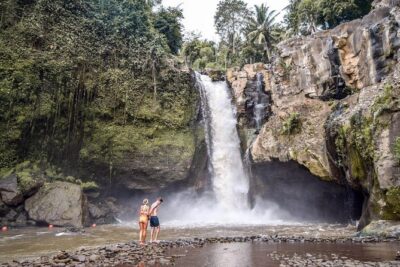
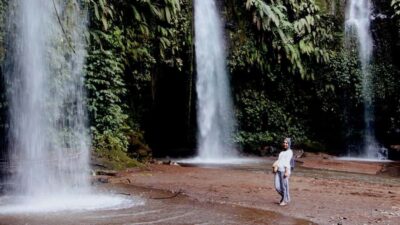
Two wheels can beat Bali traffic. This downhill ride drops you from Kintamani into rural Bali, with real cultural stops along the way. You get the big “Mount Batur” view early, then spend the day pedaling past bamboo forests, villages, and rice terraces.
Two things I really like: the included Balinese lunch in the countryside (with fresh coconut water), and the fact that your guide actually explains what you’re seeing instead of just pointing. A small heads-up: even though it’s “easy for most fitness levels,” you still need to be comfortable riding a bicycle, and a few riders may want extra hand protection because some bikes can rub.
If you’re ready for quieter roads and calmer moments away from Ubud crowds, this is a very practical day trip. The payoff is a mix of scenery and daily life—plus options like a twilight fireflies extension on afternoon departures.
In This Review
- Key highlights at a glance
- Kintamani to Taro: how the downhill day actually flows
- Who your guide is makes a difference
- That first Mount Batur view: worth the early start
- Starting the ride: safety briefing and what downhill really means
- Coffee plantation stop: tastings plus a real local craft
- Bamboo forests, jungle trails, and quieter villages
- Holy white cow conservation area: religion in plain sight
- Local family compound: architecture and daily rituals
- Taro Village lunch: coconut water and a calm countryside setting
- Optional fireflies at twilight (afternoon tours only)
- Price and value: why $33 can work well here
- What to bring (and a couple comfort upgrades)
- Who should book this Kintamani downhill bike tour?
- Should you book it or skip it?
- FAQ
- Do I get pickup and drop-off?
- Is the biking difficult?
- Are the bike and helmet included?
- What food and drinks are included?
- What stops are part of the route?
- Is there an optional fireflies add-on?
- What should I bring and what should I avoid?
- What language is the tour in, and can I pay later?
Key highlights at a glance
- Mount Batur views before you pedal, with a look at black lava fields and the crater lake
- Downhill cycling through coffee plantations, jungle trails, and rice terraces
- Cultural stops you can actually ask questions about, including a local family compound
- Holy white cow conservation area, tied to Hindu rituals
- Balinese lunch in Taro, served in nature with coconut water
- Optional fireflies add-on at twilight for afternoon tours
Kintamani to Taro: how the downhill day actually flows
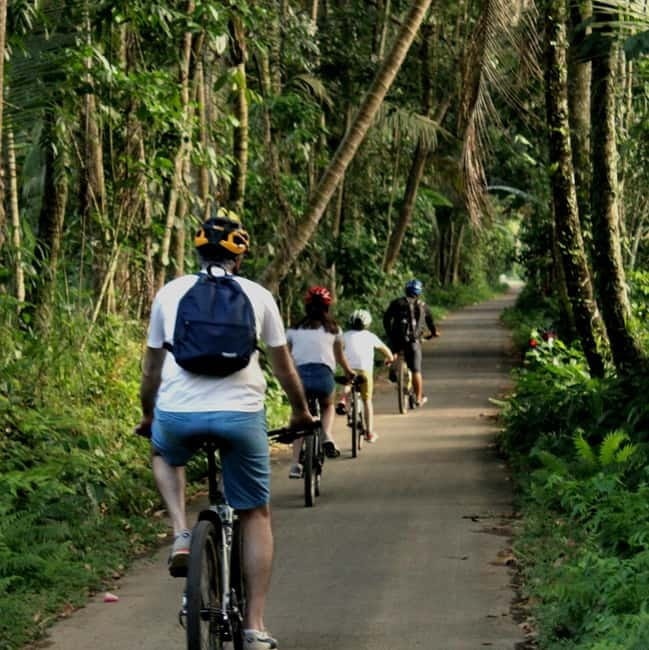
This tour is built around one simple idea: start high, then ride downhill through Bali’s everyday countryside toward Taro Village. You begin with an early drive up to Kintamani, take in the Mount Batur panorama, then bike back down on quiet rural roads.
The day has a nice rhythm. You’ll get a few scenic “wow” moments in the morning, then the route stays interesting with frequent cultural and nature stops. By the time you reach Taro, you’re ready for food, shade, and an unhurried end to your ride.
You can also read our reviews of more tours and experiences in Delodsema Traditional Village.
Who your guide is makes a difference
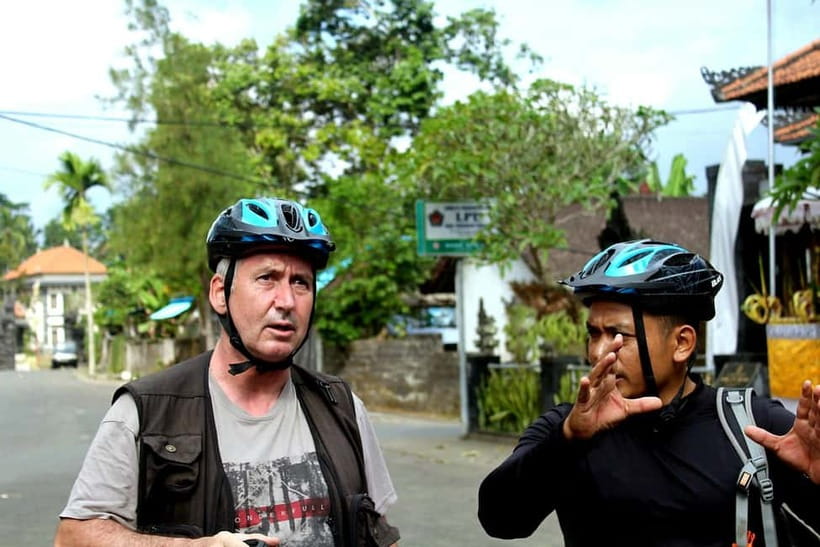
The tour leans hard on guide-led storytelling, and the reviews back that up. People praised guides like Komang Oyik, Tonic, and Made for being friendly, informative, and tuned into showing local life instead of rushing through it. In practice, that means you’ll stop more than once to learn what you’re looking at, including how village life works and how Hindu beliefs show up in daily routines.
That first Mount Batur view: worth the early start
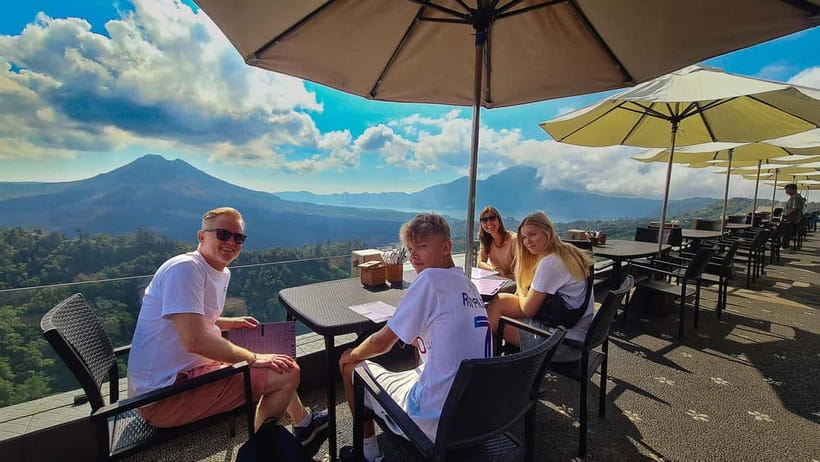
Before your tires hit the road, you’ll be driven to Kintamani for famous views of Mount Batur. You’ll also see the black lava fields and the crater lake—an unusual mix of dramatic volcanic ground and calm water that feels very different from Ubud’s greenery.
There’s even an optional restaurant stop near the volcano. That’s a smart add-on if you want extra photo time or a quick breather before you start the downhill portion. It also helps you get your bearings—high altitude air, cooler temperatures, and then you drop into warmer, more humid jungle vibes as the ride continues.
Practical note: bring your camera and plan to spend a few minutes just looking. This is one of the rare times in Bali where the terrain feels truly “geologic,” not just scenic.
Starting the ride: safety briefing and what downhill really means
Once you arrive at the bike starting point, you’ll get a short safety briefing from your guide. After that, you hop on a well-maintained mountain bike and wear a helmet (both are included).
Downhill biking can sound intimidating, but the tour is described as suitable for all fitness levels, as long as you can comfortably ride a bicycle. Translation: you’re not doing technical trail riding with jumps or steep obstacles. You’re mostly dealing with speed management, steering, and staying aware on rural roads.
The best way to enjoy this part is to stay relaxed and let the downhill do the work. If you tense up, you’ll fatigue your arms faster. And if you’re the kind of rider who gets hand numbness, consider bringing your own gloves—one review suggested bike gloves would be a helpful improvement.
Coffee plantation stop: tastings plus a real local craft
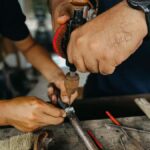
One of the most loved moments is the coffee plantation visit. You’ll taste a variety of local coffees and herbal teas, and you’ll learn how traditional Balinese coffee is made.
This isn’t only about drinking something warm. It’s a hands-on window into how agriculture works in the highlands and why certain crops matter to local families. You also get a break from biking—shade, sitting time, and a chance to cool down.
If coffee isn’t your thing, you might still like the herbal tea tasting. The point is to understand the process and the people behind it, not to “collect” a quick photo stop.
Bamboo forests, jungle trails, and quieter villages
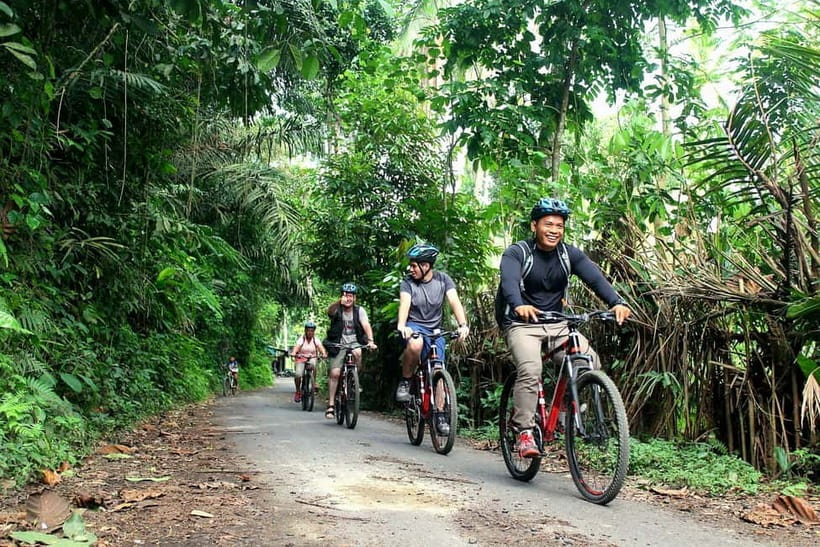
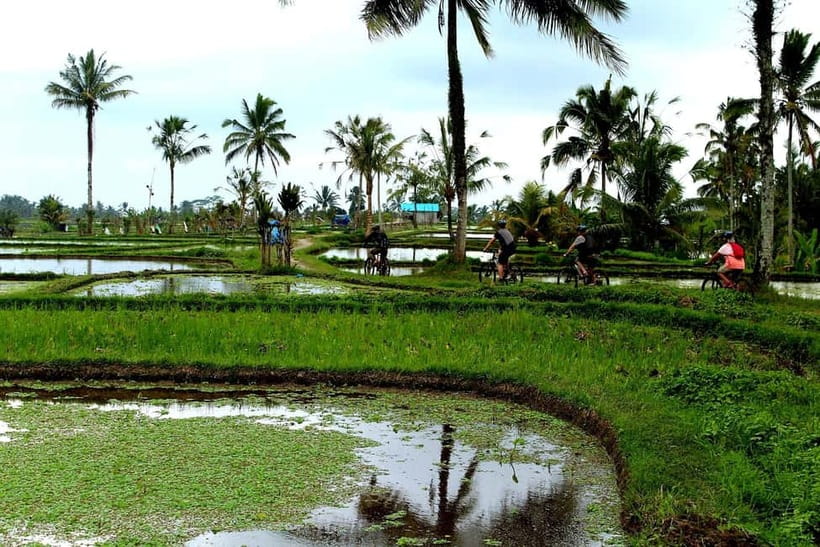
After the plantation, the ride becomes the main event. Expect stretches through bamboo forests and jungle trails—cooler, greener corridors where the road feels calmer and the sounds of nature are part of the experience.
You’ll also pass rolling rice terraces and villages that many tourists don’t see. What makes this section feel special is the pace. You’re moving, but you’re not racing. It’s slow enough to notice small details—temple gates, roadside offerings, family compounds—without feeling like you’re on a strict schedule.
This is also where the guide’s explanations matter most. When someone tells you what Hindu beliefs look like in everyday village life—what you might notice near homes or places of worship—the scenery starts to make sense instead of just being pretty.
Holy white cow conservation area: religion in plain sight
One of the more distinctive stops is the holy white cow conservation area. These sacred white cows have an important role in Balinese Hindu rituals.
Even if you’re not deeply religious, this stop connects the dots between culture and animals in a way that feels grounded, not staged. The cows aren’t just a “see it and go” attraction; they tie into belief and practice, so it helps to ask your guide what you’re noticing and why it matters locally.
Local family compound: architecture and daily rituals
Next comes a visit to a local family compound—traditional Balinese home life, seen from the inside. You’ll get help understanding the layout, the architecture, and daily rituals of village living.
This is often where the tour shifts from scenery to meaning. In Bali, the home isn’t just where people sleep—it’s part of a living spiritual and social world. That’s the kind of insight that makes a bike tour feel more like travel than activity.
One review praised the private house stop as a chance to experience real Balinese culture. In practice, it’s the difference between seeing a temple from the road and understanding how people actually structure their days around community and belief.
Taro Village lunch: coconut water and a calm countryside setting
The ride finishes in Taro Village, described as one of the oldest settlements on the island. You’ll enjoy a Balinese lunch here in a natural setting surrounded by rice fields and jungle views.
Lunch is included, and so is fresh coconut water—simple, refreshing, and very “Bali” for a day of cycling. The warung-style meal is the perfect wind-down after hours of moving, and it gives you time to talk with your guide about what you saw.
If you’re picky about food or timing, keep in mind that your meal is part of the tour flow, so it isn’t a quick snack on demand. But it’s also not a rushed “eat and run.” It’s meant to be the relaxed ending to the downhill.
Optional fireflies at twilight (afternoon tours only)
If your schedule allows, there’s an optional add-on for afternoon tours: seeing fireflies at twilight. It’s described as a magical end to the cultural adventure, and it matches the whole tone of the day—quiet, natural, and reflective.
Even if you’re not sure you care about fireflies, it’s a good idea to consider it if you enjoy simple nature moments. It’s not another “stop” that demands attention; it’s more like nature’s show after the bike ride winds down.
Price and value: why $33 can work well here
At about $33 per person, the value is strong—especially if you’re staying in the Ubud area. Your cost includes:
- free pickup and drop-off in the Ubud area
- entrance ticket for Kintamani
- a well-maintained mountain bike and helmet
- a local guide
- fresh coconut water and a Balinese lunch
- visits to a local family compound plus cultural insights
What’s not included is transportation if you’re outside Ubud (pickup/drop can be arranged from other areas for an additional cost) and personal expenses.
Here’s how I’d think about the value: you’re paying for more than the bike. You’re also paying for the guide-led cultural context, the included food, and the morning drive up to Kintamani. If you tried to build this day yourself, you’d likely spend similar money on transport plus a guide plus lunch—without the smooth handoffs between stops.
What to bring (and a couple comfort upgrades)
The essentials are pretty straightforward:
- Camera
- sunscreen
- comfortable clothes
- insect repellent
You’ll also want to wear practical footwear. It’s a bike day, and you’ll be stopping a few times, so sandals can get annoying.
One comfort tip from the reviews: bike gloves could help. A past suggestion was that some bikes can hurt hands after a while. Even if the bikes are well-maintained, your comfort depends on how your hands feel after repeated braking and steering. If you’ve ridden long days before, you already know gloves can be a game changer.
Avoid alcohol and drugs during the tour, and keep sharp objects out as instructed.
Who should book this Kintamani downhill bike tour?
This tour fits best if you want:
- a downhill bike ride without technical difficulty
- cultural learning that includes real village life stops
- a day outside the usual Ubud sightseeing loop
- a relaxed ending with lunch in rice-field scenery
It’s not suitable for people who can’t ride a bicycle. If you’re nervous on two wheels, you might spend the day focused on balance instead of enjoying the route and the explanations.
Should you book it or skip it?
I think you should book this tour if you want Bali that feels lived-in: bamboo, rice terraces, temples in villages, and a lunch that tastes like you earned it. The included guide time, coconut water, helmet, and lunch make the $33 price feel fair, not like you’re paying for a basic “bike rental.”
Skip it only if bike riding itself is a problem for you, or if you’re expecting a pure sightseeing day with long museum-style stops. This is movement plus meaning—quiet roads, cultural encounters, and a real countryside finish in Taro Village.
FAQ
Do I get pickup and drop-off?
Pickup and drop-off are included for the Ubud area. If you’re staying elsewhere in Bali, pickup and drop-off can be arranged for an additional cost.
Is the biking difficult?
The tour is downhill and suitable for most fitness levels. It’s best if you’re comfortable riding a bicycle, since you’ll be on the bike for the main part of the day.
Are the bike and helmet included?
Yes. You’ll get a well-maintained mountain bike and a helmet as part of the experience.
What food and drinks are included?
Lunch is included, along with fresh coconut water. The lunch is described as a Balinese meal served in the natural setting in Taro Village.
What stops are part of the route?
The tour includes Kintamani views, a coffee plantation tasting, bamboo forest and jungle trail riding, a holy white cow conservation area, a local family compound visit, and an artisan/village life segment before lunch in Taro.
Is there an optional fireflies add-on?
Yes. For afternoon tours, you can add a twilight fireflies extension at the end of the experience.
What should I bring and what should I avoid?
Bring a camera, sunscreen, comfortable clothes, and insect repellent. Avoid weapons or sharp objects, and the tour does not allow alcohol and drugs.
What language is the tour in, and can I pay later?
The tour is available in English and Indonesian. It also offers a reserve & pay later option, so you can book while keeping flexibility.