Street food in Denpasar starts at 5 pm. This Bali small-group night tour takes you through local markets in Denpasar and an Eat Street area where you’ll try ceremony-level favorites like Babi Guling with a friendly English-speaking guide.
Two things I really like: the scale (max 12 people) keeps the pacing easy and the questions coming, and you get proper context for what you’re eating, not just random tastings. In past groups, guides such as Putra, Irfan, Lena, and Srix have been highlighted for explaining how Indonesian food works and what to look for in the stalls.
One consideration: this tour can’t accommodate vegan diets or gluten allergies/intolerances, and any specific dietary requests need to be shared at least 24 hours ahead.
In This Review
- Key Highlights Worth Planning For
- Denpasar Street Food at 5:00 pm (That’s the Sweet Spot)
- Stop 1 in Denpasar: Market Alleys and a Taste-Prep Walk
- Kreneng Market to Eat Street: How You Get Local-Only Food
- What You’ll Eat: Babi Guling, Jaje Bali, Soups, and Jasuke
- The Guide Factor: Why the Picks Feel Smart (Not Random)
- Small Group Size: Better Pace, Better Questions
- Community-First Food: Local Vendors, Local Buying
- Dietary Limits and Who Should Skip This One
- Price and Value: Why $45 Makes Sense for This Meal Mix
- Before You Go: Simple Tips That Improve Your Evening
- Should You Book This Bali Small Group Street Food Tour?
- FAQ
- How long is the Bali Small Group Street Food Tour?
- Where does the tour start and what time does it begin?
- Where does the tour end?
- What food tastings are included?
- Can the tour accommodate vegans or gluten allergies?
- How many people are in the group?
- Is cancellation free if plans change?
Key Highlights Worth Planning For
- Max 12 people for a more personal route through markets and stalls
- Kreneng Market + Eat Street in areas where the vendors are mostly local
- Babi Guling included, a dish traditionally linked to ceremonies
- Indonesian coffee (hot or cold) alongside soups and snacks
- Local sourcing emphasis, with food bought and grown locally at the venues you visit
- Carbon-neutral operation through a B Corp certified company
Denpasar Street Food at 5:00 pm (That’s the Sweet Spot)
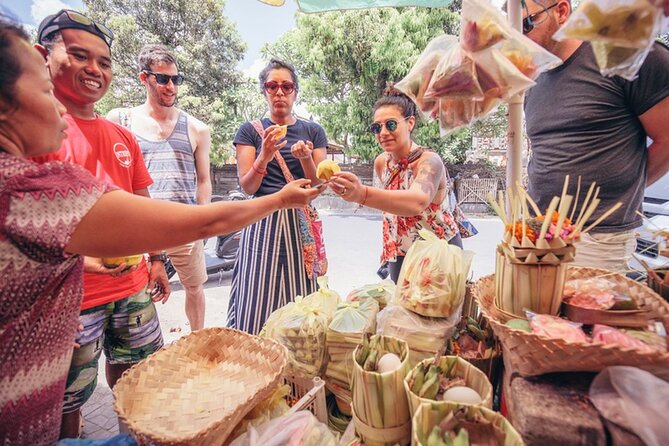
I like this tour’s timing because the day-to-night switch matters for street food. A 5:00 pm start puts you in the right window for night market energy while you’re still not fighting the late-day rush. The route is built around walking through market lanes and then moving to an Eat Street area a bit behind the big tourist zones, so you’re not just eating in a food hall-style setting.
Also, you’ll start at a real public landmark: Kantor Pos Indonesia on Jl. Kamboja No. 6 (Sumerta Kauh). That makes meeting up simpler than trying to find a random restaurant door. You’ll finish near Jl. Gajah Mada (end point at a coffee shop), which is helpful if you want to continue exploring on your own afterward.
One more small plus: you get a mobile ticket. It’s not a life-changing feature, but it does remove one headache when you’re switching between buses, rideshares, and walking.
You can also read our reviews of more tours and experiences in Kuta.



Stop 1 in Denpasar: Market Alleys and a Taste-Prep Walk
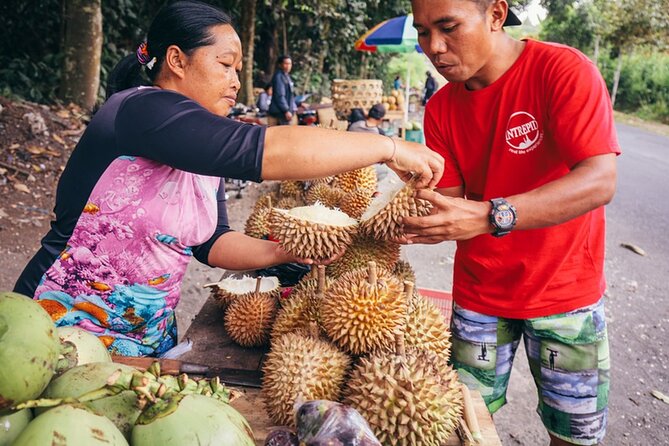
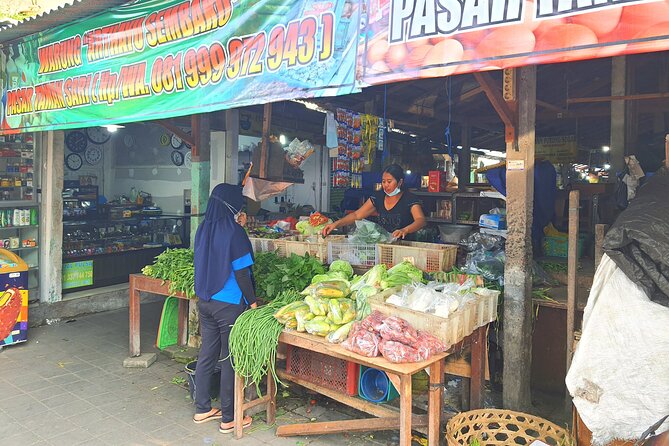
Your tour begins with a guided visit to a local food market in Denpasar (near the start location). The guide leads you in and out of narrow alleyways, pointing out foods you’ll likely see again later. This “see it now, eat it later” approach is one of the smartest parts of the tour, because it helps you understand what you’re looking at—ingredients, textures, cooking methods—so you’re not just guessing once the tasting starts.
This first stretch is about 1 hour, and there’s no admission ticket charged here. In practice, that means your money is staying focused on the guide and the food experiences rather than separate entry fees.
What to consider: market walking is close-up and hands-on. If you prefer wide, airy spaces, you might find the alley lanes a bit tight. But if you want the real feel of food culture in Denpasar, this is the right style of immersion—without pretending it’s a staged show.
Kreneng Market to Eat Street: How You Get Local-Only Food
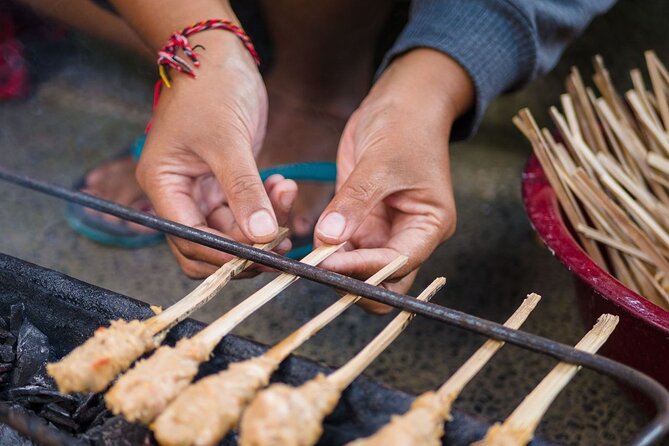
After the Denpasar market stop, you head to Kreneng Market for the second part of the experience. This is where the tour shifts into its main tasting mode, with your guide navigating through the market and then escorting you to an Eat Street area tucked behind the major tourist zone.
Kreneng Market is described as being near a heritage street in Central Denpasar, and the key idea is that it’s a market for locals first. The vendors are local, and beyond this organized tour, the area isn’t designed for mass sightseeing. That matters because it changes what you notice: you’ll see how people buy and eat, not just how a curated menu is presented.
From there, there’s a short drive to the Eat Street area. Timing is roughly 1 hour 30 minutes for this overall segment, and admission here is included. Once you arrive, the guide starts at the top of the street and works your way through small warungs and stalls. You’re not expected to order blindly; you’re guided to items that make sense together, which is a big help when you’re trying multiple Indonesian dishes in one evening.
One practical note: this is a guided route, so it’s not the kind of tour where you can wander off whenever something catches your eye. If you’re the type who likes to roam freely, you may need to set expectations that the fun happens through following the guide’s choices.
What You’ll Eat: Babi Guling, Jaje Bali, Soups, and Jasuke
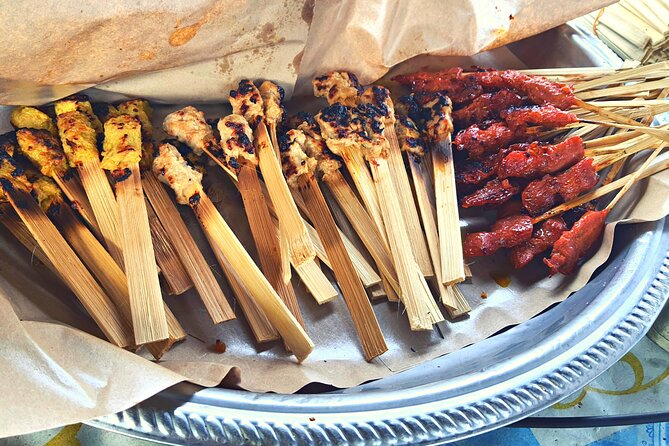
Street food tours succeed or fail on what’s actually on the table. This one aims for recognizable classics with a few cultural surprises—and it’s heavy on Balinese staples.
Here’s what’s specifically included in the tasting set:
- Jaje Bali (a traditional Balinese dessert)
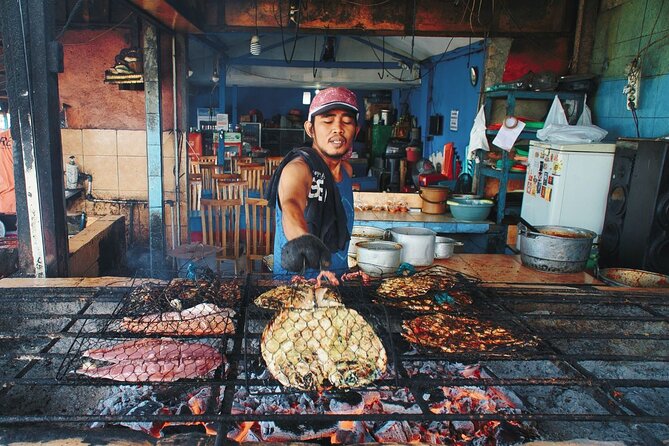
- Babi Guling (rotisserie-cooked suckling pig)
- Indonesian soups such as Soto Ayam or Bakso
- Jasuke (sweet, steamed corn)
- Martabak Telur (a traditional fried pancake with egg)
- Indonesian Arabica coffee (hot or cold)
The big “wow” dish is Babi Guling. It’s traditionally served at ceremonies, which means you’re not just eating a popular snack—you’re experiencing a food tradition that has a deeper cultural role in Balinese life. Your guide is there to explain that connection so you understand why this dish isn’t just casual bar food.
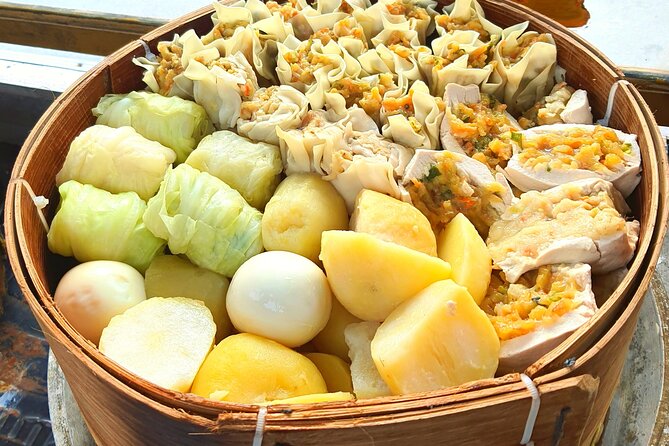
Soups like Soto Ayam or Bakso add a comforting middle step. Even if you’re adventurous, soup helps break up the pace when you’re trying several items back-to-back. And the corn-based Jasuke gives you something sweet and soft after savory bites.
If fried pancake sounds heavy, it can be, but the tour’s order usually helps. You’re tasting a mix across textures and flavors instead of eating only one style of dish all night.
A detail worth knowing: additional food and drinks are not included. So if you fall in love with a particular stall, you may want to budget extra. The tastings are designed to give you variety, not unlimited sampling.
The Guide Factor: Why the Picks Feel Smart (Not Random)
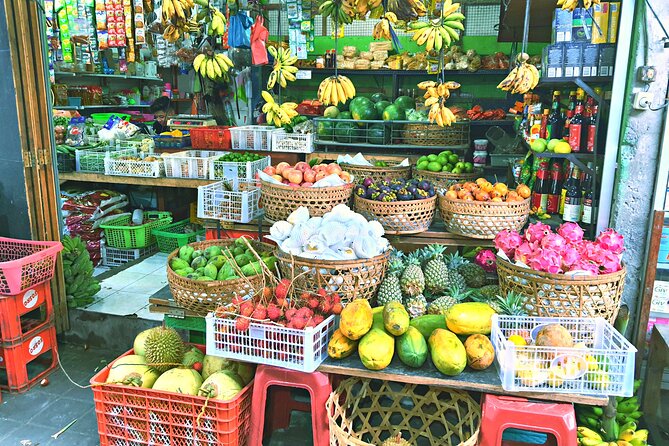
What turns a food walk into a real experience is the guide’s brain. This tour runs with a friendly local English-speaking food lover guide, and the role isn’t just translation—it’s selection, pacing, and explanation.
In past groups, guides such as Irfan have been praised for knowing how to choose items like kue (cakes) and soups, and for explaining Indonesian food in a clear, practical way. Others, including Lena and Srix, have been noted for being easy to talk with and for sharing customs and points of interest along the way.
That matters for you because the market can be overwhelming when everything smells amazing. A good guide helps you answer questions like:
- What should I order if I don’t speak the language?
- Which stall makes the version that locals actually go for?
- How do these dishes fit into everyday Balinese food culture?
There’s also a helpful “what else to see, do, and eat during your stay” component. I love this because it turns the tour into planning fuel. After you’ve learned what’s worth trying, your next meal choices get easier.





Small Group Size: Better Pace, Better Questions
This is the kind of tour where group size actually changes the experience. With a maximum of 12 people, you’re more likely to get personal attention while you’re moving through tight market spaces and stopping at multiple stalls.
In a larger group, people often lose time: someone has to stop to translate, others shuffle, and the line at each stall becomes chaos. Here, the smaller scale helps keep things organized, so you spend less time waiting and more time eating and learning.
And yes, there’s an option for private as well. If you’re a couple, a small family group, or you just don’t want to share your route with strangers, private can feel like a more relaxed version of the same format.
Community-First Food: Local Vendors, Local Buying
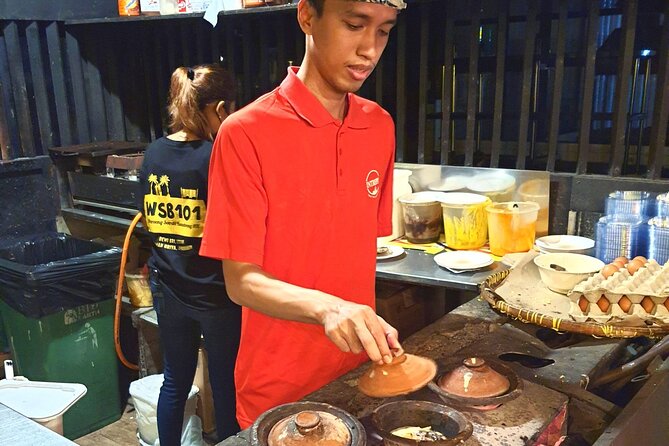
One of the tour’s strongest values is that it’s designed to support the people who run these food stalls. The experience emphasizes that vendors are locals and that the food prepared at venues is grown and bought locally. In other words, this isn’t just you sampling—it’s you participating in local commerce.
There’s also a stated community-impact detail: the tour directly employs 2 to 5 locals. That’s not just a feel-good line. When a tour is organized around local buying and local vendors, more of the money stays in the hands of the people who keep these markets alive.
The carbon-neutral note is also part of the package, and it’s run by a B Corp certified company committed to using travel as a force for good. I don’t treat carbon-neutral operations as the only reason to book, but it does align with the overall style here: food-first, local-first, impact-aware.
Dietary Limits and Who Should Skip This One
This tour is very specific about what it can and can’t handle. It cannot cater for vegans and gluten allergies/intolerances. For any specific dietary request, the tour needs to know 24 hours before the start time.
So if you’re vegan, or if gluten is a serious medical issue, you’ll likely need a different street food option in Bali. The “small group” and “local market” setup is exactly what makes this challenging—there’s no mention of special ingredient substitutions or dedicated allergy handling.
Other practical fit notes:
- Children under 6 are not permitted.
- The tour states most people can participate.
- Transfers to and from the meeting point are not included, so you’ll want a plan to get to Kantor Pos Indonesia before 5:00 pm.
If you’re comfortable eating what’s offered and you don’t have major dietary restrictions, this tour is a strong match.
Price and Value: Why $45 Makes Sense for This Meal Mix
At $45 per person for about 3 hours, this is priced like a structured small-group experience, not a random grab-and-go tasting. The value comes from how many distinct items are included.
You’re not just paying for a guided walk. You get:
- Market time with a local English-speaking guide
- Multiple tastings (dessert, pig dish, soups, sweet corn, fried pancake)
- Arabica coffee
- Tips for what else to see and eat
Admission is also handled in the experience itself (free for the first market segment and included for the second). When you total up what you’d normally pay for multiple dishes and drinks in Denpasar, plus the guide’s help, $45 starts to feel less like a premium and more like buying access to a smart route.
Would I pay more if the tastings were mostly repeats or filler snacks? Probably not. But here, the included items are varied, and the inclusion of Babi Guling is the kind of cultural-food access that’s hard to arrange on your own.
One caution: since additional food and drinks aren’t included, you might spend a little more if you want extra rounds at your favorite stall.
Before You Go: Simple Tips That Improve Your Evening
This tour is short, but it’s still a market night, so a few choices will make it smoother.
I recommend you wear comfortable shoes with good grip. Market lanes can be uneven, and you’ll be moving between stalls and a short drive. Bring something small for water and use the coffee tasting as your planned caffeine stop.
If you want to avoid decision stress, go hungry but not starving. You’ll have several tastings, and the goal is variety and learning—not turning the last stop into a stomach marathon.
Also, if you have any dietary requests that are allowed, send them at least 24 hours ahead so the team has a chance to respond.
Should You Book This Bali Small Group Street Food Tour?
Book it if you want a guided way to eat Balinese and Indonesian classics in Denpasar, with enough structure to make ordering feel easy. The combination of Kreneng Market + Eat Street, the small group size, and the inclusion of ceremony-linked Babi Guling makes this a memorable food-focused evening, even if you’re not a “food tour person.”
Skip or reconsider if vegan eating is a must, or if gluten allergies/intolerances are a serious concern. The tour is clear that it can’t meet those needs.
If you’re on the fence, here’s my practical rule: if you’d rather follow a smart local plan than worry about what to order, this tour is a good bet. And if you want a strong snapshot of how Balinese street food fits into daily life and traditional culture, you’ll leave with both full plates and useful next-meal ideas.
FAQ
How long is the Bali Small Group Street Food Tour?
It runs for about 3 hours (approximately).
Where does the tour start and what time does it begin?
The start point is Kantor Pos Indonesia, Jl. Kamboja No. 6, in Denpasar, with a start time of 5:00 pm.
Where does the tour end?
The tour ends at a coffee shop on Jl. Gajah Mada No. 122, Pemecutan, Denpasar.
What food tastings are included?
Included tastings include Jaje Bali, Babi Guling, Indonesian soups such as Soto Ayam or Bakso, Jasuke (sweet steamed corn), Martabak Telur (fried pancake), plus Indonesian Arabica coffee (hot or cold).
Can the tour accommodate vegans or gluten allergies?
No. The tour cannot cater for vegans and gluten allergies/intolerances. If you have another specific dietary request, you need to inform the operator at least 24 hours before the tour starts.
How many people are in the group?
The tour has a maximum of 12 travelers, and there’s also an option for a private tour.
Is cancellation free if plans change?
Yes. You can cancel up to 24 hours in advance for a full refund.