Sunset time at Uluwatu is stressful without a pro. This private route pairs cliff-top temple views with the Kecak dance moment, then ends in Jimbaran’s beach-cafe strip. It’s built for people who want timing to behave and driving to stay manageable.
I like that a private driver handles the hairpin south-coast route. You get pickup from Ubud and most south Bali hotels, which is a big deal when you’re trying to arrive before the best light hits the cliffs.
I also like how Jimbaran is set up for an easy dinner. You’ll head to Pantai Muaya, where grilled seafood is served on sand under candlelight tables. The main thing to watch is what’s not included: temple admission and dinner aren’t covered, so you’ll still pay locally at both stops.
In This Review
- Key highlights I’d plan around
- Why this sunset route feels easier than self-driving
- Getting to Uluwatu Temple without fighting the clock
- Uluwatu Temple: what you’re really looking at
- The Kecak dance moment: Ramayana scenes and what to expect
- A practical approach to timing (and why it matters here)
- Jimbaran Bay and Pantai Muaya: seafood dinner on the sand
- Price and logistics: what $42 actually buys you
- Who this Bali sunset plan suits best
- Should you book this Bali sunset tour?
- FAQ
- How long is the Uluwatu Temple, Kecak Dance, and Jimbaran experience?
- Is pickup included?
- What’s included in the price?
- Is dinner included at Jimbaran?
- Do I need to pay for Uluwatu Temple admission?
- What if the weather is poor for sunset?
Key highlights I’d plan around
- Private driver from Ubud and south Bali hotels: less stress, more sunset time.
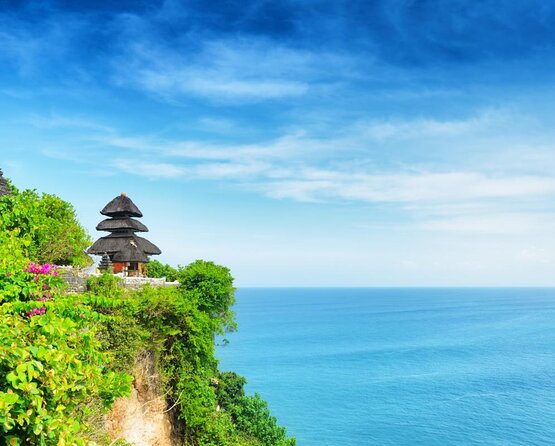
- Uluwatu Temple cliff angles: walk the area to the left (south) for a better view.
- Kecak with Ramayana scenes and a beatboxing chorus: traditional storytelling with a modern twist.
- Monkey-proof your stuff: they’re known to grab sunglasses, spectacles, hats, and handbags.
- Pantai Muaya’s candlelit beach dining: grilled seafood served at night on the sand.
Why this sunset route feels easier than self-driving
South Bali can be a lot even when you’re an experienced rider. Traffic, tight lanes, and sudden stops make the last stretch toward Uluwatu feel like it’s daring you to be late. With a private driver, you remove the biggest variable: getting there on time without turning your evening into a navigation stress test.
This is also a practical choice if you’re not traveling with a lot of buffer time. The tour runs about 5 to 6 hours, so you want the schedule to hold. Instead of juggling maps and timing, you’re free to focus on the two payoff moments: Uluwatu at sunset and Jimbaran after dark.
There’s another quiet benefit. You don’t have to coordinate meeting points with other tour groups or worry about how long a public transfer might stall. This is only your group, so the day stays more under your control.
You can also read our reviews of more tours and experiences in Kuta.

Getting to Uluwatu Temple without fighting the clock
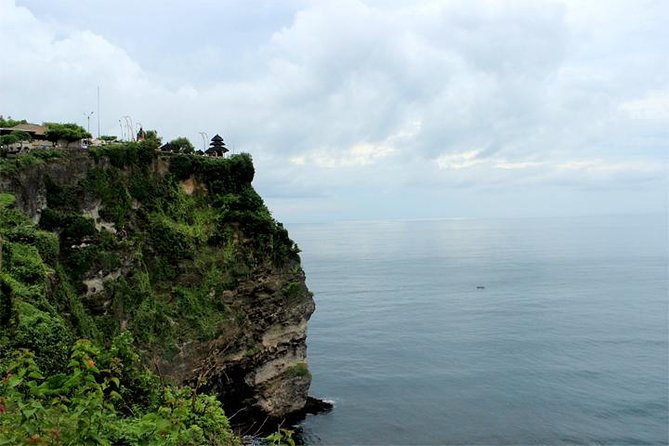
Your day starts with pickup, and the route is designed to get you to Uluwatu in time to settle in. Uluwatu Temple sits on the southwestern tip of the peninsula, with sheer cliffs dropping to the sea. That’s not just scenery. It means the location is sensitive to timing—light changes fast and the best viewing spots fill up.
At about 2 hours at the temple, you’ll have room to do two things that matter: see the temple itself and then reposition for sunset views. The cliff setting gives you options, and you don’t want to waste your one “go time” stuck in the wrong spot.
One more practical note: the tour uses a mobile ticket, which is handy if you want a low-fuss day. Keep your phone charged, and you’ll be ready when you need it.
Uluwatu Temple: what you’re really looking at
Uluwatu is a temple built into the drama of the coastline. You enter through an unusual arched gateway with statues of Ganesha on the sides. Inside, the walls are made of coral bricks and covered with carved scenes from Bali’s mythological world.
What makes Uluwatu special for sunset is not just what you see—it’s where you stand. For the best angle, you’ll want to walk around the cliff to the left (south) side of the temple. That simple move can change what you see as the sun drops behind the coastline.
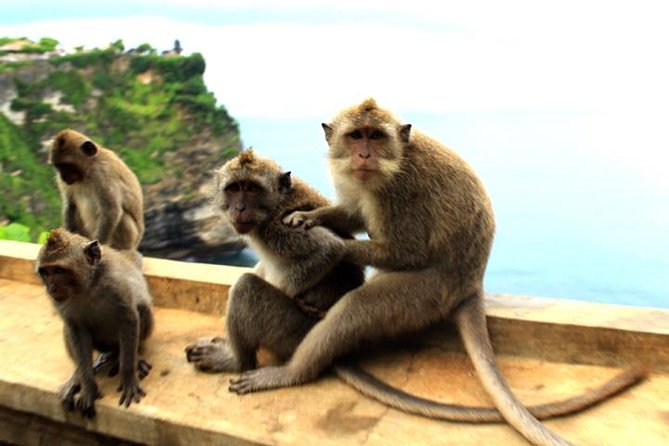
This is also the part of the day where I’d take “monkey safety” seriously. Uluwatu is known for monkeys that can snatch spectacles/sunglasses, and they may go for handbags, hats, and other small items. Don’t treat it like a cute zoo moment. Secure your things and keep valuables close.
A good plan:
- Wear sunglasses on your person (not loose in a bag).
- Store bags in a way you can close fast.
- Keep hats off surfaces where someone can snatch them.
If you do that, you’ll enjoy the temple and the cliff air without spending sunset time chasing stuff.
The Kecak dance moment: Ramayana scenes and what to expect
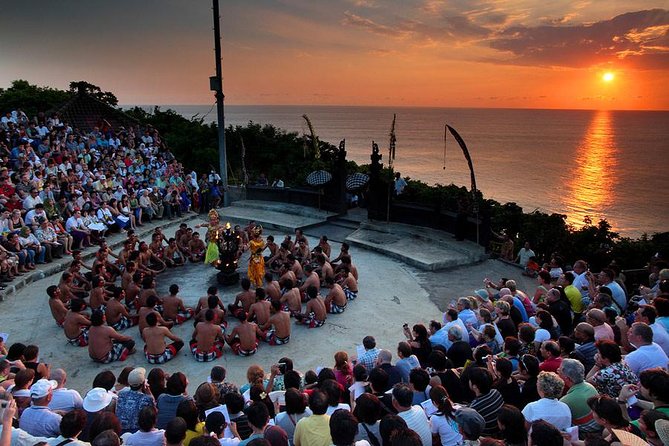
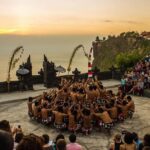
The big performance here is the Kecak dance, staged with the temple cliffs as the backdrop. Kecak is a group vocal performance that tells stories from the Ramayana. The sound is distinctive: a beatbox-style chorus is part of the experience, which gives the traditional story a punchy, modern rhythm.
There’s one piece of advice from the reality of how people interpret the show: Kecak is not automatically the same thing as what some visitors imagine when they hear fire dance. In other words, if you’re expecting a show where every performer is clearly doing a full fire spectacle, the experience may feel different than your mental picture. The version you’ll see is best understood as traditional Kecak, where fire-style elements can be part of the performance rather than the whole show.
My suggestion is to go in with the right expectation: treat it as storytelling through chant and stage action. When you do, the value lands faster because you’re watching the cultural structure instead of searching for your personal checklist.
Also, the setting matters. The whole scene becomes more cinematic because you’re watching from the cliff area beside the temple as the sky shifts. That’s the reason this part of the tour earns its place.
A practical approach to timing (and why it matters here)
With 2 hours at Uluwatu, you’re not just passing through. You need a buffer to:
- explore the temple areas,
- find the best sunset angle,
- and still be settled before the performance.
Then you head to Jimbaran for another 2-hour stretch. Jimbaran is where the evening turns from sightseeing into dinner time.
The total 5 to 6 hours means you’ll likely move at a steady pace, not a slow wander day. If you like to linger for photos, tell yourself that this is a “two anchors” schedule: temple views first, dinner second. Build your expectations around that.
And since this is weather-dependent, don’t ignore the forecast. The experience requires good weather, and if it’s canceled due to poor conditions, you’ll be offered a different date or a full refund.


Jimbaran Bay and Pantai Muaya: seafood dinner on the sand
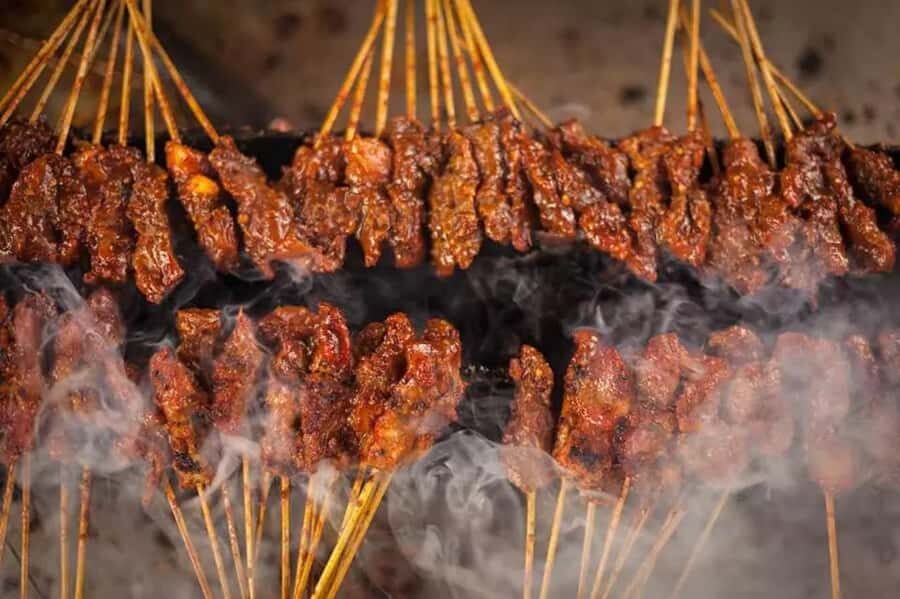
After the temple and performance, you’ll make your way to Jimbaran Bay, one of Bali’s go-to places for sunset and grilled seafood. The key area here is a strip of seafood cafes along the white-sand beach known locally as Pantai Muaya.
You’ll find seventeen seafood cafes lining the bay. Most are open in the afternoon and continue until late, which means you’re not walking into a sleepy area. When the sun starts to drop, the bay becomes a stage: you’ll see faint lights from Ngurah Rai airport on the horizon and traditional fishing boat lanterns at sea.
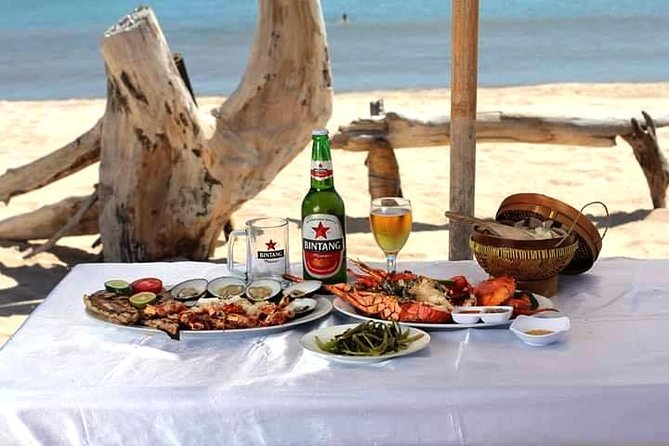
The dinner setup is part of the charm. Each venue offers fresh-grilled seafood served at candlelit tables on the sand. That matters because you’re not eating in a generic restaurant hall. You’re eating right where the evening shifts from daylight to night.
A quick reality check: dinner is not included. That’s normal for places like this—what the tour gives you is the access and time to eat. You’ll choose what you want from the seafood cafes and pay for it directly.
If you’re the type who likes to skim menus and pick your vibe, this is the right environment for it. If you want a pre-paid, guaranteed set menu, you’ll need to find a different type of package.
Price and logistics: what $42 actually buys you
The price is listed as $42 per group (with a limit mentioned as up to 5), and there’s also a note about a flat per-vehicle rate that can fit groups up to six. Either way, the structure is designed to make private transport less painful to budget for.
What you’re paying for is not just “a ride.” You’re paying for:
- private transportation,
- a schedule that aims for sunset timing,
- and a low-stress way to hit two far-apart areas in one evening.
What you’re not paying for is what you’d naturally expect to pay locally:
- Uluwatu Temple admission (not included),
- dinner (not included),
- and any fees and taxes not covered.
So how do you judge value? If you were to self-drive, you’d be paying for petrol and time stress, plus you’d still need to manage parking and timing yourself. If you’re traveling as a group, sharing the vehicle rate makes the private part feel far more reasonable.
If you’re a solo traveler, private tours may still be worth it for the ease, but the value equation shifts since you don’t split costs across multiple people. In that case, it’s worth comparing what you’d spend on transport plus the hassle cost of driving.
Who this Bali sunset plan suits best
This fits best if you:
- want sunset timing to be handled for you,
- don’t want to wrestle with south Bali driving in the late afternoon,
- and want a mix of culture + beach dinner instead of only one or the other.
It’s also a strong match for groups where one person gets sick of being the driver. Because it’s private, you can keep your pace and move as your group wants, without waiting around for strangers.
If you’re traveling with kids or people with limited tolerance for climbing and shifting around crowds, the temple experience might be a “plan smart” day. You’ll still have time to enjoy the setting, but you should expect some walking and standing in an outdoor cliff environment.
And if you’re worried about “monkey attention,” you’ll do better if you treat your belongings like you’re at a busy transit station—keep them secured and close.
Should you book this Bali sunset tour?
If your priority is a smooth, well-timed evening—temple sunset views, a real cultural performance, then Jimbaran beach dining—this is a solid booking. The biggest strength is the private driver approach: it removes the most stressful part of south Bali travel while keeping the day’s pacing realistic.
I’d book it when:
- you want Uluwatu Temple and Kecak without the risk of arriving late,
- you care about having time at Pantai Muaya for candlelit grilled seafood,
- and you’re traveling as a group where the private rate makes sense.
I’d think twice if:
- you’re expecting dinner to be fully included in the package price,
- you’re arriving with no flexibility for weather changes,
- or you strongly expect a very specific kind of fire dance spectacle. Kecak is traditional storytelling, and the performance vibe may be different from a casual fire-dance fantasy.
FAQ
How long is the Uluwatu Temple, Kecak Dance, and Jimbaran experience?
It lasts about 5 to 6 hours total, with roughly 2 hours at Uluwatu Temple and about 2 hours at Jimbaran Bay.
Is pickup included?
Yes. Pickup is offered from Ubud and most south Bali hotels, and you’ll be dropped back after the tour.
What’s included in the price?
The price includes private transportation. The tour also uses a mobile ticket.
Is dinner included at Jimbaran?
No. Dinner is not included. You’ll choose food at one of the Jimbaran seafood cafes along Pantai Muaya.
Do I need to pay for Uluwatu Temple admission?
Yes. Uluwatu Temple admission is not included. Jimbaran Bay access is free.
What if the weather is poor for sunset?
The experience requires good weather. If it’s canceled due to poor weather, you’ll be offered a different date or a full refund.