Bali’s Uluwatu Kecak Fire Dance is a sunset show with bite. The big draw is the way the performance rides the last light of day, so the chanting, costumes, and flames all land at the exact moment the sky turns gold. You’ll also see the story of the Ramayana brought to life through rhythmic group chanting and dramatic dance beats.
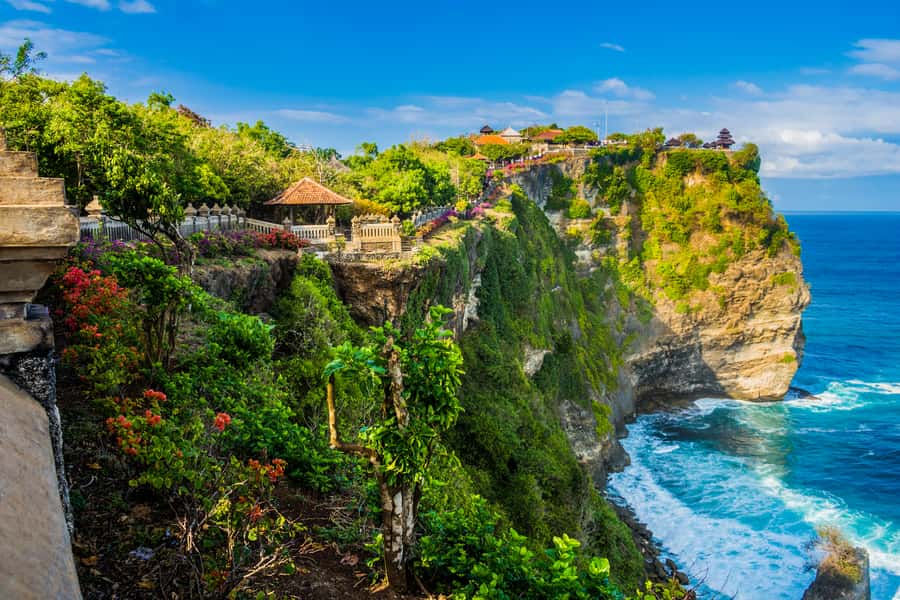
I like that the show leans hard into Balinese tradition: you get male performers in traditional costume doing the iconic “cak-cak-cak” style chanting without needing a bunch of instruments to carry it. I also love the setting at Uluwatu Temple—open-air amphitheater on ocean cliffs means the backdrop is part of the performance.
One thing to plan for: it’s crowded and it can run short if weather hits. If you’re going on the 7:00 PM slot, also expect more queue pressure, and you’ll want your patience.
In This Review
- Key Things You’ll Notice at Uluwatu Kecak and Fire Dance
- Why the 6:00 PM Show Feels Like the Real Deal
- Price vs. Real Cost: The $9 Ticket Isn’t the Only Fee
- Redeeming Your Voucher and Getting Into the Right Flow
- The Kecak Chanting Story: What the Show Actually Looks Like
- Fire Dance Finale: Flames, Heat, and the “Last Minutes” Energy
- Seats, Crowds, and Why Timing Changes Your View
- Uluwatu Temple Entry: A Quick Reality Check
- Monkeys at Uluwatu: Funny Until They Touch Your Stuff
- Weather and the Raincoat: Your Show Plan B
- Getting the Most From Your Evening: A Simple Game Plan
- Should You Book the Bali Uluwatu Kecak and Fire Dance Ticket?
- FAQ
- What time are the Kecak performances at Uluwatu?
- How long is the show?
- What is included in the ticket?
- Do I need to pay an extra Uluwatu Temple area entry fee?
- What do I need to bring to enter?
- Where do I redeem my voucher?
Key Things You’ll Notice at Uluwatu Kecak and Fire Dance
- Sunset timing is the whole point: choose the 6:00 PM show if you want the ocean view in full light.
- One-hour show format: expect a tight performance window, listed as 1 hour (some timing feels closer to 45 minutes).
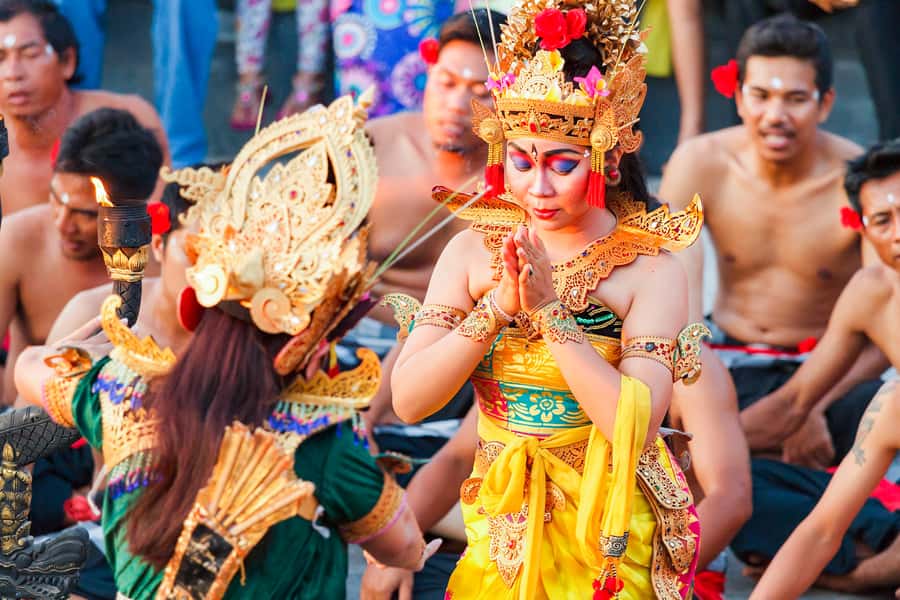
- Ramayana told with chanting + gesture: the men’s chorus drives the rhythm, while the dancers do the storytelling.
- Costumes matter: traditional dress, bold colors, and detailed outfits are built for the amphitheater setting.
- Fire moments come near the end: the dramatic flame segment is a highlight, especially when the dark sets in.
- Monkeys are real at Uluwatu: keep your stuff secured and watch your glasses and phone.
Why the 6:00 PM Show Feels Like the Real Deal
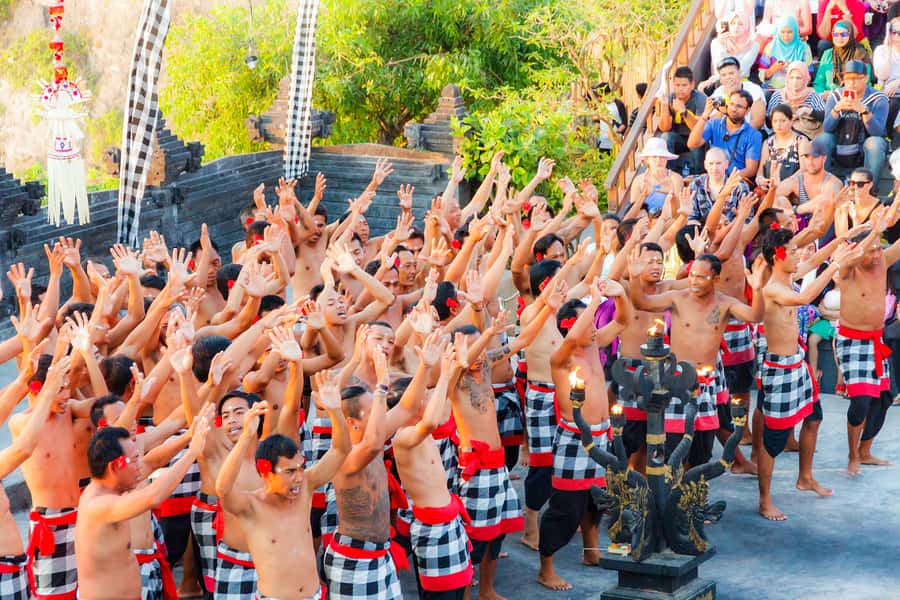
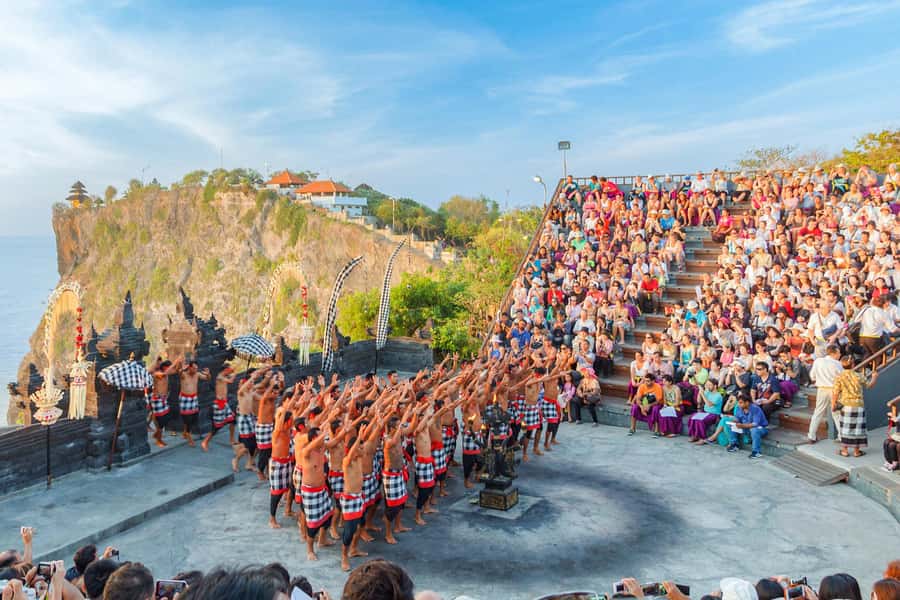
If you can pick a time, go for 6:00 PM. The schedule is split into two showtimes: 6:00 PM and 7:00 PM, and the first one is built around the sunset. That’s not a small detail. It changes how the whole show reads. In early evening, you get the ocean view in daylight fading to firelight, and the amphitheater feels warmer and more dramatic.
At 7:00 PM you can still have a great show—people do—but you’re trading some daylight backdrop for a darker stage picture. One review notes the night version has less sunset charm, and it makes sense. Uluwatu is a cliffside theater. The ocean and sky are part of the art direction whether the performers are aware of it or not.
Also, arrive early. This place can move like a concert—packed lines, people settling in on floor space, and crowd flow that depends on what came before. Booking your ticket ahead helps you skip the longest ticket-counter crush, but you still need time for the checks and getting seated.
You can also read our reviews of more tours and experiences in Uluwatu.



Price vs. Real Cost: The $9 Ticket Isn’t the Only Fee
The ticket price is around $9 per person, which is good value for a true cultural performance. But here’s the catch: your ticket does not include the Uluwatu Temple area entry fee.
That temple entry fee is paid separately in cash on site:
- Domestic visitors: adults IDR 40,000; children IDR 30,000
- Foreign visitors: adults IDR 60,000; children IDR 40,000
You’ll want to factor that into your budget before you decide you’re paying only $9. Even with the added gate fee, the overall spend still tends to feel reasonable because what you’re getting is a full stage show: chanting drama, dancers in traditional costume, and a fire finale with a prime ocean-cliff backdrop.
So the value equation is:
- You’re paying for the performance, not the temple grounds access.
- The performance timing (especially 6:00 PM) is where your money starts to feel worth it.
- Crowd management matters: if you arrive late, you may lose the seat quality you paid for.
Redeeming Your Voucher and Getting Into the Right Flow
This is one of those Bali experiences where the first 20 minutes decide your mood. Your voucher needs to be redeemed at the Kecak Performance ticket counter. You’ll receive a physical ticket that includes a Kecak story sheet.
Then you go through the on-site admission process for the temple area (again, separate cash fee). Reviews also suggest there can be a shorter line for online ticket pickup, which is a big deal when there’s heavy foot traffic and people forming queues hours before showtime.
Practical tips that actually help:
- Bring your passport or ID card.
- Plan to arrive before doors open to get better seating.
- Don’t assume you’ll walk straight in right at showtime. If you do, you might end up watching from the wrong angle, and that’s just wasted money.
There’s also a smart note from the info you’ll get at the venue: the show includes story context, and having the story sheet in front of you makes the dance much easier to follow. You don’t need to be a Ramayana expert. You just need a clue about what’s happening.
The Kecak Chanting Story: What the Show Actually Looks Like
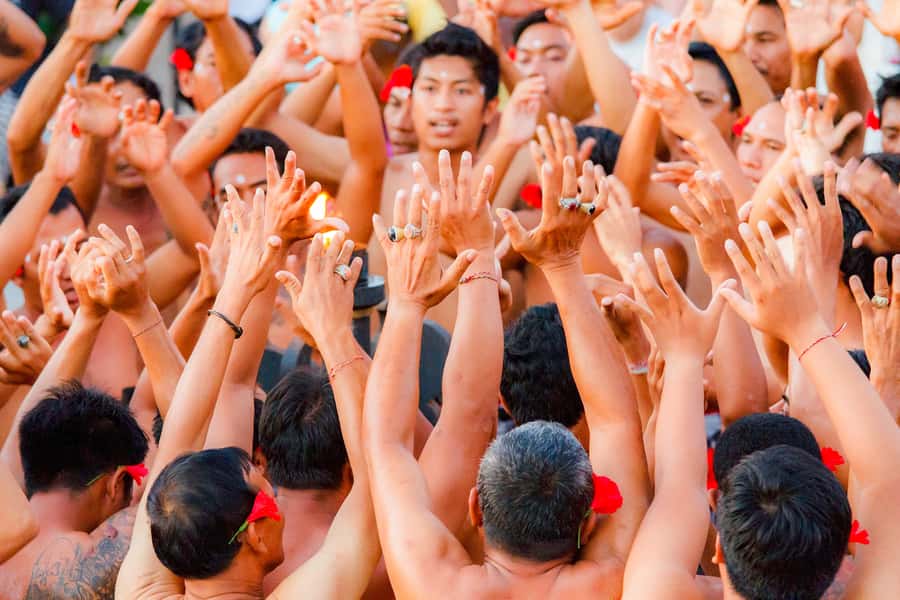
The Kecak performance is built around group chanting and synchronized movement. You’ll see dancers in traditional Balinese costumes, and you’ll also see the chorus of performers where the rhythm and chant create the emotional engine of the show.
The story being told is based on the Ramayana, with the performance focusing on key drama moments that lead up to the fire segment. You’ll notice a few things right away:
- The chanting isn’t background noise. It’s the structure.
- The dancers handle the plot with gesture and movement rather than complicated stage props.
- The whole thing feels communal. The men in the chant provide the pulse; the dancers respond like the story is unfolding in real time.
What I like about this style is that it doesn’t try to be modern. It doesn’t need special effects. The performers are the spectacle, and the open-air space makes the sound and motion carry farther than you’d expect.
Also, the audience stays involved—people watch closely, and it can feel lively without needing a lot of extra narration. If you can, read the story sheet once before the show starts. It turns a repeating chant pattern into a timeline you can follow.
Fire Dance Finale: Flames, Heat, and the “Last Minutes” Energy
The fire segment is the big visual payoff. The information you’re given points you toward the idea of swirling flames set against a natural venue, and reviews underline that the last part of the show is when the flame moments really land.
One review specifically notes that the final part—around the last 10 minutes—has the fire element. Translation: don’t leave early. There are always people who treat the show like a movie trailer. Don’t. The climax is toward the end, and once the fire starts, the entire amphitheater mood shifts.
And yes, you’ll feel the heat when the fire is close enough to be part of the stage picture. Even if you don’t feel like you’re in the center of it, it adds a physical element that changes how you experience the story.
The fire dance is also where the performers’ timing becomes obvious. Fire doesn’t forgive loose pacing. So when you watch, you’ll see discipline—movement that’s controlled, not chaotic—and that makes it more impressive, not less.






Seats, Crowds, and Why Timing Changes Your View
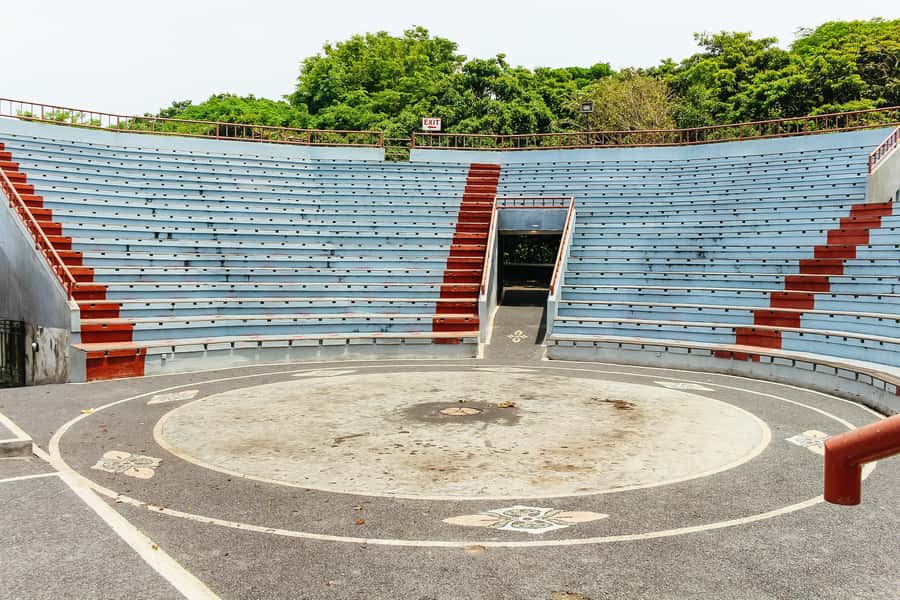
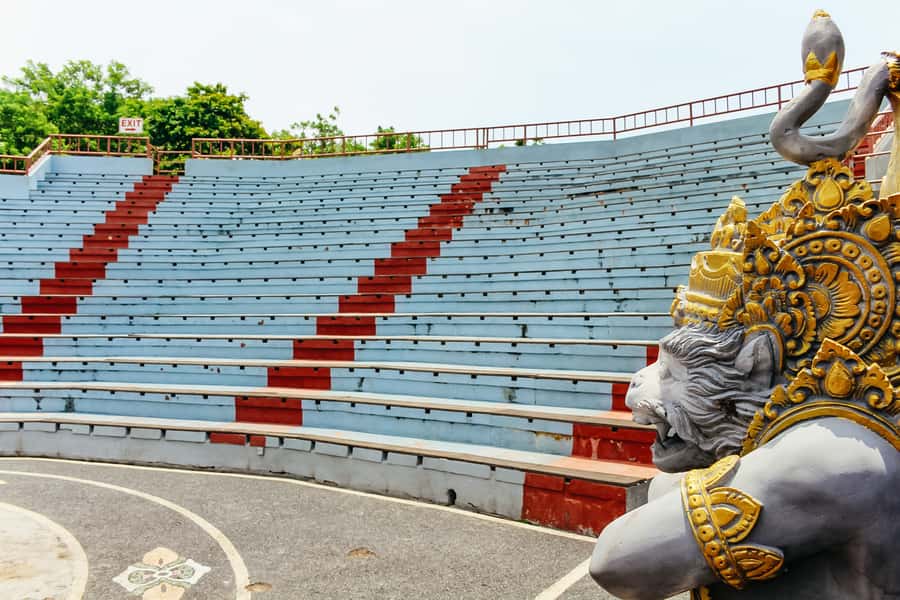
Uluwatu can get packed. The venue is open-air and people sit on floors and stairs. One review warns that crowds can feel like a concert entry: very busy, and sometimes people end up queued standing for a while.
If you’re sensitive to crowd crush, don’t gamble with arriving late.
Here’s what to expect if you’re early vs late:
- If you arrive early, you’re more likely to land a seat area that lets you see the full stage and dancers’ movements.
- If you arrive late, you might end up with limited sightlines and tighter spacing.
Some reviews mention being very crammed and not comfortable seating. That’s not a deal-breaker for everyone, but it is a consideration if you’re planning a relaxed evening. Also note that the show is one-time entry. Once you’re in, you can’t wander out and back in, so plan your bathroom breaks before the show fully starts.
Uluwatu Temple Entry: A Quick Reality Check
Your Kecak fire dance ticket includes standard admission to the performance. It does not include entry to the temple area where the show happens.
So on the ground you’ll likely do two separate things:
- Use your voucher for the Kecak Performance ticket.
- Pay the temple area entry fee in cash on site (with prices based on visitor type and age).
A lot of people miss this because the performance ticket sounds like it covers everything. It doesn’t. The temple itself is worth seeing, and you can often take photos from the temple area viewpoints before the show begins—just be aware that the monkeys are a real variable.
Monkeys at Uluwatu: Funny Until They Touch Your Stuff
If you’ve never dealt with monkeys in Bali, here’s the honest version: they can be a pain.
Multiple reviews call out monkey interaction and warn that they may:
- get very close to people at the temple
- steal small accessories
- create chaos near phones and bags
- even cause damage like broken glasses in some cases
So treat your belongings like you’re on a busy city sidewalk with pickpockets.
- Keep your phone and camera secure.
- Avoid dangling items on straps that they can grab.
- Don’t set valuables down where you can’t monitor them.
If you’re traveling with kids, this part needs extra attention. The monkeys aren’t mean in a cartoon villain way, but they are opportunistic. Your best move is simple: don’t give them a chance.
Weather and the Raincoat: Your Show Plan B
Rain can happen. The ticket includes a raincoat if it’s raining, which is a nice practical touch. But weather can still interrupt the experience. One review says the show ended earlier because it started raining.
That means you should mentally allow for the possibility that the performance might not run to the expected timing if conditions turn rough. You can’t control the sky from your seat. You can only show up with a positive attitude and proper gear.
If you’re picking dates, Bali’s rainy patterns vary by season. You don’t need to obsess. Just know that outdoor amphitheaters react to weather more than indoor theaters do.
Getting the Most From Your Evening: A Simple Game Plan
Here’s how I’d set up your night to get the best experience without losing your patience.
1) Choose the 6:00 PM show if you care about sunset and ocean light.
2) Arrive early so you can find a comfortable viewing spot. If you’re the type who hates standing in lines, give yourself more buffer.
3) Keep your expectations realistic about crowds. This is a famous show in a famous temple area, so it’s not quiet.
4) Read the Kecak story sheet once. It makes the chanting and gesture far easier to follow.
5) Protect your phone and glasses. Monkeys are not a myth here.
If you’re also planning Uluwatu Temple beyond the show, this slot works well. The temple is on the cliffs, and the views are part of the pull. Just remember: you’ll need to budget for the extra temple area entry fee, and you’ll want to keep your timing flexible for crowds.
Should You Book the Bali Uluwatu Kecak and Fire Dance Ticket?
Book it if you want a classic Bali evening that mixes culture, story, and a sunset setting without needing a complex tour plan. The cost is low for what you get, especially if you choose the 6:00 PM show and treat arrival time seriously.
Skip or reconsider if you:
- hate tight crowd seating and don’t want to deal with busy queues
- need a guaranteed long, uninterrupted outdoor show (weather can cut things short)
- can’t manage monkey areas and want zero risk around your belongings
Bottom line: for most people, this is a high-value night out in Bali. The chanting story and fire finale are the kinds of moments you remember because they feel tied to place—cliff, ocean, and the last light of day.
FAQ
What time are the Kecak performances at Uluwatu?
There are two showtimes: the first show is at 6:00 PM and the second show is at 7:00 PM. You can check availability for your chosen slot.
How long is the show?
The activity is listed as 1 hour. Some guests note the performance can feel closer to about 45 minutes, but the official duration is 1 hour.
What is included in the ticket?
The ticket includes standard admission and a raincoat if it’s raining.
Do I need to pay an extra Uluwatu Temple area entry fee?
Yes. The Uluwatu Temple area entry fee is not included and must be paid in cash on site. Domestic visitors pay IDR 40,000 (adults) or IDR 30,000 (children). Foreign visitors pay IDR 60,000 (adults) or IDR 40,000 (children).
What do I need to bring to enter?
Bring your passport or ID card.
Where do I redeem my voucher?
Redeem your voucher at the counter of the Kecak Performance to get your physical ticket. The ticket includes the kecak story sheet, and you’ll need to present your voucher at the ticket counter for admission.