A ring in the making beats a gift shop. This Ubud workshop sends you out to Delodsema, where a silversmith teaches you how to plan, shape, and finish Balinese-style silver jewelry, with tea and snacks while you get started. I especially like the hands-on coaching and the fact you leave with your own piece instead of just photos.
One thing to consider: the workshop sits a bit beyond central Ubud, so you’ll want to factor in travel time (many people report roughly a 40-minute drive) and the fact it’s a more rural area.
In This Review
- Key reasons this jewelry class is worth your time
- Ubud to Delodsema: a practical ride to a real workshop
- What you actually make (and why that feels like a souvenir)
- Your 3-hour rhythm: tea, sketching, then hands-on metalwork
- How the instructor keeps your design from going off the rails
- Price and value: what $36.66 really buys you in silver craft
- Picking a class style: ring focus vs. mixing it up
- Optional add-ons that pair well with a Ubud silver day
- Timing, group size, and how the “private workshop” feels
- What to bring (and what to expect once you’re in it)
- Should you book Ubud Silver Class Jewelry making?
- FAQ
- How long is the Ubud silver jewelry making class?
- Where does the class start?
- Do you provide pickup from Ubud?
- What’s included in the price?
- How much silver do I get for the class?
- Can I make more than one piece of jewelry?
- What if I want to add gemstones?
- How much does extra silver cost?
- How many people are in a class?
- What happens at the end of the experience?
- Is cancellation free?
Key reasons this jewelry class is worth your time
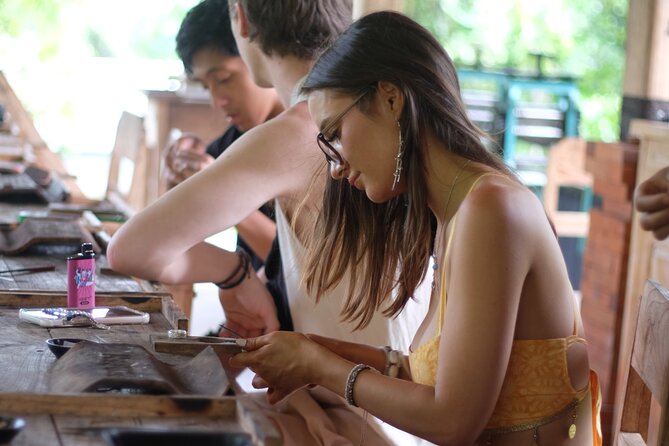
- Private-workshop feel with small groups: up to 20 people, and you get real guidance rather than watching from the sidelines.
- 7 grams of silver included: enough to create a meaningful memento, often a ring or pendant, depending on your design and pace.
- You sketch your own idea (or build from sample designs): the instructor helps you translate inspiration into something workable.
- Multiple techniques in one session: you’ll handle key steps like hammering, soldering, engraving, and cutting.
- Staff focus on fit and finishing: people mention patience and attention to detail, including ring sizing.
Ubud to Delodsema: a practical ride to a real workshop
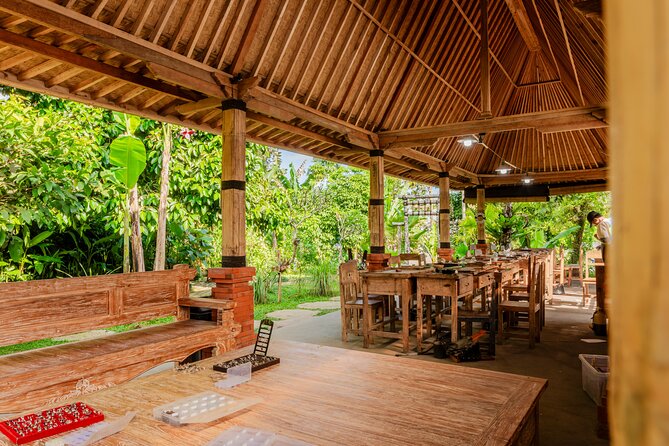
Most Ubud stays have an easy, familiar routine: rice terraces in the morning, temples in the afternoon, dinner with a view. This class breaks that rhythm. You’ll start in Ubud (with pickup if you choose it), then head out to the silversmith village area of Delodsema—starting at GBE Silver Class, Jl. Taman Gajah, Taro, Kec. Tegallalang, Kabupaten Gianyar, Bali.
Why this matters: jewelry-making is easier when you’re not rushed by constant stopping and “tour-bus energy.” The workshop setting is part of the appeal. It’s not just a studio in a strip-mall. It’s a working craft environment, where the process is treated as serious work—and tourists are invited into that flow for a few hours.
If you’re staying in central Ubud, plan for a drive. Several people specifically mention the trip as “worth it,” but also warn that Grab/Uber-style rides may not feel as smooth out there. If you want the least stress, pick the pickup option so you’re not juggling timing.
You can also read our reviews of more tours and experiences in Ubud.



What you actually make (and why that feels like a souvenir)
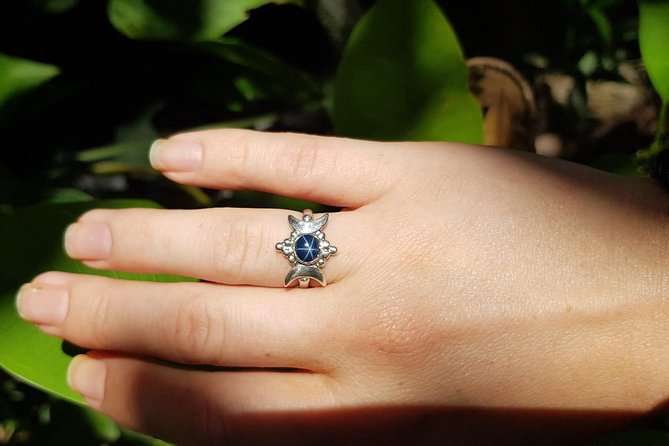
The class is built around creating silver jewelry that you keep. The standard offering includes 7 grams of silver (listed as 0.25 ounce / 7g). In practice, that typically supports one main piece—most commonly a ring, but you may also have options like a pendant, bangle, or earrings, depending on what the workshop helps you accomplish within the time.
Here’s the value angle: in Bali, you can buy silver pretty much everywhere. What’s harder to find is a piece where you’ve made the choices—style, shape, details—and then worked through the steps to see it become real. Even when you start from a sample, you’re still shaping your design with the instructor’s help.
If you’re trying to make multiple items, the workshop sets a realistic rule: you can make more than one piece as long as you have enough silver. That turns 7 grams into an actual design constraint (in a good way). It keeps your project focused, and it encourages finishing strong rather than starting five things and finishing none.
Your 3-hour rhythm: tea, sketching, then hands-on metalwork
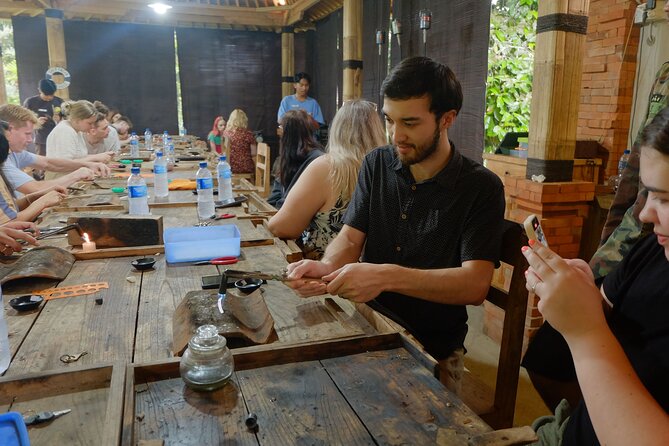
The schedule runs about 3 hours (approx.). The exact flow can vary a bit depending on the class timing you book, but the experience follows a clear arc:
1) Arrival and welcome
You’ll meet at the workshop site in the Delodsema area. Then you start with a welcome drink—tea or coffee—and snacks. This is more than a nice touch. It helps you slow down and get comfortable before you touch tools.
2) Inspiration and design planning
Your teacher shows jewelry samples. If you already have a design idea, you’ll sketch it out with guidance. If not, you pick from sample styles and refine the plan. This part is key for first-timers. Jewelry-making isn’t hard because it’s complicated; it’s hard because you’re not used to working in metal. The sketch-to-plan step saves you from ending up with something you don’t like.
3) The metalwork session
You work with a silversmith/instructor through core techniques, including:
- hammering
- soldering
- engraving
- cutting
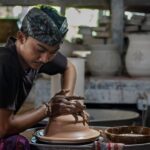
You’re not just watching. You’re doing the actual craft steps, then receiving corrections as needed.
4) Finishing (and possibly another small piece)
If there’s time and enough silver left, you may create an additional piece. Many people leave with exactly what they planned for—a ring or pendant—and take pride in the details. Others try for more; the instructor helps you judge what’s realistic in the allotted time.
A small note from the broader experience: some people describe a shorter version of the class (around 1.5 hours) with less silver than the 3-hour session. If you’re comparing options, check the silver amount and how many steps you’ll likely complete at your pace.
How the instructor keeps your design from going off the rails
Silver jewelry can punish hesitation. Metal doesn’t “forgive” mistakes the way soft materials do. What keeps this class enjoyable is the way instruction is delivered: patient, step-by-step support rather than a lecture and a clipboard.
You’ll hear details that make a big difference, like:
- how to shape bands so they sit properly
- how to match a ring design you brought as a reference
- how to think about engraving and cutting so you don’t weaken the piece
In past sessions, people have named instructors and staff such as Wawam, and teams like Aldi, WaWan, and Pepi. Another name that comes up is Olen for pickup and driving coordination, and Budi as a driver who helped make the trip smoother. You might not get the same people, but the theme is consistent: real support from the workshop team.
If you’re worried about being “not artsy,” take comfort in this: the class is set up so your design doesn’t need to start perfect. The teacher helps you simplify. Then you learn enough to finish confidently.
Price and value: what $36.66 really buys you in silver craft
At $36.66 per person, the headline seems affordable for a guided, hands-on craft. The better way to judge value is what’s included and how the process is structured.
Included:
- welcome drink
- 7 grams of silver
- experienced local instructor
- ability to make multiple jewelry pieces if there’s enough silver
Not included:
- extra charges if you use gemstones
- extra silver costs 80k per gram (so the math matters if you’re tempted to expand your design)
Here’s the practical takeaway: the class price is tied to silver quantity. If you have a simple design in mind, you can likely stay within the included silver and enjoy extras like a refined finish or small adjustments. If you want gemstones or a bigger-than-expected project, expect to add costs for extra silver and stones.
So for value seekers: decide early what you want most—more detail, more pieces, or a larger design. Then let the instructor guide you within your silver budget. That’s how you get a satisfying result without surprise upgrades.






Picking a class style: ring focus vs. mixing it up
Most people seem to gravitate to rings—partly because they’re the most iconic Bali silver souvenir, and partly because ring-making fits well in a multi-technique workshop.
But don’t assume rings are your only option. The experience supports other jewelry types, and you can ask the instructor which designs match the silver amount and time you have. People mention having options like rings, pendants, bangles, or earrings, and being willing to work with the design idea—even if it’s ambitious.
My advice: bring a reference picture, even if you’re not sure. The instructor can steer your idea into something you can actually finish. And if the design you want feels too complex for the allotted silver or time, it’s better to scale the details rather than ending up with a rushed final piece.
Optional add-ons that pair well with a Ubud silver day
The class can be a standalone experience, or you can attach other activities before or after. Options include:
- ATV / quad bike tour
- cooking class
- village visit
- sightseeing tour
- retro Volkswagen Safari
These add-ons make sense because they match what most people want to do in Ubud: tradecraft during one block, then greenery, food, or adventure during another. If you’re the type who gets restless after one activity, the add-ons help fill the day without making the schedule feel chaotic.
A smarter move: if you’re doing ATV, consider doing it before or well-separated from jewelry-making. You’ll likely want your hands clean and focused for metalwork.
Timing, group size, and how the “private workshop” feels
The tour describes it as a private workshop tour, with a maximum of 20 travelers. In plain terms: it’s small enough that instructors can circulate and help with fit and finishing, but big enough that you’ll still feel a friendly workshop atmosphere.
A common theme in the experience is attention to detail and patience. People mention that even complete beginners got help and guidance—especially with ring sizing and getting the final look right. That’s exactly what you want when your success depends on small measurements and careful finishing.
If you’re booking a time slot, try to pick one that leaves you energy afterward. Jewelry-making can be physically and mentally focused. You don’t want to schedule a demanding hike immediately afterward.
What to bring (and what to expect once you’re in it)
The experience provides a welcome drink and snacks, and it supplies the included silver. That means you don’t need to bring craft materials. But it helps to show up ready to work with your hands.
What you should expect:
- you’ll be actively shaping and finishing metal
- you’ll spend time at the workshop before heading back
- it’s outside Ubud center, so plan for rural conditions
A practical consideration: because this is a more rural village setting, you may see mosquitoes. Bring your own repellent if you’re sensitive to bites, even though the workshop provides bug spray in some cases (based on prior experiences).
Should you book Ubud Silver Class Jewelry making?
Book it if you want:
- a real craft souvenir you helped make
- instruction that focuses on finishing and getting the piece right
- a break from the usual Ubud checklist
Skip it (or pick a different activity) if:
- you hate getting on the road for a workshop day
- you want zero mess/zero “hands-on” involvement
- you’re only interested in shopping silver, not making it
If you’re deciding between this and another Ubud day trip, I’d give it a strong vote for “best value for something you’ll actually wear.” With 7 grams of included silver, clear steps in metalwork, and a team that helps you translate ideas into a finished ring or pendant, it’s one of those Bali activities that gives you a story you can still explain months later.
FAQ
How long is the Ubud silver jewelry making class?
The class is listed at about 3 hours (approx.).
Where does the class start?
You start at GBE Silver Class, Delodsema, Jl. Taman Gajah, Taro, Kec. Tegallalang, Kabupaten Gianyar, Bali 80561, Indonesia.
Do you provide pickup from Ubud?
Pickup is offered if you choose it, and extra charges apply for pickup from elsewhere outside the Ubud area.
What’s included in the price?
The price includes a welcome drink, 7 grams of silver, and an experienced instructor/local expert. You can make multiple jewelry pieces if you have enough silver.
How much silver do I get for the class?
You receive 7 grams of silver as part of the included package.
Can I make more than one piece of jewelry?
You can make multiple jewelry items as long as there’s enough silver for them.
What if I want to add gemstones?
Gemstones aren’t included. There can be an additional charge if you use gemstones.
How much does extra silver cost?
Extra silver costs 80k per gram.
How many people are in a class?
The activity has a maximum of 20 travelers.
What happens at the end of the experience?
The activity ends back at the meeting point. If you chose pickup, you’ll return to your Ubud address at the end.
Is cancellation free?
Yes. You can cancel for a full refund if you cancel at least 24 hours in advance of the experience start time.