If you love food with a backstory, this one works. On an organic farm near Ubud, you’ll learn six Balinese dishes and drink your way through herbal teas and coffee, all while touring the UNESCO-protected subak system.
What I like most is the hands-on pace in a small group, and the way you start by picking ingredients right off the land. One thing to consider: it’s a working rural farm, so plan for a warm, outdoorsy morning and expect the day to be weather-dependent.
In This Review
- Key highlights worth getting excited about
- A Balinese cooking class that starts on the land, not in a kitchen
- What you’ll cook: six Balinese dishes plus drinks that actually help
- The farm walk: where the day really becomes yours
- Cooking on a wood-fired stove: real technique, real smells
- Small group size: why you get more than a standard demo
- Mai Organic Farm and the community mission behind your lunch
- Price and logistics: where the money goes (and what you get back)
- Who should book this (and who might not love it)
- A quick culture-and-food tip to make this day even better
- Should you book Mai Organic Farm’s Balinese cooking class?
- FAQ
- How long is the Balinese cooking class?
- What dishes and drinks are included?
- Is pickup available from Ubud?
- How large is the group?
- Where does the experience take place?
- What happens if weather is poor?
Key highlights worth getting excited about
- Ingredient picking first: you walk the farm and choose produce for what you’ll cook
- Six dishes, not a sample plate: including sate lilit kebab and corn fritters
- Farm-to-table drinks: sip juice, infused water, herbal drinks, lemongrass tea, and Balinese coffee
- Wood-fired cooking: food is prepared using traditional outdoor fire and a wood-fired stove
- Small-group attention: capped at eight travelers, with an overall maximum listed as 10
- Community support built in: your visit backs Mai Organic Farm and farmers in Pejeng
A Balinese cooking class that starts on the land, not in a kitchen
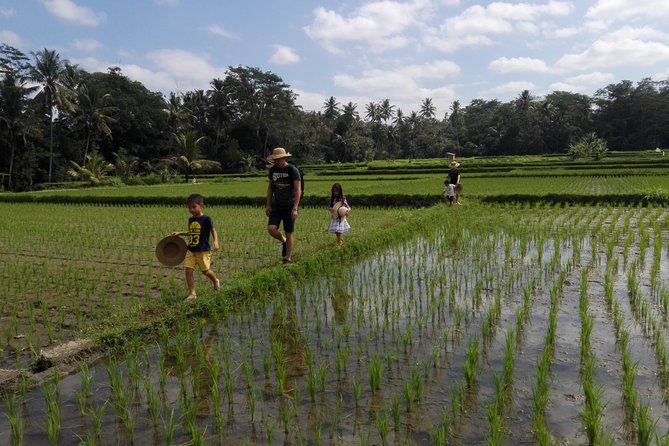
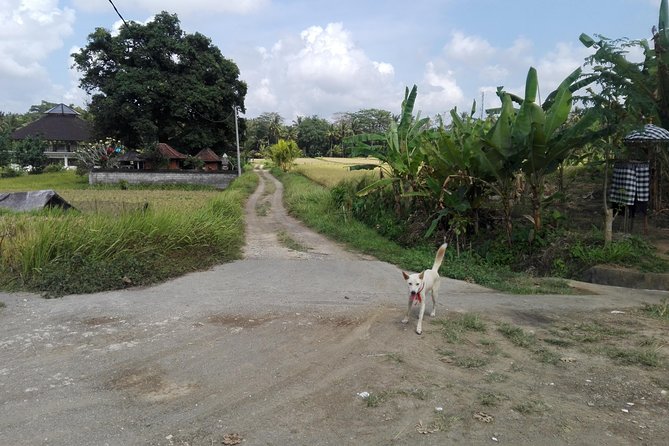
Most Bali cooking classes begin with a shopping list and end with a nice meal. This one begins on an organic farm outside Ubud, in the Pejeng area (Tampaksiring/Gianyar region). That matters because you’re not just learning recipes—you’re learning why certain ingredients taste the way they do here.
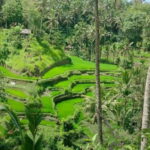
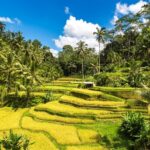
You also get context that most classes skip. Early on, you’ll hear about how organic farming works and how Bali’s subak system fits into the island’s food culture. The subak network is UNESCO-protected, and the point of that lesson isn’t academic trivia. It’s practical: it explains how water management supports farming, which is the backbone of what you’re about to cook.
Finally, you’ll cook in a way that feels grounded and traditional. The experience uses a traditional wood-fired stove and an outdoor setup, so the cooking process feels like Bali food preparation, not a staged demonstration.
You can also read our reviews of more tours and experiences in Ubud.



What you’ll cook: six Balinese dishes plus drinks that actually help
The class is built around making six Balinese dishes, with a focus on ingredients you selected during the farm walk. Your cooking list includes sate lilit kebab, plus other classics like tuna sate and corn fritters (the exact dishes are presented during the session as part of the six-dish meal).
This is also a drinks-and-herbs class, whether you came for cooking or not. Plan to try:
- sip juice
- infused water
- herbal drinks
- Balinese coffee
- lemongrass tea
Why this matters for your day: when you’re tasting herbs and spices before you cook, the flavors make more sense. You start noticing what’s fragrant, what’s cooling, and what adds depth to savory sauces. It turns the meal into a whole experience, not just lunch.
Also, the class is flexible about participation. You can jump in as much or as little as you want, which is handy if you’re traveling with kids, or if you want the fun of cooking without feeling like you must perform every step.
The farm walk: where the day really becomes yours
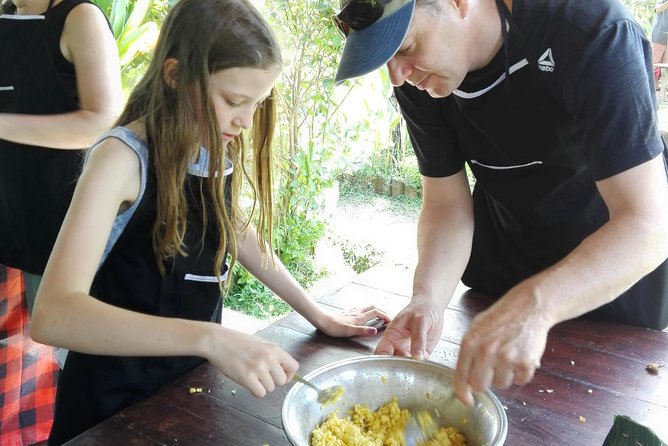
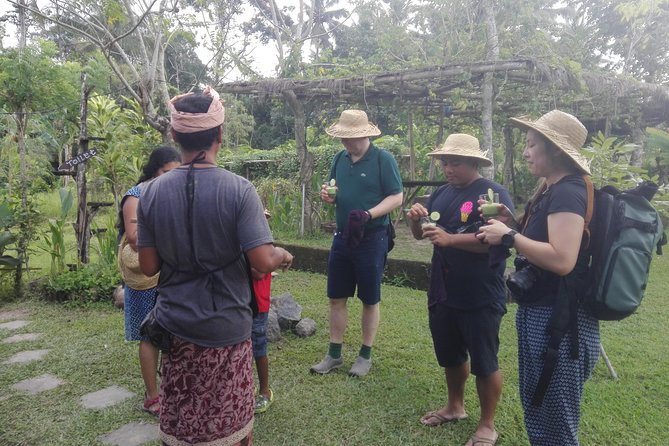
Your morning starts at Mai Organic Farm Bali. You’ll be welcomed with a drink (fresh coconut water shows up in feedback, and you’ll also hear general welcome-drink language in the experience flow). Then you settle into a shaded spot while you’re introduced to the farm and the community movement behind it.
After that, you’ll walk through the farm and learn about organic growing—how they grow produce and maintain the land. You’ll also learn about the subak system, the water and irrigation approach Bali is known for. In a place like this, that’s not abstract. It connects the dots between land, water, and the ingredients you’ll later chop, mix, and cook.
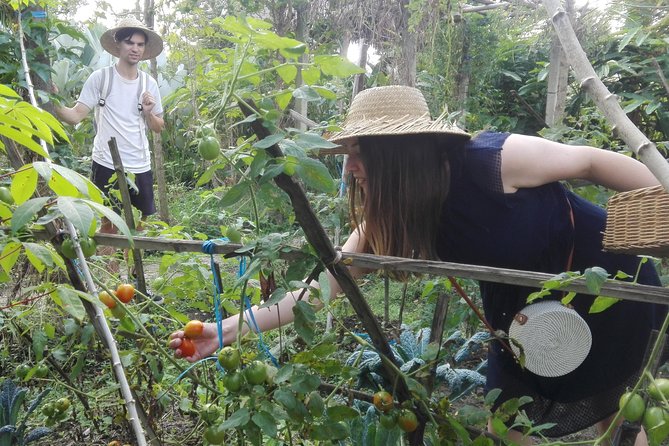
Then comes one of the best parts of the day: you pick ingredients for your cooking session. You’re not just told what to use—you gather it. In practical terms, this makes the class easier to follow later, because you remember what the ingredient looked like and where it came from.
If you’re traveling with children, this segment tends to land especially well. There are families in the feedback who said kids loved harvesting herbs and produce before cooking together.
Cooking on a wood-fired stove: real technique, real smells
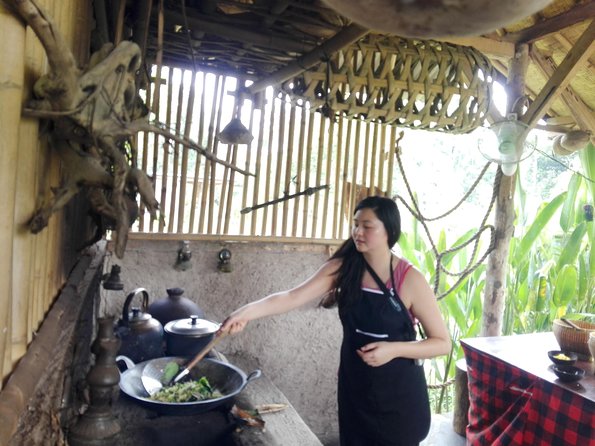
Once you’re done with the farm walk, you move into the center of the community area, where you’ll have another refreshing juice made from fruits and vegetables grown by local farms. After that, you get to cook your six dishes.
The cooking setup is outdoors, and it uses fire and a wood-fired stove. One reason I’m into that: wood-fire cooking changes the feel of everything. You spend more time smelling, watching, and understanding how heat behaves than you would in a modern kitchen. It’s also just more fun than sitting at a counter while someone else cooks.
In feedback, people highlighted the use of outdoor grill and fire stove, and also the fact that the atmosphere stays relaxed and interactive. That’s a key point for value. A cooking class can feel like a lecture with food at the end. Here, the structure supports participation.
You’ll also eat together. Lunch is served in a tranquil gubuk (hut) setting with your group. That communal meal is part of the experience’s payoff: you’re not rushing through dishes; you’re tasting the results with the people you cooked alongside.
One nice bonus mentioned in feedback: you may receive a recipe book, which helps you recreate at least some of what you learned after you’re back home.
Small group size: why you get more than a standard demo
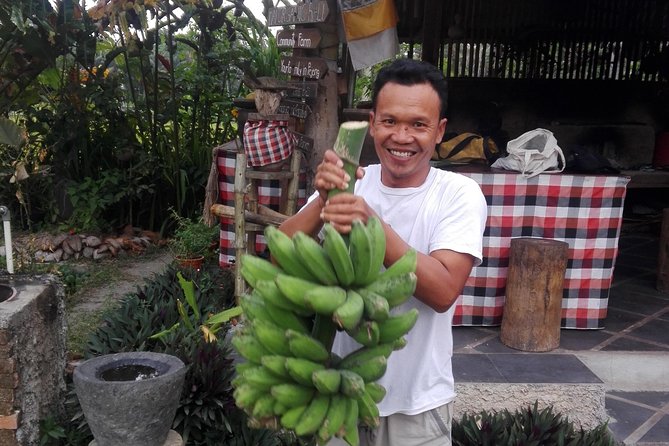
This experience keeps numbers low. It’s capped at eight travelers in the overview, and the maximum is listed as 10 travelers for the activity. Either way, you’re not packed into a big class room.
That small-group cap changes the experience in a few ways:
- You get more direct help while cooking
- You spend more time doing and tasting, not waiting
- The instructor and cooks can adjust the flow if the group needs extra time or clarification
And you’re not just standing by. The format supports hands-on cooking, plus ingredient harvesting earlier in the day. If you’re a couple or a group of friends, it also feels social in a good way, since everyone is doing the same tasks together.


Mai Organic Farm and the community mission behind your lunch
This class doesn’t just use local ingredients. It’s connected to a local farming community movement in Pejeng. Mai Organic Farm supports farmers and villagers with resources aimed at improving quality of life and local income.
So when you pay the $40 per person price, you’re not only buying a cooking lesson. You’re also supporting the farm’s work and the community’s ability to keep farming sustainably. That makes the value feel more grounded than a class that could happen anywhere.
On top of that, the experience includes hassle-free round-trip transfers from central Ubud hotels and rentals. For many people, that’s not a small detail. It saves time and stress, especially if you don’t want to figure out the drive yourself for a half-day activity.
Price and logistics: where the money goes (and what you get back)
At $40 per person for about 5 hours, this sits in the middle of the market for cooking experiences in Bali—but it earns its price by bundling several things together.
You’re getting:
- farm-to-table ingredient picking
- explanation of organic farming and the subak system
- a multi-dish cooking session (six dishes)
- multiple drinks (including herbal options, plus coffee and tea)
- a traditional cooking method using wood fire
- round-trip pickup and drop-off from central Ubud
If you compare that to a basic cooking demo where you only taste a couple bites, this feels like more meal for your money. And because the group stays small, the time doesn’t feel wasted.
One more practical point: you’ll be traveling outside the center of Ubud to Pejeng/Tampaksiring-area farm grounds. If your plan is tightly packed and you hate driving time, build this in carefully.
Who should book this (and who might not love it)
This is a strong fit if:
- you want food that comes with real context about farming
- you like hands-on cooking and tasting herbs and spices
- you enjoy small-group experiences rather than large workshops
- you’re traveling as a family—feedback includes kids around primary-school age who loved harvesting and cooking together
You might think twice if you want something strictly indoor and polished, or if you’re not comfortable with an outdoor farm setting. Because it’s weather-dependent (the experience notes good weather is required), you should also be flexible if rain or conditions affect the schedule.
A quick culture-and-food tip to make this day even better
Go into the farm walk with your eyes open. When you’re picking herbs and produce, don’t just grab what looks familiar. Ask what each ingredient is for in the dishes. That single habit makes the cooking session stick, because you’ll connect the herb to the sauce or garnish you’ll later eat in your hut lunch.
Also, pace your drinks. If you try everything back-to-back (sip juice, infused water, herbal drinks, coffee, tea), you’ll still enjoy it—but you may notice the flavors blend together. One round at a time keeps everything clearer.
Should you book Mai Organic Farm’s Balinese cooking class?
I think you should book it if you want a cooking class that feels like it belongs in Bali, not just on a tour schedule. The combination of organic farming, UNESCO-linked subak context, ingredient picking, and traditional wood-fired cooking gives you a full loop—from land to lunch.
It’s also a good pick if you like groups that stay small and friendly. Even the feedback pattern leans toward “this is the highlight,” mostly because people loved the hosts, the farm tour, and the fact that you do real work, not just watch.
If you want a fast, purely city-based food activity, this may feel like too much time outside Ubud. But if you’re after an authentic farm-to-table morning with six-dish payoff, it’s hard to beat for $40.
FAQ
How long is the Balinese cooking class?
It runs for about 5 hours.
What dishes and drinks are included?
You’ll learn to cook six Balinese dishes, including sate lilit kebab, and you’ll also have sip juice, infused water, herbal drinks, Balinese coffee, and lemongrass tea.
Is pickup available from Ubud?
Yes. Hassle-free round-trip transfers are offered from central Ubud hotels and rentals.
How large is the group?
The experience is capped at eight travelers, and the activity maximum is listed as 10 travelers.
Where does the experience take place?
The meeting point is at Mai Organic Farm Bali, Subak Kana, Banjar Panglan, Pejeng, in the Tampaksiring area of Gianyar, Bali.
What happens if weather is poor?
The experience requires good weather. If it’s canceled due to poor weather, you’ll be offered a different date or a full refund.