Learning to surf in Canggu is easier than you think. This 2-hour course runs from the surf school at Black and White in Batu Bolong, with a clear plan for beginners and more direct wave coaching for experienced surfers. You’ll get plenty of time in the water, not just a quick taste.
Two things I really like: the lesson structure that starts on sand before you paddle out, and the emphasis on safety with certified lifeguard instructors plus water gear like soft-top boards, rash guards, and leashes. One thing to consider: surfing uses muscles you didn’t train on purpose. If you’re not ready for a workout, you may feel it by the end (and it’s not suitable for pregnant women).
In This Review
- Key Points at a Glance
- Batu Bolong Meets Black and White: Where Your Lesson Starts
- The 30-Minute Dry Session: How Beginners Get Standing Fast
- In the Water for 1.5 Hours: Paddling, Positioning, and Timing
- Safety and Gear: Soft Boards, Rash Guards, and Certified Lifeguards
- The Beach Reality Check: What You’ll Actually Feel After 2 Hours
- Price and Value: $23 for a Full Lesson, Not a Quick Demo
- Who Should Book This Course in Canggu (and Who Should Skip It)
- What to Bring (Plus One Extra Smart Add-On)
- Small Details That Make the Lesson Feel Better
- Should You Book This 2-Hour Surf Course in Canggu?
- FAQ
- Where is the meeting point for the Canggu surf course?
- How long is the surf lesson?
- Is this surf lesson good for complete beginners?
- What if I already know how to surf?
- What equipment is included in the price?
- What should I bring with me?
- Do instructors speak English?
- Are private or small groups available?
- Is the activity suitable for pregnant women?
Key Points at a Glance
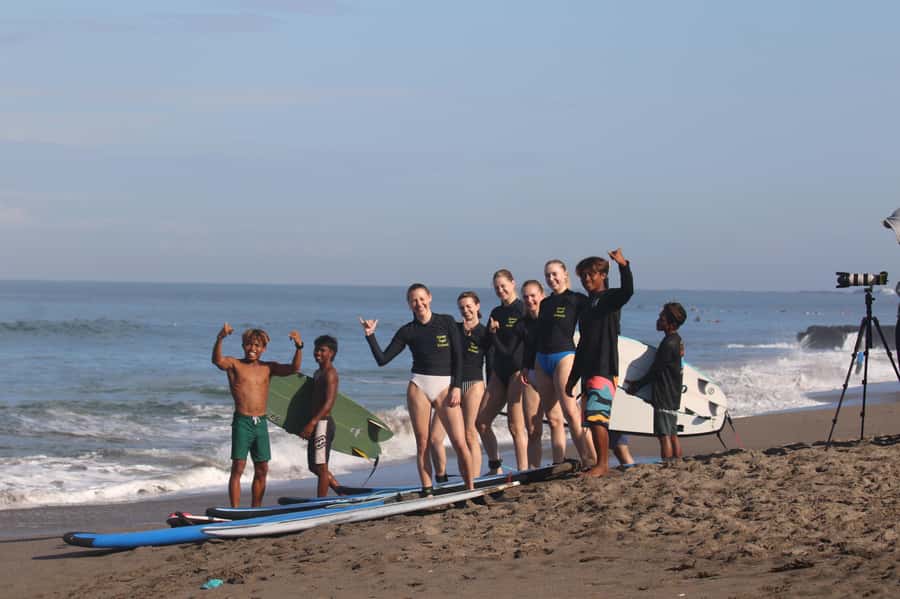
- Black and White, Batu Bolong: A straightforward meeting point right by the action at the beach.
- 30-minute dry lesson for beginners: basics first, confidence fast.
- About 1.5 hours in the water: enough time to actually progress and try multiple waves.
- Certified lifeguards + top gear: soft-top boards, rash guards, leashes, and included water essentials.
- Private or small groups: often more hands-on coaching per person.
Batu Bolong Meets Black and White: Where Your Lesson Starts
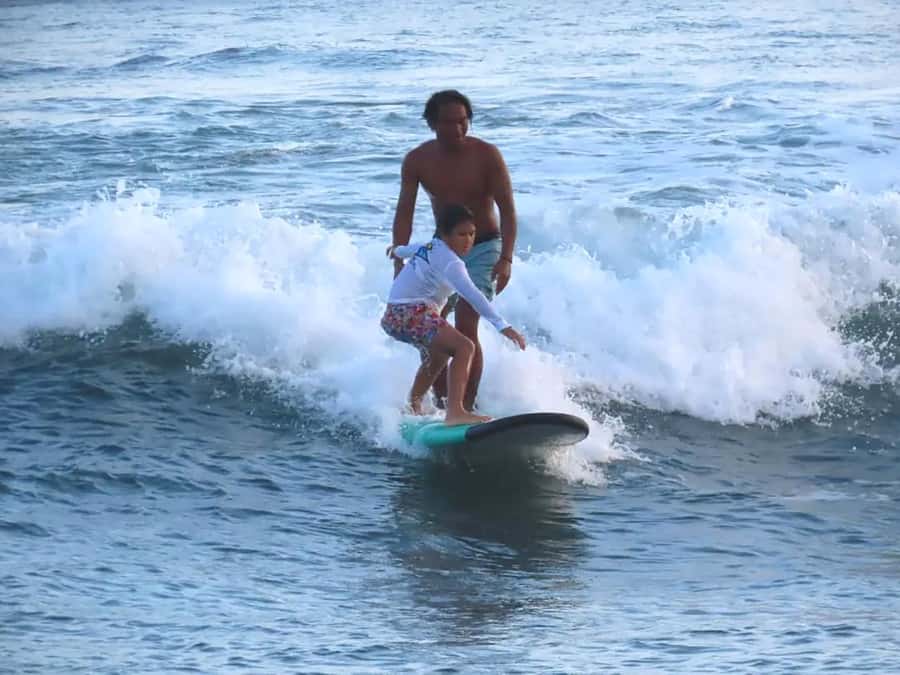
Canggu’s surf scene can feel like motion all day, so I like that this lesson starts with something practical: you meet at the surf school at Black and White on the beach of Batu Bolong. That matters because the first 15 minutes set the tone. You don’t want to waste daylight figuring out where to go or chasing gear.
Once you’re in, the vibe is focused but relaxed. You’ll meet your instructor (English and Indonesian are both offered), then get a briefing before you get in the surf. From what I’ve seen in the way instructors coach, the best sessions are the ones where you understand what to do before you’re cold and flopping around in the water.
One detail that helps a lot in Bali: Batu Bolong is the kind of spot where beginners can get access to real wave riding without needing a full-on surf trip logistics game. You’re there to learn, not to solve a puzzle.
You can also read our reviews of more tours and experiences in Canggu.

The 30-Minute Dry Session: How Beginners Get Standing Fast
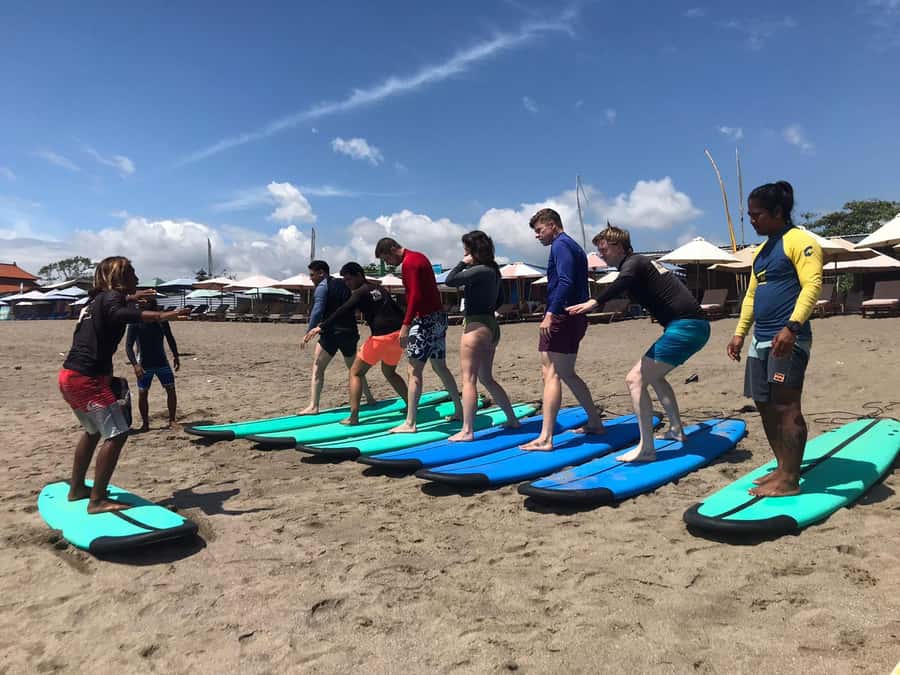
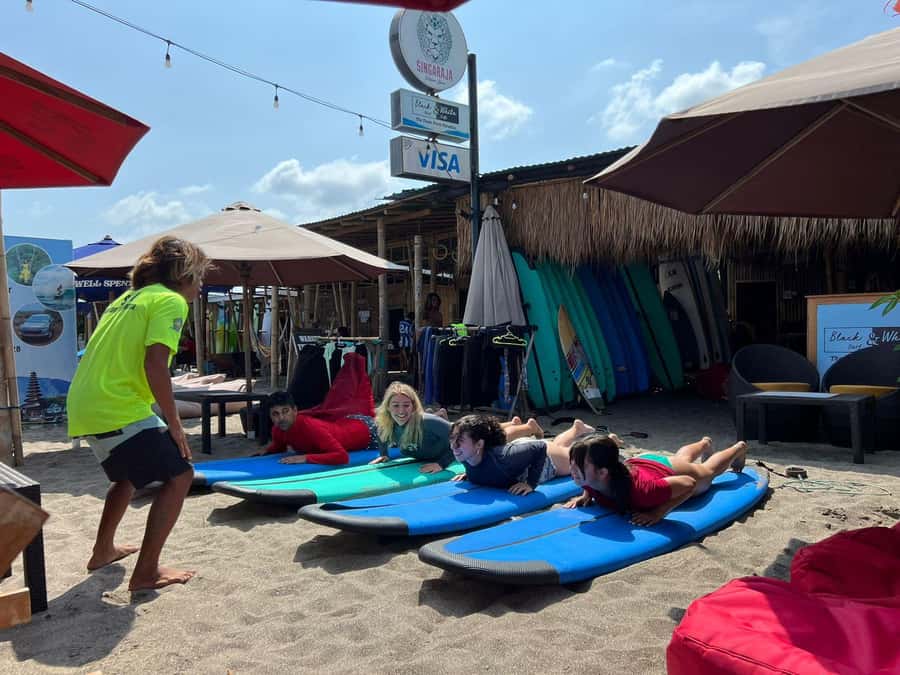
For first-timers, the course is built around a simple truth: you can’t learn the board and the ocean at the same time. That’s why you start with about 30 minutes of dry surf instruction (on land). It’s not just theory. It’s the stuff you’ll repeat immediately once you’re in the water.
Here’s what the land portion typically covers:
- how to stand up on a surfboard
- how to paddle effectively
- how to behave in the water so you don’t interfere with other surfers
This is also where instructors help you avoid the classic beginner mistakes. You see it everywhere: people fight their board instead of using it. A good coach gets your body positions right early—so when you paddle out, you’re already doing something that works.
What I especially like is how often instructors bring energy without rushing you. Names that come up in the teaching style include Oges, Jabibi, Gibe, Ryan, Rafli, Ramadan, and Rapli. Different personalities, same goal: clear directions and steady encouragement. I’ve found that when you feel safe on land, you take more chances in the water.
In the Water for 1.5 Hours: Paddling, Positioning, and Timing
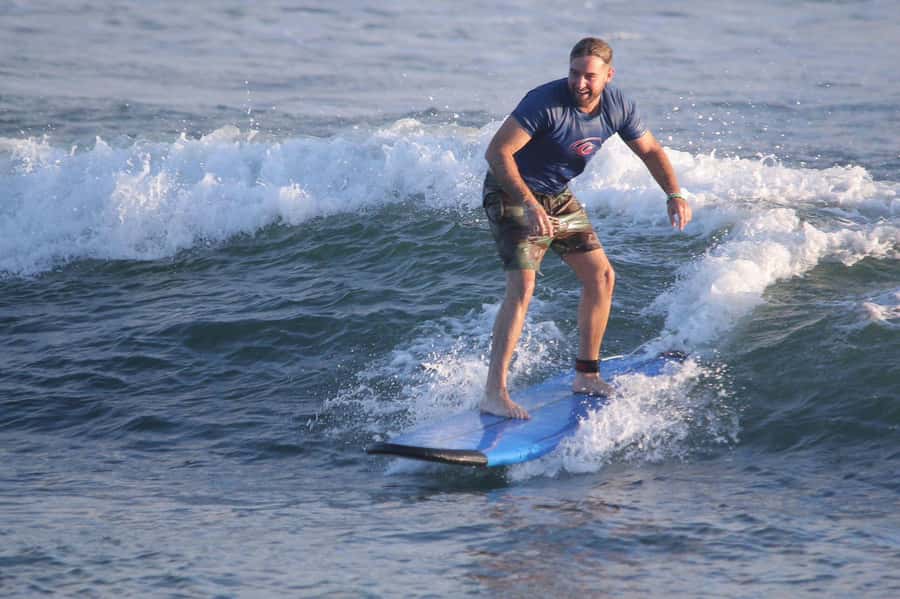
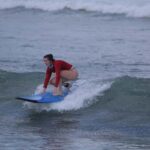
After that land warm-up, beginners spend roughly 1.5 hours surfing in the water. This is the part you came for, but it only feels good if the coaching is specific. The instructors are watching your timing, where your board is pointed, and how you’re setting up for waves.
If you’re a beginner, your instruction usually targets the fundamentals:
- paddling hard enough to reach the takeoff spot
- turning yourself and the board to face waves
- standing in a way that doesn’t immediately fold you in half
If you’re more experienced, the lesson shifts. Instead of long sand basics, you generally head to the surf right away and get help with positioning and timing—the two things that separate a nice attempt from a real ride.
One nice sign of good coaching is decision-making on the ocean side. For example, you might wait if conditions are choppy, even if other people are out. That kind of judgment keeps beginners from getting pounded unnecessarily and helps the group stay safe while still getting quality wave attempts.
Safety and Gear: Soft Boards, Rash Guards, and Certified Lifeguards
Surfing has risk. A good lesson lowers it, fast. This course explicitly puts safety first: instructors are certified lifeguards, and they provide modern beginner-friendly equipment so you’re not wrestling a board that’s too hard for your current level.
You’re given:
- soft-top surfboard
- rashguard
- leash
- wax
- sunblocker
- water
Those inclusions sound basic until you think about first-time surfing in the heat. Having a rashguard and leash means you’re not improvising. Wax and board choice mean you can focus on popping up instead of guessing. Even the included water and sunblocker help you stay alert and not burn out too early.
In the water, you’ll also get behavior guidance—how to handle your board safely, where to sit, and how not to collide with others. Safety coaching is one of those things you don’t notice when it’s perfect. You feel it when it’s missing.
The Beach Reality Check: What You’ll Actually Feel After 2 Hours
Let’s talk about the part no one puts on the brochure: the body tax. A 2-hour surf session can be surprisingly demanding, especially if you haven’t done paddle-based sports before. Even if you’re getting coached through good technique, paddling burns shoulders and core quickly.
One practical takeaway: plan your day so you’re not rushing to a late dinner workout afterward. You’ll likely feel tired in your arms. That’s normal.
Also, consider weather and crowd timing. One reason beginner lessons work well here is that conditions can be selected and managed by your instructors. You may paddle out when it’s the right time for the group’s skill level. That helps keep the lesson moving and reduces the chance you spend the whole time waiting around.
And about photos: instructors may take photos during the session, and sometimes you can purchase them on the spot. If you want digital images as a guaranteed souvenir, confirm that before you go—because in the info here, photos aren’t listed as included.





Price and Value: $23 for a Full Lesson, Not a Quick Demo
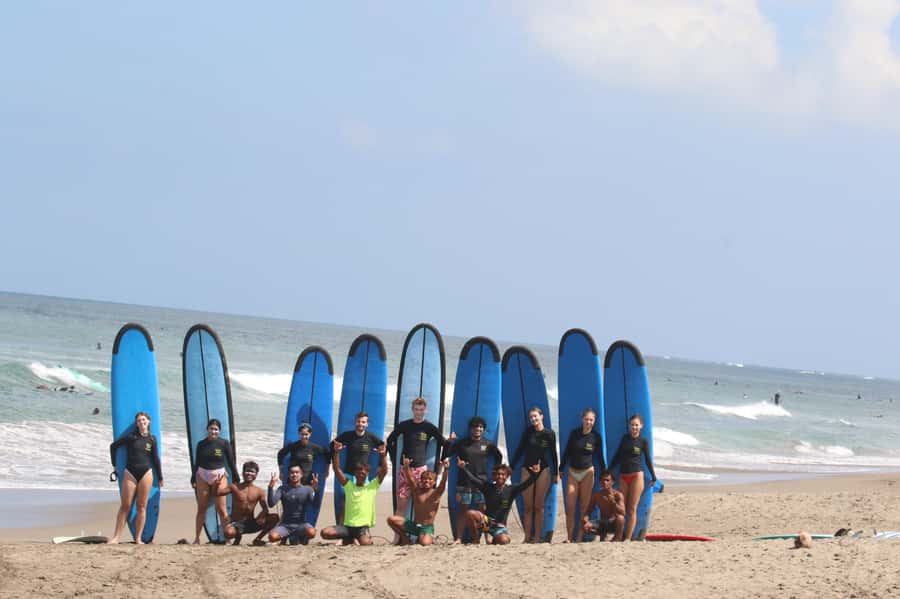
At $23 per person for two hours, the value comes from what’s included and how the time is used. You’re not paying just for “someone to hold a board while you try.” You’re paying for a timed plan: instruction up front, then a long stretch in the water.
Here’s what makes the price feel fair:
- You get gear provided (board, rashguard, leash, wax)
- You get a built-in warm-up and setup for beginners (the 30-minute dry instruction)
- You get real coaching attention for your attempts
- You get safety emphasis through certified lifeguard instructors
If you’ve paid for similar activities elsewhere, you know the hidden costs add up fast—renting equipment, buying sunscreen, and scrambling for basics. Here, most of that is already handled.
If you’re traveling with a limited schedule and want a real “Bali moment,” this lesson is a clean fit. It doesn’t pretend surfing is effortless. It just gives you a strong starting point in a short window.
Who Should Book This Course in Canggu (and Who Should Skip It)
This surf course is a great match if:
- you’re a beginner who wants structure and patience
- you’re nervous and want clear instructions before you hit the waves
- you want quality coaching in a short 2-hour block
- you’re booking private or small groups and want more hands-on attention
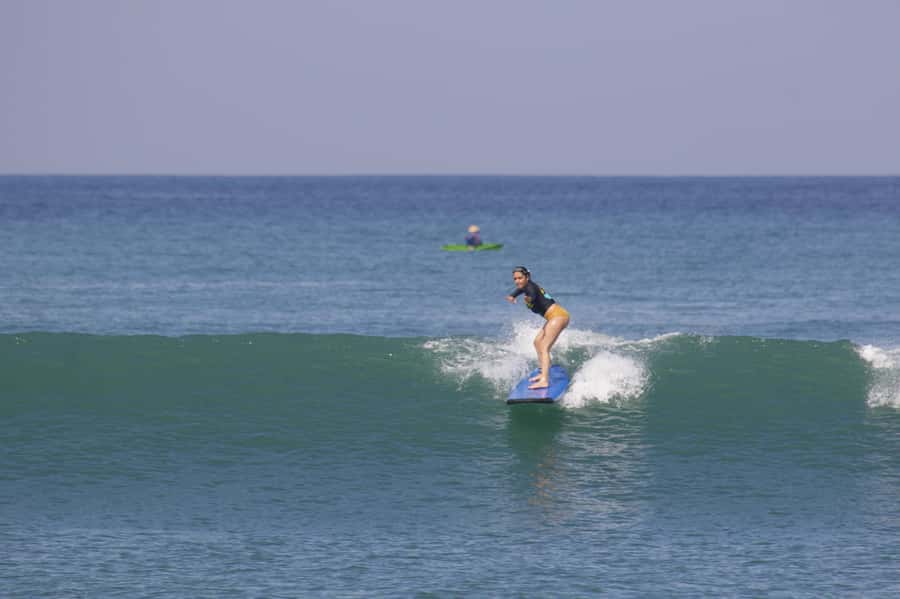
It can also work for people with some experience, because the lesson adapts. If you’ve surfed before, you’ll generally spend more time on waves, with coaching focused on positioning and timing.
Skip it if:
- you’re pregnant (not suitable per the tour info)
If you’re concerned about swimming strength, know that the coaching and safety briefing are part of the point. Still, be honest with yourself about your fitness and endurance. The ocean doesn’t care about good intentions.
What to Bring (Plus One Extra Smart Add-On)
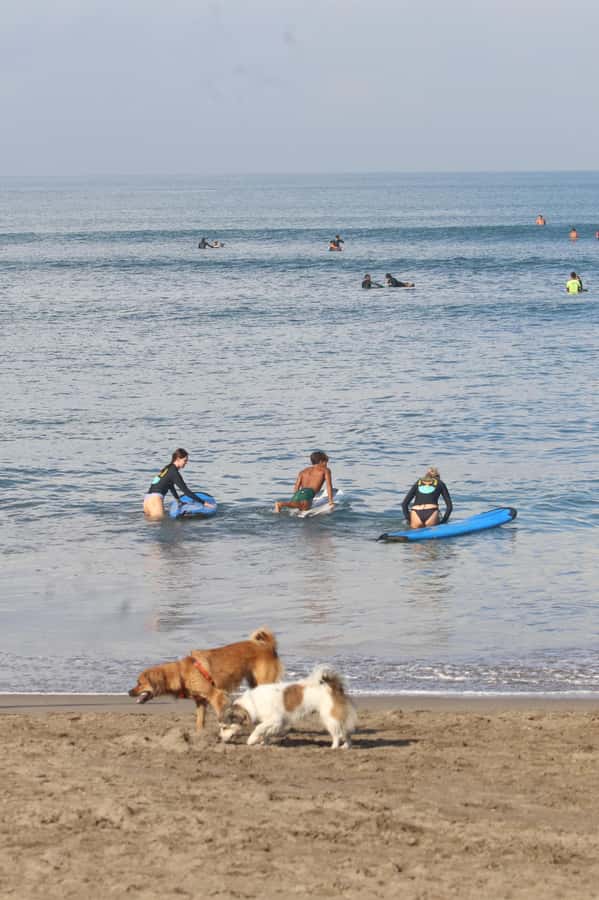
The basics you should pack:
- swimwear
- towel
- beachwear
That’s it for required items. Everything surf-specific is provided, including sunblocker, plus you get water.
One smart optional add-on: water sport shoes. A reviewer mentioned rocks in the ocean area can be painful on bare feet. Shoes cost less than a ruined lesson day, and they help with beach walks and getting in and out more comfortably.
Also, bring a small towel plan. You’ll want to dry off quickly between sand and water phases. If you’re wet and shivering, you’ll lose energy and focus.
Small Details That Make the Lesson Feel Better
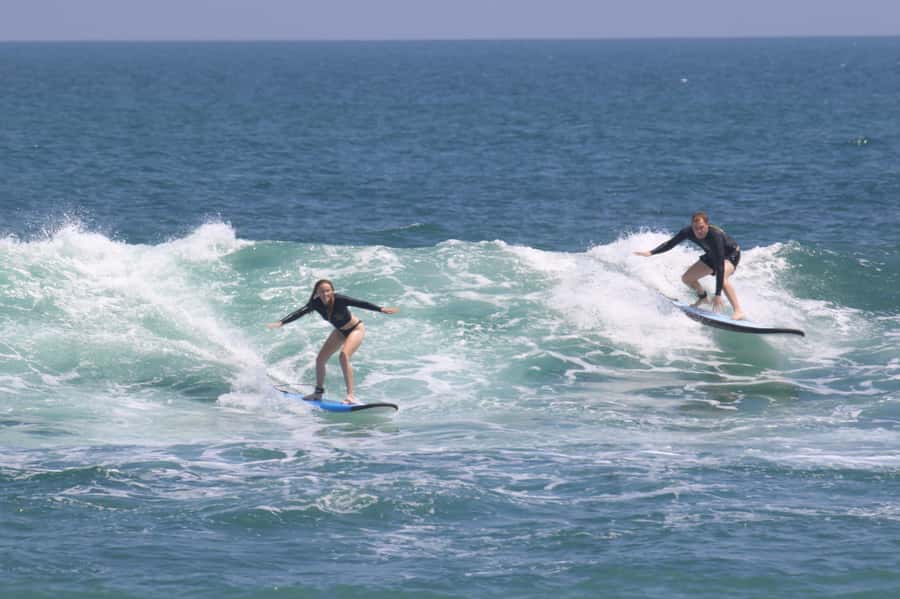
A lesson like this rises or falls on the little moments:
- Waiting for the right conditions instead of forcing everyone out
- Coaches staying upbeat while giving direct feedback
- Positioning help when you’re stuck and arms are getting tired
- Quick explanations you can actually repeat in your next attempt
Some instructors even do little after-moments—drinks and music have been mentioned on certain days. Don’t count on it as a guarantee, but it’s part of why the experience can feel social rather than clinical.
And if you’re booking with a friend or partner, private or small group options can make a big difference. There are sessions where each person gets very close instruction, not just a general talk. That’s how beginners move from standing once to standing multiple times.
Should You Book This 2-Hour Surf Course in Canggu?
If you want a straightforward way to start surfing in Bali, I’d book it. The biggest reasons are the lesson structure and the safety setup: land basics first, then enough time in the water to build real confidence, plus certified lifeguard coaching and beginner-friendly equipment included.
Book it especially if:
- you’re doing Bali in a busy schedule
- you want a real skill, not just a photo opportunity
- you like instructions that are clear and repeated until your body understands
Hold off if:
- you’re not up for a physical challenge
- you need guaranteed photo packages included in the price
- you fall into the not-suitable category listed for pregnancy
Bottom line: for $23 and two hours, this is one of those activities where the planning does the heavy lifting. You show up, you learn, you catch waves, and you leave with something you can build on tomorrow.
FAQ
Where is the meeting point for the Canggu surf course?
You’ll find the surf school at the surf cafe Black and White at the beach of Batu Bolong. The exact meeting point may vary depending on the option booked.
How long is the surf lesson?
The duration is 2 hours total.
Is this surf lesson good for complete beginners?
Yes. Beginners get a lesson plan that starts with about 30 minutes of dry surf instruction before spending roughly 1.5 hours in the water.
What if I already know how to surf?
If you’re more experienced, you’ll typically go to the waves right away and get coaching focused on positioning and timing.
What equipment is included in the price?
Included items are a surfboard, rashguard, wax, leash, sunblocker, and water, plus instruction and safety guidance.
What should I bring with me?
Bring swimwear, a towel, and beachwear.
Do instructors speak English?
Yes. Instruction is available in English and Indonesian.
Are private or small groups available?
Yes. The course offers private or small group options.
Is the activity suitable for pregnant women?
No. It is listed as not suitable for pregnant women.