Menhirs and funeral cliffs, all in three days. This Toraja-focused tour in South Sulawesi lets you see the megalith world of Kalimbuang Bori and then feel the emotional weight of a Rambu Solo buffalo ritual through music and dance. I love how the sights are tied to real cultural meaning, not just photo stops. One heads-up: you’ll move on uneven roads and stone paths, and you’ll likely spend long minutes standing and looking up at cliffside graves.
What makes it work is the guide and the pace. With pickup offered and a private setup, Yacob Kakke can slow down when you have questions and speed up when the day gets busy. Expect a mix of market life, royals’ burial sites, and everyday village scenes, with dinner included.
The itinerary also includes a long walk: trekking from Rantepao to Batutumonga (about 5 hours total), plus a viewpoint and rice-terrace village stops. If you like history you can stand next to, this is your kind of trip.
In This Review
- Key highlights you’ll care about
- What You Really Get for $115.76: Value in Toraja
- Meet Yacob Kakke and Why Private Helps Here
- Day 1 in North Toraja: Kalimbuang Bori Menhirs and Rambu Solo Ritual Life
- Day 2: Rantepao Livestock Market, Suaya Kings’ Cliff Graves, and the Faces of Tau-Tau
- Tampang Allo to Lemo to Ke’te Kesu: Cliff Details and Tongkonan Pride
- Kambira Baby Grave: A Different Tone in Toraja Burial Customs
- Day 3: Trek from Rantepao to Batutumonga for Views and Rice Terraces
- Practical Tips: Entrance Tickets, What to Wear, and How to Stay Comfortable
- Who This Tour Fits Best (and Who Might Rethink It)
- Should You Book This Toraja Culture Tour?
- FAQ
- How long is the Toraja culture tour?
- Where does the tour take place?
- What is the price per person?
- Is pickup included?
- Is this a private tour?
- Is dinner included?
- Are admission tickets included?
- How long is the Batutumonga trek, and is it free?
- When do I receive confirmation?
- Can I get a full refund if I cancel?
Key highlights you’ll care about
- Rambu Solo rituals you’ll see explained with details like Mapasilaga tedong buffalo fighting and the dance set
- Cliff burial sites like Suaya, Tampang Allo, and Lemo, with tau-tau figures and stone graves carved into rock
- Tongkonan village heritage at Ke’te Kesu, including old hanging graves and cave graves
- A proper market contrast at the Rantepao livestock and buffalo market before you head into the funerary sites
- A real trek day to Batutumonga for viewpoints, rice terraces, and village views
- Dinner included, but entrances aren’t so you’ll want a little extra budget for site fees
What You Really Get for $115.76: Value in Toraja
At about $115.76 per person for roughly 3 days, this tour is priced like a cultural guide-and-transport experience, not like a mega-attraction package. The value comes from how much you’ll cover with a local expert who can interpret what you’re looking at: menhirs, buffalo culture, tongkonan architecture, and burial cliffs that are unlike anything else in Indonesia.
Dinner is included, which helps on a short trip. You’re also not locked into a fixed crowd schedule since it’s a private tour for your group. That matters in Toraja, where the day can feel emotionally heavy around funerals and you’ll want time to watch and understand without being rushed.
The main thing to plan for is extra costs for admission tickets and any fees on-site. The tour also lists “all fees and taxes” as not included, and each stop notes admission tickets aren’t included. So think of the listed price as the core guiding and arrangement fee, then add some spending for site entries and anything you personally choose to buy.
You can also read our reviews of more tours and experiences in South Sulawesi.
Meet Yacob Kakke and Why Private Helps Here
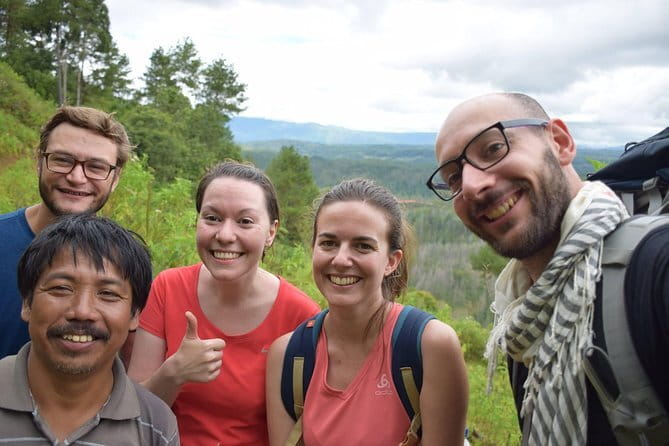
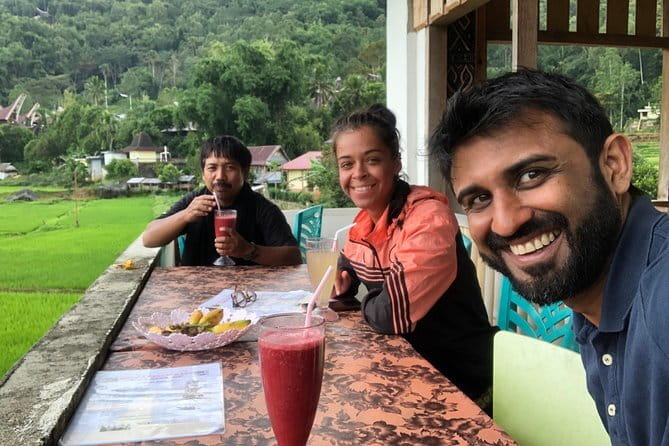
Toraja isn’t only about what you see. It’s about why people see it that way. This is where Yacob Kakke earns his keep. In the accounts shared about him, he’s consistently described as friendly, always smiling, speaking good English, and able to explain rituals and history in a clear, human way—especially around funerary practices.
A private setup also gives you flexibility. If you’re curious about buffalo fighting signs, or you want context about why certain chiefs were buried in specific ways, you can ask and get an answer without the rhythm of a bigger group getting in your way.
Pickup offered is another practical win. Toraja sites can be scattered and day trips can get exhausting fast. Having someone pick you up helps you spend the energy on the places themselves—rather than bouncing between transit logistics.
Day 1 in North Toraja: Kalimbuang Bori Menhirs and Rambu Solo Ritual Life
Your first stop is Objek Wisata Kalimbuang Bori in Sesean Village (about 5 km from Rantepao). This is the kind of place that feels calm the moment you arrive: a collection of menhirs standing neatly in a planned-feeling arrangement. The site is home to around 102 menhirs, and the visit time is about 30 minutes—long enough to take it in slowly, not so long that it drags.
Getting there is part of the experience. The road is described as terrain that isn’t too good, so the ride can feel bumpy. Once you reach the site, though, you get a sense of order and age at the same time. For many people, this is the “slow down” moment that makes the later cliff burial sites hit harder.
Then you move into Toraja Village for a cultural program tied to Rambu Solo ceremonies. This is where you get far more than a performance. You’ll see or be guided through key elements such as:
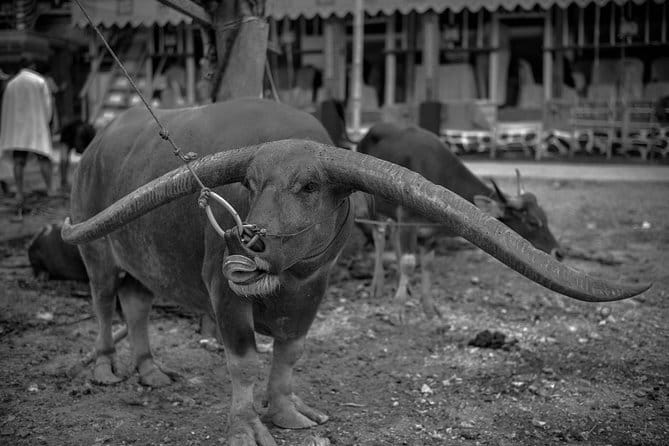
- Mapasilaga tedong (buffalo fighting), including details about buffalo types and horn patterns like tedong bonga
- Ritual dances like ma’badong, ma’dondi, ma’randing, ma’katia, ma’papanggan, and massailo
- Instrumental music named pa’pompang, pa’dalidali, and unnosong
You get about 2 hours here. One consideration: in Toraja, rituals carry emotional weight. The best mindset is respectful attention—watch, listen, and don’t treat it like a quick show-and-tell for your camera roll.
Day 2: Rantepao Livestock Market, Suaya Kings’ Cliff Graves, and the Faces of Tau-Tau

Day 2 starts with a very different kind of scene: Rantepao Livestock Market. It’s around 1 hour, and it’s a useful contrast. Before you enter the burial world, you see daily economics and animal culture—especially the buffalo market side of things. It helps you understand Toraja society as something lived, not only memorialized.
Next comes Suaya, one of the most important burial sites in the region. Suaya is known as the burial place of the Sangalla kings and their royal families. The last royal burial took place there in 1972, which helped draw broader attention (including coverage that reached international viewers).
What you’ll see is a cliffside hillside setting with massive rock surfaces. Stone graves sit alongside balconies and wooden effigies called tau-tau, shaped into the rock. The tau-tau figures give the cliffs a human presence—you’re looking at carved faces that seem to stand watch.
There’s also a single grave at the foot of the cliff that’s believed to be an Islamic grave of a Torajan nobleman. That detail matters because it shows Toraja burial practice is not a sealed museum. It interacted with the wider history of the region.
After Suaya you go to Tampang Allo. This site can feel peaceful because it combines tau-tau, cave elements, and rice paddy scenery pressed between cliffs. It’s said the graves belong to chiefs of Sangalla, descendants of Tamborolangiq, a mythical divine figure credited with introducing the caste system and death rituals into Torajan society.
One detail I like here is the way it complicates assumptions. The skulls are said to look like those of commoners. So the cliff doesn’t just scream power. It also invites you to think about how Torajan belief defines status, ritual, and identity.
Tampang Allo to Lemo to Ke’te Kesu: Cliff Details and Tongkonan Pride
Then you head to Lemo, another cliff burial stop where tau-tau figures stare out from carved balconies in the rock. It’s described as impressive and hauntingly beautiful, especially in early morning light. The site is at the head of a terraced valley, which means you often get a sense of depth—stone faces in the foreground, terraces opening out beneath, and cliffs rising around.
The local legend attached to Lemo is specific: a chief built his house on top of the cliff, and the graves were cut into that house’s cliffside space. The tombs are said to have cost around 40,000,000 Rp to hollow out and could take months of labor. That’s a lot of effort for stone. It’s a reminder that these funerals weren’t quick closures. They were major community undertakings with long timelines.
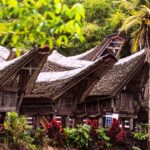
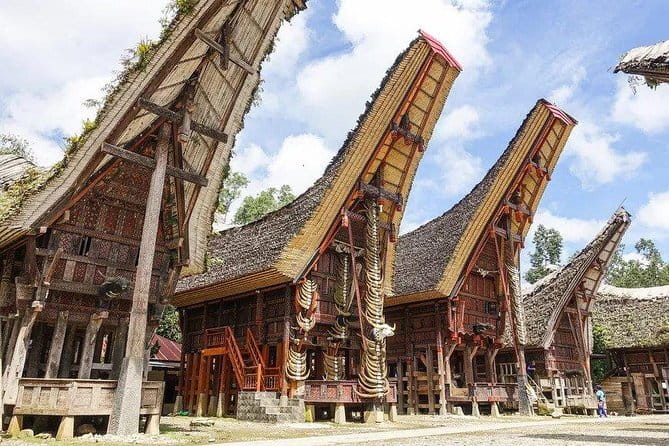
After the cliff sites, you shift into village heritage at Ke’te Kesu (Kete Kesu Village). This part is one reason people love Toraja beyond the famous burials. Ke’te Kesu includes four stately tongkonan and many granaries. The village was moved to the current site in 1927, because a family head noticed the Dutch government largely ignored people far from their administrative centers.
Today, Ke’te Kesu also has a tourism history: it became the first official obyek wisata in Toraja, and the local community lobbied hard for international attention tied to UNESCO.
Back against the village cliff face, you can see old cave graves and hanging graves said to be 500 years old or more. The whole scene gives you that Toraja feeling where everyday structures and burial traditions share the same view. You’re not just looking at monuments—you’re seeing how a community keeps its identity in place.
Kambira Baby Grave: A Different Tone in Toraja Burial Customs
Not every Toraja burial site fits the same emotional pattern, and Kambira Baby Grave shows that clearly. Here, Torajans traditionally inter deceased babies in trees—specifically babies who have not yet teethed.
The belief explained for this practice centers on ideas of purity and growth: children are considered more pure than adults, and their bodies and spirits are believed to be absorbed into the tree so they can continue growing with it. The site holds around 20 deceased infants, and the tree itself is now deceased too.
This stop is described as shady and tranquil, which can feel like a necessary reset after the larger cliff scenes. It’s also where you may appreciate that Toraja funerary culture isn’t one single uniform style. It has variations for life stages and ritual meanings.
Nearby there’s also an ornate tongkonan, so you don’t leave empty-handed on the architecture side. You get a quieter moment and then a return to the bigger cultural environment around it.
Day 3: Trek from Rantepao to Batutumonga for Views and Rice Terraces
Day 3 is the active one: a trek from Rantepao to Batutumonga. The trek time is about 5 hours, and the admission ticket is listed as free for this part.
What makes Batutumonga special here is the combination of movement and scenery: you don’t just hike and return. There are also scheduled stops for a View Point, Rice Terrace, and Village. Those are the places where you get to slow down, look around, and connect the walking effort to actual countryside views.
A practical note: 5 hours is long enough that your footwear and hydration matter. The tour doesn’t provide detail on terrain steepness in the data you shared, so I’d treat it as moderate hiking with uneven footpaths—then adjust based on how you feel once you start.
Also, you’ll likely be carrying your energy from two earlier full culture days. If you’re the type who needs a lot of recovery time, plan for a gentle evening after the trek. Toraja days can be intense in body and mind.
Practical Tips: Entrance Tickets, What to Wear, and How to Stay Comfortable
A smart expectation-setting point: admission tickets aren’t included at the stops you’ll visit, and “all fees and taxes” are not included. So bring extra cash/card buffer for entry fees at multiple sites, not just one.
For clothing and gear, you’ll thank yourself for simple comfort:
- Wear shoes that can handle stone paths and uneven ground.
- Bring a light layer for early mornings (some sites are described as especially beautiful in morning light).
- If you’re sensitive to heat, a hat and water are worth it, since some parts of the day involve standing and viewing.
Cameras are fine, but funerary contexts deserve a pause. In places like Suaya, Tampang Allo, and Lemo, take pictures if you want—but keep your attention on the meaning behind the scene. If you’re unsure what you’re seeing, ask your guide to explain. With Yacob, you’re not stuck guessing.
Finally, expect a few hours of “looking up.” Cliffside tombs and effigies mean your neck will work. That’s normal. Bring a calm pace and let your eyes do their job.
Who This Tour Fits Best (and Who Might Rethink It)
This is a great fit if you want:
- A focused introduction to Toraja burial culture (menhirs, royal graves, tau-tau cliffs)
- Village life through tongkonan heritage at Ke’te Kesu
- A balanced rhythm that includes both market life and ritual culture
- A guide who explains what you’re seeing in clear, friendly English
It’s less ideal if you want purely relaxing sightseeing, with no emotional heaviness. Funeral-related sites are central here, and that tone may not suit everyone.
It’s also not the best choice if you hate walking. The Batutumonga trek is listed at about 5 hours, so you’ll need enough stamina for a day that’s more active than the others.
Should You Book This Toraja Culture Tour?
Yes, you should book it if your priority is meaning, not just sightseeing checklists. This tour’s strength is the way it connects places—menhirs, buffalo culture, tongkonans, royal cliff graves—into one coherent picture of Toraja life and belief.
It’s also a solid value for a short trip because you get dinner included, pickup offered, and a private pace with Yacob Kakke as your local interpreter. The main reason not to book is simple: plan for uneven ground and extra entrance fees, and make sure you’re ready for a day of emotional sites as well as scenic viewpoints.
If that sounds like your kind of adventure, this is a strong way to experience Toraja without losing time to guesswork.
FAQ
How long is the Toraja culture tour?
It runs for about 3 days.
Where does the tour take place?
In South Sulawesi, Indonesia, focused on the Tana Toraja area.
What is the price per person?
The price is listed as $115.76 per person.
Is pickup included?
Yes, pickup is offered.
Is this a private tour?
Yes. It’s a private tour/activity, meaning only your group participates.
Is dinner included?
Yes, dinner is included.
Are admission tickets included?
No. All fees and taxes are listed as not included, and the stops note that admission tickets aren’t included.
How long is the Batutumonga trek, and is it free?
The trek from Rantepao to Batutumonga is listed as about 5 hours, and admission is listed as free for that segment.
When do I receive confirmation?
Confirmation is received at the time of booking.
Can I get a full refund if I cancel?
Yes. Free cancellation is available up to 24 hours in advance for a full refund. If you cancel less than 24 hours before the start time, the amount paid is not refunded.