One day in Ubud hits hard. You get door-to-door pickup plus big-gaze views at Tegalalang rice terraces and Tegenungan waterfall, all in about 8 hours. One thing to watch: it’s a full schedule, and the waterfall swim depends on the water conditions.
I like how this feels built for real day-trippers: an English-speaking driver, air-conditioning, mineral water, and entrance fees included. The guide side matters too, with a consistent theme of staff who are kind, helpful, and genuinely tuned in to your day. The only practical catch is that meals are not included, so you’ll want to plan around that.
In This Review
- Quick Key Points
- From Nusa Dua Pickup to an 8-Hour Ubud Culture Day
- Tegenungan Waterfall: A 15–20 Meter Stop With a Swim Option
- Ubud Sacred Monkey Forest Sanctuary: Temples in Macaque Territory
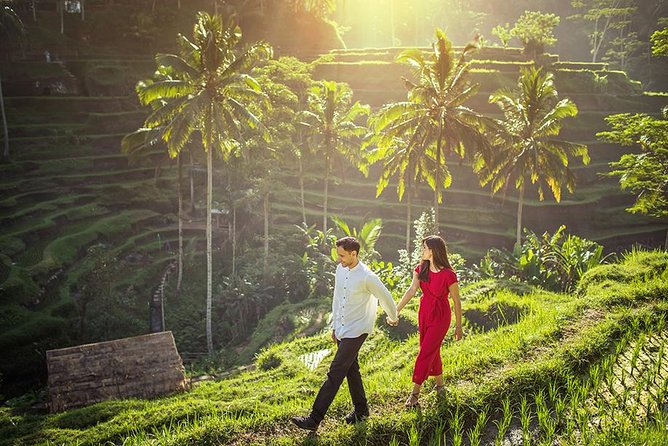
- Tegalalang Rice Terrace: Terraced Fields and Traditional Planting Views
- Tirta Empul Temple: The Water Temple Experience
- Crafts and Culture Stops: Batik, Mas Wood Arts, and Silver Crafting
- What’s Included, What Isn’t, and Why the Price Can Make Sense
- Who This Tour Suits Best (and Who Should Rethink It)
- Booking Verdict: A Solid, Efficient Bali Day Trip
- FAQ
- What time does the tour start?
- Where is pickup offered for this tour?
- What major stops are included?
- Are entrance fees included?
- Are meals included in the price?
- Can you swim at Tegenungan Waterfall?
- What’s the dress code?
Quick Key Points
- Door-to-door transport from Nusa Dua and many nearby areas makes the day easy to start
- Tegenungan Waterfall offers a swim option when conditions are clear (and it’s about 15–20 meters tall)
- Ubud Monkey Forest mixes gray macaques with Hindu temple settings in a sanctuary setting
- Tegalalang rice terraces show off the terraced rice system and traditional planting
- Tirta Empul Temple is a water temple experience with a bathing structure in the compound
- Craft village stops include batik/handweaving areas, Mas for arts and wood crafts, and major silver crafting
From Nusa Dua Pickup to an 8-Hour Ubud Culture Day
This is the kind of trip that saves you from puzzle-solving your own route. You start at 8:30 am, and pickup and drop-off are offered from the wider South Bali area, including Nusa Dua and neighboring resort zones. The ride is handled in a comfortable air-conditioned vehicle, with petrol, parking, and even mineral water taken care of.
The tour is listed as private in the sense that it’s your group only, which usually helps with pacing. You’re also getting an English-speaking driver, and the day is framed around learning Balinese daily life and religion through a local lens.
You should still expect a “do a lot” day. You’re moving between nature sights and temple/craft stops, with limited time at each place, so it’s not for slow wanderers.
You can also read our reviews of more tours and experiences in Nusa Dua.

Tegenungan Waterfall: A 15–20 Meter Stop With a Swim Option
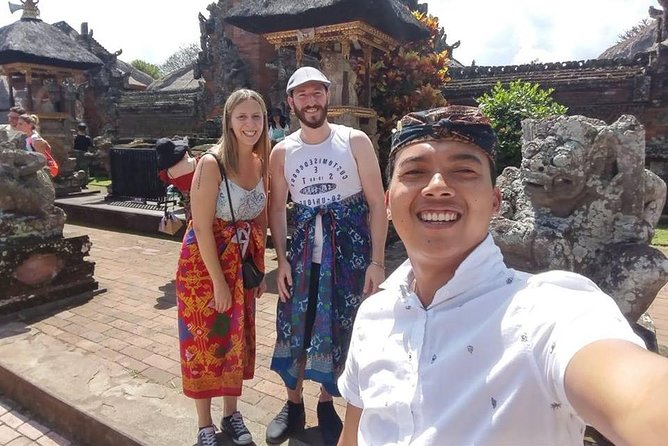
Your first major nature hit is Tegenungan Waterfall. It’s described as a waterfall in an area with heavier water flow from more urban surroundings, and it sits at about 15–20 meters tall. You’ll typically have around an hour here, which is enough time to see it from a good angle and decide whether you want to get into the water.
The key detail: swimming is only when water conditions are clear. That means you should keep your expectations flexible. If you pack swim gear, great. If the water looks off, you’ll still get your waterfall time in, just without the splash.
Practical note: wear shoes you trust for uneven ground. Even when a waterfall spot looks straightforward, the paths down and around can be slippery, especially after rain.
Ubud Sacred Monkey Forest Sanctuary: Temples in Macaque Territory
Next comes the Sacred Monkey Forest Sanctuary in Ubud, with about 2 hours allocated. This is where you see gray macaques moving through a forest environment that includes Hindu temples. It’s not just a zoo-style stop. The temples and the sanctuary setting are part of the whole experience, which helps it feel more tied to Balinese religious life.
You’ll get admission ticket coverage here, so you’re not wasting time in lines with cash or card issues. The big payoff is the contrast: lush forest + small temple compounds + active monkeys. That combination makes for photos that look less like a typical tourist selfie loop and more like a real place.
One consideration: this is a wildlife encounter in a temple sanctuary. Keep your belongings secure and listen to your guide’s cues for where to stand and how to move through the area. If you’re sensitive to animal noise or motion, this stop can feel more intense than the rice terraces.
Tegalalang Rice Terrace: Terraced Fields and Traditional Planting Views
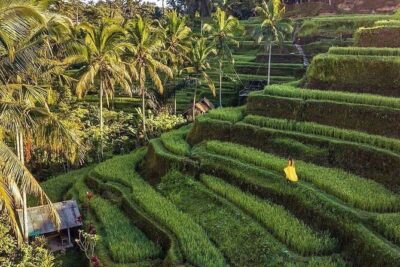
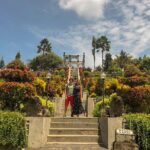
Then you get to slow down a bit at Tegalalang Rice Terrace, one of Bali’s most famous terraced rice areas. Your time here is about 1 hour, and the focus is on what makes terracing work: the way rice fields step down in layers, and the traditional planting rhythm that still shapes how the land is farmed.
I love this stop because it’s not just a pretty view. You’re seeing how the rice-field system functions as a landscape form shaped by human hands. Even if you’re not farming yourself, you can usually spot how the terracing helps manage water and keeps planting areas organized.
Drawback to keep in mind: the terraces are popular. Expect to share photo angles and walk through crowds in parts of the area. If you hate waiting your turn, aim to be ready to move when your guide signals.
Tirta Empul Temple: The Water Temple Experience
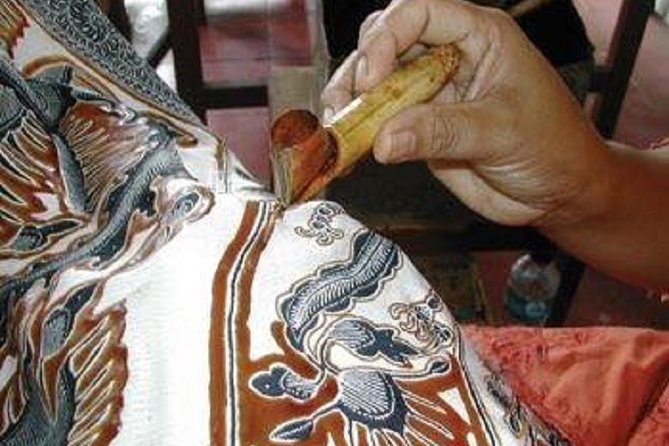
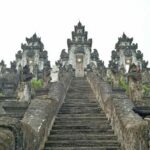
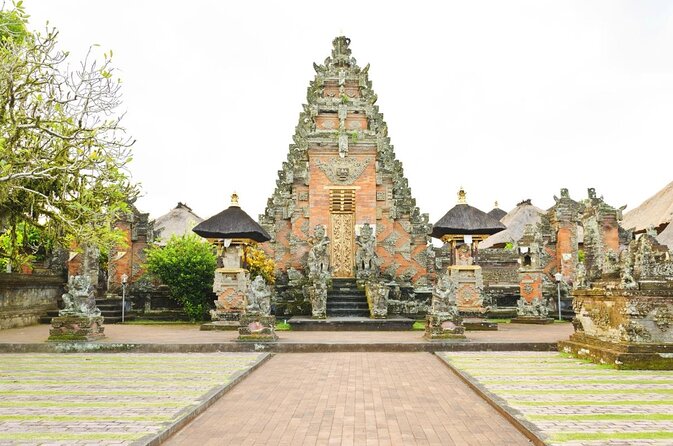
After the rice terraces, the day pivots back to religion and ritual at Tirta Empul Temple (Pura Tirta Empul). This is described as a Hindu water temple near Tampaksiring, and the compound includes a petirtaan, which is the bathing structure area.
You’ll have around 1 hour here, plus admission included. This isn’t just “look at a temple from the outside.” The whole point is the temple compound’s relationship to water, and you’ll see how central the bathing structure is to the site’s purpose.
For your visit, the best mindset is respectful observation. If you’re curious about what’s happening, give space to the rituals and focus on what you can learn without turning it into a spectacle.


Crafts and Culture Stops: Batik, Mas Wood Arts, and Silver Crafting
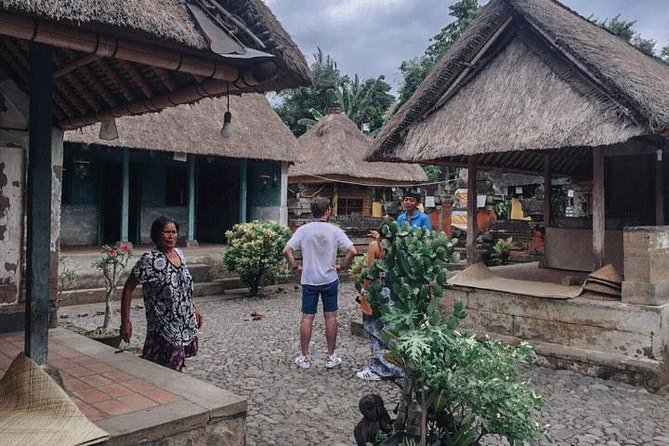
Balinese craft is a big part of what makes Ubud feel like more than sightseeing. The tour includes village visits tied to traditional making, including areas known for handicraft and handweaving batik (often associated with Tohpati scenery) and time in places known for arts like Mas village, which is recognized for wood crafts.
Then there’s also a stop for what’s described as the biggest silver crafting in Bali. Put together, these craft moments do a good job explaining why people return to Bali even after the beaches fade into memory. You’re not just buying souvenirs. You’re watching how different skills become part of everyday life and local identity.
A realistic tip: if you want to shop, set aside time for it without expecting the day to stop for your shopping bag. The tour is built around scheduled stops, so decide in advance what you’re hunting for—batik fabric, wood carvings, or silver—and keep your budget tight.
What’s Included, What Isn’t, and Why the Price Can Make Sense
At $37 per person for an approximately 8-hour day trip, the value comes from what’s bundled. You get:
- Door-to-door round-trip transport from a long list of pickup zones (including Nusa Dua area)
- An English-speaking driver
- Entrance fees included
- Air-conditioned comfort, plus parking fee and petrol
- Mineral water
Meals are not included, and you’ll also need to plan for optional personal expenses (and alcohol is available for purchase). That’s the main “extra cost” category you can control.
So is $37 worth it? For many people, yes—especially if you’re staying in a resort area like Nusa Dua where independent transport can cost time and hassle. You’re paying to turn multiple ticketed stops plus transport into one managed day.
If you’re the type who would happily do this alone by bus or scooter, you might think you can shave the cost. But you’d still be juggling navigation, timed entry, and switching vehicles. This package removes that stress.
Who This Tour Suits Best (and Who Should Rethink It)
This trip is a strong fit if you want a culture-heavy Ubud day without having to plan each leg. You’ll likely enjoy it most if you:
- Like mixing temples, nature, and craft all in one outing
- Prefer guided context over wandering with zero background
- Want pickup convenience from Nusa Dua or nearby resort zones
- Are okay with a full schedule and moving between several stops
You might want to rethink it if you:
- Only want one or two major stops and hate crowds
- Need plenty of free time to roam without a clock
- Are expecting meals to be handled for you (they’re not)
Also, the minimum age is 5 years, and the dress code is smart casual. If you’re traveling with kids, this kind of guided pacing can be helpful, but you’ll still need to manage energy for the full day.
Booking Verdict: A Solid, Efficient Bali Day Trip
Should you book this Ubud Monkey Forest, rice terrace, temple, and waterfall day tour from Nusa Dua? If your goal is to check off the classic Ubud sights while learning how Balinese religion and craft tie into daily life, I’d say yes. The standout advantage is the balance of transport + entry fees + structured stops, so you spend your energy enjoying rather than figuring out logistics.
Just go in prepared for a long, active day with limited meal flexibility. Pack smart, keep water and snacks in mind for the gaps, and treat the temple stops with the respect they deserve. If you do that, you’ll get a day that feels like more than a photo tour.
FAQ
What time does the tour start?
The start time is 8:30 am.
Where is pickup offered for this tour?
Pickup and drop-off are offered in the Nusa Dua area and also several other Bali areas, including Seminyak, Legian, Kuta, Tuban, Jimbaran, Sanur, Tanah Lot, Ubud, Tanjung Benoa, and Benoa Port.
What major stops are included?
You’ll visit Tegenungan Waterfall, Sacred Monkey Forest Sanctuary, Tegalalang Rice Terrace, and Tirta Empul Temple, plus additional craft village stops (including batik/handweaving areas, Mas village for wood arts, and silver crafting).
Are entrance fees included?
Yes. Entrance fees are included.
Are meals included in the price?
No. Meals are not included, so you’ll want to plan for food and any personal optional expenses.
Can you swim at Tegenungan Waterfall?
Swimming is possible when the water conditions are clear.
What’s the dress code?
The dress code is smart casual.