Three days, and your camera never rests. This private photography trip in Bukittinggi and the Minangkabau region is built around specific shooting moments—waterfalls, palace sights, sunrise timing, and nighttime frames—plus real cultural performances.
I like two things a lot here: the planned photo time for Jam Gadang (sunrise if conditions are right, then another round at night), and the chance to photograph Pacu Jawi in Batusangkar. With guides like Doni (and driver Toni on the road), the focus stays on getting you positioned fast and helping you make sense of what you’re seeing.
One thing to consider is that the schedule depends on good weather, and it also includes early starts (for example, the 5:30am sunrise shot plan). If skies don’t cooperate, some light-based shots may shift or be different than you hoped.
In This Review
- Key highlights at a glance
- Minangkabau Photo Trip Basics: What You’re Actually Buying for $450
- Getting There and Staying Organized: Pickup, Timing, and Small-Group Energy
- Day 1: Sianok Canyon Area Shots, Anai Valley Waterfall, and Puncak Taruko Coffee Views
- Day 2: Jam Gadang Sunrise Plan, Pagaruyung Palace, and Pacu Jawi Bull Race
- Day 3: Taruko Village Pencak Silat in Water, Panoramic Stops, and Bika Making
- Gear and Shooting Strategy: How to Get More Keepers in Less Time
- Price and Value Check: What Makes This Deal Feel Worth It
- Who Should Book, and Who Might Pass
- Quick Reality Check: Weather, Changes, and the Non-Refundable Part
- Should You Book This Minangkabau Photography Trip?
- FAQ
- How long is the trip and how many nights are included?
- Where do we start, and is pickup included?
- What meals and tickets are included?
- What photography events are part of the itinerary?
- What happens if the weather is bad?
- Is it refundable if I cancel?
Key highlights at a glance
- Sunrise and night shooting around Jam Gadang for two very different looks
- Pacu Jawi bull race in Batusangkar, with admission included
- Minangkabau culture stops like PDIKM and Pagaruyung Palace tied to your photos
- Taruko Village Pencak Silat in the water for motion and dramatic framing
- Accommodation + meals included, so you’re not juggling logistics on the go
- Small group size (maximum 12) with private-style guiding
Minangkabau Photo Trip Basics: What You’re Actually Buying for $450
This is a short, focused 3-day / 2-night photography program based in the Bukittinggi area. You’re paying for more than a checklist of sights—you’re buying timing, access, and guidance that helps you photograph Minangkabau culture and nature without wasting half the trip in transit panic.
At $450 per person, the value is strongest if you’d otherwise pay separately for a guide, local transport, tickets, and at least some meals and lodging. Here, the package includes an accommodation stay, entrance fees, and multiple meals (breakfast, lunch, dinner). It also includes Pacu Jawi admission, which is the kind of ticket you’ll usually pay extra for if you travel independently.
It’s also “private” in the sense that you’re not stuck with a giant tour-bus script. The cap is 12 travelers, so you can expect less chaos and more flexibility for photo stops, especially when you’re trying to get the right angle before a crowd flows in.
You can also read our reviews of more tours and experiences in Bukittinggi.
Getting There and Staying Organized: Pickup, Timing, and Small-Group Energy
The meeting pattern is simple: you start with pickup offered and a planned meeting time of 8:00am. From there, your guide welcomes you at Minangkabau International Airport in Padang, then the trip rolls forward through key photo areas around West Sumatra.
The “small group” setup matters because photography is all about micro-timing. You need a window to position yourself, frame, and shoot before people move or light changes. With a maximum of 12, it’s easier for your guide (often Doni) to keep you moving while still slowing down when a shot matters.
You also get a mobile ticket, which is one less thing to print or misplace. And yes, they allow service animals, which is useful if you travel with a companion that can’t be left behind.
Day 1: Sianok Canyon Area Shots, Anai Valley Waterfall, and Puncak Taruko Coffee Views
Day 1 is the “get your bearings fast” day—scenic, cultural, and set up for photos right away. You start by heading toward the Sianok Canyon area, then you’ll work through stops that naturally create different photo textures: water, greenery, viewpoints, and Minang heritage context.
A strong photo moment is the Anai Valley Waterfall stop. Water helps you capture motion blur, misty detail, and layered backgrounds. It’s also one of those places where you can shoot wide for the scene and then drop lower for tighter frames with the falls as a foreground anchor.
After that, there’s time for Minangkabau Documentation and Information Center (PDIKM) in Padang Panjang. This is valuable because it gives you visual and cultural context. When you understand what you’re looking at—patterns, traditions, how the Minangkabau story is presented—you’ll photograph people and architecture with more intent, not just decoration.
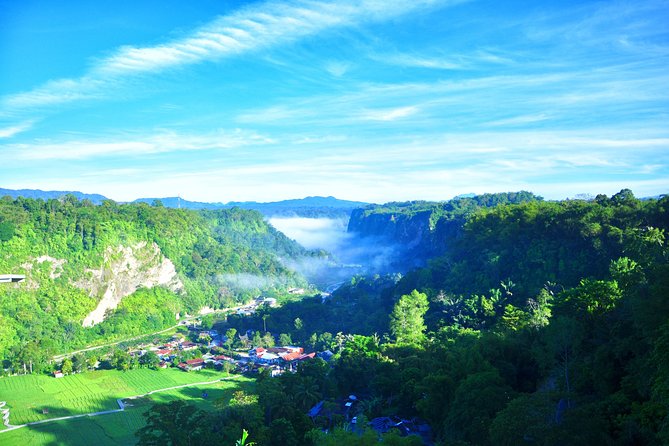
Lunch is at a local restaurant, then the day builds toward the viewpoint: Puncak Taruko with afternoon coffee or tea. This is where you can reset your camera settings, shoot the wider panorama, and catch calmer light than you’d get at midday. Dinner is also included, then you check in to your homestay and get free time.
Practical note: bring patience for daylight transitions. Day 1 is not rushed like an airport sprint, but the best light at viewpoints can disappear quickly.
Day 2: Jam Gadang Sunrise Plan, Pagaruyung Palace, and Pacu Jawi Bull Race
If Day 1 gives you variety, Day 2 gives you energy. It starts early with a sunrise plan at Jam Gadang Bukittinggi. The schedule says 5:30am if it’s a sunny day, then back around 7:00am for breakfast.
That early start is a real advantage for photographers because sunrise at Jam Gadang changes everything: reflections, shadows, and the way the town wraps around the clock tower. Then, later at night, you get another chance at night shots in Jam Gadang, when the tower and streets take on a different mood.
After breakfast, you head to Batusangkar around 9:00am. The day’s cultural core is Pagaruyung Palace. Even if you’re mostly photographing architecture, this stop helps you capture the Minangkabau identity beyond just a single performance.
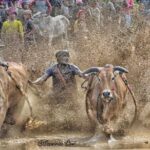
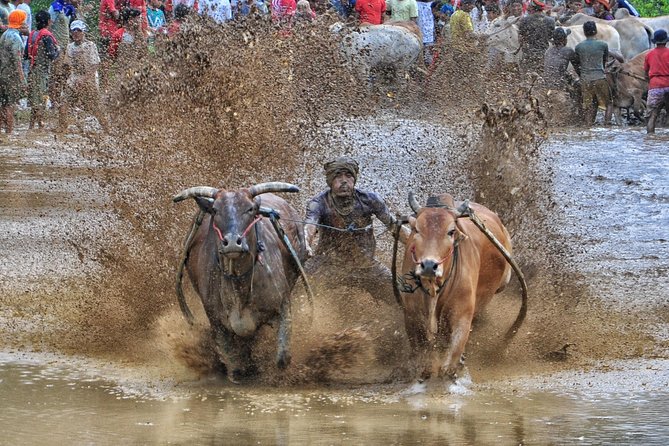
Then you shift into the day’s standout: Pacu Jawi (Bull Race). This is the one I’d plan around if you care about action photography. Bull races mean fast movement, dust, and unpredictable beats. The fact that Pacu Jawi admission is included is a big practical win—you aren’t scrambling for ticket timing once you arrive.
After the bull race, you get dinner coverage as part of the package, plus free time in the evening. If you’re trying to shoot handheld at night, this is also a good day to conserve battery and keep your settings consistent so you’re not constantly rethinking everything under pressure.
Day 3: Taruko Village Pencak Silat in Water, Panoramic Stops, and Bika Making
Day 3 is the “showtime” finale—performance plus food culture plus a clean route back. After breakfast, you check out and move to Taruko Village for a Pencak Silat performance in the water.
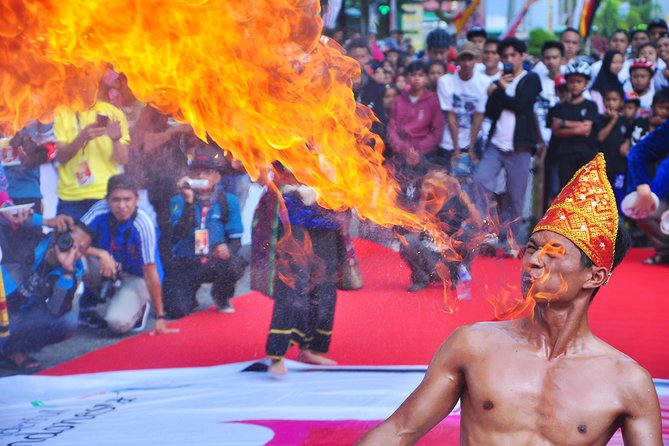
That detail matters. Water performance usually means you’ll deal with bright highlights, splashes, and fast motion. If you like shooting drama—hands, feet, expressions, and contrast—this is a strong place to practice quick framing. I also like this because it’s not just scenery. You’re photographing a living tradition with momentum.
Then it’s back toward the viewpoint: Puncak Taruko again for panoramic shots. Doing a viewpoint stop on Day 3 (after performance) gives you a satisfying contrast. You go from kinetic motion to calmer wide frames.
The cultural-food angle comes in on the way back: you’ll see the process of making Bika (Minang pancake), then stop for lunch at a local restaurant before heading back to Padang. For photographers, food-making is a great change of pace: shorter bursts of action, close-up texture, and steady hands at work.
This day is shorter (about 5 hours listed for the final stretch), so the key is to keep your gear packed but ready. You don’t want your camera buried when a performance or food moment suddenly starts.
Gear and Shooting Strategy: How to Get More Keepers in Less Time

This trip is built for photos, but you still need strategy. You’re moving between viewpoints and performances, so you’ll want a setup that can handle both wide scenes and fast action.
A few practical tips that fit this itinerary:
- Use a fast shutter mindset for performances. Pencak Silat and bull races will reward shorter shutter speeds to freeze key moments.
- Plan for low-light at Jam Gadang at night. Bring a lens or settings that can work with available light, since you’ll be shooting in an urban night scene.
- Pack one steady option. Even a basic tripod or monopod can help at sunrise/night towers and viewpoint frames.
- Keep batteries and memory organized. Day 2 runs from early sunrise to night shooting and you’ll burn storage faster than you expect.
If you’re also a person who likes learning while shooting, guides like Doni can help you time your position and understand what’s happening before you raise the camera. That short-circuit to context often makes your photos look more intentional.
One more note: your route may include additional photo stops depending on timing. For example, some programming on similar routes includes a Kelok 9 photo session. If your driver and guide have a window, you might get that extra angle on the way.
Price and Value Check: What Makes This Deal Feel Worth It
Here’s what you’re getting, in real-life terms:
- Accommodation for 2 nights (homestay/hotel setup)
- Entrance fees included
- Meals included across the days (breakfast, lunch, dinner counts are included)
- Pacu Jawi admission included
- A guide-driven route with pickup offered and a small-group cap
When a trip is priced like this, I look for how much would cost you if you hired things separately. A guide, transport, ticketed events, and lodging add up quickly, especially in a place where you’re trying to hit tight time windows like sunrise and nighttime tower shots.
Also, the “photo focus” isn’t just marketing. The itinerary repeatedly gives you structured chances to shoot: waterfalls, viewpoints, palace context, action events, and performance. That means you don’t spend the day saying, I’ll take a photo later.
$450 is fair if you value your time and want your camera schedule handled for you. If you’re a slow traveler who hates early starts, the price might not feel “cheap,” because the itinerary expects you to roll with light and timing.
Who Should Book, and Who Might Pass
You’ll be happiest here if you:
- Want a short trip that still covers real cultural events
- Care about photography timing more than museum-style wandering
- Like action shots (Pacu Jawi) and performance shots (Pencak Silat)
- Prefer a guide-driven plan with fewer decision points
You might want to look elsewhere if you:
- Strongly dislike early mornings (the sunrise plan is part of the plan)
- Need fully flexible days with no weather dependence
- Want only independent walking time with no structured movement
This program is also a good fit if you’re traveling solo or as a couple and you like the comfort of having a driver and guide handling logistics while you focus on framing and light.
Quick Reality Check: Weather, Changes, and the Non-Refundable Part
The trip requires good weather. If poor weather causes cancellation, you’ll be offered a different date or a full refund. That’s the important safety net.
But the package is generally non-refundable and cannot be changed for any reason. So if you’re booking, treat it like a firm plan: check your travel dates carefully and make sure you’re comfortable with the weather-dependent schedule.
Should You Book This Minangkabau Photography Trip?
I’d book it if you want a practical, well-paced photography plan that mixes Minangkabau culture with action and viewpoint shooting. The standout combination is Jam Gadang at two different times plus Pacu Jawi plus Pencak Silat in water. That’s a lot of variety for 3 days.
I would pause only if early starts or weather uncertainty would stress you out. If you can handle that, you’re likely to leave with photos that feel like stories, not just snapshots.
If you value guides who help you move quickly into position—and you want your lodging and key tickets handled—the $450 price feels like it’s paying for momentum.
FAQ
How long is the trip and how many nights are included?
The program runs for 3 days and includes 2 nights of accommodation.
Where do we start, and is pickup included?
You’re met at Minangkabau International Airport in Padang, and pickup is offered. The meeting time is listed as 8:00am.
What meals and tickets are included?
The package includes entrance fees and meals: breakfast (2), lunch (2), and dinner (2). Pacu Jawi bull race is also included.
What photography events are part of the itinerary?
You’ll have opportunities to photograph Pacu Jawi (bull race), Pencak Silat performance in the water, and photography time around Jam Gadang (sunrise if sunny, plus night shots). There are also scenic stops such as Anai Valley Waterfall and viewpoint time at Puncak Taruko.
What happens if the weather is bad?
The experience requires good weather. If it’s canceled due to poor weather, you’ll be offered a different date or a full refund.
Is it refundable if I cancel?
This experience is non-refundable and cannot be changed for any reason. If the provider cancels due to weather or the minimum traveler requirement not being met, you’ll be offered a different date or a full refund.