Art villages in Bali are best when you can ask questions. This private tour strings together several maker communities, so you can watch the work up close, not just pose in front of it. I love the way the day mixes batik, silver and gold, and wood carving into one smooth craft crawl, and I also like that your guide stays there to help with translation.
You’ll also get door-to-door pickup and drop-off from your hotel or even the port, plus bottled water and a real restaurant lunch that keeps the day from turning into a snack-only endurance event. The main drawback: shopping is not included, and these stops can feel sales-heavy if you’re not in the mood to buy carvings, jewelry, or textiles.
In This Review
- Key Highlights You’ll Actually Notice
- Why This Craft Tour Beats the Usual Art Stop Pattern
- Price and Value: What $79.99 Buys You
- Pickup From Seminyak (and Port Stops): How the Day Runs
- Stop 1: Batubulan Batik Workshop and Wax-Resist Dyes
- Stop 2: Celuk Village for Silver and Gold (Plus a Workshop Moment)
- Stop 3: Mas Village Wood Carving From Blocks to Character
- Stop 4: Batuan Village Traditional Balinese Painting
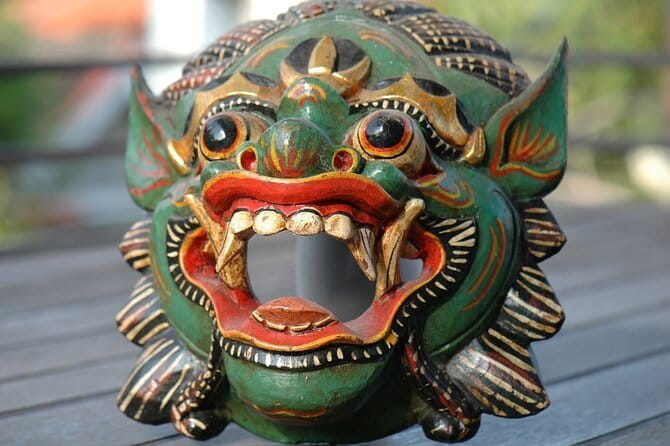
- Stop 5: Setia Darma House of Mask and Puppets in Ubud
- Lunch, Bottled Water, and Coffee/Tea That Keep You Moving
- What to Buy Without Getting Taken for a Ride
- Who This Tour Is Best For (and Who Might Skip It)
- Should You Book This Private Ubud Art Village Tour?
- FAQ
- How long is the tour?
- Where is pickup available?
- Is the tour private?
- What’s included for meals and drinks?
- Are admission tickets included?
- Which places will you visit during the day?
- Do you get a guide or host?
- Is shopping included in the price?
- What is the cancellation policy?
Key Highlights You’ll Actually Notice
- Private driver/guide who helps with language and questions while you watch artisans work
- Batik, silversmithing, woodcarving, and painting across multiple villages in one 5–6 hour day
- Lunch, bottled water, and coffee/tea included so you can stay comfortable between stops
- Celuk Village workshop time included (a hands-on jewelry moment, not just photos)
- Setia Darma House of Mask and Puppets as a fun, museum-style finale in Ubud
Why This Craft Tour Beats the Usual Art Stop Pattern
If you’ve done Bali tours before, you’ve probably seen the rhythm: a quick look, a quick shop, then back in the van. This one keeps you on the maker side longer. You’re visiting a chain of art villages where people still work in their crafts as part of daily life, so the demonstrations feel more like a working space than a staged photo set.
The private format matters too. If you want to linger with a silversmith or ask why a batik pattern uses a certain wax-resist method, you can. If you’d rather speed through and save energy for the museum finale, you can do that too.
And yes, you’ll still be offered items for sale. That’s how these village workshops survive. The difference is you can shop with context, not blind browsing.
You can also read our reviews of more tours and experiences in Seminyak.



Price and Value: What $79.99 Buys You
At $79.99 per person for a private 5–6 hour experience, the value comes from what’s included, not what’s optional. You get round-trip private transfers by air-conditioned minivan, bottled water, lunch, and coffee/tea. Admission fees are also covered for the stops that require tickets, and the tour includes all fees and taxes.
A big reason I think it’s good value: you’re not just paying for transport. You’re paying for a guide escort who stays with you through multiple craft zones. That saves time and confusion, especially if you don’t speak Indonesian.
One caution: shopping is not included. If you’re hoping for a hands-free day with no sales pressure, you might feel a little tempted anyway. The good news is you can treat it like a window into how things are made and only buy if something truly fits your taste.
Pickup From Seminyak (and Port Stops): How the Day Runs
Your day starts with pickup from your hotel in the Seminyak area, or from the port if that’s where you’re based. The tour is designed as door-to-door, and that’s a real help in Bali where traffic and navigation can turn small delays into big ones.
You’ll travel in an air-conditioned minivan, and the tour is private for your group. That means you’re not timing your schedule around other people’s bathroom breaks and slow shopping detours.
Also, keep in mind the day is built around roughly one hour at each village stop, plus transit time and lunch. If you want more time at one place, your guide can usually adjust pacing within reason. In rain, one guide kept the mood up and still hit the key points, which is exactly what you want from a private escort.
Stop 1: Batubulan Batik Workshop and Wax-Resist Dyes

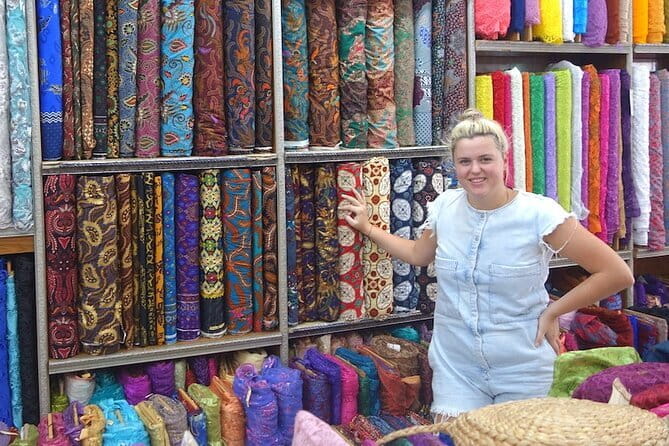
Batubulan is one of Bali’s best-known batik craft areas. Here, you’ll focus on how designs are created using a wax-resist method. In plain terms: patterns are made by applying melted wax to fabric so parts stay protected during dyeing. When you remove the wax later, the fabric reveals the design.
This stop is especially good if you like detail. Even if you don’t buy fabric, watching how the process layers together helps you understand what you’re looking at when you see finished batik in shops later.
Time is listed at about one hour, and the admission ticket is noted as free. That means you’re getting a structured visit without feeling like you’re paying extra just to walk around.
If you’re hoping to buy, come in with a clear plan. Batik items can vary a lot in quality and how the pattern is made. Use this stop to learn what to look for before you see a dozen similar products later.
Stop 2: Celuk Village for Silver and Gold (Plus a Workshop Moment)
Celuk Village is famous for silversmiths and goldsmiths, and this stop is one of the most satisfying on the route because it centers on metalwork. You’ll see designs being made and understand how locals turn raw metal into wearable art.
What I like here: the tour includes an activity component. Celuk is described as including a short workshop, and admission is included. So you’re not just watching from a distance—you get at least a taste of the creative process that goes into jewelry and decorative pieces.
This is also a great time to ask your guide questions. A name that comes up in past experiences is Parti, and the theme is clear: the guide sticks close and helps you interpret what you’re seeing. If you’re trying to figure out what makes one piece pricier than another, this is where you’ll learn the most simply by asking.
Possible drawback: if you hate being offered items, this is the stop where you’ll see the most jewelry. You can still keep it low-pressure by focusing on craftsmanship rather than immediately negotiating.




Stop 3: Mas Village Wood Carving From Blocks to Character
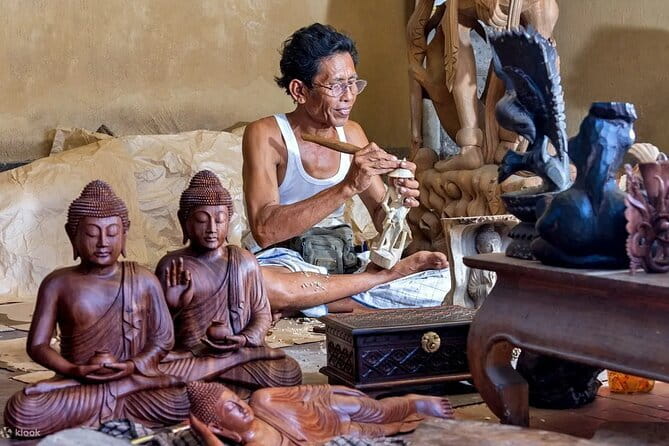
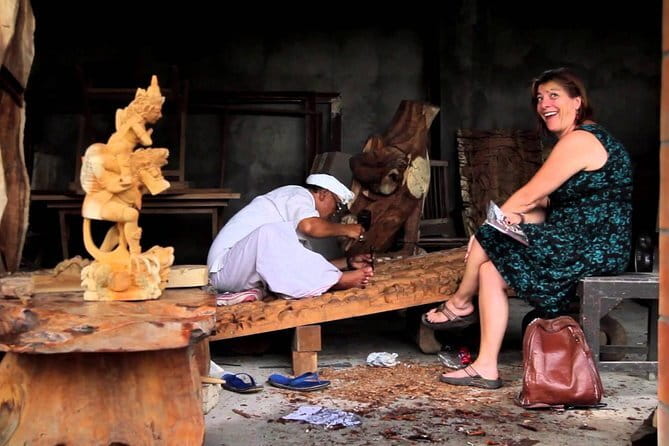
Mas Village is known for wood carving, and the tour’s visit here is about seeing how artisans shape wood into art. You’ll typically meet a carver and watch the process, plus learn a bit about the kinds of wood used.
I like this stop because it gives you a different kind of sensory understanding. Metalwork is fine and exact; wood carving is physical and often more visually dramatic as a plain piece turns into something with curves, faces, or intricate patterns.
Admission is listed as free for this stop. The hour-long timing works well here because it’s long enough to watch a sequence, but not so long that you lose track of the overall day.
If your goal is to buy a carving, try not to decide too quickly. Bring attention to details like how clean the edges are and whether the piece looks consistent in its finishing. A guide can help explain what you’re seeing, but you still need to trust your own eye.
Stop 4: Batuan Village Traditional Balinese Painting

Batuan is the painting stop, and it’s a welcome change from the physical crafts of wood and metal. Traditional Balinese painting often links to religious and cultural themes, and seeing artists at work helps you understand why certain styles feel so recognizable.
This visit is described as exploring one of the famous painting artists in the area, with a chance to see the workshop and how painters create their work. In past experiences, one standout moment was meeting a family home of painters, which tells me this stop can feel more intimate and personal than a standard storefront.
Admission is listed as free for this stop too, which is a nice bonus. Still, don’t assume “free” means “quick.” If you care about understanding the art, use the time to ask about materials and technique. The guide interpretation support is your friend here.
A practical thought: paintings take up less space than bulky carvings or textiles, so this can be a smart purchase if you’re worried about packing.
Stop 5: Setia Darma House of Mask and Puppets in Ubud

The final stop is Setia Darma House of Mask and Puppets in Ubud. This museum-style visit is included and runs about one hour, which is a good length for a day that already includes several workshops.
Why it works: masks and puppets connect to performance traditions, so it’s not only visual art—it’s cultural storytelling. You’ll see many different types of mask and puppets from across Indonesia, and the description also notes that some come from China and Brazil.
I like finishing here because it gives your brain a break from hands-on making. After all the craft labor, you get to walk, look, and process what you’ve learned. It’s a strong ending even if you didn’t end up buying anything.
One more plus: if rain hits, museums are a lot easier to enjoy than outdoor carving stations. Past experiences noted rain during the day, and the tour still managed a full, enjoyable flow.
Lunch, Bottled Water, and Coffee/Tea That Keep You Moving
Food is included, and that’s not a small detail. This type of craft day can run long if you’re hungry, and Bali traffic doesn’t help. Having a restaurant lunch built in means you can focus on the art instead of hunting for meals between stops.
Bottled water is provided throughout the day, plus coffee and/or tea. That’s a comfort factor, especially if you’re out in the heat while waiting for a demonstration to start.
If you have any dietary needs, the tour info doesn’t specify. So it’s smart to plan as if lunch choices may be standard restaurant options. If you’re sensitive, you might message your provider with your preferences before you go.
What to Buy Without Getting Taken for a Ride
You don’t have to buy anything. But if you do want souvenirs, this tour helps you shop smarter.
For batik: shop based on what you saw at the wax-resist process. Look for how patterns align and how the fabric feels. If you’re unsure, ask your guide what you’re looking at, and compare a couple of choices before paying.
For silver and gold: the Celuk stop is where you’ll learn to spot differences. Focus on details like workmanship, thickness, and finish rather than just the design name. If you’re buying jewelry for wearing, comfort matters too.
For wood carving: don’t buy solely because it looks cool in the moment. Check for clean carving work and finishing. If you’re not carrying the item yourself, think through how you’ll transport it.
For paintings: choose based on subject and style, and make sure the painting is something you’ll still like when you’re back home and the novelty wears off.
A small reality check: these villages rely on sales. So expect the sales conversation. The goal is to keep it honest and controlled. Use the guide, ask questions, and decide only when it feels right.
Who This Tour Is Best For (and Who Might Skip It)
This tour fits best if you want a private, structured art day with minimal stress and real craft exposure. It’s ideal for couples, solo travelers, and families who want culture without the hassle of driving between multiple village stops.
It also works well if you value a guide who can help break the language barrier. Guides like Parti and drivers like Wayan Sudira come up in excellent experiences, and the consistent theme is that they keep things understandable and enjoyable.
You might consider something else if you hate shopping pressure at all. This isn’t a museum-only day, and multiple stops involve crafts that are also sold.
Should You Book This Private Ubud Art Village Tour?
If you’re traveling with a tight schedule and you want maximum craft value per hour, I think this is a solid choice. The mix of batik, metalwork, wood carving, and painting gives you a full creative spectrum, and the addition of Setia Darma’s masks and puppets gives the day emotional closure.
Book it if you want:
- Private door-to-door convenience from Seminyak (or the port)
- Included lunch, water, and coffee/tea so your day stays comfortable
- A guide who helps interpret what you’re seeing at each stop
Skip it if you only want museum time, or if you’re sure you don’t want to see any sales side of village life.
FAQ
How long is the tour?
It runs about 5 to 6 hours.
Where is pickup available?
Pickup is offered at your hotel in the Seminyak area, or at the port.
Is the tour private?
Yes. It’s a private tour for only your group.
What’s included for meals and drinks?
Lunch is included, along with bottled water throughout the day and coffee and/or tea.
Are admission tickets included?
Admission is included for some stops, while others list admission as free. Overall, the tour includes all fees and taxes.
Which places will you visit during the day?
You’ll visit Batubulan, Celuk Village, Mas Village, Batuan, and end at Setia Darma House of Mask and Puppets in Ubud.
Do you get a guide or host?
Yes. You’ll have a tour escort/host who interprets and helps with the language barrier.
Is shopping included in the price?
No. Shopping is not included.
What is the cancellation policy?
You can cancel for a full refund up to 24 hours before the experience starts.
If you’d like, tell me your travel dates and where you’re staying in Bali, and I’ll suggest how to time this tour within your day (especially if you’re also planning Ubud or beach time).