If you like food learning with real ingredients, this hits. A Seminyak vegetarian cooking class pairs a guided market run with hands-on prep, then turns it into a sit-down meal with recipes to take home. I like that it teaches Balinese vegetarian cooking in a way that feels practical, not performative. I also love the small-group setup, so you’re not stuck waiting for help.
The one thing to think about is logistics: there’s no hotel pick-up, so you’ll need to get to the meeting point on your own. Also, with a duration of about 1 hour, you’ll learn skills and flavors more than you’ll master every single technique.
From start to finish, the tone stays friendly and focused. You’ll work with a native Balinese chef who guides you through ingredients, culture, and how dishes come together, in English.
In This Review
- Key highlights that make this class worth your time
- Why Seminyak’s vegetarian cooking class feels more Bali than touristy
- The market visit: choosing spices, herbs, and produce like a local
- What to watch for in the market
- Back to the kitchen: how the cooking steps actually connect
- The rhythm of the class
- What dishes are you really cooking here
- Eating what you made: afternoon tea and a proper sit-down meal
- Small group + English guide: the fastest route to asking questions
- Chef energy: calm, funny, and focused on the food
- Price and value: is $47 fair for an hour in Seminyak?
- Who should book this cooking class (and who should skip it)
- Tips so you get the most from your 1-hour class
- Should you book the Seminyak vegetarian cooking class?
- FAQ
- Where is the class meeting point?
- How long is the experience?
- What is included in the price?
- Do I need to bring anything?
- Is there an English guide?
- Is the class wheelchair accessible?
Key highlights that make this class worth your time
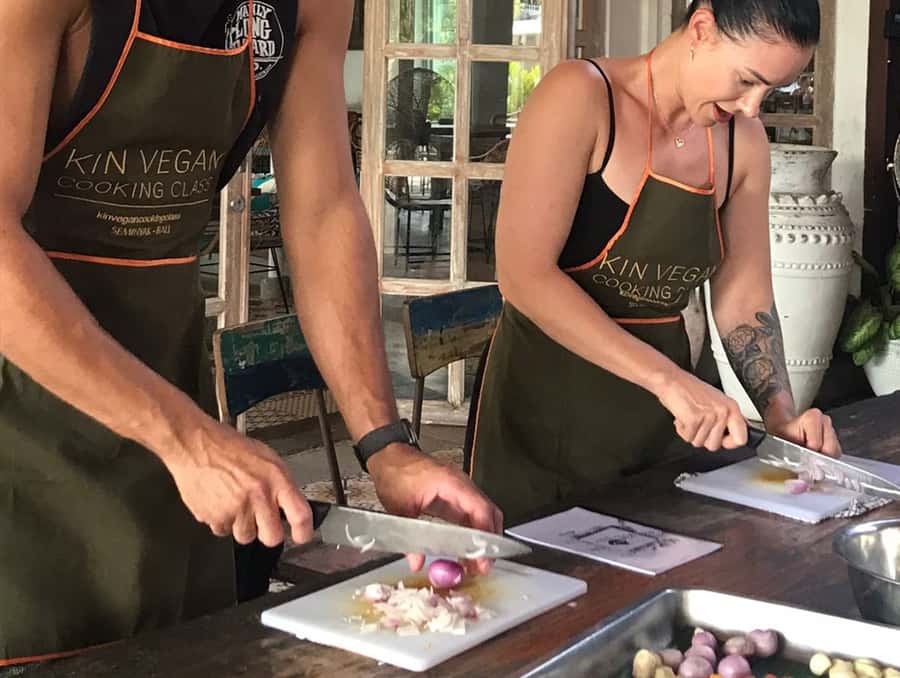
- Local market ingredient hunt: Your chef walks you from stall to stall and helps you choose the right herbs, spices, produce, and other ingredients.
- Small group = real coaching: Fewer people in the kitchen means more chances to ask questions and get feedback.
- Vegan vegetarian Balinese food: You learn Balinese vegetarian dishes using ingredients that are vegan for the class.
- You leave with tools, not just photos: A recipe book and a completion certificate are included.
- Tea and a meal included: You don’t just cook and run; you sit down and taste what you made.
Why Seminyak’s vegetarian cooking class feels more Bali than touristy
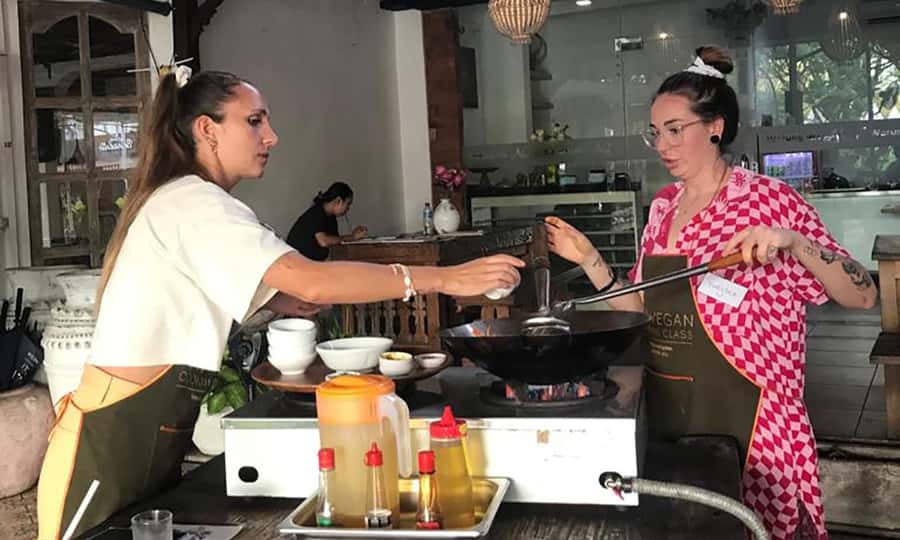
This is the kind of activity that makes sense for a short Bali trip. You get a full mini-lesson on how Balinese vegetarian meals are built, starting with the ingredients and finishing with eating. It’s educational, but it stays fun because the chef is there to guide you through the steps in plain terms.
I particularly like that the class doesn’t treat vegetarian cooking like a compromise. It treats it like a real cuisine path with its own ingredient logic and flavor building blocks. You’ll also get to enjoy a meal made from your own work, which is usually where the learning clicks.
A small group matters more than it sounds. In a bigger class, you can end up watching more than cooking. Here, the format is designed so you can actually keep moving, ask for help, and understand what you’re doing.
You can also read our reviews of more tours and experiences in Seminyak.



The market visit: choosing spices, herbs, and produce like a local
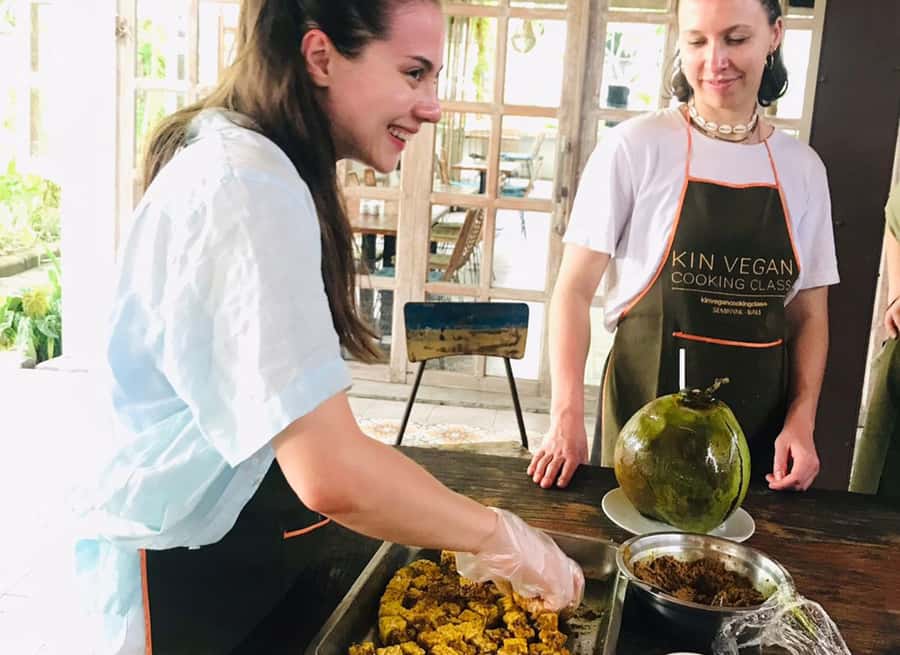
Your class begins with a nearby local market visit. You’ll meet at the class’s meeting point area, then head out with your chef who guides you from stall to stall. The goal isn’t just sightseeing. It’s learning what to buy, why to buy it, and how to spot quality.
As you walk, the chef helps you identify and select ingredients used in the Balinese vegetarian dishes you’ll cook later. That includes local herbs and spices, fresh produce, and other items used to create the flavor base. You’ll also get explanations about how ingredients connect to the dishes, which is where most cooking classes fall short.
One of the most useful parts is the chef’s take on ingredients that you can find abroad. You’ll learn which items are easier to source in international grocery stores, especially Asian markets, and which ones may take a little effort. That matters if you actually want to cook these dishes again at home.
What to watch for in the market
Go in with comfortable shoes and a relaxed pace. Markets can be a little chaotic, and your job is to focus on cues like smell, freshness, and how ingredients are typically prepared or bundled at the stalls. If you ask your chef questions during the walk, you’ll get answers while the ingredients are right in front of you.
You may also notice something important: local cooking relies on building flavor early. Even though this is a vegetarian class, you still see how the kitchen gets its depth through spices, herbs, and careful ingredient selection.
Back to the kitchen: how the cooking steps actually connect
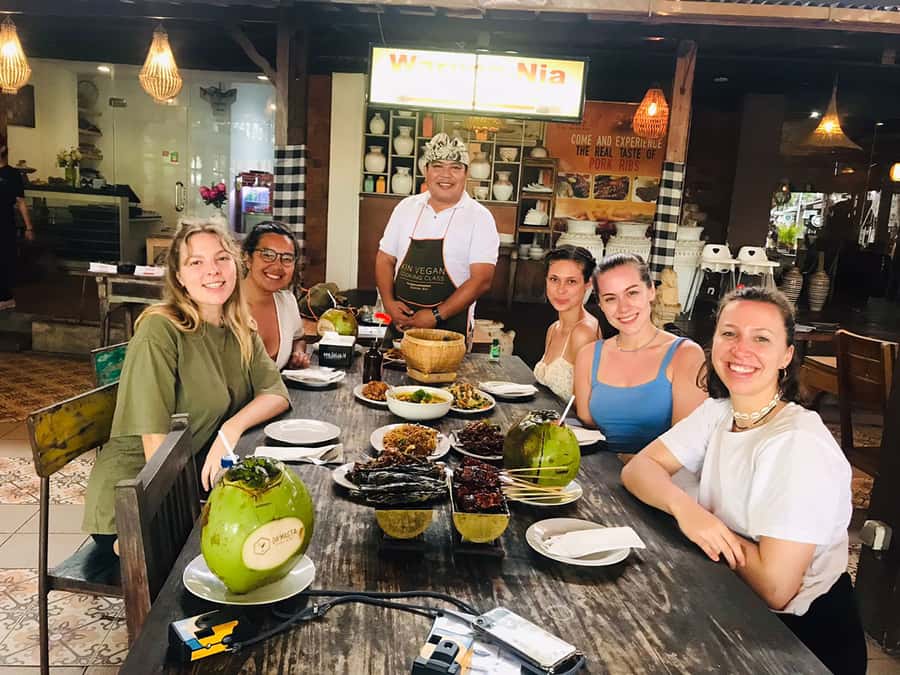
After the market, you return to the cooking venue and start cooking. This is where you turn the chef’s ingredient talk into real hands-on practice. You’ll work with the mentoring chef’s guidance as you prepare the dishes, and you’ll learn by doing, not just by watching.
Because it’s a small-group class, you’re less likely to get stuck waiting for a cooking station or help. That also makes the experience more relaxed. You can talk with the other participants while you prep, and you’ll pick up little technique pointers along the way.
The rhythm of the class
The class follows a straightforward flow:
- Start with ingredients you collected or confirmed at the market.
- Prepare dishes using techniques the chef explains as you go.
- Eat together at the end, so you can judge your results.
Even though the total time is about an hour, the structure is tight. It’s designed to keep you active and moving, which is a good thing for first-timers. You’ll likely come away with a clearer idea of how Balinese vegetarian flavors are constructed, even if you don’t perfect every step.




What dishes are you really cooking here
This is a Balinese vegetarian cooking class, and the ingredients are vegan. The class focuses on Balinese vegetarian dishes, plus some popular Indonesian dishes. You won’t just be making one item; you’ll prepare various dishes as part of the session.
What I find valuable is the concept, not the memorization. The chef teaches you how to think about key ingredients and how they show up in finished dishes. That way, when you go home, you can recreate flavors and methods even if you can’t source every ingredient exactly the same way.
Because the class includes a recipe book, you’ll have a reference for what you cooked. That’s the practical part many classes forget: a recipe you can use later, not just a photo of your food.
Eating what you made: afternoon tea and a proper sit-down meal
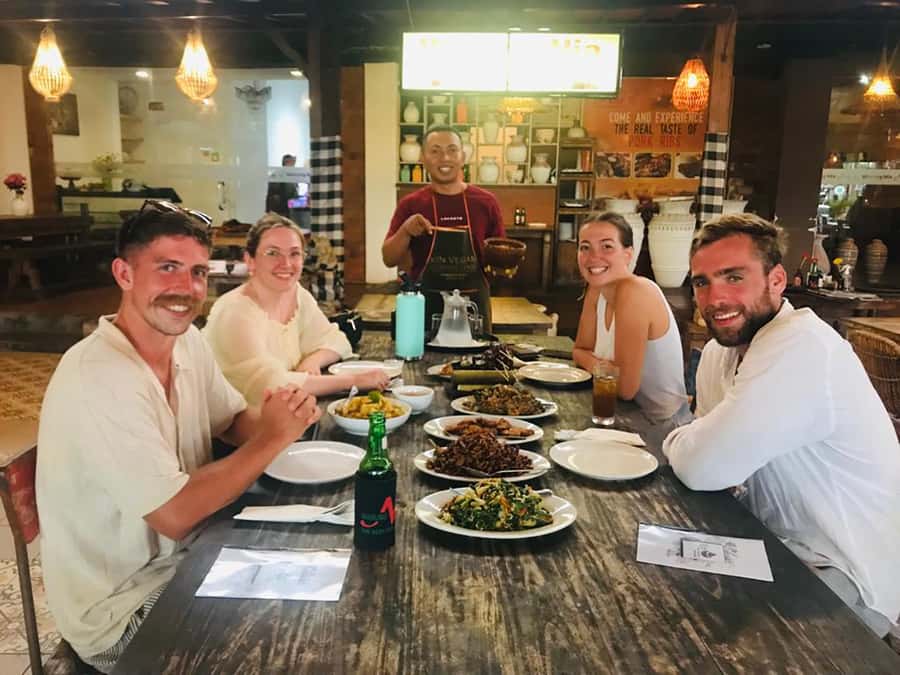
After cooking, you’ll sit down and enjoy what you created. This is more than a perk. It’s the payoff that turns instructions into understanding. You’ll taste the dishes while everything you did is still fresh in your mind.
Afternoon tea is included too. That rounds out the experience and gives you a slower moment to compare notes with your chef and cooking partners. If you’re the type who learns best by tasting right away, this part is a big win.
The class also includes a completion certificate. It may not be what you frame on the wall, but it does mark the experience and gives you a sense of closure that feels more complete than a quick demo class.
Small group + English guide: the fastest route to asking questions
This class runs with a live tour guide in English. That’s important, because ingredient cooking gets technical fast. When you can ask questions in your language, you’ll understand what substitutions mean and how the chef expects you to cook.
The small group format is also a major reason people rate this class highly. You’re not competing for attention. You’re in the kitchen long enough to actually learn, and you’re close enough to get help when you need it.
Even if you’re a confident cook, you’ll probably still learn something from a native Balinese chef’s perspective on ingredient choices. And if you’re a beginner, you’ll appreciate that the chef is there to guide the process step by step.
Chef energy: calm, funny, and focused on the food
The best cooking classes don’t just teach technique; they keep the mood easy. In this class, the chef comes across as relaxed and humorous, which helps when you’re learning something new and a little hands-on mess is inevitable.
That kind of energy makes it easier to stay engaged during the market walk and the cooking session. You’ll also be more likely to ask questions, because the tone doesn’t feel intimidating. In short: learning happens faster when you don’t feel rushed or judged.
Price and value: is $47 fair for an hour in Seminyak?
At about $47 per person for a 1-hour experience, the price is reasonable because you’re not paying just for instruction. The class includes all ingredients, plus afternoon tea, a recipe book, and a certificate. You also get the market visit portion, which is often where you would otherwise spend extra money and time exploring on your own.
The part that can change the value for you is the no hotel pick-up. If you’re staying close by, it’s no big deal. If you’re further out, you’ll want to plan how you’ll reach the meeting point without wasting time.
Still, for a short, concentrated class with ingredients included, this is the kind of value that fits people who want a real skill and not just a meal. You’re leaving with knowledge you can re-use.
Who should book this cooking class (and who should skip it)
This experience is wheelchair accessible, which is a meaningful plus if you need that option. You’ll also want to wear comfortable clothes and comfortable shoes since there’s a market component.
It’s not suitable for:
- Children under 2 years
- Children under 3 years
- People over 70 years
If you’re traveling as a couple, a small group of friends, or even solo, the format still works well because the class is built around interaction and coaching, not crowd chaos.
It’s a particularly good fit if you:
- Want Balinese vegetarian or vegan cooking you can reproduce at home
- Like ingredient-focused learning (spices, herbs, produce)
- Prefer a short, structured experience that ends with a meal
Tips so you get the most from your 1-hour class
Come prepared so you can focus on learning instead of comfort. Bring comfortable shoes and comfortable clothes, since you’ll be on your feet during the market walk and cooking session.
Show up about 5 minutes early. It’s a small rule, but it helps the whole group start smoothly. If you arrive late, you can miss some of the chef’s ingredient explanation, and that’s the foundation of the whole class.
Also, go with a light attitude. You’re cooking and tasting, so mistakes happen. Use your questions. The chef’s job is to help you understand what each ingredient does and how to use it.
Should you book the Seminyak vegetarian cooking class?
Yes, if you want an ingredient-first introduction to Balinese vegetarian cooking in a way that’s easy to follow and actually ends with you eating what you made. The market ingredient tour, small group coaching, vegan Balinese focus, and the recipe book make it feel like more than an entertainment activity.
I’d skip it only if you need hotel pick-up for convenience, because there’s no included transport. Also, if you’re looking for a long multi-hour deep technical course, this one-hour format will feel tight.
If your goal is a practical, fun food skill you can repeat at home, this is a smart booking choice in Seminyak.
FAQ
Where is the class meeting point?
You meet at the activity meeting point. Hotel pick-up and drop-off are not included.
How long is the experience?
The duration is 1 hour. You can check starting times based on availability.
What is included in the price?
It includes the cooking class, all ingredients, afternoon tea, a certificate, and a cook book. A live guide in English is also included.
Do I need to bring anything?
Wear comfortable shoes and comfortable clothes. That’s the main advice.
Is there an English guide?
Yes. The experience includes a live tour guide who speaks English.
Is the class wheelchair accessible?
Yes, it is listed as wheelchair accessible.