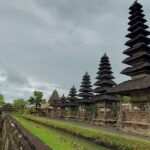
Cliffside sunset in Bali begins at 4 pm. This half-day trip blends an 11th-century Uluwatu Temple visit with the famous Kecak Fire Dance, timed for sunset views over crashing waves. It’s one of those Bali combos that feels spiritual, scenic, and cultural in one smooth sweep.
I especially like how pickup + an English-speaking guide reduces stress. You’re not guessing your way around sacred space or rushing for the amphitheater. The other big win is the performance itself: the human “orchestra” of Kecak, plus the fire element, with the temple cliffs as your backdrop.
One consideration: this is not a quiet, empty experience. Even with the skip-the-line promise, you’ll still deal with crowd motion at the amphitheater.
In This Review
- Quick hits before you go
- Uluwatu’s 4 pm rhythm: why this timing works
- Uluwatu Temple: cliffs, history, and the monkey reality check
- What you’ll notice once you arrive
- The Kecak Fire Dance: human orchestra meets cliffside night
- Sunset seats and timing: what “skip the line” really means here
- Price and value: $32 for what you’re actually getting
- Getting there without Bali chaos: A/C, shortcuts, and guides
- Dress code and monkey-proof habits that save your trip
- Comfort basics that people quietly appreciate
- Who should book this Uluwatu + Kecak tour
- Should you book this tour?
- FAQ
- What time does the tour start?
- How long is the tour?
- Is hotel pickup available?
- Are entrance tickets included?
- What’s the dress code for Uluwatu Temple?
- Are there monkeys at Uluwatu?
- Is this tour really a skip-the-line experience?
- What if the weather is bad?
- Can I cancel for free?
Quick hits before you go
- 4:00 pm start means you’re built around Bali’s sunset timing
- Uluwatu Temple sits about 70 meters up, with dramatic cliff views
- Kecak & Fire Dance is performed in an open-air amphitheater with waves below
- Small group size (max 5) keeps things more personal and manageable
- Monkeys are real at the temple, so protect cameras and bags
- Dress code is strict: shoulders, underarms, back, and knees need coverage
Uluwatu’s 4 pm rhythm: why this timing works
Uluwatu Temple is stunning at almost any hour, but the magic really lands in the late afternoon. Starting at 4:00 pm, you get enough daylight for temple wandering and photos, then you roll into the amphitheater as the sky shifts. That’s the whole point of pairing these two stops: the temple gives you the spiritual setting, and sunset gives you the emotional payoff.
There’s also a practical reason this timing helps. Traffic on Bali can be unpredictable, and the half-day format keeps your schedule tight. With the right guide, you’re set up to arrive with time to settle and find your viewing spot without panic. In the past, I’ve seen hosts like Kadek Oka and Donald praised for being on time and for navigating the rush without wasting your energy.
The group is small too, with a maximum of 5 travelers, which matters more than it sounds. When your group stays compact, it’s easier to move as a unit, keep track of everyone, and actually enjoy the sights instead of getting separated in the chaos.
You can also read our reviews of more tours and experiences in Jimbaran.

Uluwatu Temple: cliffs, history, and the monkey reality check
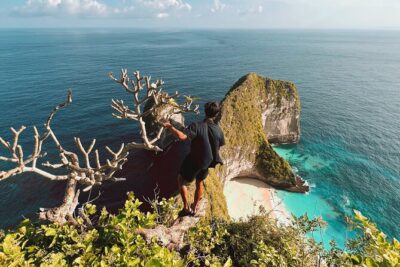
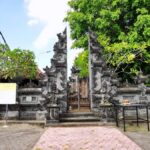
Uluwatu Temple (Pura Luhur Uluwatu) is an important 11th-century site perched roughly 70 meters above sea level. It’s one of Bali’s key sea-cliff temples, often described as one of the island’s six major temples, and it plays a big role in local religious life. Even if you’re not a history nerd, the place makes sense. The ocean air, the height, and the setting on sacred grounds all do the heavy lifting.
Your visit includes time with a local guide, with explanations that help you understand what you’re seeing. From there, you get leisure time to wander the grounds and take photos. That mix is useful: guides help you interpret, then you can enjoy without feeling like you’re being herded.
Now, the part you should plan for: monkeys. They’re a constant presence around the temple area. The tour info makes it clear they can grab or engage with items belonging to visitors, so you’ll want to treat your bag like it has a job. Keep a watchful eye, don’t dangle anything tempting, and be extra careful with cameras and phones.
A few guides get special mentions for handling monkey moments. People describe how Kadek Oka helped them avoid a monkey that had its eye on camera gear, and how Dewa guided them through the monkey areas. Even if you never have a close call, you’ll still move slower and safer when you’re paying attention to what’s near you.
What you’ll notice once you arrive
- You’re standing above the sea, so the wind and light feel dramatic
- Temple pathways can be uneven, so wear shoes with grip
- Sacred sites have a strong culture-and-rules vibe, especially with clothing
The Kecak Fire Dance: human orchestra meets cliffside night
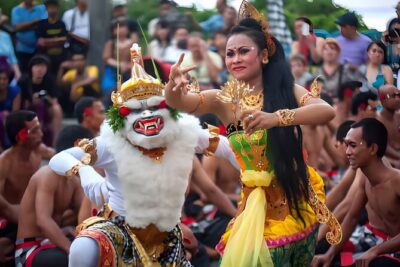
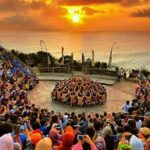
After Uluwatu, you head to the open-air amphitheater for the Kecak & Fire Dance. This is one of Bali’s most recognizable performances, and it works even if you don’t speak a word of Indonesian. The core idea is the human “orchestra”: a group of performers using traditional Balinese song, dance, and storytelling, supported by a circle of human voices. It feels rhythmic and communal—like the audience is watching a living instrument.
The performance is timed so you get the best backdrop: sunset, with waves crashing far below. That view isn’t just a nice add-on. It changes how the whole show feels. The atmosphere at Uluwatu is part of the performance.
Then comes the fire element. Expect a dramatic shift in intensity, with the performers bringing heat, motion, and focus. The combination of cliff setting + open-air amphitheater + fire visuals is why this show is so popular.
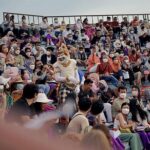
One thing I want you to keep realistic expectations on: the crowd situation. A few people have pointed out that the experience is not truly a low-crowd “skip ahead in line” situation. Instead, it’s more like you avoid a formal queue, but you still have movement pressure as people enter and exit. If you don’t like crowds or you hate being squeezed even slightly, this may be the part that tests you.
Still, plenty of people loved the show itself, with praise for memorable performances and for guides who helped them get good seats. Donald and Dewa are both mentioned for ensuring great viewing spots, and that’s a big deal because Uluwatu seating can affect what you actually see.
Sunset seats and timing: what “skip the line” really means here
Let’s translate the marketing into real-world behavior. “Skip the line” can sound like you’ll step in while everyone else waits. In practice, what people describe is closer to: there may not be a strict line system, but the amphitheater is busy, and you’ll still experience crowd flow.
That means your best strategy is simple:
- show up with your guide’s timing
- follow directions quickly
- don’t fight for space at the last second
The good news is that this tour is built for the sunset window, and guides seem to do a lot of the smart work for you. People mention help with timing, seat choice, and navigation around the temple rush. That support is the difference between a “good show” and a “great show you can actually enjoy.”
Also, keep in mind that a half-day schedule limits how much buffer time you get. If it’s a cool day or you’re caught waiting longer than expected, the experience can feel less comfortable. So plan to bring something for temperature changes, especially if the sun drops behind the cliffs.




Price and value: $32 for what you’re actually getting
At about $32 per person, this tour isn’t trying to be a luxury custom day. It’s a practical package for a very specific Bali moment: Uluwatu at sunset + Kecak Fire Dance.
Here’s what your money covers:
- Air-conditioned vehicle
- Hotel pick-up and drop-off if you choose that option
- English-speaking guide
- Bottled water
- Entrance fees for Uluwatu Temple and the dance performance
- Insurance
- Mobile ticket
What’s not included: meals and personal expenses.
From a value perspective, the biggest payoff is that you’re paying to “bundle” three things that are usually separate headaches: transport to the southern cliff, entrance logistics, and timing around the show. Plus, your guide can help you avoid common mistakes like getting stuck in the wrong crowd zone or missing the best seat area.
One more value note: this is a small group max (5 people). In Bali, larger groups can turn sightseeing into a slow-motion traffic jam. With fewer people, your guide can manage movement and attention better—especially around monkeys and sacred rules.
If you’re budget-conscious but still want the headline Bali experience (temple + sunset + iconic dance), this looks like a reasonable deal.
Getting there without Bali chaos: A/C, shortcuts, and guides
This tour uses an air-conditioned vehicle, which matters on an afternoon when you’re stepping out into sun, then back into a cliffside breeze. If you pick the hotel pickup, it reduces the hassle of getting to the start point and managing multiple transport hops.
The small group size also makes a difference. You’re not stuck watching a driver wait for a dozen people with separate pickup locations. That usually keeps the day moving.
Guide quality is a major part of why people rate this so highly. Names like Kadek Oka, Gusti, Santika, Adi Putra, Donald, Dewa, Eddy, Komang, Topan, and Nusa come up in the feedback. The common thread is helpfulness: punctual arrivals, good explanations, safe driving, and practical problem-solving.
Some guides even mention using shortcuts to avoid traffic delays, so you can reach Uluwatu without losing your sunset window. Others help with seating strategy and guide you in monkey zones so you don’t have to constantly scan the ground and the branches yourself.
If you care about comfort and timing, the guide is where this tour makes or breaks the experience. I’d pick this specifically for that reason.
Dress code and monkey-proof habits that save your trip
Uluwatu is strict about clothing. The tour info clearly states that clothes revealing shoulders, underarms, back, or knees are not allowed, and enforcement is described as strict. So treat this like an actual checklist, not a suggestion.
Bring a sarong/scarf/sweater to cover up. Or wear clothes that already meet the rules. If you show up underdressed, you may lose time adjusting or negotiating access.
Now monkeys. The best monkey plan is prevention:
- keep bags zipped and closed
- keep phones/cameras controlled, not dangling
- don’t snack openly
- watch what’s near you before you step or turn
You’ll notice that people got saved from monkey trouble more than once. That’s not luck—it’s attention, and a guide who knows the local rhythms.
Comfort basics that people quietly appreciate
- Comfortable shoes (you walk more than you think)
- Extra water if you’re sensitive to heat
- A light layer for after sunset
Who should book this Uluwatu + Kecak tour
This tour fits best if you want a focused half-day that hits the must-see Bali trifecta:
- a major temple setting
- a famous sunset viewpoint
- a standout cultural dance
You’ll probably enjoy it if:
- you like cultural performances and storytelling
- you want a guided experience that reduces decision fatigue
- you’re okay with a small amount of crowd movement at the amphitheater
- you’re willing to follow dress code rules (or you pack cover-up fabric)
You might reconsider if:
- crowds make you anxious
- you strongly dislike being in tightly managed entry zones
- you need long free time or a slow, unstructured itinerary
The good part is the schedule is clear and compact, so it doesn’t sprawl into an all-day slog.
Should you book this tour?
Yes, I think you should book it if you’re aiming for a high-impact Bali evening without overplanning. The combination of Uluwatu Temple, the sunset backdrop, and Kecak Fire Dance is exactly the kind of experience that feels “Bali” in a real, place-based way—not just a box to tick.
Book it with confidence if:
- you can start at 4:00 pm
- you pack the correct cover-up for the temple
- you’re prepared for monkey behavior (secure your gear)
- you’re okay with some crowd energy at the amphitheater
Skip or choose another option if:
- you’re uncomfortable with the reality of amphitheater crowds
- you’re expecting a truly empty, no-pressure “skip-the-line” entry
If you do go, pick this tour partly for the practical value: A/C transport, entrance fees included, and guides like Kadek Oka, Donald, and Dewa getting repeatedly praised for punctuality, explanations, seat help, and monkey navigation.
FAQ
What time does the tour start?
The experience starts at 4:00 pm.
How long is the tour?
It runs for about 5 hours (approx.).
Is hotel pickup available?
Yes, hotel pick-up and drop-off are included if you select that option. Otherwise, the activity ends back at the meeting point.
Are entrance tickets included?
Yes. Uluwatu Temple entrance and the dance performance entrance fee are included.
What’s the dress code for Uluwatu Temple?
You must cover shoulders, underarms, back, and knees. If your clothes don’t meet the rules, bring a sarong/scarf/sweater to cover up.
Are there monkeys at Uluwatu?
Yes. There are monkeys in the area, and you should keep a close watch on your possessions, especially cameras and bags.
Is this tour really a skip-the-line experience?
It’s marketed as skip the line, but in practice you may still deal with busy crowd movement when entering and exiting the amphitheater.
What if the weather is bad?
The experience requires good weather. If it’s canceled due to poor weather, you’ll be offered a different date or a full refund.
Can I cancel for free?
Yes. You can cancel for a full refund if you do it at least 24 hours before the start time. If you cancel within 24 hours, the amount paid is not refunded.