Breath-hold training can change your snorkeling fast. This small-group try session on Nusa Penida pairs a short classroom start with reef practice, so you learn breathing control and feel steadier in the water. I especially liked the max-4 setup (you get real coaching) and the hands-on flow from theory to the home reef.
One thing to plan for: there’s no hotel pickup, so you’ll need your own ride or transport to the school meeting point.
You also leave with practical tools for calm swimming and the option of underwater photography, which makes the whole experience feel extra tangible after you’re back on land. And yes, instructors have a reputation for staying patient with first-timers, including names like Roberto, Chiarra, and Heiko from past course sessions.
In This Review
- Key things to know before you go
- Nusa Penida’s “try it” format: why this course feels different
- The 3-hour rhythm: classroom theory, then reef practice
- What you actually learn: breathing control and safer underwater freedom
- The reef session: where you’ll practice (and why that’s smart)
- Underwater photos and the little things that make it worth $150
- Logistics on Penida: no pickup, morning hours, easy meeting point
- Who should book this course (and who should consider something else)
- Taking this from a one-time try to better snorkeling later
- Should you book Try Free-Breathing on Nusa Penida?
- FAQ
- What’s the duration of the course?
- How many people are in the group?
- What’s included in the price?
- Is hotel pickup included?
- Where does the session take place?
- What are the opening hours?
- Is it suitable for children?
- If plans change, can I cancel?
Key things to know before you go
- Small group, tight attention: a maximum of four people, so your instructor can correct your body position and timing quickly.
- Classroom + reef, not just one or the other: about 1.5 hours on theory and technique, then practice on the reef in front of the school.
- It’s for range, not depth: the try course focuses on seeing more reef while staying safe and controlled.
- Underwater photos are part of the magic: there’s an emphasis on capturing underwater moments for later.
- You’ll practice breath-hold skills with support: the goal is confidence in open water, not just a one-time try.
- Bring moderate fitness: the course notes a moderate physical fitness level, and kids must be with an adult.
Nusa Penida’s “try it” format: why this course feels different
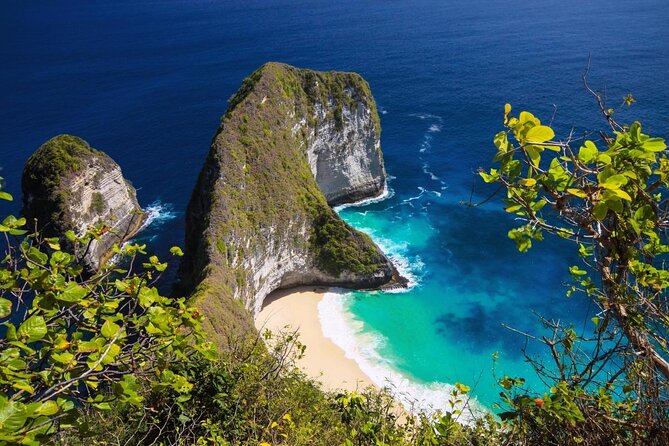
Penida can be a dramatic place at the surface—waves, rocky edges, strong water movement. This course keeps that energy from turning into stress by teaching the fundamentals first. You start with the breath-hold principles in a classroom setting, then you apply them right away where conditions are manageable and repeatable.
What I like is that it’s not sold as a deep, technical mission. The emphasis is on improving your snorkeling game and giving you more underwater range safely. You’re learning how to move through the water with control, not how to race down to a far target.
The small group size matters more than people think. When you’re learning breathing timing and body positioning, a two-person difference in attention can mean the difference between progress and confusion. A max of four makes it easier to spot what’s holding you back—often it’s not ability, it’s technique.
You can also read our reviews of more tours and experiences in Nusa Penida.
- ️Nusa Penida by Private Boat – Snorkeling 4 spots, Swim with Mantas + Land Tour
★ 5.0 · 6,424 reviews
The 3-hour rhythm: classroom theory, then reef practice
This try session runs about three hours total. The pacing is straightforward:
First, you spend roughly 1.5 hours in the classroom. This is where you learn the practical aspects of breath-hold technique: how to prepare your body, how to think about breathing timing, and what to expect when you move from air to underwater. It’s not just “here’s a lecture,” either. The structure is meant to set you up for practice without guessing.
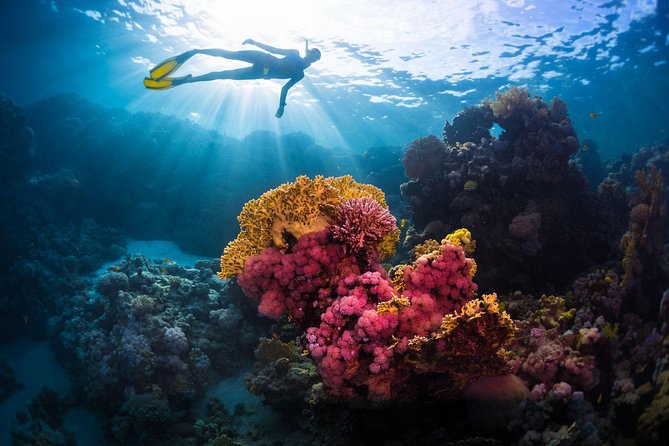
Then you head into the water to apply what you just learned. The practice happens on the school’s home reef right in front of the school. That’s a big deal for a first course because it reduces the uncertainty you get from long travel or changing dive conditions.
The session ends back at the meeting point, so you’re not stranded across the island at the end of the morning.
What can be a drawback: if you want a long ocean session or constant water time, the classroom portion will feel like “waiting.” But it’s usually the best kind of waiting—skills you learn on land make your practice safer and more successful.
What you actually learn: breathing control and safer underwater freedom
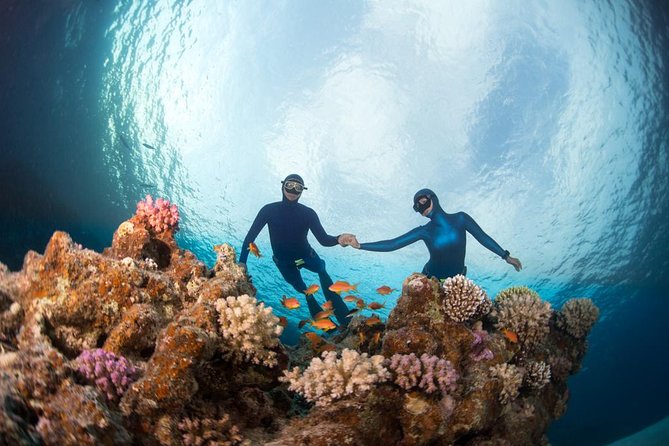
The course is tailored for people who want to see more reef rather than chase depth. That focus changes what you’ll work on. Instead of training for extreme descent, you learn the mechanics that help you stay calm and extend your underwater moments.
Here are the practical areas the experience targets:
- Confidence with breath-hold timing: learning how long you can comfortably hold and how to manage the moment instead of panicking.
- Body positioning: how you float, where your head and shoulders go, and how to reduce wasted effort.
- Controlled movement: improving your efficiency so you spend less energy and see more reef.
- Safety habits: learning how instructors keep training structured so you can build skills without feeling thrown into the deep end.
One detail I really appreciate from the way the school describes the course is the goal of giving you more freedom. You’re not just doing exercises; you’re learning why certain techniques make the ocean feel less intimidating.
And from past experiences, instructors like Roberto, Chiarra, and Heiko have been praised for staying calm with beginners. That matters because breath-hold practice can create nerves fast. A patient instructor helps you slow down and get it right.
The reef session: where you’ll practice (and why that’s smart)
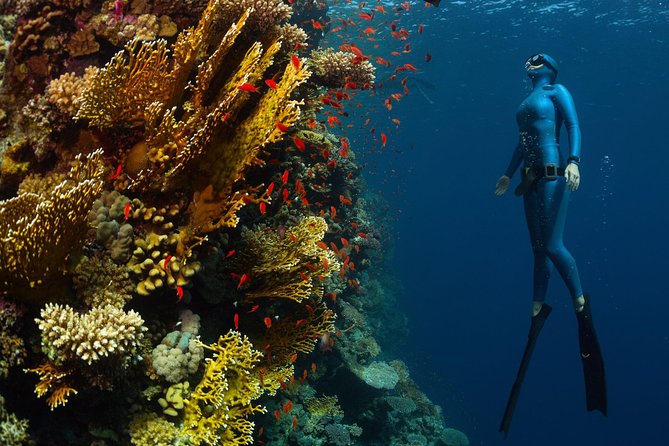
The water practice happens on a reef right in front of the school. That means less logistics stress and more time spent learning. It also means you can repeat skills in a consistent environment.
For many first-timers, the best part is realizing that underwater isn’t about bravado. It’s about calm. When you’re practicing breath-hold technique on a familiar, nearby reef, you can focus on what you’re doing instead of battling too many variables at once—like long swims, major depth changes, or exhausting surface conditions.
If you’re also the type who likes snorkeling, this session helps you translate snorkeling confidence into breath-hold control. Your “underwater range” becomes larger without requiring big depth commitments.
Underwater photos and the little things that make it worth $150
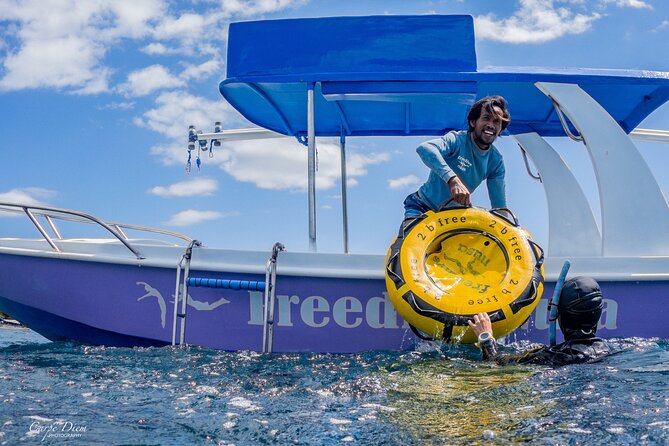
The price is $150 per person for a half-day try course (about three hours). On its face, that may sound pricey—until you factor in what you’re getting:
- Instruction with a small group size
- Freedive equipment provided for the session
- Drinking water
- Digital learning materials to support what you learned in the classroom
- Underwater photography highlighted as part of the experience
A lot of value here is tied to supervision and coaching. Breath-hold technique changes fast with the right cues, and the max-4 format helps ensure those cues land correctly.
The equipment and learning materials also reduce friction. You’re not hunting gear or trying to piece together technique from random videos before you show up.
If you’re the type who forgets the details later, having underwater photos can be a practical reminder. It turns a skill session into a lasting memory you can share (and rewatch mentally when you want to improve).
Logistics on Penida: no pickup, morning hours, easy meeting point
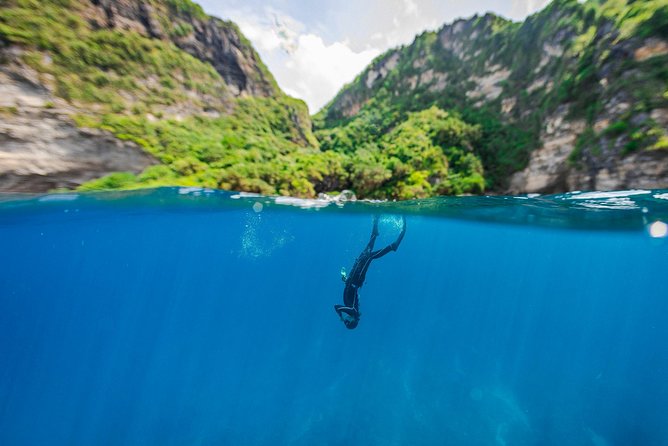
This course starts and ends at the meeting point. Hotel pickup and drop-off are not included, so you’ll want transport lined up ahead of time.
The meeting address is:
Freedive Nusa – Freediving School, Jl. Ped – Buyuk No, Desa, Ped, Kec. Nusa Penida, Nusa Penida, Bali 80771, Indonesia
Opening hours are listed as 8:30 AM to 12:00 PM, Monday through Sunday. Since the experience is about three hours, plan to arrive early enough to start promptly and avoid feeling rushed.
You’ll also use a mobile ticket, so make sure your phone battery is happy and your booking is accessible offline.
Who should book this course (and who should consider something else)
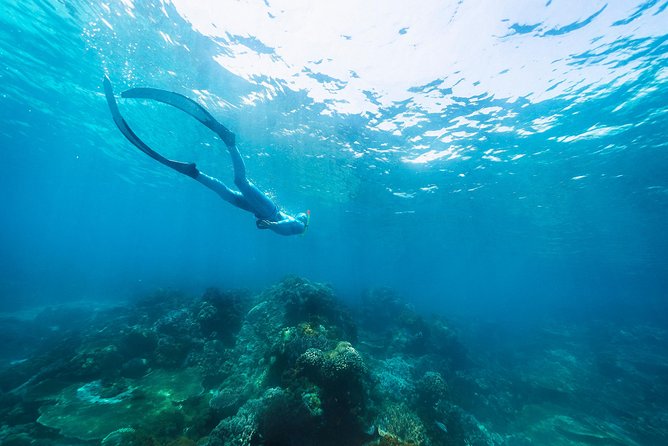
This try course is a good fit if you want:
- More underwater time than basic snorkeling gives you
- A safer learning path with an instructor
- A structured start that makes breath-hold feel manageable
- A small-group experience where you’re not just “part of the group”
It may be less ideal if you want:
- A long, open-ended training session with nonstop water time
- A focus on extreme depth goals
- Zero classroom time
Physical readiness matters. The course notes moderate physical fitness and that kids must be accompanied by an adult. Minimum age is 4. If you’re bringing a child, the max-4 structure can help keep coaching clear, but you’ll still want to plan for comfort in the water and follow the instructor’s safety guidance.
Taking this from a one-time try to better snorkeling later
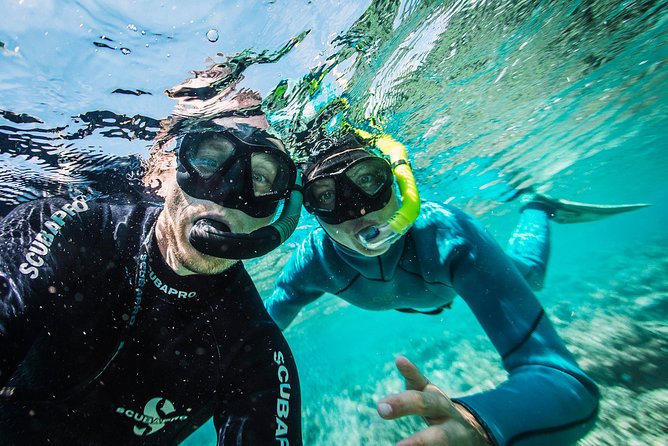
Even if this is your first breath-hold experience, it’s designed to change what you can do during future snorkeling. The classroom theory gives you a framework, and reef practice turns it into a body memory you can carry forward.
If your goal is to feel more in control in the ocean—less flailing, less rushing, more calm movement—this course is aimed directly at that. And because it’s described as “also known as Advanced Snorkeling,” the training is intentionally geared toward seeing more reef, not just hitting technical milestones.
If you later decide to go further with breath-hold training, a try course like this is often the confidence-builder you want before stepping into bigger conditions.
Should you book Try Free-Breathing on Nusa Penida?
I’d book it if you want a safe, coach-led way to expand your underwater range without turning your morning into a stressful scramble. The max-4 structure, the classroom-to-reef format, and the inclusion of equipment and learning materials make it feel like a focused skill lesson, not a casual activity.
Skip it or consider another option if you’re mainly after long, nonstop water time or you’re uncomfortable with the idea of practice that includes breathing timing and technique coaching.
If you’re unsure, your best move is to compare your comfort level with breath-hold technique. The course is built for first steps and confidence, but it still expects you to participate actively and follow instruction.
FAQ
What’s the duration of the course?
The experience runs for about 3 hours.
How many people are in the group?
The course has a maximum of 4 travelers, which keeps instruction more hands-on.
What’s included in the price?
It includes freedive equipment, drinking water, and digital learning materials.
Is hotel pickup included?
No. Hotel pickup and drop-off are not included, and transportation to and from attractions isn’t included either.
Where does the session take place?
The activity is on Nusa Penida, and the practice happens on the school’s home reef right in front of the school. You’ll meet at the Freedive Nusa – Freediving School address listed for the tour.
What are the opening hours?
The listed operating window is 8:30 AM to 12:00 PM daily (Monday through Sunday).
Is it suitable for children?
Minimum age is 4, and children must be accompanied by an adult.
If plans change, can I cancel?
Yes—there’s free cancellation up to 24 hours in advance of the experience start time for a full refund.
You Might Also Enjoy

More Tour Reviews in Nusa Penida
- ️Nusa Penida by Private Boat – Snorkeling 4 spots, Swim with Mantas + Land Tour
★ 5.0 · 6,424 reviews