Bali can feel like a movie set, but this route gives it context fast. The Ubud Historical Guided Tour with Transfer strings together village life and major temple sites in a way that helps you see how the rituals, art, and monuments connect. I like that the day is built around specific places like Goa Gajah and Tirta Empul, not just quick photo stops.
Two things I especially like: first, the tour includes an English-speaking guide who can explain what you’re looking at as you move, so the sites feel less like a checklist. Second, the logistics are thoughtful—air-conditioned vehicle plus bottled water and parking fees—so you’re not spending the day battling transport. One drawback to plan for: several temples have separate entrance fees in Indonesian rupiah, so you’ll want cash ready and budget a bit more than the headline price.
In This Review
- Key Highlights You’ll Actually Care About
- Why This Ubud Route Works From Seminyak
- Meeting Time, Transfer Comfort, and How to Plan the Day
- Batuan Traditional House Compound: Living Architecture You Can Walk Through
- Puseh Batuan Temple and the Khayangan Tiga Idea
- Elephant Cave (Goa Gajah): A Cave Built for More Than One Thing
- Gunung Kawi (Mount Kawi): Rock-Cut Memorials From an 11th-Century Rule
- Tirta Empul Temple: The Spring Water Cleansing Pools
- Gunung Kawi Sebatu Temple: Lord Vishnu in a Quieter Setting
- Price and Value: What $45.91 Really Covers
- Guide Style: Why Patient Explanations Change the Whole Day
- Who This Tour Suits Best (And Who Might Want a Different Plan)
- Should You Book This Ubud Historical Guided Tour?
- FAQ
- What’s the start time and total duration of the tour?
- Does the tour include pickup from Seminyak?
- Are temple entrance fees included in the price?
- What’s included in the tour package?
- Is lunch or a meal included?
- Is the tour open to most travelers?
Key Highlights You’ll Actually Care About
- Comfort-first transfer: air-conditioned vehicle, parking fees, and bottled water included
- Temple fees are mostly extra: plan for the listed IDR entrance costs at several stops
- Real Ubud-area anchors: Batuan, Goa Gajah, Gunung Kawi, Tirta Empul, and Gunung Kawi Sebatu
- Helpful guides can run point: accounts of patient guide support show up, like Kadek waiting for an hour when timing went off
- Early start, full day: 8:30am start with about 10 hours total time in motion
- A mix of daily life and sacred space: from a traditional house compound to bathing-temple rituals
Why This Ubud Route Works From Seminyak
If you’re staying in Seminyak and want Ubud without the stress, this tour makes sense. You’re not juggling maps, local transfers, and timing across multiple temple areas. Instead, you get a single day built around a cluster of sites—so the effort goes into what you came for: seeing Balinese culture up close.
Also, the itinerary isn’t only big-name temples. You start in Batuan with a traditional house compound, then move into village temples, cave archaeology, rock-cut memorial work, and finally the spring-water bathing temple. That order matters. It helps you notice shifts in purpose—from family heritage and village worship to royal-era stone monuments and ritual water practices.
One more practical point: the tour is listed as private for your group, so you’re not stuck in a cattle-car experience. That usually makes it easier to ask questions and keep the day moving at your pace—within reason, of course, because the sites still have their own rhythms.
You can also read our reviews of more tours and experiences in Seminyak.



Meeting Time, Transfer Comfort, and How to Plan the Day
This experience starts at 8:30am and runs about 10 hours. That’s a long day, but it’s a realistic length for hitting multiple sites with driving time between them. The pickup offering is a plus if you don’t want to figure out where to meet.
You also get the stuff that makes a difference when you’re away from your hotel all day:
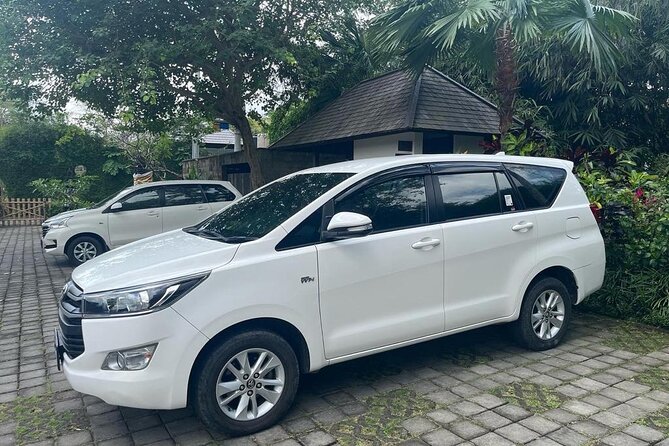
- Air-conditioned vehicle
- Bottled water
- Parking fees
- English-speaking driver tour guide
That’s not glamorous, but it’s the difference between arriving sharp and arriving cranky. I’d rather spend the day watching details than worrying about hydration.
The biggest planning wrinkle is money for entrance fees (more on that below). The tour itself doesn’t include all site tickets, so if you want to avoid awkward stops, bring cash in Indonesian rupiah and keep it organized.
Batuan Traditional House Compound: Living Architecture You Can Walk Through
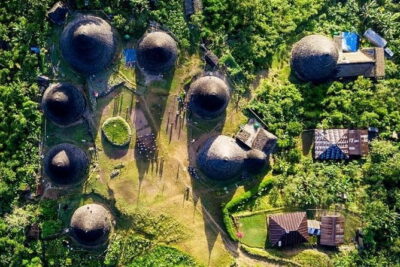
Your first stop is Batuan, centered on a traditional house compound in Batuan Village (Sukawati District, Gianyar Regency). This is the kind of place that helps you understand Bali as a lived-in culture, not only a stage for visitors.
The house is connected to the Gung Aji family, and it’s often referred to by foreigners as the Bali Traditional House Gung Aji. The tour notes that the house has unique characteristics and is still preserved and used, which is exactly what you want from a “traditional house” stop: a sense of continuity, not a set dressed for tourists.
You’re given about 1 hour, and admission here is listed as ticket free. That makes it a smart early stop too—when you’re freshest, you can absorb the basics of what a family compound looks like and how it fits into village life.
What to watch for: take your time with layout and building details. Even if you don’t catch every explanation, you’ll start noticing patterns you can then compare later at temples.
Puseh Batuan Temple and the Khayangan Tiga Idea
Next comes Puseh Batuan Temple, part of Khayangan Tiga, described as three major temples in a village dedicated to Wisnu (the protector god). This is a helpful concept because it explains why certain temple structures show up again and again across Bali—there’s a system, not random scattering.
You’ll spend about 1 hour 30 minutes, and the admission is listed as not included (IDR 30,000 per person). So plan for that extra stop on the payment side.
Why I like including a temple that’s explicitly tied to a village system: it makes later sites easier to interpret. When you know the frame—village temples connected through a three-temple tradition—you start recognizing that Bali’s spiritual life is integrated into daily geography.
Practical tip: keep your attention on what the guide tells you to focus on. At religious sites, small details can carry big meaning, and having an English-speaking guide helps translate what you see.
Elephant Cave (Goa Gajah): A Cave Built for More Than One Thing
Then you head to Elephant Cave, also known as Goa Gajah. The tour describes it as a cave built in the 11th century by the king of Udayana. It also explains the name: it comes from Lua Gajah, a small river nearby. That origin story helps you connect the site to its surrounding landscape instead of treating it as an isolated monument.
You’ll get about 2 hours here. Entrance is not included, listed as IDR 50,000 per person.
One detail I find particularly interesting is that the cave area includes a bathing setup in front with six figures, and that there are figures inside. Even without getting into mythology beyond what’s stated, you can sense this wasn’t built as a one-purpose “look only” attraction. It was tied to ritual or ceremonial use, which is exactly why a guided explanation matters here.
Possible drawback: caves and carved sites can be slippery or shaded depending on the day and conditions. The tour doesn’t specify physical difficulty, but it’s still worth wearing grippy footwear and moving carefully while you look around.



Gunung Kawi (Mount Kawi): Rock-Cut Memorials From an 11th-Century Rule
From Goa Gajah you move to Gunung Kawi (Mount Kawi Temple complex). This is where the itinerary shifts from day-to-day village structures and ritual water to something more monumental.
The tour notes the complex was built in the 11th century during the reign of Anak Wungsu, the son of Udayana King. It also states the site includes 10 memorial temple rock-cut structures. If you’ve ever seen one rock-cut temple structure and thought, that’s neat—this stop helps you appreciate scale.
You’ll spend about 1 hour 30 minutes, and entrance is not included at IDR 50,000 per person (listed as Mount Kawi, Pakrisan River).
What to do here: slow down when you’re facing the memorials. Rock-cut temples are easy to photograph quickly, but the real payoff is spending a few extra minutes comparing shapes, carvings, and how the rock forms guide the viewer’s eye. A guide can also help you interpret what you’re looking at as you move between points, rather than only after you’re finished.
Tirta Empul Temple: The Spring Water Cleansing Pools
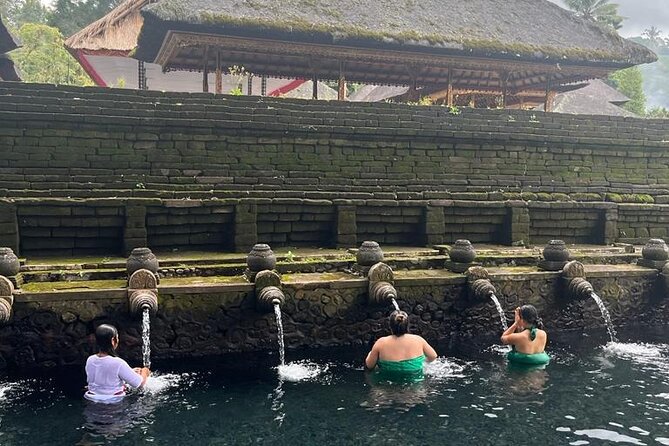
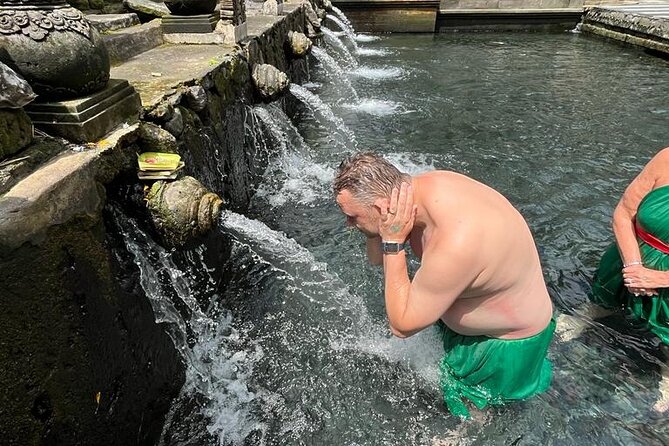
Next is Tirta Empul, the Spring Water Temple in Tampaksiring, near Gunung Kawi. This stop is one of the most meaningful parts of the day because the tour describes the temple as built around springs and special bathing pools.
You’ll get about 2 hours here. Entrance is not included, listed as IDR 50,000 per person.
This is the part of the itinerary where the idea of “culture” becomes practical. Water isn’t just scenery here. It’s part of the religious function of the site, and you’ll likely see people participating in a cleansing or bathing ritual. I suggest you treat this as a place to watch respectfully and follow the flow of people. If you want photos, wait for the right moment, but don’t block movement around the pools.
A small caution: since this is a bathing setting, the area can be wet and active. Stay aware of your footing and keep your bag secure. Nothing ruins a good temple visit like an avoidable slip.
Gunung Kawi Sebatu Temple: Lord Vishnu in a Quieter Setting
To close the loop, you end at Gunung Kawi Sebatu Temple. The tour says the exact building date isn’t known, but records indicate it was built for worship of the gods, especially Lord Vishnu.
You’ll spend about 2 hours, and entrance is not included at IDR 30,000 per person.
I like this final temple stop because it gives you contrast. After the structured bathing-pool focus at Tirta Empul and the famous rock-cut scale at Gunung Kawi, Sebatu can feel more like a calmer, reflective pause. Even if two temples look similar at first glance, a guide can point out differences in layout, purpose, and how worship happens in the space.
What to bring to this stop mentally: try to connect it back to the village-temple idea from earlier. The tour frames multiple places with relationships to worship—Wisnu appears earlier, and Lord Vishnu is highlighted again here. That repetition helps you notice the throughline.
Price and Value: What $45.91 Really Covers
The listed price is $45.91 per person for about 10 hours with a Seminyak transfer. That’s not just a “driver day.” You’re getting:
- Air-conditioned vehicle
- English-speaking driver tour guide
- Parking fees
- Bottled water
- A route that hits six distinct sites across the Ubud region
Where the cost picture changes is that several attractions have separate entrance fees. From the information provided:
- Tirta Empul: IDR 50,000
- Gunung Kawi Sebatu: IDR 30,000
- Puseh Batuan Temple: IDR 30,000
- Elephant Cave (Goa Gajah): IDR 50,000
- Mount Kawi, Pakrisan River: IDR 50,000
- Batuan Traditional House Compound: free (ticket free)
So you’re likely budgeting for extra site payments on top of the base price. If you prefer all-in pricing, you’ll feel this more. If you don’t mind paying entry fees for the actual sites you’re visiting, the base price can feel fair—especially because your transport and guide time are included.
One more value note from the guide feedback you can use to decide: people often rate the guide experience highly when it’s calm, patient, and helpful. For example, there are accounts of guide Kadek being very patient and waiting for an extra hour when someone misjudged timing, and Nanda being credited with making the day enjoyable and worth recommending. That kind of service matters on a multi-stop day.
Guide Style: Why Patient Explanations Change the Whole Day
A tour like this lives or dies by the guide. The good news is the format explicitly includes an English-speaking driver tour guide, which gives you a better chance of understanding what you’re seeing in the moment.
From real-world guide experiences shared for this style of tour, I’d pay attention to two things when you’re traveling:
- Timing patience: when plans slip, it helps if your guide doesn’t cut your day short. One account specifically highlights guide Kadek waiting for an hour when timing went off.
- Clarity and friendliness: Nanda is mentioned in a positive, recommend-this-to-friends way. That’s usually a sign the guide doesn’t talk like a textbook and instead helps you focus on what to notice.
You can help your guide help you. If you’ve got questions about what looks similar between two temples, ask. If you care about architecture over rituals, say so. Guides respond better when you give them a direction.
Who This Tour Suits Best (And Who Might Want a Different Plan)
This tour is a strong fit if you want:
- A full Ubud cultural circuit from Seminyak
- A day with a guide who can explain what you’re seeing
- A route that mixes village tradition, cave archaeology, rock-cut memorials, and water temple rituals
It may feel like too much if you:
- Prefer a slower, single-site deep day
- Hate paying multiple entrance fees on top of the base price
- Get restless in a full-day schedule (the tour is about 10 hours)
Because it’s private for your group and includes transfer comfort, it’s especially good for couples, small groups, and travelers who don’t want to coordinate multiple drivers or worry about where to go next.
Should You Book This Ubud Historical Guided Tour?
I’d book it if you’re in Seminyak and you want an efficient, guided way to hit major Ubud cultural stops without the mental load of planning the route yourself. The included transport, water, and English-speaking guide make the day feel manageable, and the itinerary covers a smart mix: traditional compound life in Batuan, major temple worship at Puseh Batuan, carved-and-ritual cave history at Goa Gajah, monumental rock-cut memorials at Gunung Kawi, spring-water cleansing at Tirta Empul, and worship context again at Gunung Kawi Sebatu.
I’d think twice if you’re trying to keep costs tight, because several key sites require entrance fees in IDR. But if you’re willing to handle that extra budget—and you want a guided day that gives you meaning while you walk—it’s a solid value for a full cultural outing.
FAQ
What’s the start time and total duration of the tour?
The tour start time is 8:30am, and the duration is listed as about 10 hours.
Does the tour include pickup from Seminyak?
Pickup is offered, and the tour lists Seminyak as the location. It’s designed for transfer as part of the experience.
Are temple entrance fees included in the price?
No. The tour lists entrance fees as not included for several sites, including Tirta Empul, Gunung Kawi Sebatu, Puseh Batuan Temple, Elephant Cave (Goa Gajah), and Mount Kawi. The Batuan traditional house compound is listed as ticket free.
What’s included in the tour package?
Included items are air-conditioned vehicle, parking fees, an English speaking driver tour guide, and bottled water.
Is lunch or a meal included?
No. Meal is listed as not included.
Is the tour open to most travelers?
The info says most travelers can participate, and confirmation is received at time of booking.