Uluwatu is where first-wave nerves turn into laughs. In a tight 2-hour session with small groups, you get practical surf coaching, full equipment, and focused time in the water. I especially liked the patient instruction (I saw names like Luis, Repho, Aldin, and Irawan popping up often) and how the lesson is built around real wave time, not endless standing on the sand. One thing to consider: the site and schedule can shift because of weather and waves, and Uluwatu reef breaks demand respect.
What makes this lesson feel worth it for the price is the structure. You start with quick safety, then you practice in chunks, and you get another shot right after a short break. Expect a good mix of learning and progression, even if you are brand new. If you are not a confident swimmer, or you hate being in the ocean with strangers, you should take the safety briefing seriously and tell your instructor your comfort level early.
In This Review
- Key Points at a Glance
- 2 Hours in Uluwatu: What This Lesson Feels Like
- Where You’ll Surf: Balangan, Jimbaran, or Dreamland
- Safety First: The 15-Minute Setup That Actually Matters
- Gear and Comfort: Why Reef Shoes and a Rush Guard Help
- The Water Time Plan: 45 Minutes, a Break, Then 50 Minutes
- Instruction Style: Calm, Specific, and Built for Real Progress
- What You’ll Be Doing (Beyond Just Standing Up)
- Pictures and Videos: Included if You Book with 2 or More
- Timing and Logistics That Affect Your Day
- Price and Value: Why $36 Can Make Sense Here
- Who This Surf Lesson Is Perfect For
- My Booking Call: Should You Book This?
Key Points at a Glance
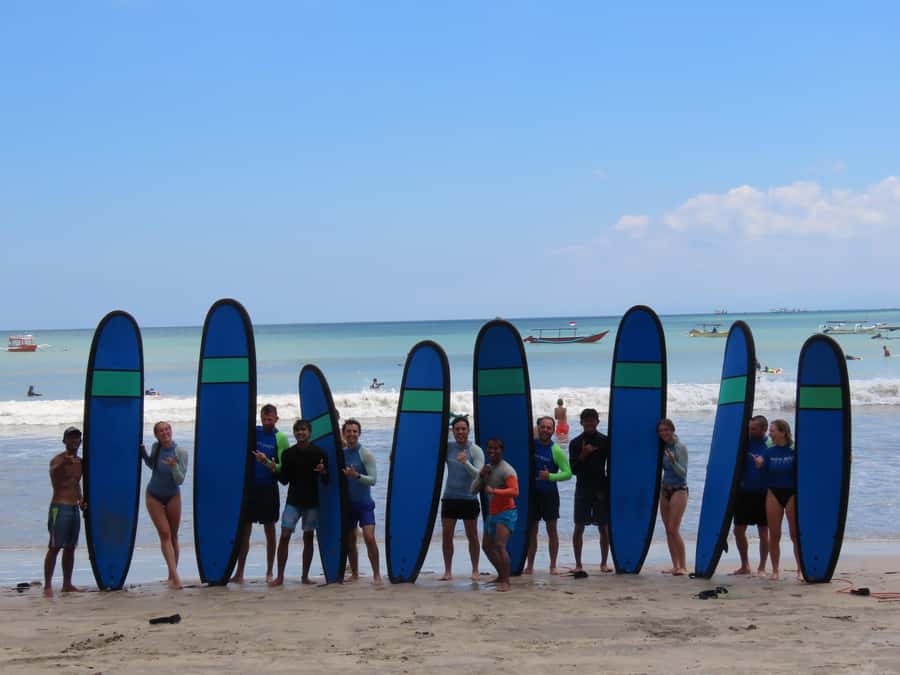
- Small groups (up to 6) help you get more attention than big surf herds.
- Rush guard + reef shoes mean less hassle and more confidence around the reef.
- Clear step-by-step coaching covers laying down, paddling, standing, and safe wave choice.
- A real practice rhythm: theory, then 45 minutes, a short break, then 50 minutes more.
- Photos and video are included when you book as a group of 2 or more.
- Flexible beach choice across Balangan, Jimbaran, or Dreamland depending on conditions.
2 Hours in Uluwatu: What This Lesson Feels Like
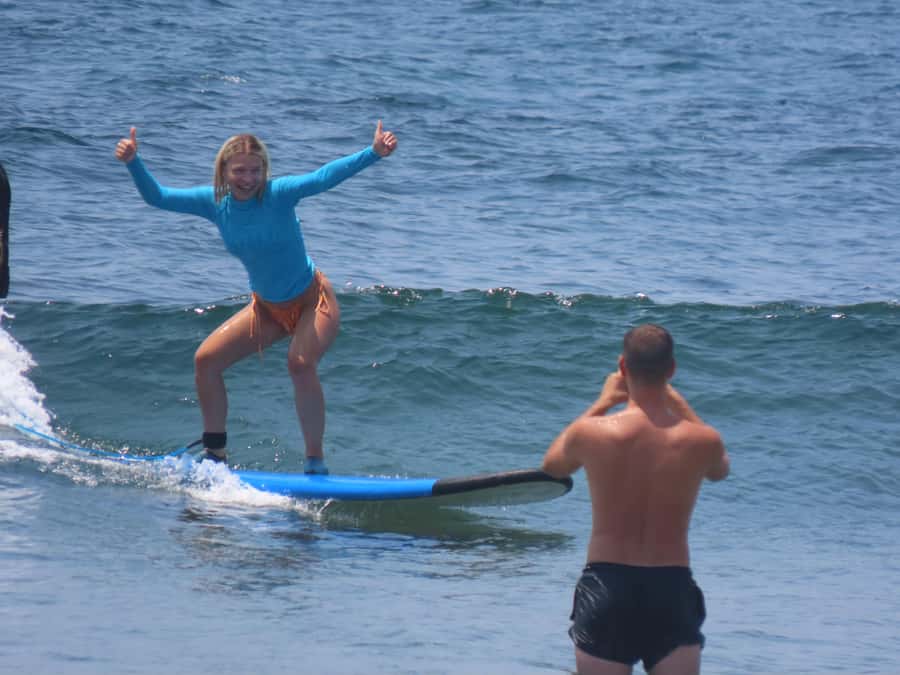
This is a beginner-and-intermediate surf lesson designed to get you moving quickly, safely, and often. Two hours is not a long time, so the organizers don’t waste it with endless demo videos. Instead, you get a short on-land briefing, then you are out there getting attempts—lots of them.
The best part is the pacing. Your brain needs time to process what you just learned, and your body needs recovery after paddling. This lesson builds that in with a break at about the halfway mark, so you can show up for the final stretch with better technique.
You also get some practical comforts that matter in Bali heat: mineral water, sunblock, lockers, and even showers. That might sound minor, but after you’ve worked hard in salt water, you’ll appreciate not feeling sticky for the rest of the day.
You can also read our reviews of more tours and experiences in Uluwatu.



Where You’ll Surf: Balangan, Jimbaran, or Dreamland
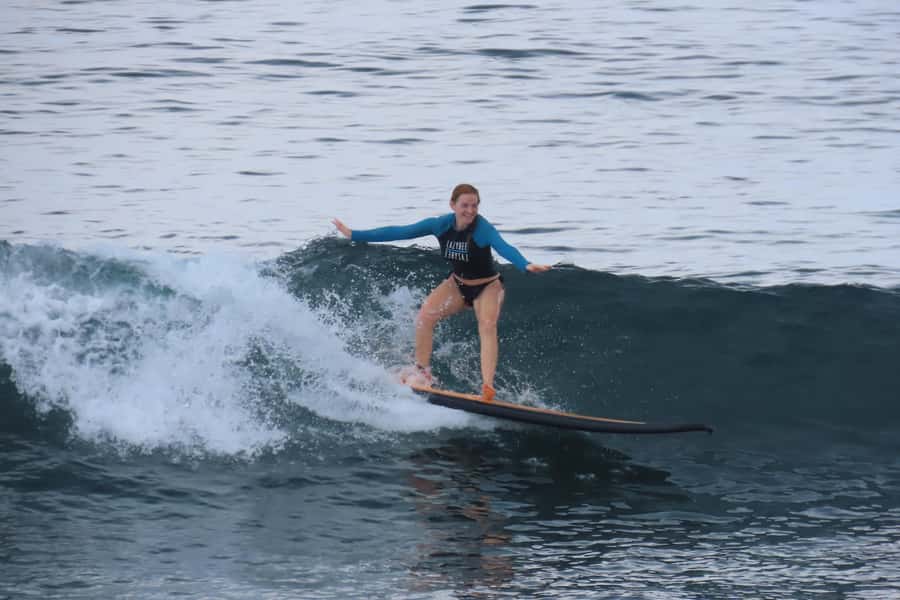
Uluwatu surf lessons often share the same challenge: the waves change fast. This one handles that by choosing between Balangan, Jimbaran, or Dreamland Beach based on what the sea is doing that day.
What that means for you:
- If conditions at one spot are rough or not ideal, the activity provider may move you to another beach.
- You’ll be contacted if the schedule or location needs to change because of weather and waves.
From a value standpoint, this flexibility is smart. A “best conditions for the day” approach usually gets better learning results than forcing everyone onto one spot no matter what. You still get the Uluwatu experience—cliffs, bright water, and that classic coastal feel—but you’re not gambling your lesson on luck alone.
Safety First: The 15-Minute Setup That Actually Matters
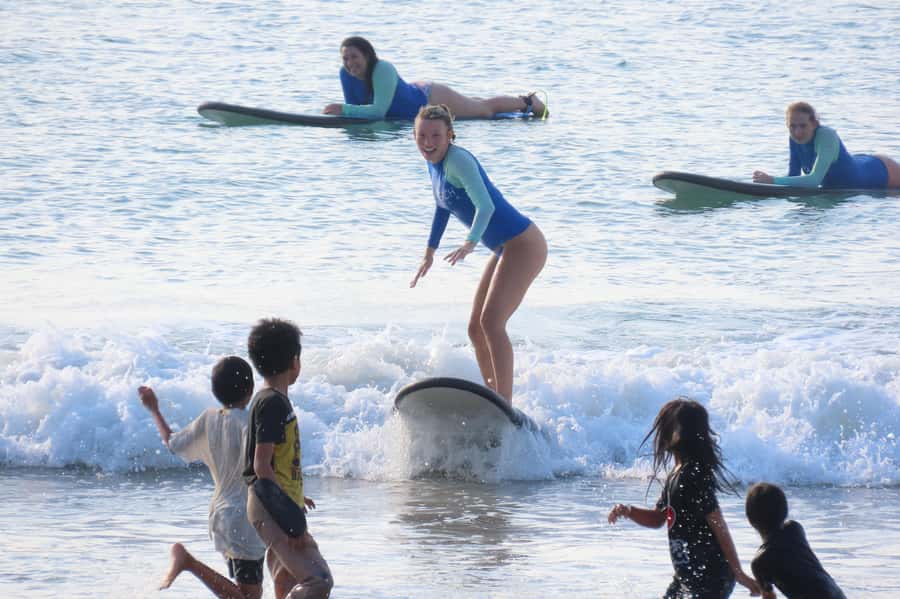
Right at the start, you get about 15 minutes of surf safety and theory. This isn’t the boring part of the trip. It sets the rules so you can focus on getting better instead of second-guessing yourself in the lineup.
You’ll cover the basics of what matters most in surf safety:
- how to lay down and paddle with control
- how to stand up safely
- how to surf while thinking about the ocean and other people
Because this lesson includes reef shoes and a rush guard, it’s clearly built with Uluwatu’s real conditions in mind. One theme that comes through in the instructor style is calm, clear coaching. Names like Luis, Repho, Aldin, and Irawan show up repeatedly in the feedback as instructors who explain things in a way you can actually use on the next wave.
A small but important consideration: the lesson is not suitable for children under 9, and it’s not designed for people over 65. Also, Uluwatu waves can feel aggressive. You don’t need to be an athlete, but you should be honest about your comfort level in the water.
Gear and Comfort: Why Reef Shoes and a Rush Guard Help
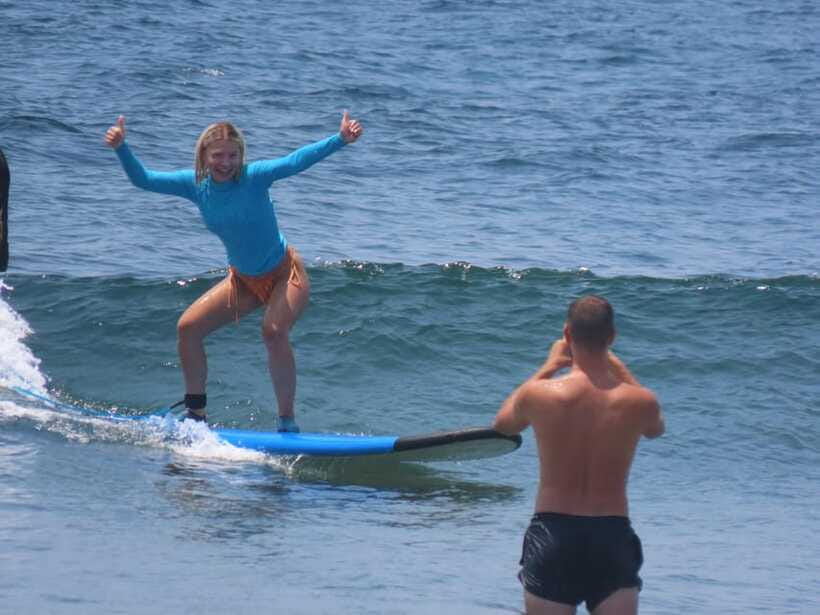
This lesson includes the gear, and that’s a big deal. Surfing falls apart quickly if you are fighting your equipment instead of learning technique.
You’re provided with:
- surf equipment (board and related gear)
- rush guard and reef shoes
- locker storage and shower access
- mineral water and sunblock
The rush guard is useful because it reduces chafing and keeps you comfortable while you paddle and fall repeatedly. Reef shoes matter even more in areas like these, where footing matters and the ocean floor isn’t always friendly.
Lockers and showers are part of the value too. You’re in the water for a while and then you want to clean up and move on with your day. One review note highlighted that your stuff is kept in lockers while you’re surfing, which is exactly what you want to hear.
The Water Time Plan: 45 Minutes, a Break, Then 50 Minutes
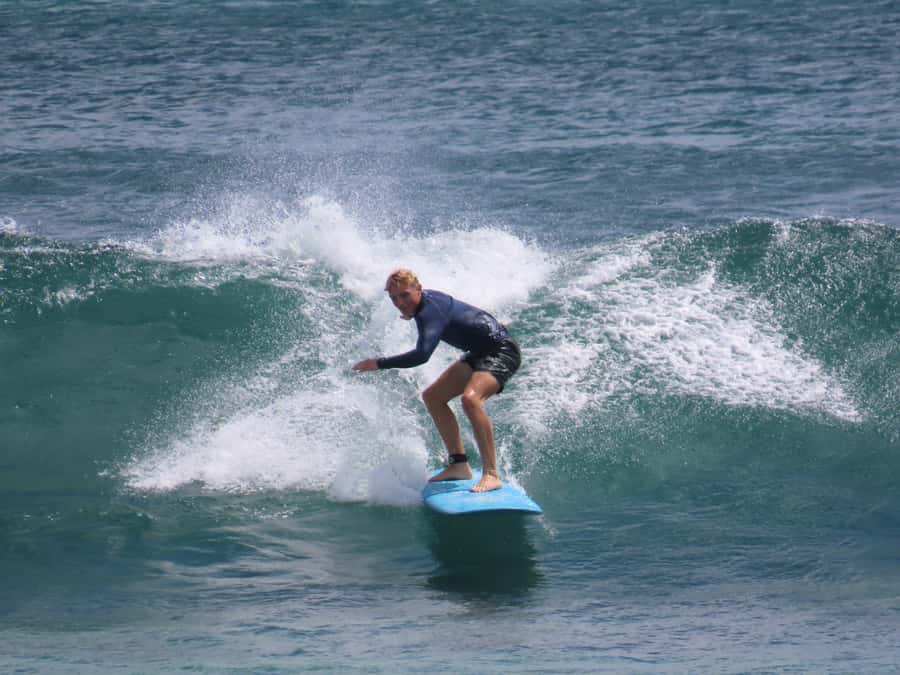
This lesson has a clear rhythm. That’s why you learn faster.
Here’s how the 2 hours typically break down:
- 15 minutes: surf safety and theory on land
- 45 minutes: practice and coaching in the water
- 10 minutes: break
- 50 minutes: final practice session with more attempts
That middle break isn’t a throwaway. After paddling and wipeouts, fatigue can wreck your body position and timing. A short pause helps you reset, so the last stretch is more productive.
The instructor-to-student support is also structured. The lesson is set up for a trainer for every two students, and if someone is under 12, there’s a trainer for every student. For adults and kids in the eligible age range, that “every two students” approach usually means you can get individual fixes instead of generic advice.






Instruction Style: Calm, Specific, and Built for Real Progress
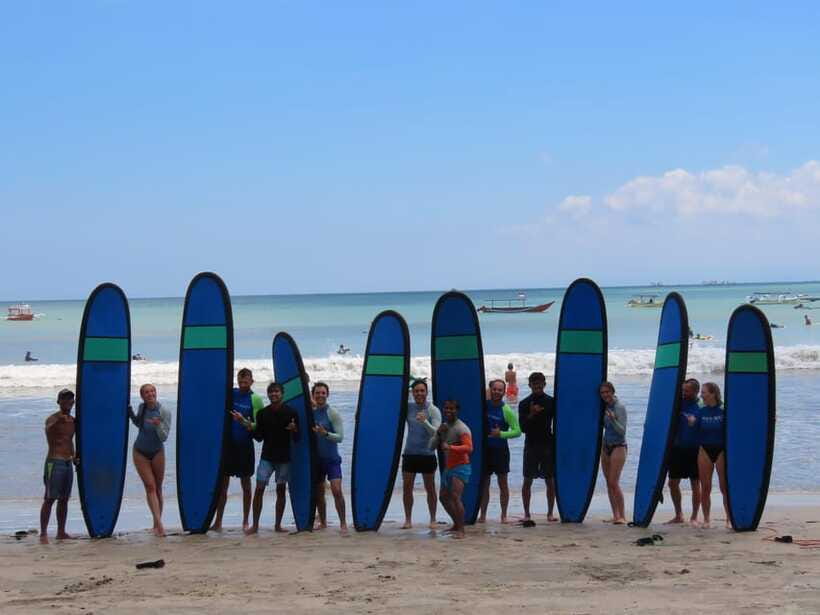
In Uluwatu, you’re not just learning to stand. You’re learning how to pick the right moment, paddle efficiently, and stay safe when conditions are moving.
The instructors featured in the feedback tend to share the same strengths:
- they keep instructions simple and actionable
- they correct technique in the water
- they push you toward the right break when it counts
You’ll also notice a coaching theme: they don’t just tell you to paddle harder. Many instructors focus on helping you get into the wave position and stand up in a way that actually fits your current level.
If you are a beginner, this matters because the first obstacle is usually the step from trying to standing. Several feedback notes mentioned that after a few attempts, people were standing up quickly and riding waves. The instructors credited this to clear beach instruction and patient coaching once you’re in the lineup.
If you’re intermediate, you’ll still benefit. The lesson can refine your setup and wave choice, especially because the instruction is not random. It’s built around safe technique and practicing repeatedly in the same session.
What You’ll Be Doing (Beyond Just Standing Up)
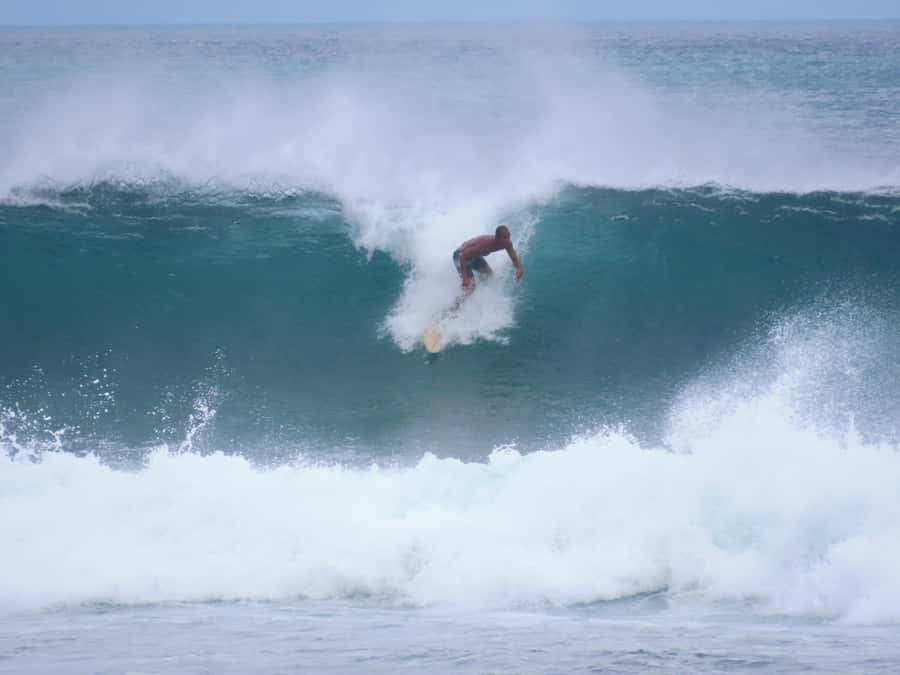
A common mistake is thinking surf lessons are only about catching your first wave. This one is designed to cover the chain of skills you need to keep improving.
You should expect coaching on:
- laying down and getting your board positioned
- paddling with purpose so you’re not exhausted too early
- standing mechanics (where your feet go, how to pop up)
- surfing safely in a group
And because you get repeated practice segments, you should see progress from the start to the end of the lesson. Two hours won’t make you a pro, but it can absolutely make surfing feel learnable.
One more practical tip: being in good physical shape helps. Not because you need to be tough, but because paddling and wiping out are work. If you’re able to swim comfortably and you’re not afraid of getting wet, you’ll likely enjoy the experience more quickly.
Pictures and Videos: Included if You Book with 2 or More
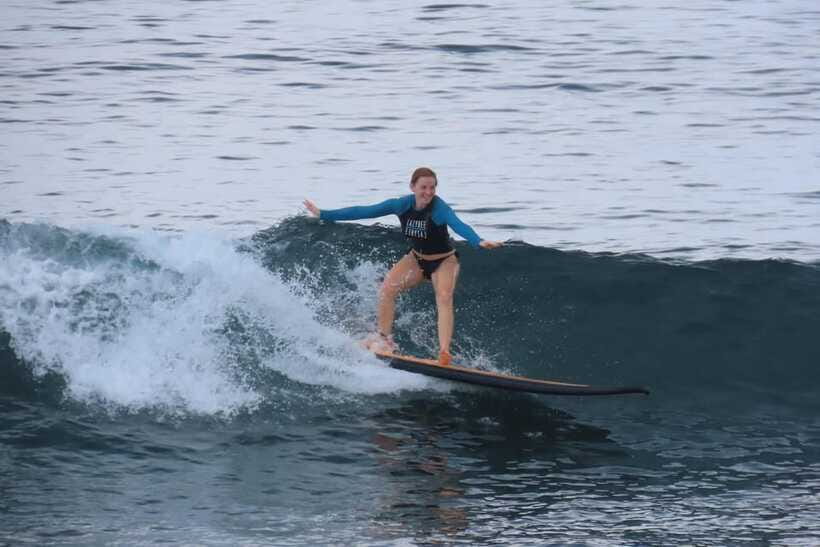
One of the better details here is how media is handled. You receive photos and videos of your experience when booking for 2 or more participants.
That means if you’re going as a couple, with friends, or as a small group, you can typically get the full “proof you were actually surfing” package without needing to scramble for a separate photographer.
It’s also more likely you’ll like the results when there are multiple people in the group, because the media is tied to the session rather than treated as an extra add-on. After your session, you can then focus on enjoying Bali instead of chasing your board footage.
Timing and Logistics That Affect Your Day
This is a 2-hour lesson with no pickup and no drop-off. So you’ll want to plan how you’ll get to the meeting location area.
The meeting point isn’t pinned to one single address in your details. Instead, the activity provider will contact you if the schedule and location need to shift due to weather and waves.
That’s not a dealbreaker. It just means you should:
- keep your phone charged
- be flexible about the beach
- arrive ready to move quickly once you get instructions
Also bring a towel and swimwear. Those are the practical basics. You’re already getting the surf gear, sunblock, and water, so pack light.
At the end of the session, you’ll return your gear, get your photos and videos (when eligible), and then you have some free time on the beach. After that, you make your own way back to your hotel when you’re ready.
Price and Value: Why $36 Can Make Sense Here
$36 for a 2-hour surf lesson in Uluwatu is not the kind of price that feels like a shortcut. The value comes from what’s included and how the lesson is structured.
You’re getting:
- a full surf session with safety and coaching
- surf equipment, rush guard, and reef shoes
- locker storage and shower access
- mineral water and sunblock
- photos and videos when booking as 2+
When you compare that to the cost of renting gear plus hiring an instructor elsewhere, the included equipment and structured coaching make the price feel reasonable. It’s also a small-group format capped at 6 participants, which usually improves the learning experience.
If you’re the type who benefits from guidance and you want your best chance to stand up during one visit, this lesson is a strong option. If you already have your own gear and you’re mostly trying to surf for fun without instruction, it may not feel as “efficient.” But for first-time surfers and improving beginners, it’s hard to argue with the setup.
Who This Surf Lesson Is Perfect For
This lesson fits best if:
- you are new to surfing and want step-by-step guidance
- you can swim and you’re willing to work through wipeouts
- you want a calm, organized session with a small group
- you’d like photos and video of your progress
It’s also a good match for people who want to learn without being stuck with huge classes. The instructor ratio and small group size are built for real correction.
If you’re older than 65 or you’re traveling with kids under 9, this isn’t the right fit. And if you have major mobility limits or you feel anxious about ocean conditions, you should be upfront before you go out, so your instructor can guide you to the right level and help you stay comfortable.
My Booking Call: Should You Book This?
Yes, you should book this surf lesson if your goal is to get solid instruction, spend meaningful time in the water, and leave Uluwatu with more than just sandy memories.
Do it now if:
- you want the equipment included (rush guard + reef shoes are a big quality marker)
- you like learning with a trainer per small group
- you’re traveling with a friend or partner so you can unlock photos and video
Hold off if:
- you need guaranteed beach conditions with no possibility of switching locations
- you know you’re not comfortable swimming in surf and near reef areas
If you can be flexible about the beach and you show up ready to learn, this is a fun, practical way to earn your first (or sharper) surf skills in Uluwatu.