One night in Yogyakarta is like a living menu. I like that this tour mixes easy strolling with short becak hops, then fills the streets with tastings at places you’d probably skip. My favorite part is the small group size (up to 8) and the way the guide keeps things friendly and organized, with local food stories along the way.
Two things I really love: the mix of classic flavors (from Malioboro street bites to Plengkung Wijilan tastings) and the careful attention to dietary needs, including guests with allergies. A small drawback to consider: it’s not set up for wheelchair users, and you’ll be walking at night even though you get pedicab rides between stops.
In This Review
- Key Things You’ll Notice on This Night Food Tour
- Why This Night Food Tour Works So Well in Yogyakarta
- Starting at Tugu: Getting Oriented Before You Eat
- Malioboro Night Bites: Coffee, Street Snacks, and the Real Crowd Energy
- Titik Nol Kilometer: Snacking With a Sense of Place
- Plengkung Wijilan Tastings: Where Yogyakarta Flavors Concentrate
- Jamu at Lugu Murni: Trying Traditional Wellness Drinks the Right Way
- Jalan Brigjen Katamso: More Regional Bites, Less Tourist Guessing
- The Fun Finale at Alun-Alun Kidul: Games, Rides, and Night Atmosphere
- Dietary Needs and Food Safety: The Tour’s Quiet Strength
- Small Group Size: Why 8 People Changes Everything
- Price and Value: What $17 Gets You (and Why It’s Not Just Cheap)
- Who This Tour Is Best For
- Should You Book This Nighttime Walk and Food Tour?
- FAQ
- How long is the tour?
- What’s included in the tour price?
- Are there different starting points?
- Do you need to arrange pickup or drop-off?
- Is the tour suitable for dietary restrictions?
- Is this tour wheelchair accessible?
Key Things You’ll Notice on This Night Food Tour

- Up to 8 people means you actually get time to ask questions (and get dietary tweaks handled fast).
- Becak-style rickshaw rides break up the route so the walking stays comfortable.
- Malioboro to Alun-Alun Kidul covers two key sides of Yogya after dark: food streets and the local hangout scene.
- Jamu at a named spot (Lugu Murni) gives you a legit taste of traditional wellness drinks, not a random souvenir stop.
- Small “game drive” finale adds local fun at Alun-Alun Kidul, with activity fees covered if you choose the full experience.
Why This Night Food Tour Works So Well in Yogyakarta

Yogyakarta is one of those cities where night life is part of the daily rhythm. The tricky bit is that the food scene moves fast, and it’s easy to end up eating the same basics—fried snacks with no context. This tour solves that by pairing food with route planning and explanations you can actually use while you walk.
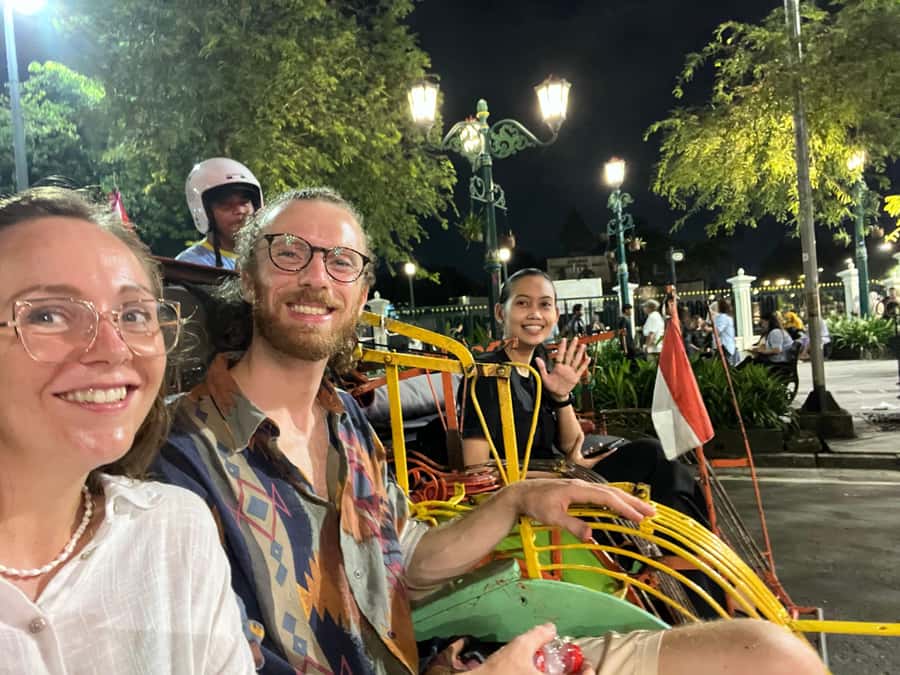
The route isn’t one long slog. You alternate between short on-foot stretches and quick becak/pedicab rides. That matters because you stay present: you’ll notice what people are ordering, how the stalls are set up, and which flavors show up again and again across neighborhoods.
Also, you get a guide who knows how to talk food without turning it into a lecture. Many groups report guides like Kalika or Anisa (and also Jasmine) making the stops feel personal—explaining what you’re eating, why locals like it, and how the flavor works, not just what it’s called. If you’re new to Indonesian cuisine, that kind of context makes the whole night smoother.
You can also read our reviews of more tours and experiences in Yogyakarta.



Starting at Tugu: Getting Oriented Before You Eat
You’ll begin near the sign Tugu Golong Gilig. There are two starting options: Tugu Yogyakarta Monument or the meeting area near Tugu Golong Gilig, depending on what the group uses for that departure.
Right away, the tour gives you a practical rhythm: brief guide orientation, then the first quick becak/pedicab hop. That first ride is more than fun—it helps you get your bearings fast in a city where the streets feel busy and sometimes chaotic after dark.
You’ll spend time in the early stretch near the center, which sets you up for the main food strip later. The guide also helps you read the flow of the night: where to stand, when to move, and how to order without feeling lost.
Malioboro Night Bites: Coffee, Street Snacks, and the Real Crowd Energy
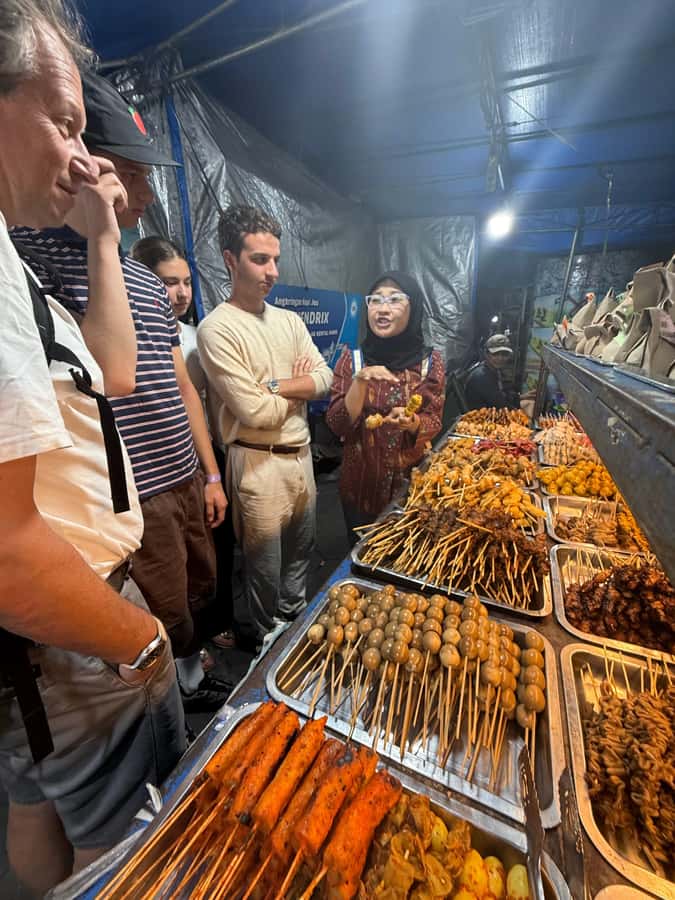
One of the first real stops is MALIOBORO JOGJAKARTA, where the tour shifts from general wandering into actual eating. You’ll have coffee plus street food, and the timing is smart: it gets you grounded early, before the tastings pile up later.
Malioboro is famous, but it can still feel overwhelming if you arrive alone at night. With a guide, you’re not just hunting for a menu. You’re learning how to pick. The guide’s role here is big: they steer you toward what’s most worth trying and explain what to expect from the flavor style—sweet, savory, crisp, or comforting soup-like bites.
One practical consideration: this tour is not a “one snack per stop” experience. Multiple reviews mention that you may want to resist going too hard right at the beginning, because the rest of the night adds up quickly. The good news is the pace keeps you moving and tasting, not sitting through a food coma.
Titik Nol Kilometer: Snacking With a Sense of Place
After Malioboro, you’ll move on foot toward Titik Nol Kilometer Yogyakarta, the city’s starting point for measuring distance. The tour includes a short guided moment here, plus local snacks.
This stop is valuable for two reasons. First, it gives you context for why this area matters, so you’re not just walking past big landmarks. Second, it breaks the night into logical chapters: street energy, then a location with meaning, then back into tasting.
The snack portion also works as a mid-route reset. You’re not switching neighborhoods blindly; you’re stepping from one food-and-street identity to the next.
Plengkung Wijilan Tastings: Where Yogyakarta Flavors Concentrate
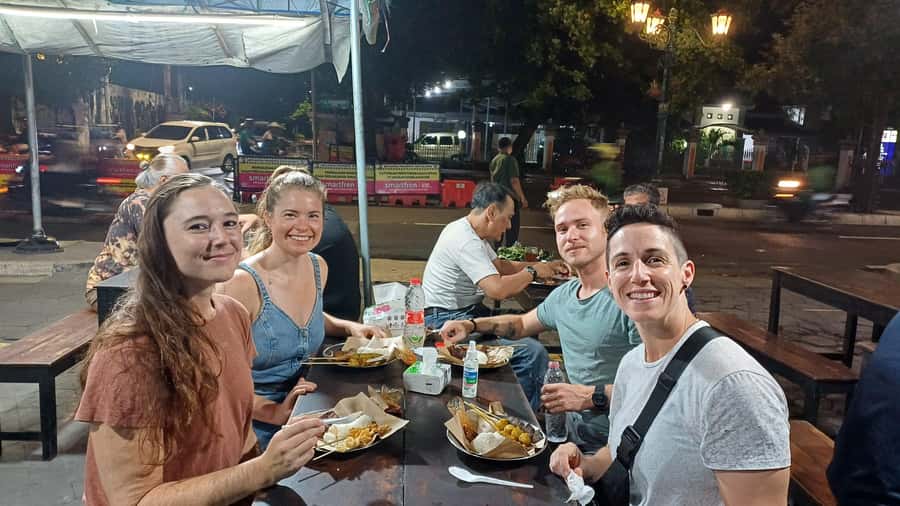
Next up is Plengkung Wijilan, one of those places where you can feel the food focus instantly. The tour brings you in for food tasting of regional items.
This is where you’re likely to get more specific Yogya flavors beyond the generic street-food circuit. Reviews mention dishes like lumpia, bakpia, soup, and other local favorites. Even if you don’t know the names, you can often recognize the style the guide points out: savory fillings, snackable portions, and desserts/sweets that don’t taste like imitation.
What I like about a stop like this is that it doesn’t just feed you. It teaches you what to notice. The guide helps you understand how these foods are meant to be eaten—what’s best to order, how the flavors balance, and what makes Yogya versions distinct.





Jamu at Lugu Murni: Trying Traditional Wellness Drinks the Right Way
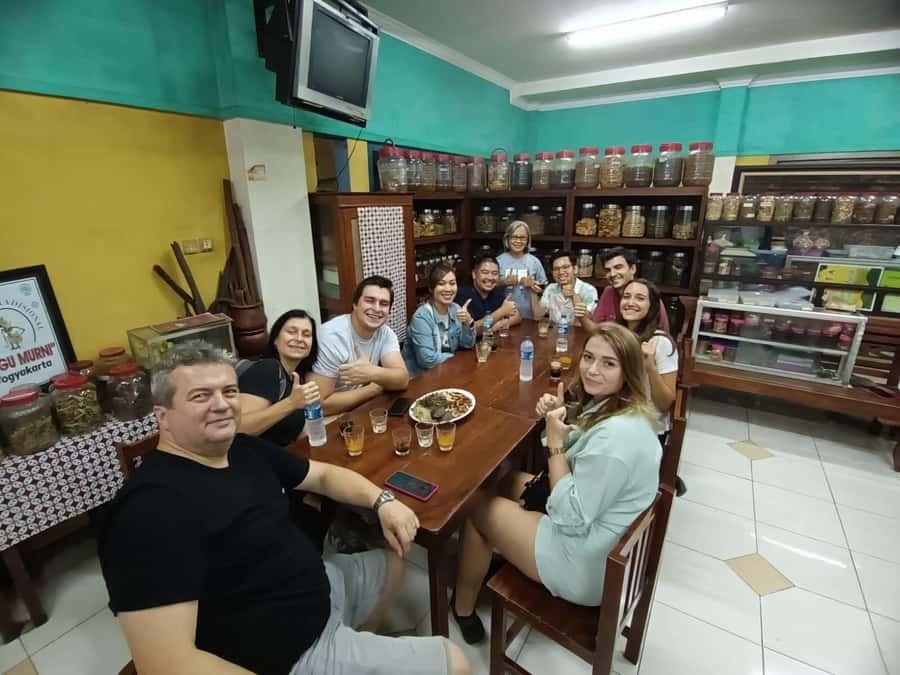
A highlight for many people is the Jamu Jawa Tradisional Lugu Murni stop. Jamu is traditional Indonesian herbal drink culture, often used as a daily “wellness” habit rather than a dramatic health pitch.
Here’s what makes this part of the tour practical: you don’t just get a drink and move on. The guide explains what it is, how it’s made in general terms (as you can learn on-site), and how locals use jamu in everyday life. You also get to see that not every “health” drink is bland. Some are earthy, some are sweet, and some hit with a warming spice profile.
Reviews also mention that the guide helps make the food experience feel safer for Western stomachs—for example, by using hygiene-minded practices like clean cutlery and attention to how hot food is served. While you’re still eating street food, the tour’s handling reduces the guesswork.
Jalan Brigjen Katamso: More Regional Bites, Less Tourist Guessing
After the jamu stop, the tour heads to Jalan Brigjen Katamso for another round of food tasting.
This area matters because it extends your tasting variety beyond the “big name” zones. You get to experience another slice of how Yogya eats at night—what people choose when they’re not trying to impress tourists.
In several reports, guides are praised for choosing stops that feel connected to daily life, not just tourist checklists. That shows up here: you’re not walking in circles looking for something to eat. You’re being guided to places where locals keep coming back.
The Fun Finale at Alun-Alun Kidul: Games, Rides, and Night Atmosphere
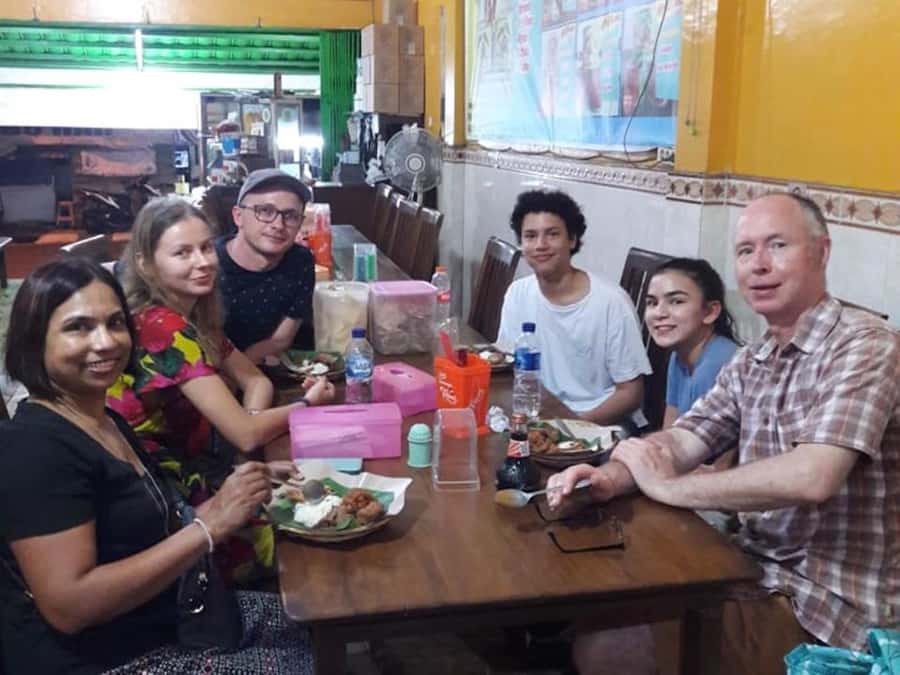
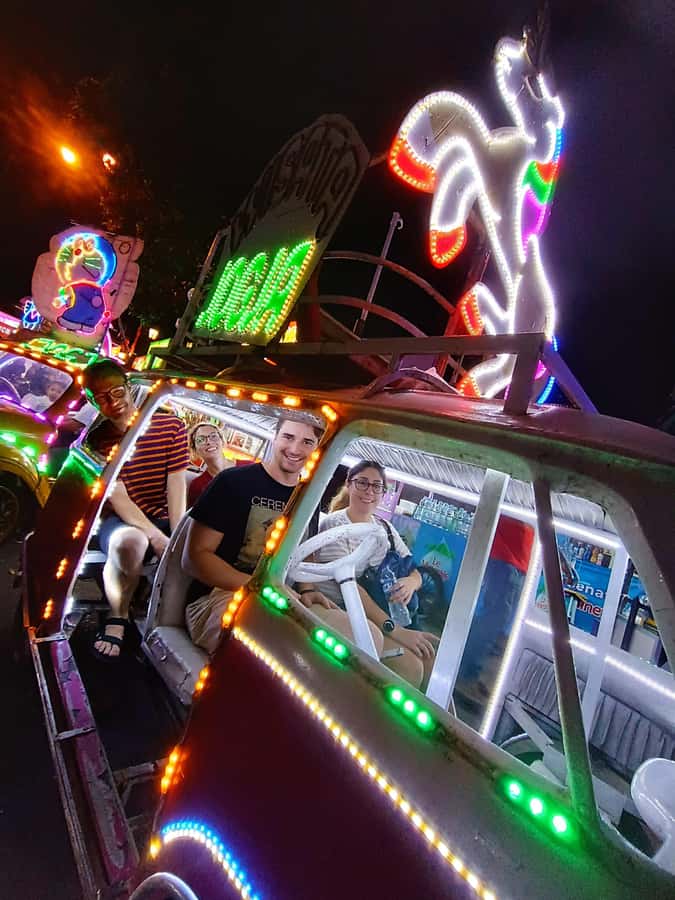
The ending is at Alun-Alun Kidul (the drop-off options include Titik Nol Kilometer Yogyakarta and Alun-Alun Kidul). Before that, there’s a game drive segment—about 30 minutes—where the tour leans into local fun.
This part includes activity fees if you select the full experience. The tour mentions fees for activities like masangin and paddle car, and it also references fun rides such as odong-odong and traditional games.
Here’s why I think this finale is a smart add-on. Eating at night can become repetitive if you only focus on food. Alun-Alun Kidul shifts the tone: you’re watching the local evening routine, trying a couple of activities, and finishing with a sense that you experienced more than just dinner.
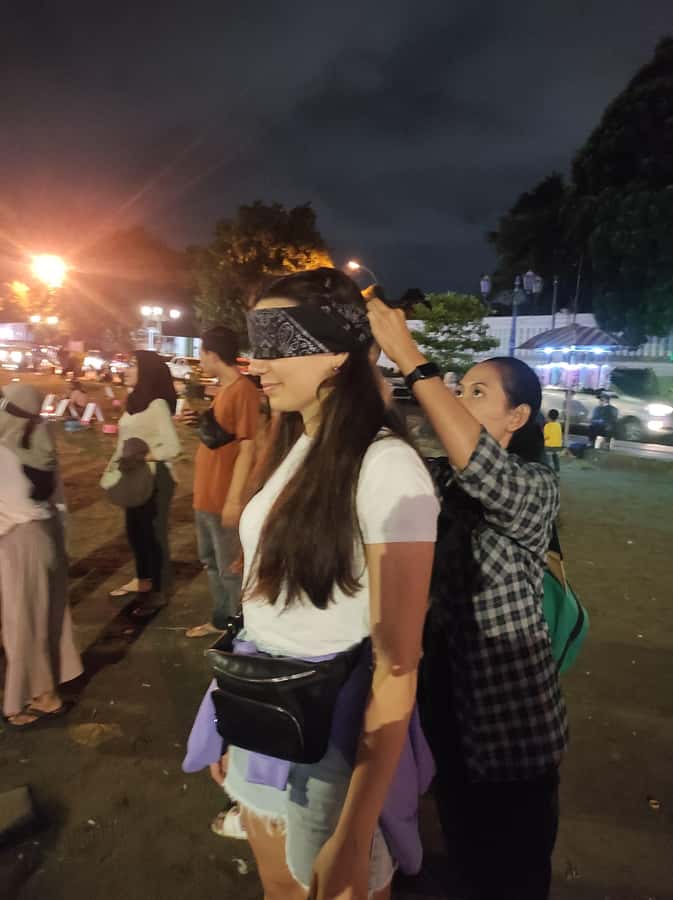
One extra detail that some groups note is a blindfolded walk through banyan trees near the palace area as part of the closing atmosphere. Even if you’re not sure you’ll catch that exact moment on your night, the overall goal is the same: end with local night culture, not just a last bite.
Dietary Needs and Food Safety: The Tour’s Quiet Strength
If you’ve ever worried about street food when you have allergies or dietary restrictions, this tour stands out for its approach. The description specifically says it’s suitable for any food allergies or dietary restrictions, and many reviews reinforce that the guide takes care to match what you can and can’t eat.
You’ll also notice a recurring theme in feedback about hygiene and “Western stomach” comfort. Some groups mention the guide brings supplies like hand sanitizer, provides clean cutlery, and even uses tactics like keeping certain foods hot or handling portions in a way that feels safer.
That doesn’t mean street food becomes risk-free in general, but it does mean you’re not left on your own at a stall wondering what to do. You’re with a guide who can steer, explain, and manage the awkward moments.
Also, if you’re not into spicy food, reviews mention that spice levels can be adjusted so you still get plenty to enjoy.
Small Group Size: Why 8 People Changes Everything
With a maximum of 8 participants, the tour stays personal. That matters in three ways.
First, the guide can watch for reactions—if you’re unsure about a flavor, if you want to slow down, or if you need a dietary swap. Second, the group can move smoothly through smaller streets and tighter food spots without a big pack blocking everyone.
Third, you’re less rushed. Several reviews mention that guides give people time and don’t push you through like a factory line.
And yes, it’s also a social bonus. When the group is small, you tend to talk during breaks, share what you tried, and compare notes about the flavors you’re tasting.
Price and Value: What $17 Gets You (and Why It’s Not Just Cheap)
At about $17 per person, this tour is good value for one simple reason: you’re paying for guidance plus transportation plus organized tastings, not just for walking.
Consider what’s included:
- An English-speaking local guide
- Becak/pedicab rides during the route
- Mineral water (600 ml)
- Raincoat if needed
- Fees for activities at Alun-Alun Kidul when you choose the full experience
- A lot of Javanese authentic snack, food, and drink across multiple stops
In other words, the price isn’t covering just a map and a stopwatch. It’s paying for someone to make the city’s night-food logic click for you—especially if you don’t know what to order or where to go.
The one “value watch” is that you may eat a lot. If you prefer very light tours, you might feel full before the end. But if you want variety and a real night out, the abundance is exactly the point.
Who This Tour Is Best For
This is a strong fit if:
- You want a guided street-food experience with real local context
- You’re traveling solo, as a couple, or in a small group and want a relaxed pace
- You have dietary restrictions or allergies and want a guide who can handle them
- You’d rather spend the night learning how to order than wandering blindly
It’s less ideal if:
- You rely on wheelchair access (the tour isn’t suitable for wheelchair users)
- You dislike eating a lot in one sitting
- You want a quiet, museum-style outing rather than a lively evening with games
Should You Book This Nighttime Walk and Food Tour?
Yes—if your goal is to experience Yogyakarta after dark through food plus local night culture, this is an efficient way to do it. For the money, you get guidance, multiple tastings, several becak rides, and an Alun-Alun Kidul finale that feels like real evening life.
Book it especially if you’re new to Indonesian food or you’ve had trouble with street-food anxiety in the past. A good guide turns “what do I eat?” into a fun checklist you can actually enjoy.
If you prefer small portions, choose lighter options where possible. Otherwise, plan for a full night: your stomach will do the traveling too.
FAQ
How long is the tour?
The tour runs from about 2 hours up to 210 minutes, depending on the selected timing and activities.
What’s included in the tour price?
It includes an English-speaking local guide, mineral water (600 ml), becak/pedicab rides, a raincoat if it’s raining, and many types of Javanese snacks, food, and drinks. Activity fees at Alun-Alun Kidul (like masangin and paddle car) are included if you select the full experience.
Are there different starting points?
Yes. You start at one of two options: Yogyakarta Monument (Tugu Yogyakarta Monument) or the meeting area near the sign Tugu Golong Gilig.
Do you need to arrange pickup or drop-off?
Pickup and drop-off services are not included. The tour has two possible drop-off locations: Titik Nol Kilometer Yogyakarta or Alun-Alun Kidul Yogyakarta.
Is the tour suitable for dietary restrictions?
The tour states it’s suitable for any food allergies or dietary restrictions, and the guide is described as handling dietary needs during tastings.
Is this tour wheelchair accessible?
No. The tour is not suitable for wheelchair users.