The farm-to-stove setup is the whole point. You get a market visit first, then you cook Balinese food in a real open-air kitchen setting. For me, the standout is the combination: ingredients come from the local supply chain, not just a demo kitchen. One thing to consider is that class formats can vary, so your overall time may stretch closer to 3 to 4 hours.
You’ll start with pickup from central Ubud, then visit a traditional market to shop and sample fruit and local treats. After that, you hand-pick produce on an organic farm, cook six authentic Balinese and Indonesian dishes together, and eat what you make with coffee and tea. The price is $39.71 per person, and in Ubud that lands in the “good value if you want hands-on cooking” category—especially with recipes included.
In This Review
- Key things that make Pemulan Bali’s class work
- A Ubud cooking class that starts before the kitchen
- The market stop: where your cooking lessons start
- Farm picking on an organic-style garden (and why it’s more fun than it sounds)
- The open-air kitchen: cooking six Balinese dishes together
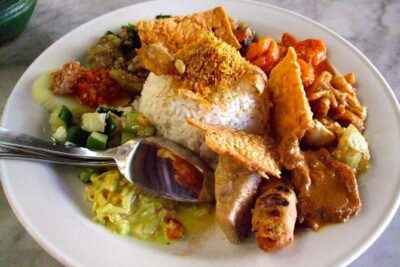
- What you eat, plus coffee and recipes you can actually use
- Timing and group setup: what to plan for in real life
- Price check: is $39.71 good value in Ubud?
- Who this suits best (and who might skip it)
- Should you book Pemulan Bali’s farm cooking class?
- FAQ
- Where is the meeting point for the Balinese Farm Cooking Class?
- What times are the cooking classes offered in Ubud?
- How long is the experience?
- How many dishes will you cook?
- Is there pickup, and where does the tour end?
- What’s included besides the cooking?
- How large are the groups?
- Can I cancel for a full refund?
- Is the tour weather-dependent?
Key things that make Pemulan Bali’s class work
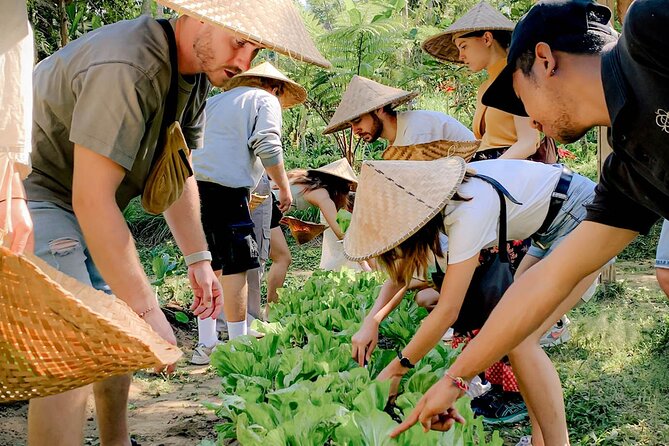
- Market-to-farm flow you can feel: you shop for ingredients, then pick your own greens and produce on the farm.
- Six dishes, not a show-and-tell: you’ll actually cook multiple preparations and then share the meal.
- Open-air countryside kitchen: cooking happens outdoors, surrounded by the calm of Balinese farming life.
- Coffee, tea, and recipes to take home: you eat your food and leave with instructions you can use later.
- Small group size (max 20): it’s set up to stay manageable and hands-on instead of crowded.
- Timing can run long if class levels differ: you might be paired with an advanced group that changes how much food/time you cover.
A Ubud cooking class that starts before the kitchen
Most Bali cooking classes begin with you standing around watching someone else work. This one starts earlier—at the market—so your cooking actually connects to real ingredients and real flavors.
You’ll get pickup from central Ubud, then head to the meeting point at Pura Dalem Puri Peliatan (F7R9+8P2), Jl. Sukma Kesuma, Jl. Raya Ubud, Tebesaya, Petulu, Kecamatan Ubud, Kabupaten Gianyar, Bali 80571. The experience ends back at the meeting point, which keeps logistics simple in a place where traffic and detours can mess with your day.
What you’re paying for here is not just a meal. It’s the whole sequence: ingredients first, cooking second, then a shared table afterward. That matters because Balinese cuisine is all about balance—spice, herbs, aromatics, and the right technique. When you shop and pick the ingredients yourself, it becomes easier to remember what you used and why it works.
A small heads-up: the class experience depends on weather. If conditions are poor, it can be rescheduled or refunded. Plan for that kind of flexibility when you’re in Bali.
You can also read our reviews of more tours and experiences in Ubud.



The market stop: where your cooking lessons start
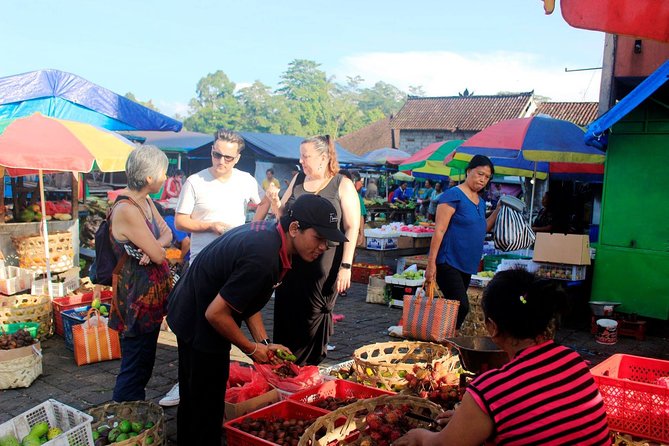
The market visit is built into the schedule for the morning class. You’ll explore local produce and shop for ingredients, with time to sample fresh fruits and local treats along the way.
This part is useful for two reasons.
First, you start building a spice-and-ingredient map in your head. When you later cook, you’ll recognize common items instead of guessing. That makes the class feel practical, not mysterious.
Second, you learn how people actually buy what they use. Balinese cooking is ingredient-driven. If you only learn recipes, you might miss that the flavor comes from the quality and freshness of what goes into the paste, the herbs, and the supporting aromatics.
In the market, think of yourself as learning how to shop for flavor. Even if you don’t memorize names on the spot, you’re training your eye to notice what looks fresh and fragrant—and that’s a skill you can use after Bali when you’re cooking at home.
Farm picking on an organic-style garden (and why it’s more fun than it sounds)
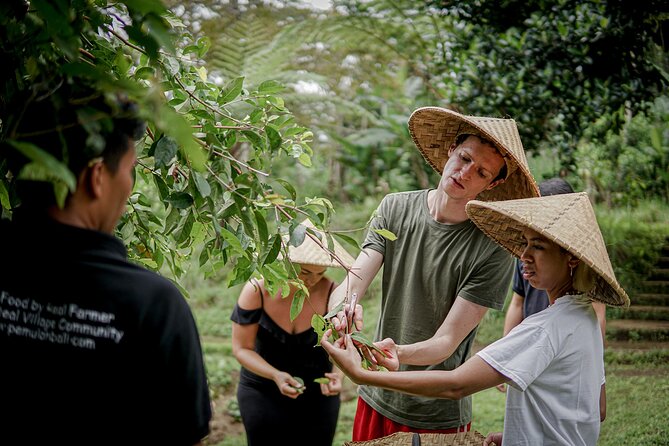
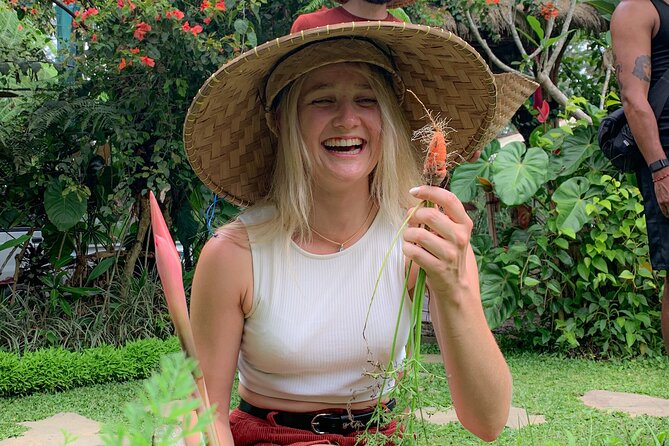
After the market, the next step is the farm: you go to an organic farm garden and hand-pick produce. You’ll walk through the garden, pick ingredients you’ll use later, and learn directly about Balinese spices and plants that show up in daily cooking.
If you like cooking classes where you do something with your hands, this is a great moment. You’re not just chopping. You’re choosing. That selection part sticks.
You’ll hear about Balinese spices and plants and connect them to what you’ll cook. And because the garden is part of the lesson, it also changes the feel of the day: instead of a single block of cooking, it becomes a sequence with breathing room between tasks.
One practical note: you’re outdoors for portions of the experience, so wear comfortable shoes and plan for sun. If you’re going in the morning or afternoon in Ubud, keep water handy and protect yourself from heat.
The open-air kitchen: cooking six Balinese dishes together
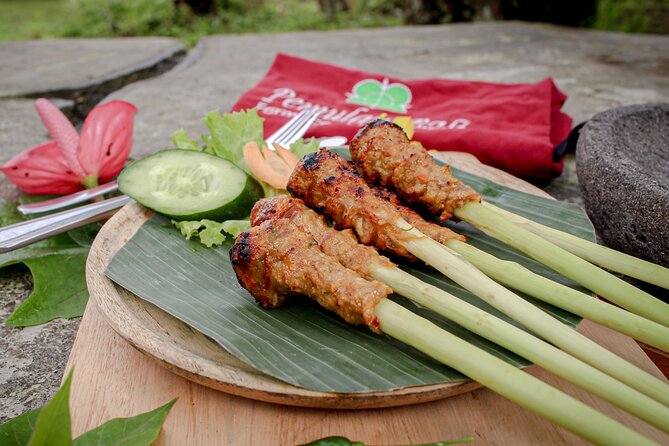
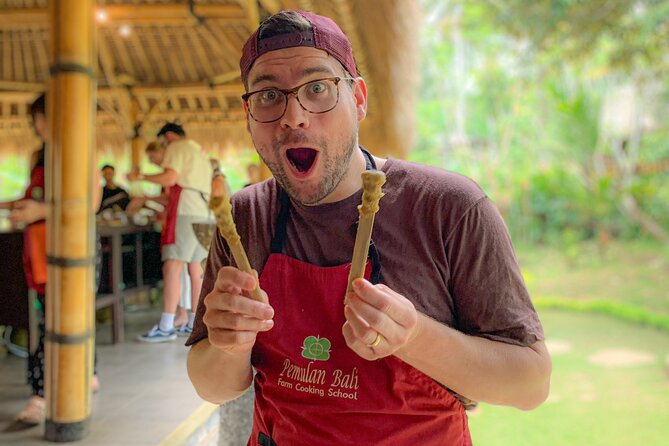
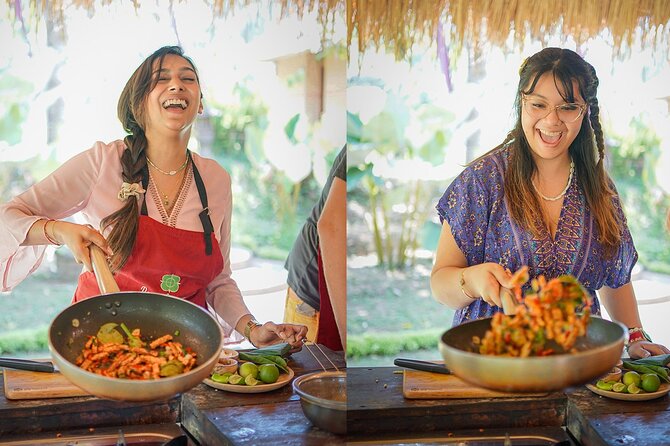
This is the main event. You’ll cook in an open-air kitchen in the countryside setting, guided by the chefs. The class includes making six different authentic Balinese and Indonesian dishes, and you’ll prepare them as a group, then sit down together to enjoy the results.
What makes this work is the structure. You’re not tasked with one dish and sent home. You cook multiple dishes, which usually means you get a wider sense of the cuisine—how pastes differ, how herbs get treated, and how seasoning changes from starter to main.
From the experience format and how people describe it, you can expect a mix along these lines:
- a couple of appetizers,
- several mains,
- and even a community-style dessert.
Some people finish with dishes across different categories, and the instructions are paced to match the group’s pace. The chefs keep the lesson flowing, and there’s often a playful tone—so even if you’re nervous about cooking, it tends to feel friendly rather than strict.
Because it’s open-air, the kitchen can feel more relaxed and “in the village” than most indoor cooking setups. You’re cooking where the air is part of the experience, not fighting against a hot room and fluorescent lights.
What you eat, plus coffee and recipes you can actually use
After cooking, the meal is part of the deal. You sit down together and enjoy what you made. Coffee and tea are included, so you’re not just eating and running—you get a true end-to-the-day moment to taste, compare flavors, and ask questions.
You also take home recipes and typically keep leftovers from the meal. That’s a small but real value add. Cooking classes can be fun but forgettable if the only souvenir is a photo. Here, recipes make your cooking practice stick.
If you’re the type who likes recreating a trip at home, this is one of the better formats because you leave with instructions for multiple dishes, not just one. And because you picked ingredients at the farm and shopped at the market, you’ll have a clearer sense of what to look for when you’re shopping later.




Timing and group setup: what to plan for in real life
The schedule is offered in multiple daily blocks:
- Morning class: 07:30 AM
- Afternoon class: 12:30 PM
- Evening class: 16:00 PM
The tour is listed at about 5 hours, but in real life, you should expect closer to 3–4 hours depending on what class level you end up in and how the group pace runs. One key consideration: there may be different class levels operating at the same time, and you might be grouped with an advanced class format. That can change how much food you make and how long the experience runs.
Group size is capped at 20 travelers. That limit matters because you want enough attention to cook confidently. In a bigger crowd, you can feel like you’re waiting for a station or catching up. Here, the cap keeps things more manageable.
Pickup is from central Ubud, and you’re brought back to the meeting point afterward. That keeps your day from turning into a logistics puzzle.
Weather can also affect scheduling. If conditions aren’t good, you may be offered a different date or a full refund.
Price check: is $39.71 good value in Ubud?
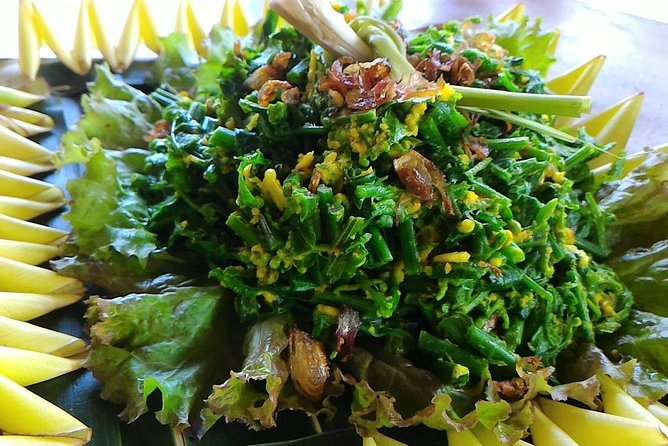
At $39.71 per person, this class is positioned as an accessible, do-it-yourself cooking experience. The value comes from the bundle:
- Market visit with ingredient exploration and sampling (morning),
- farm picking of produce,
- hands-on cooking for six dishes,
- then a meal with coffee and tea,
- plus recipes to take home.
Many cooking classes charge similar money for only a cooking session, with ingredients already prepared and the “why” left out. Here, the value is in the ingredient journey. You’re learning how choices in the market and garden translate into what ends up on the plate.
You also get group discounts, which can be helpful if you’re traveling with friends or family and want to split costs without downgrading the experience.
If your goal in Ubud is authentic local food done hands-on, this price feels fair. If your goal is purely watching and taking photos with minimal involvement, you may find it better to choose a simpler food tour instead.
Who this suits best (and who might skip it)
I think this is a strong fit if you:
- want to cook Balinese food instead of just tasting it,
- like the idea of market + farm as part of your learning,
- want multiple dishes and not just one item,
- enjoy recipes you can repeat after your trip.
It may be less ideal if you:
- hate group work or fast station changes,
- want a very predictable exact duration with zero variation,
- are tightly scheduled to the minute and can’t handle weather reschedules.
Service animals are allowed, and the meeting point area is near public transportation, so it’s not hard to reach. Still, since you’re outdoors and cooking, wear sensible clothes and plan for a hands-on day.
Should you book Pemulan Bali’s farm cooking class?
Book it if you want a day in Ubud where food actually connects to ingredients. The market-to-farm-to-kitchen flow makes the cooking lesson feel grounded, not like a scripted performance. Add in the included coffee and tea, the recipes, and the chance to cook six dishes, and it’s a strong “value for effort” pick.
Skip it only if your schedule can’t flex. Timing can vary based on class level, and weather can shift things. If you can give it a little room in your day, you’ll likely come away with flavors you understand and recipes you’ll actually cook again.
FAQ
Where is the meeting point for the Balinese Farm Cooking Class?
The meeting point is at Pura Dalem Puri Peliatan (F7R9+8P2), Jl. Sukma Kesuma, Jl. Raya Ubud, Tebesaya, Petulu, Kecamatan Ubud, Kabupaten Gianyar, Bali 80571, Indonesia.
What times are the cooking classes offered in Ubud?
You can choose a morning class at 07:30 AM, an afternoon class at 12:30 PM, or an evening class at 16:00 PM.
How long is the experience?
The class is listed at about 5 hours.
How many dishes will you cook?
You’ll prepare and enjoy six different authentic Balinese and Indonesian dishes.
Is there pickup, and where does the tour end?
Free pickup is included from central Ubud, and the activity ends back at the meeting point.
What’s included besides the cooking?
Coffee and tea are included, and you’ll receive recipes. The meal is also part of the experience.
How large are the groups?
The activity has a maximum of 20 travelers.
Can I cancel for a full refund?
Yes. You can cancel for free up to 24 hours in advance of the experience start time for a full refund.
Is the tour weather-dependent?
Yes. The experience requires good weather, and if it’s canceled due to poor weather you’ll be offered another date or a full refund.