Cooking in the woods beats restaurant food. In Sidemen, you’ll cook Balinese dishes on a sacred mountain surrounded by trees, using old-school methods that feel more like a family practice than a staged show.
What I love first is the hands-on jungle setup: wood-fired cooking, fresh ingredients, and that quiet “time slows down” feeling you don’t get in a city kitchen.
The second big win for me is the teaching style. With chefs like Ketut (and his team), you learn the why behind the flavors, not just the steps, and you still end up eating what you made. One consideration: getting there takes a little effort because the road is bumpy and narrow, and hotel pickup isn’t included.
In This Review
- Key things you’ll notice fast
- Sidemen’s sacred mountain kitchen: the setting is half the point
- Old-style technique: what “no shortcuts” looks like
- The 4-hour flow: from prep to five dishes
- 1) Arrival and setup
- 2) Chef-led explanation, then you cook
- 3) The fire and the timing
- 4) Eating together
- What you’ll actually learn (and use later)
- The chefs and hospitality: Ketut’s style matters
- Value and how this compares to other Bali food tours
- Getting there, what to bring, and timing that works
- Meeting point
- When it runs
- What to bring
- Who this Bali cooking class is best for
- Should you book? My take
- FAQ
- How long is the cooking class?
- What time does the class start?
- How many people are in the group?
- Is hotel pickup included?
- Can I request a vegan or vegetarian menu?
- What languages do the instructors speak?
- What is the meeting point?
- Does the class run in rain?
- Is it suitable for people with food allergies?
Key things you’ll notice fast
- Sidemen’s mountain setting in the woods on a 1-hectare property
- Old Balinese style revived from a 1920s approach, including traditional cooking tools
- Wood-fired cooking that keeps flavors grounded and real
- Small group size (max 6) so you actually get hands-on time
- Five Balinese dishes, with the exact menu kept a surprise until you arrive
- Vegan/vegetarian by request, plus recipes you can recreate later
Sidemen’s sacred mountain kitchen: the setting is half the point
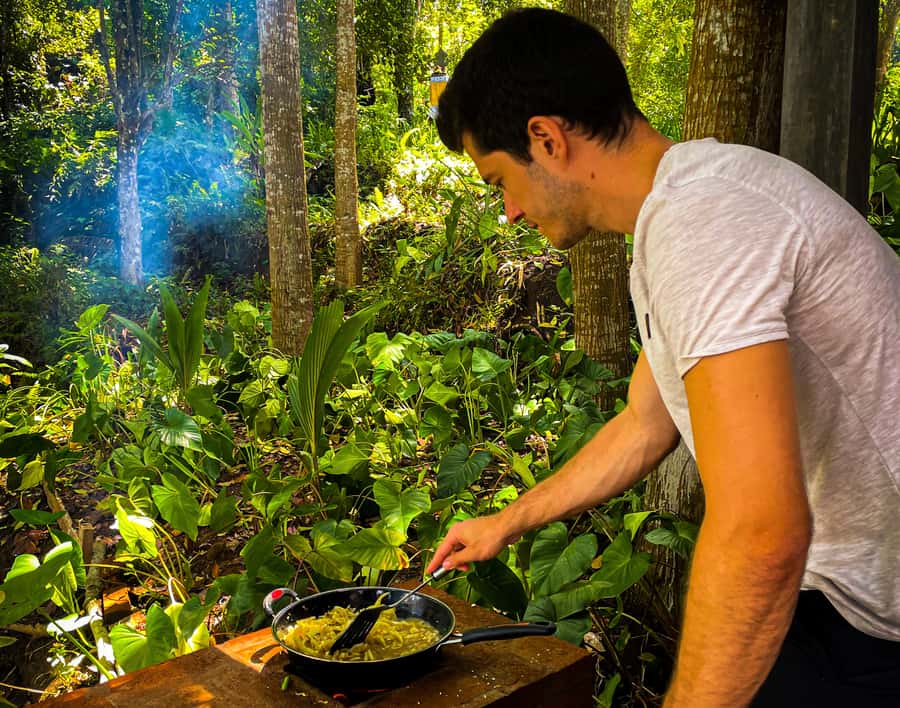
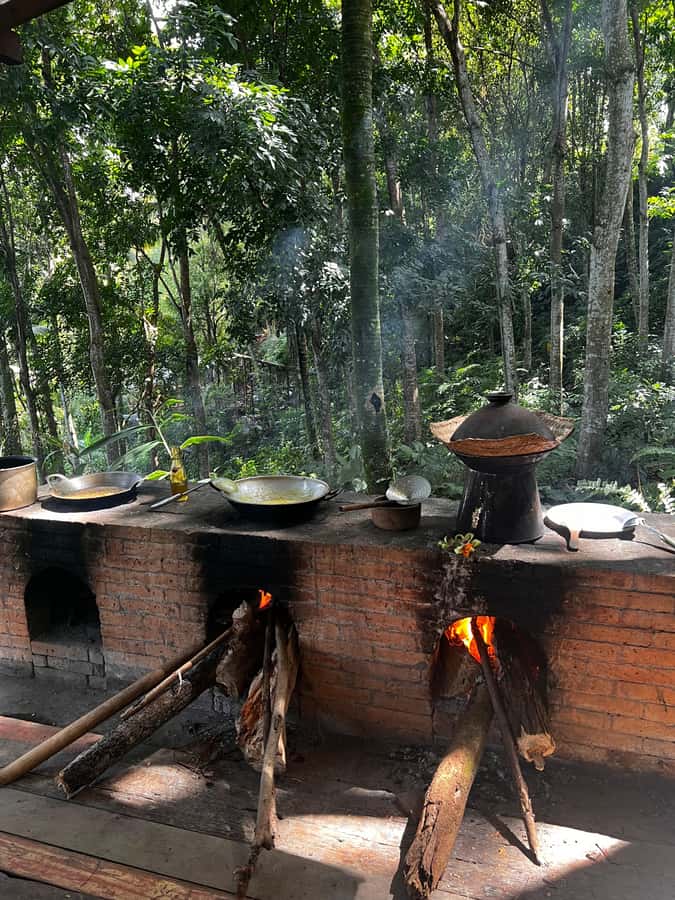
This is a Bali cooking class you’ll feel in your body, not just your stomach. The cooking area sits in Sidemen (Karangasem) on a sacred mountain, surrounded by woods on a property about 1 hectare. That matters because it changes the whole vibe of the class. You’re not squeezed into a tiled studio. You’re cooking where the air is cooler, the sounds are natural, and the day feels more like a countryside ritual than a tour activity.
The team also emphasizes the historical angle: they describe this as an older-style cooking class returning to tradition, linked to a 1920s Balinese approach. In practice, what you see is a kitchen built around the way people used to cook: real preparation steps, traditional implements, and a slower rhythm that gives you time to understand ingredients before they hit the fire.
And yes, you’re also doing this in the jungle-like environment. Several people highlight the view while cooking, which is the kind of detail that makes the morning memorable even after you finish. If you’re the type who likes your food experiences grounded in place, this checks the box.
One more thing: the location is called Mystery Mountain Cooking Class (Bird Hills Bali), and the meeting instructions basically amount to finding the Bird Hills Bali area on Google Maps and looking for the sign. The road getting up there is part of the experience: bumpy and narrow.
You can also read our reviews of more tours and experiences in Sidemen Village.
Old-style technique: what “no shortcuts” looks like
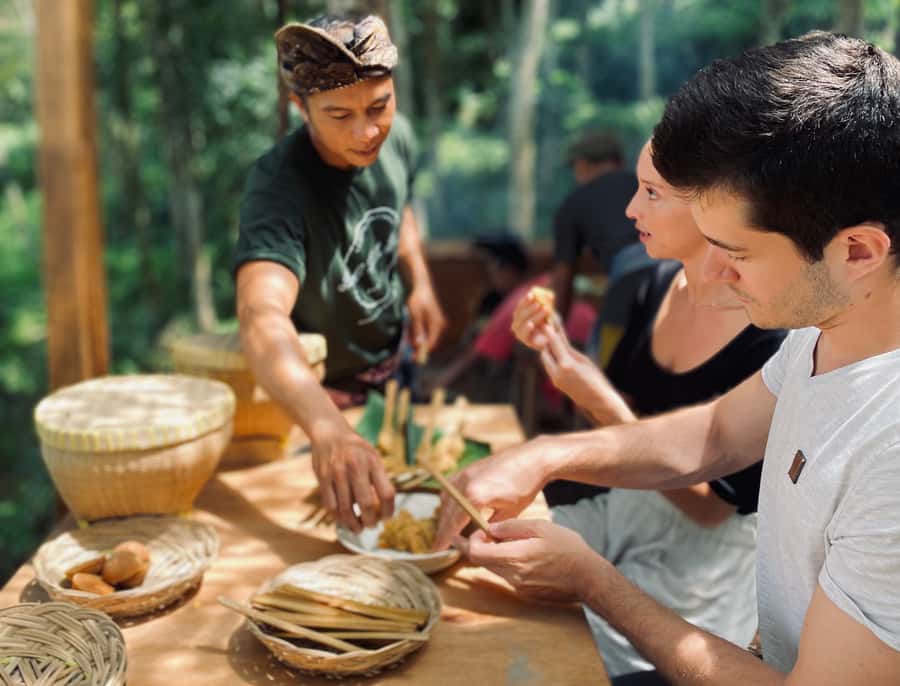
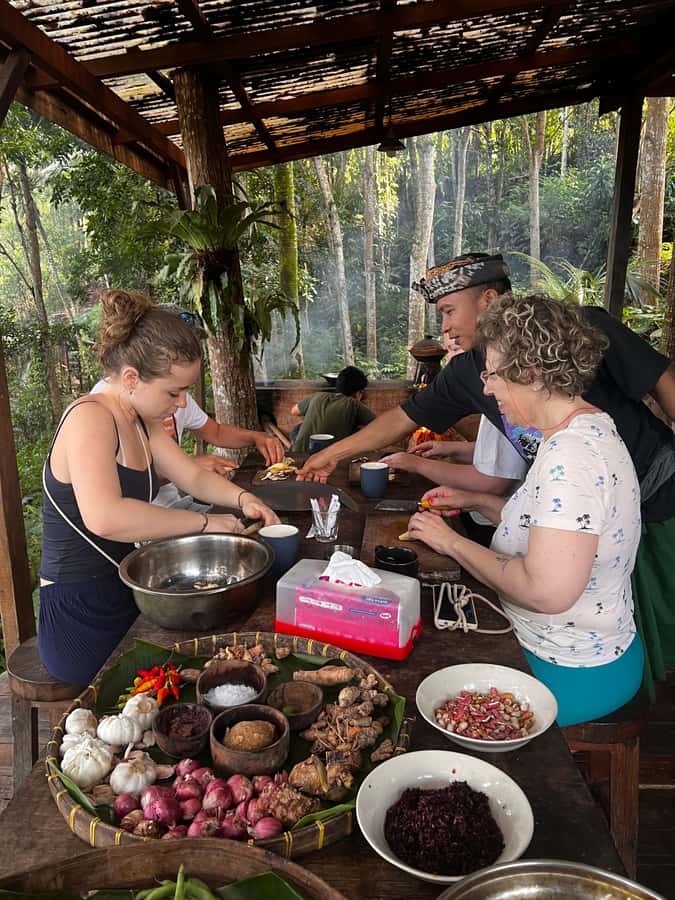
This class is built around traditional technique, and you can taste the difference when you cook from scratch. A repeated theme in the feedback is how everything is made by hand and how the cooking avoids manufactured shortcuts. One person specifically notes there were no curry pastes or supermarket-style ingredients used in the preparation process, which points to a more hands-on spice workflow (grinding, mixing, and building flavor as you go).
What that means for you:
- You’ll see mise en place (setup and prep) before cooking starts, not just a chef doing everything while you watch.
- You’ll learn how flavors come together through preparation steps, not just through adding sauce at the end.
- You get the sense that the kitchen is designed for real cooking, not just demonstrating for tourists.
There’s also a “jungle cooking class” element that’s not only aesthetic. Cooking outdoors with wood-burning heat changes how you manage timing and attention. More than one guest highlights that they cooked on open fires/wood-burning stoves, which forces you to stay present and involved. It’s not hard, but it’s different from a standard range where the heat is predictable and you can walk away for a minute.
And because the class is a small group (limited to 6 participants), the chef can guide you while you work. That’s where old-style cooking becomes learnable, instead of just impressive to look at.
The 4-hour flow: from prep to five dishes
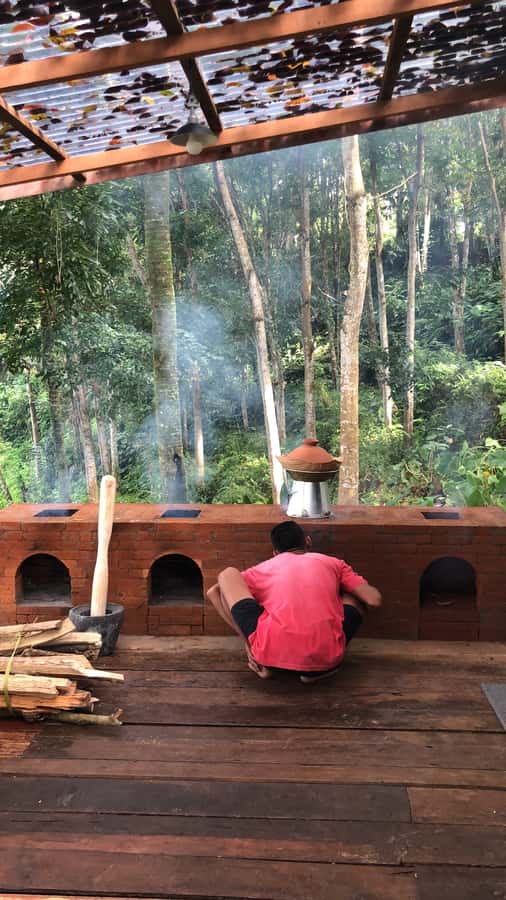
You’re in the kitchen for about four hours, typically from 8:30am to 1:00pm. The structure is designed so you experience the whole process, not just the final “eat” part.
A key detail: the menu isn’t disclosed ahead of time. That’s unusual, and it can be a plus. It keeps you from trying to guess what you’ll make, and it makes the class feel more like a surprise culinary lesson. At the end, you’ll have cooked five different Balinese dishes and you’ll get to eat what you made.
Here’s how the day tends to feel in practice:
1) Arrival and setup
You show up, get oriented, and start with prep. Since the class includes cooking equipment and is run by an experienced local chef, you’re not bringing gear or hunting down ingredients. Your job is to show up ready to work.
Practical note: the venue is outdoors, and it runs rain or shine. So you’ll want to think about comfort as the day starts. You might want layers, and you’ll likely be moving around during cooking.
2) Chef-led explanation, then you cook
The chef demonstrates each process, from initial prep steps (mise en place) through cooking, until the dishes are ready to serve. Multiple reviews mention learning from the chef while also actively preparing food. One guest described it as more than a lesson because there was chatting and laughing too, which is exactly how you want a small-group class to feel.
English instruction is available (and Indonesian too). Some groups also report the team adapts to non-English speakers during explanations, which can be a relief if you’re traveling with parents or mixed-language companions.


3) The fire and the timing
This is where wood-burning cooking becomes real. You’ll pay attention to heat management and how ingredients respond. Several people call out the view while cooking, and a few mention open fire as a key part of the memory. That combination makes it feel like you’re cooking “with” the environment, not just in front of it.
4) Eating together
When everything finishes, you eat your way through what you made. You’ll see why the class keeps coming up as a highlight: it’s not a quick demo followed by a bland snack. It’s a full morning of work and a full payoff.
One guest even calls out a coconut curry as the best they’ve had. While you won’t know the exact lineup in advance, you can expect dishes heavy on Balinese flavor building—often including coconut elements and spice aromatics—because that’s a common signature described in the experience.
What you’ll actually learn (and use later)
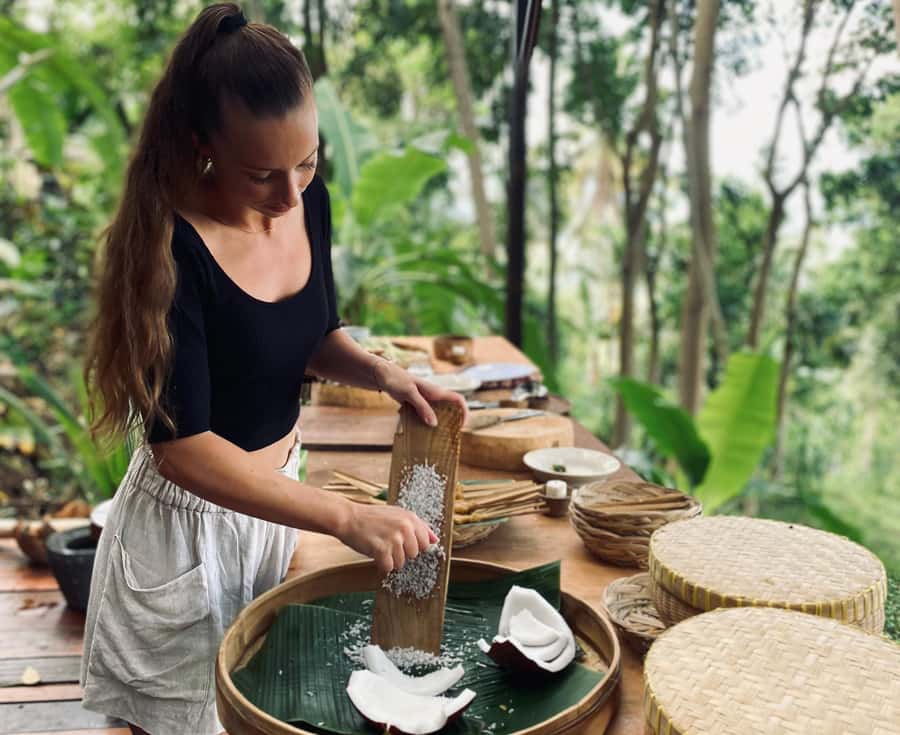
A great Bali cooking class leaves you with more than recipes. This one leans that way.
You’ll learn:
- How ingredients are prepared before cooking (so you understand texture and timing)
- How spice flavor gets built during the cooking process
- How traditional methods shape the final taste
The best part is that you don’t just watch. With the small group size, you get enough time to do the steps with guidance. One review describes a group of four getting enough opportunity to cook each dish. That’s a big deal. If you’ve done cooking classes where you chop for 5 minutes and then leave, this is different.
Another advantage: recipes are provided after the class. One person specifically notes recipes were sent to them so they could recreate the dishes at home. So even if the jungle morning is your memory, you also get practical next steps for your kitchen later.
And because the class is described as “bringing back” an older Balinese style, it’s not only about taste. It’s also about how daily cooking works—what people do, what they prioritize, and how they take their time.
The chefs and hospitality: Ketut’s style matters
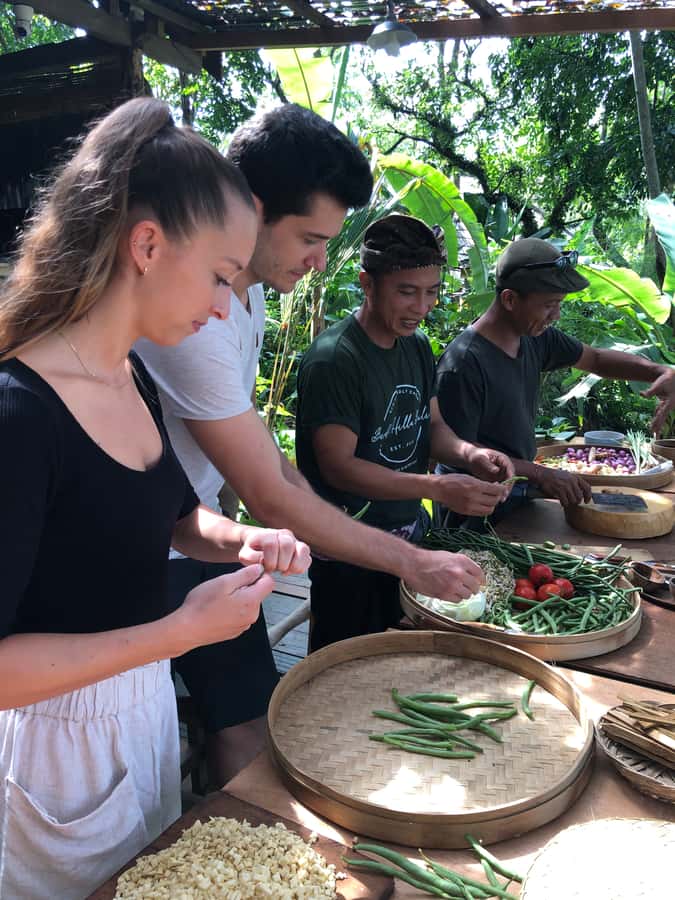
A lot of the praise focuses on the chef’s personality, and that matters because your experience depends on the teaching energy. Ketut shows up repeatedly in the feedback, praised for humor, warmth, and guiding people from start to finish.
You’ll likely feel:
- A fun, positive pace (not stiff, not rushed)
- Clear explanations during prep and cooking
- A team that helps you feel comfortable while you’re handling unfamiliar techniques
Some people also mention that the staff made them feel at home. That’s not a small detail. In a cooking class, if you feel awkward or confused, the whole thing gets less enjoyable. Here, the goal seems to be comfort plus learning.
If you want more than food, you’ll probably enjoy the cultural chat part. Multiple reviews mention talking with the local team about Balinese lifestyle and learning backstory around the cuisine. It turns the class into a small window into how people live and cook, not just how they perform for visitors.
One additional detail from a review: the family has bungalows on the property and is working on more. So if you like the vibe, it might be worth considering staying nearby for a longer connection to the place (though the cooking class itself doesn’t require that).
Value and how this compares to other Bali food tours
Even without a price listed here, I can tell you how this experience tends to rate in value.
You’re paying for:
- A full four-hour cooking session, not a quick tasting
- Five dishes cooked by you, with chef guidance
- Equipment and instruction included
- A small group that keeps attention on you
- Recipes afterward so you can repeat what you learned
Where other classes can feel like a production line, this one is more like a focused, local morning. The wood-fired outdoor cooking and the “old-style” approach aren’t just marketing phrases. They show up in what you do during prep and cooking, and they affect the quality of what you end up eating.
Also, the menu being kept secret until you arrive helps the value feel higher. You don’t get stuck deciding what you want to learn. You just follow the process and discover what the kitchen chose for your group.
One small reality check: because there’s no hotel pickup, your cost (time and transport) is on you. If you’re staying far from Sidemen, factor in the effort to reach Bird Hills Bali and the bumpy mountain road. Still, many people feel that the setting makes the trip worth it.
Getting there, what to bring, and timing that works
Meeting point
You’ll drive to Bird Hills Bali. Look for the sign for Mystery Mountain Cooking Class by Bird Hills Bali. The road is bumpy and hilly, so give yourself a little buffer.
The big practical point: hotel pickup and drop-off isn’t included. If you’re relying on local transport or a driver, plan ahead. One guest even notes there aren’t many Grab/Gojek options in the area, so prebooking transport can save stress.
When it runs
The class starts at 8:30am and goes until around 1:00pm. Because it runs rain or shine, early mornings are still your best bet for calmer conditions and clear photos—if the weather cooperates.
What to bring
They ask you to bring:
- A camera
- Cash
- A charged smartphone
That combo makes sense in an outdoor setting. You’ll want photos, and cash can be useful for small needs. Your phone charge matters because you’ll probably want to document dishes as you cook.
Who this Bali cooking class is best for
This experience fits best if you:
- Want a more authentic Bali food lesson tied to place
- Like hands-on cooking with small groups
- Enjoy learning technique, not just eating
It may not fit if you:
- Have food allergies (they say it’s not suitable for people with food allergies)
- Are traveling with children under 7
- Are pregnant
- Are over 95
If you’re vegetarian or vegan, you can request a vegetarian/vegan menu. The class is designed to be flexible enough to accommodate by request.
Also, if you’re sensitive to bumpy roads, you’ll want to consider the ride up the mountain. It’s not described as extreme, but it is described as narrow and bumpy, so plan accordingly.
Should you book? My take
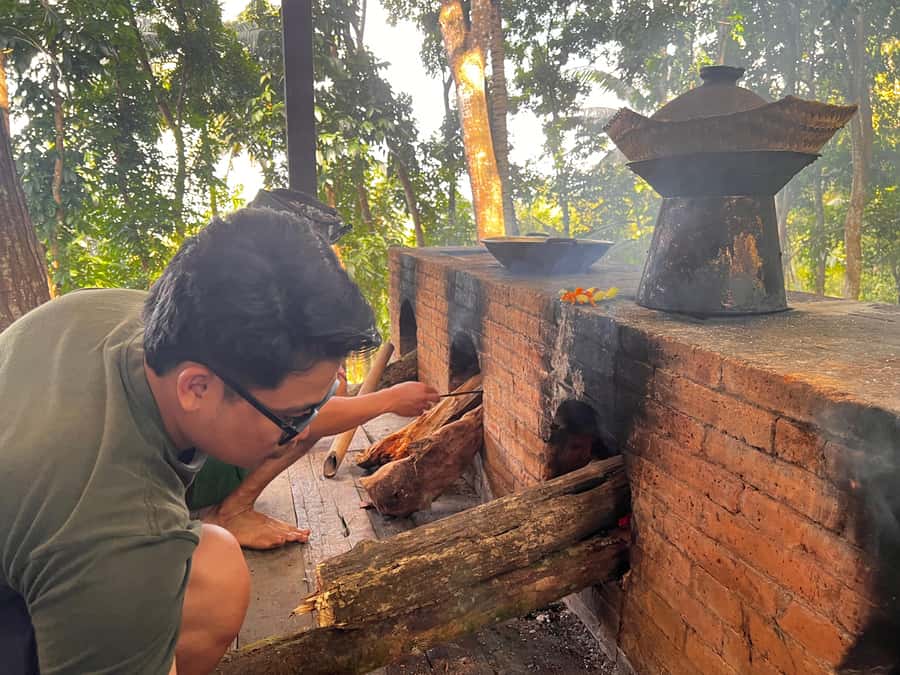
Book it if you want a Bali cooking class that feels like a morning in the Sidemen hills: small group, wood-fired cooking, old-style technique, and five dishes you actually make. The setting in the woods and the chef-led approach (especially with Ketut’s teaching style in many accounts) are the reason this keeps getting mentioned as a top highlight.
Skip it only if the bumpy mountain road or the lack of hotel pickup would make logistics stressful, or if your needs fall into the “not suitable” categories like food allergies, pregnancy, or young kids.
If you can get there comfortably and you’re up for hands-on cooking in rain or shine, this is one of those Bali experiences that doesn’t feel like a box-check. It feels like learning how Balinese food gets made when nobody’s rushing.
FAQ
How long is the cooking class?
The class runs for 4 hours.
What time does the class start?
It starts at 8:30am and typically goes until about 1pm.
How many people are in the group?
It’s a small group limited to 6 participants.
Is hotel pickup included?
No. Hotel pickup and drop-off aren’t included.
Can I request a vegan or vegetarian menu?
Yes. A vegetarian/vegan menu is available by request.
What languages do the instructors speak?
The instructor speaks English and Indonesian.
What is the meeting point?
Search Google Maps for Bird Hills Bali. You should see a sign for Mystery Mountain Cooking Class by Bird Hills Bali when you arrive.
Does the class run in rain?
Yes, it takes place rain or shine.
Is it suitable for people with food allergies?
No. It isn’t suitable for people with food allergies.