Rice terraces here feel close enough to touch. This Sidemen walk takes you through working villages, rice paddies, and Subak irrigation paths with big Mount Agung views. The whole thing runs on a simple rhythm: market first, then footpaths, bridges, temples, and terraces.
I love how the tour mixes scenery with real daily farm life, not just photo stops. I also like that the guide keeps the story grounded in what you’re seeing—water management, planting cycles, and how locals move through the fields, often with pointers from guides like Darya, Gede, and Adi.
One thing to consider: the route is active and includes narrow paths on rice terraces. Go with proper shoes, expect ups and downs, and plan for heat, insects, and a bit of balance work.
In This Review
- Key highlights worth showing up for
- Why this Sidemen trekking feels different from the usual rice-field walk
- Meeting point at Pasar Sidemen: start where locals actually shop
- Stop-by-stop: what you’ll actually see and why each part matters
- Pasar Sidemen market start (plus a quick shop stop)
- Hidden gem viewpoint/photo stop on the way up
- Jembatan Kuning Tukad Yeh Unda: crossing the hanging bridge
- Dukuh village pass-through: temples and street ups and downs
- Babakan Dukuh rice terraces: your longest “look and walk” section
- Subak irrigation and Mount Agung: the story your guide turns into walking context
- How hard is it, really? Footwear, heat, and balance on rice edges
- Where the small-group size shows up (and where it doesn’t)
- Logistics at the end: finishing near Warung Ume Anyar and getting back
- Value check: $14 for a guided rice-and-village walk in Sidemen
- Who should book this, and who might want a different plan
- Should you book Sidemen Trekking from a different perspective?
- FAQ
- How long is the Sidemen trekking tour?
- Where do I meet the guide?
- Where does the tour end, and how do I get back?
- Is hotel pickup and drop-off included?
- Are groups small, and is the guide in English?
- What should I wear or bring?
- Can I cancel and get a refund?
Key highlights worth showing up for
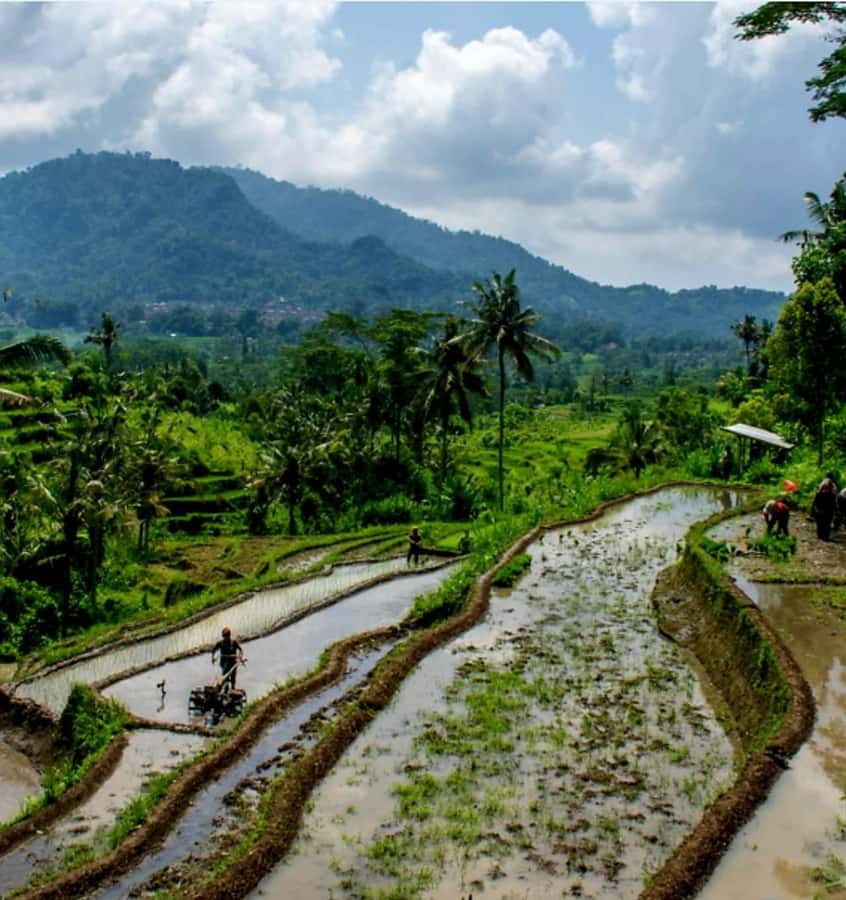
- Mount Agung viewpoints if skies cooperate, especially from terrace vantage spots
- Subak irrigation explained on the move, tied directly to the water channels you cross
- Small group (up to 10), so questions are easy and the pace stays human
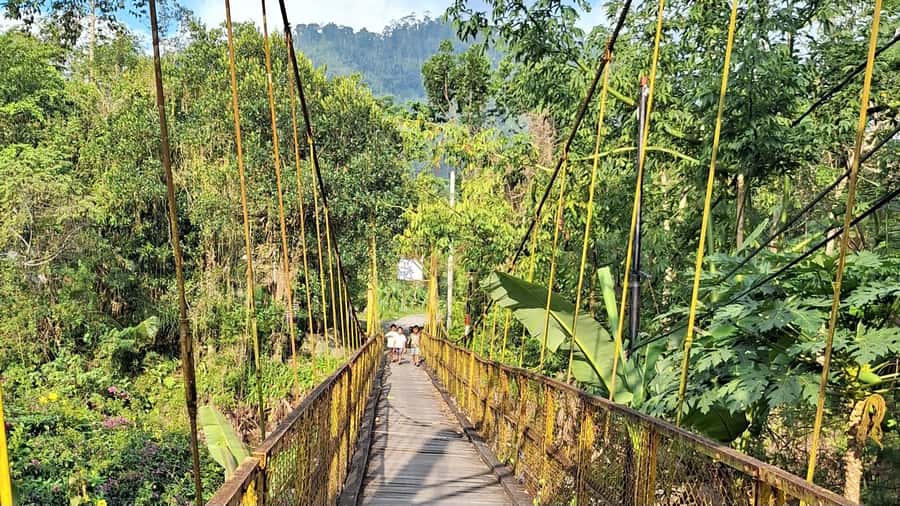
- Hanging wooden bridge (for both people and motorbikes) plus classic rice-field photo angles
- Sidemen villages + temples along the way, so you see daily life, not just scenery
- Real farming tasks you’ll pass as people work the fields: plowing, cultivating, planting, and harvesting
Why this Sidemen trekking feels different from the usual rice-field walk
Sidemen is famous for its terraces, but what makes this trek click is the angle. You’re not only looking at rice. You’re walking through the places where rice happens—along irrigation routes, through village streets, and up to viewpoints that give you perspective on the whole system.
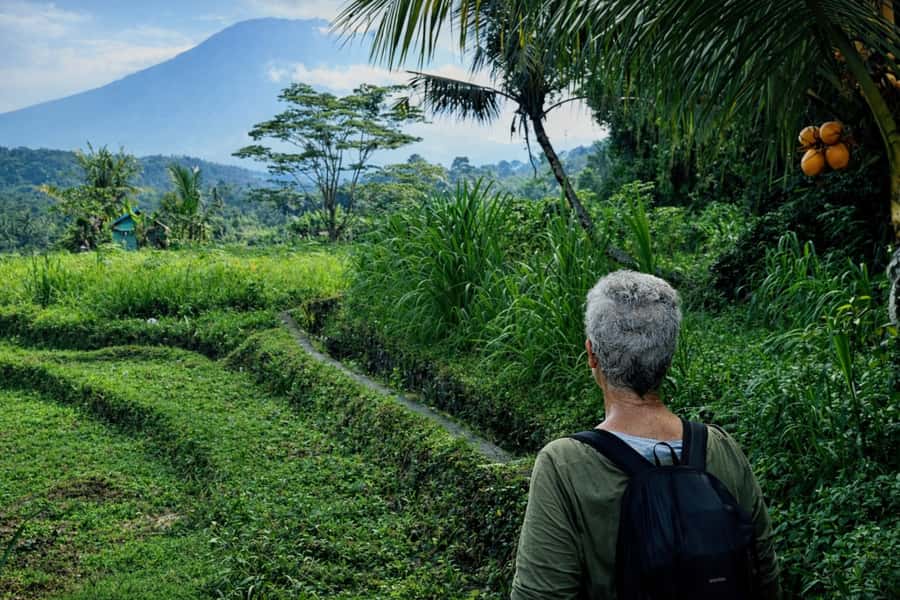
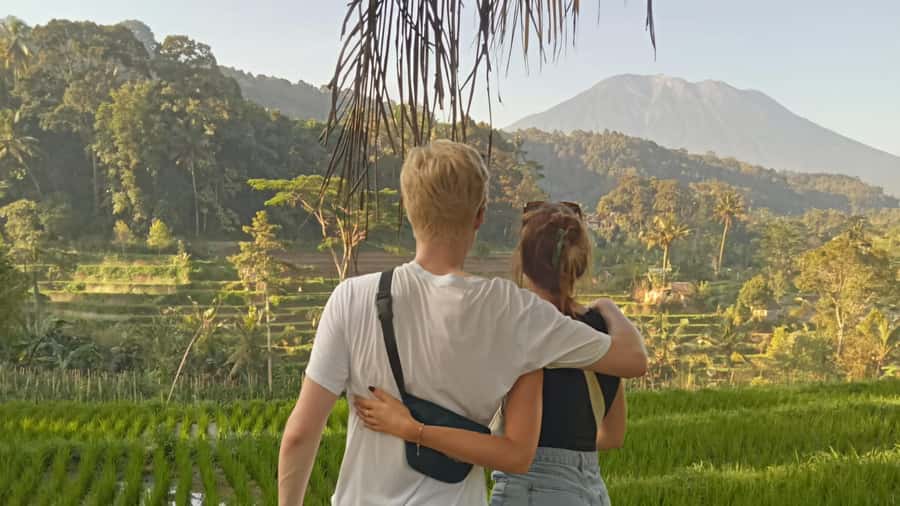
The core “wow” is Mount Agung in the background. When clouds don’t swallow it, the view frames the terraces in a way that photos rarely capture. The other big “wow” is the Subak lesson—how traditional water management organizes farm life. It turns what looks like “pretty paddies” into something you can actually understand as an everyday operation.
And yes, the walk is scenic. But the vibe is practical and calm: you’re learning as you walk, stepping from market to fields to bridges to terraces, and you’re doing it in a small group. That size matters. It keeps the trek from feeling rushed and gives your guide room to answer questions instead of just counting heads.
You can also read our reviews of more tours and experiences in Sidemen Village.
Meeting point at Pasar Sidemen: start where locals actually shop
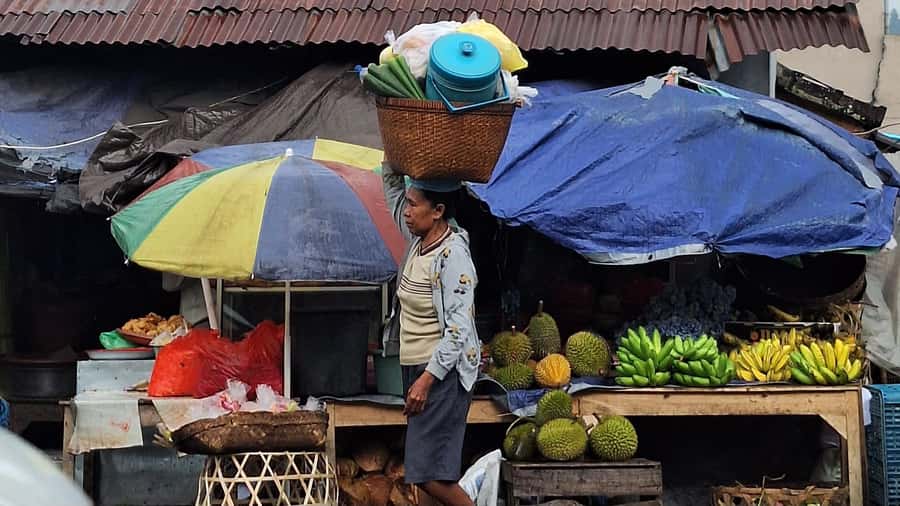
Your trek starts in Pasar Sidemen (Sidemen Traditional Market) on the main street. The meeting point is near the shop with the sign UPA BOGA (you’ll spot the guide when you arrive). This is a smart choice because you begin in the middle of village life, not at a far-off “tourist entrance.”
You’ll typically also see a first stop linked to the shop area, Toko Upa Boga Pertenunan, before the market visit proper. Then you get a focused market break, about 15 minutes, just enough time to orient yourself and catch the local rhythm without turning the trek into a detour.
If you’re arriving later, note that the market is open around 5 AM to 10:00 AM (optional to visit earlier). If your start time lands after that window, you may still do the trek, but the market portion may be shorter or less central—so plan your morning accordingly if market atmosphere is part of your must-do list.
Stop-by-stop: what you’ll actually see and why each part matters
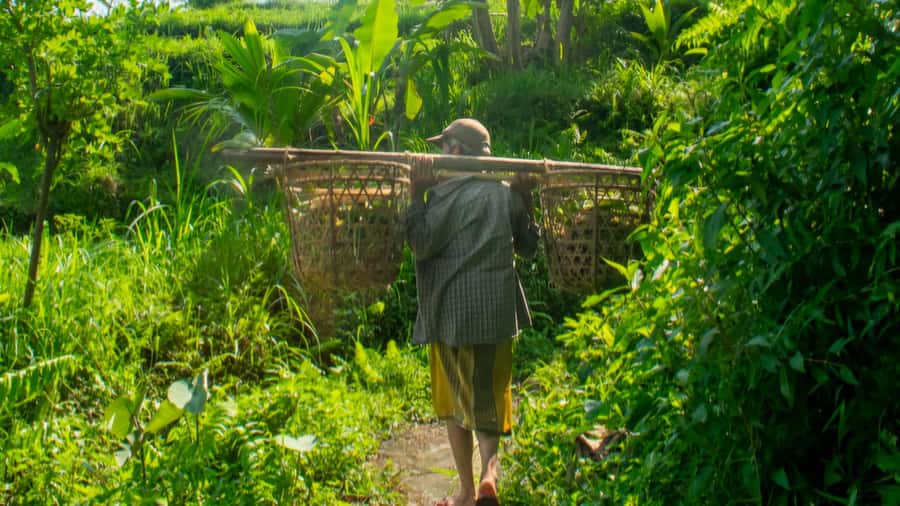
This trek is built like a story you can walk through. Here’s what each segment tends to deliver, plus the trade-offs.
Pasar Sidemen market start (plus a quick shop stop)
Right away you transition from “I’m visiting” to “I’m moving with the village.” The short market stop gives you context: the food market feel, the pace of local errands, and that sense that Sidemen isn’t built for tourists first.
Practical tip: this is when you’ll want to double-check footwear and water access. Once you’re on the path and rice walls start showing up, it’s not a good time to realize your shoes have zero grip.
Hidden gem viewpoint/photo stop on the way up
After the market, the route moves toward higher ground. There’s a photo stop with guided walking and scenic views, around 35 minutes in this middle stretch, where you start getting terrace angles from farther out.
This is where you’ll want to pause and look in both directions: back toward the village streets you just left, then out over the terraces. The point isn’t only the view—it’s seeing the pattern of irrigation and how plots relate to each other.

Jembatan Kuning Tukad Yeh Unda: crossing the hanging bridge
Next comes Jembatan Kuning Tukad Yeh Unda, a 10-minute bridge stop for photos and a quick look around. The bridge is made of wood and it’s reportedly usable for both humans and motorbikes—which tells you this is an everyday route, not a staged attraction.
If you’re nervous about heights, treat this part like a slow step-by-step moment. The bridge is short, but it’s a “attention required” segment, and that’s exactly why it’s memorable.
Dukuh village pass-through: temples and street ups and downs
You’ll then spend time around Dukuh village, about 20 minutes. This section is more about lived-in detail—passing through village areas and seeing small temples used for local prayers.
One subtle benefit here: village sections break up the walking so it doesn’t feel like endless flat fields. The trade-off is that this stretch can include more up-and-down movement, so it’s better suited to people who don’t mind mild stair-like effort.
Babakan Dukuh rice terraces: your longest “look and walk” section
The biggest scenic segment is Babakan Dukuh Rice Terrace, a 45-minute stretch. Expect photo opportunities, guided walking, and time to take in viewpoints from close enough to appreciate the work, but far enough to understand the terrace structure.
This is also the part where attention to footing really counts. Some narrow rice paths can feel tighter than you’d expect, and the edges can be uneven. You’ll often see people working in different stages—plowing, cultivating, planting, and harvesting—so the terraces aren’t frozen. They’re active.
Subak irrigation and Mount Agung: the story your guide turns into walking context
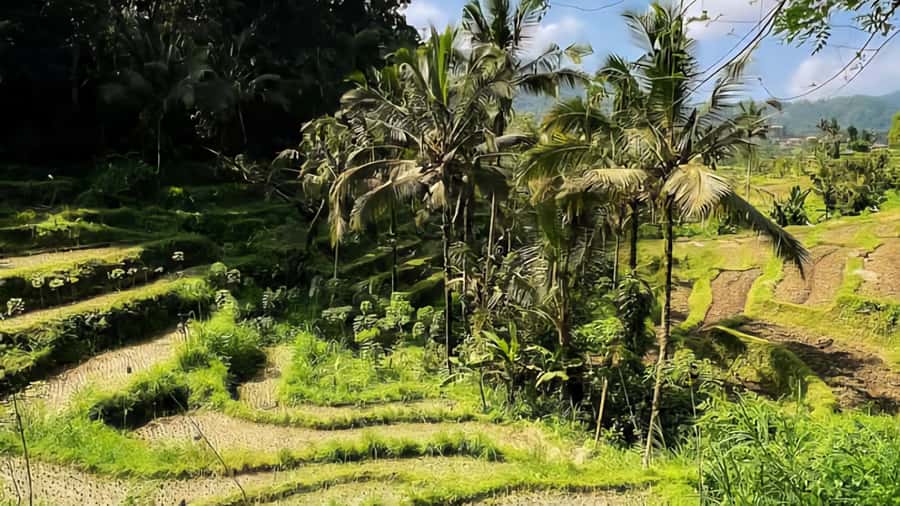
The heart of the tour is the way it connects water to farming. You’ll head in the direction of Mount Agung while following irrigation routes, and you’ll cross a path where water comes from, travels through, and supports the paddies you’re walking beside.
As you move, your guide explains the traditional irrigation system called Subak, including the Subak area of Ogang. The value here is simple: once you understand the water logic, the terraces start making sense as a whole engineering system, not just scenery.
This is also where your guide’s personality matters. Guides like Darya and Gede are described as friendly and engaging, with clear explanations about farming life, plus extra cultural context like religion and how local traditions influence daily routines. Adi is also noted for connecting terrace details to the market and broader local life. Translation: you don’t just get facts—you get answers, and you can ask questions without feeling rushed.
And if Mount Agung is visible during your trek, it turns the horizon into a living backdrop for everything you see in the fields. It’s the kind of view that makes you slow down naturally.
How hard is it, really? Footwear, heat, and balance on rice edges
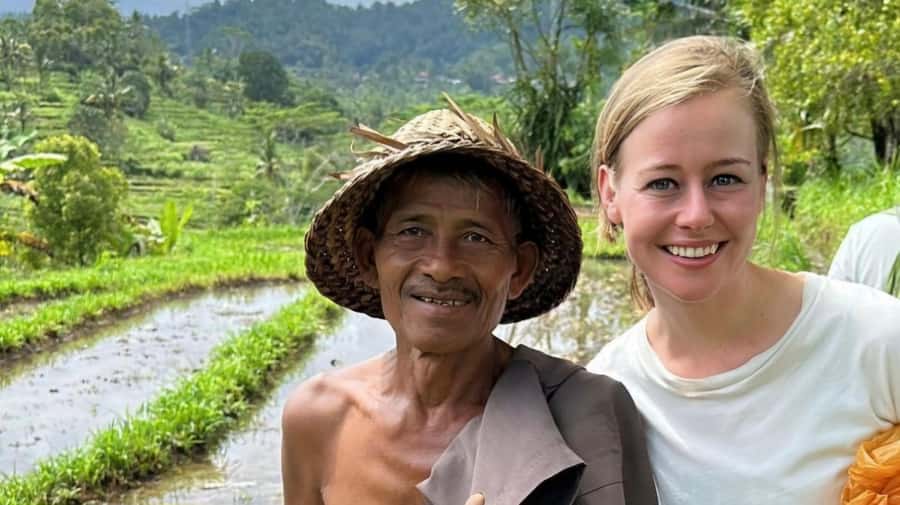
This is billed as a trekking tour with a 2-hour duration, and most people find it manageable. But “manageable” doesn’t mean “casual.” There are ups and downs through village streets and walking stretches that can include narrow terrace paths.
Bring comfortable shoes—and the instructions are firm: no sandals or flip-flops. Sunglasses, a hat, and sunscreen are also a must because you’ll get exposed sun while moving between villages and fields.
I’d also plan for insects and wet grass. Some paths can have tall vegetation with small bugs around. If you tend to get bitten, consider wearing long pants for protection and extra balance confidence.
Finally, balance helps. Some segments involve walking along narrow rice walls or tight foot routes. If you’re comfortable moving slowly and carefully, you’ll be fine. If you prefer wide, flat surfaces, this may feel more like a hike than a gentle stroll.
Where the small-group size shows up (and where it doesn’t)
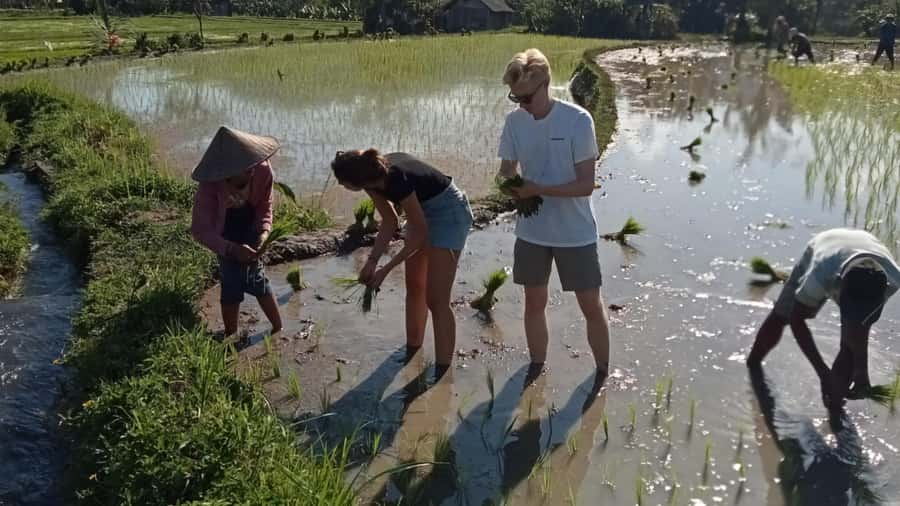
The group limit is 10 participants, which is a real quality lever. It keeps the walk calm and gives your guide room to steer the group toward better angles and to answer questions as they come up.
You also get a more human pace. The itinerary has multiple “photo stop / visit / pass by” moments, but because the group stays small, those moments feel like pauses—not like bus stops.
Included basics are straightforward: you get a guide and bottled water. That’s enough for a 2-hour walk, especially if you avoid overpacking. The tour doesn’t include hotel pickup, so you’ll start at the market and finish near Ogang.
Logistics at the end: finishing near Warung Ume Anyar and getting back
The trek finishes at Warung Ume Anyar in Ogang Village (it’s recommended as a place to take a break). After that, you’ll need to plan how you get back to your original meeting point.
You can walk back about 3 km, roughly 30–40 minutes, by following the main road. That’s the “no hassle, no ride needed” option if you still have energy and the weather isn’t unbearable.
If you want a ride, the guidance is to use Grab/Gojek car. A key note: Grab/Gojek bike isn’t available in the Sidemen area, so don’t plan on a quick bike shortcut.
If you travel with a driver, you can arrange pickup from the finish point around 2 hours after the start time. That works well if your driver already knows local timing and doesn’t mind waiting.
Value check: $14 for a guided rice-and-village walk in Sidemen
At $14 per person, this tour is good value—mainly because it’s not just a scenic walk. You’re paying for an English-speaking guide, bottled water, and time on a route that includes market context, irrigation education, village pass-through, and multiple viewpoint stops.
The “value math” improves when you consider what you’d otherwise do. If you try to DIY the route, you’d still need to understand Subak water systems, find the right terrace viewpoints, and figure out safe paths and timing. Here, you get the structure, the interpretation, and the guidance on where to stand for better photos.
Also, the small group limit helps. If you dislike crowded tours, this one’s built to feel quieter and more personal.
Who should book this, and who might want a different plan
Book this if you want:
- a guided look at how rice terraces are actually managed
- village detail beyond temples and viewpoints
- clear explanations in English
- a morning or daytime walk that’s active but not extreme
Skip or rethink if:
- you need a fully stroller-friendly or flat route (there’s walking up and down)
- you prefer sandals (you can’t wear them here)
- you hate narrow terrace paths or don’t do well with balance tasks
This is a great match for couples, solo travelers, and small friend groups who want authentic Sidemen life without turning the day into a complicated logistics puzzle.
Should you book Sidemen Trekking from a different perspective?
Yes, if you like your sightseeing with context. This trek earns its value by connecting rice terraces to Subak irrigation and village routines, with guides who can explain what you’re seeing as you walk. The Mount Agung viewpoint adds that “wow” moment that makes the effort feel worth it.
I’d book it with the right expectations: it’s a 2-hour walk with real footwork requirements, sun exposure, and narrow paths in places. If you bring the right shoes and move slowly when the terrain tightens, you’ll get a genuinely memorable Sidemen morning.
FAQ
How long is the Sidemen trekking tour?
The duration is 2 hours. Starting times vary, so you’ll want to check availability for the times offered.
Where do I meet the guide?
Meet at Pasar Sidemen (Sidemen Traditional Market) on the main street. Look for the shop sign UPA BOGA; when you arrive, the guide will come over to you.
Where does the tour end, and how do I get back?
The tour ends at Warung Ume Anyar Restaurant in Ogang Village. You can walk back about 3 km (around 30–40 minutes) along the main road, or arrange a Grab/Gojek car. Grab/Gojek bikes aren’t available in the Sidemen area.
Is hotel pickup and drop-off included?
No. Hotel pickup and drop-off are not included.
Are groups small, and is the guide in English?
Yes. The group is limited to 10 participants, and the live tour guide speaks English.
What should I wear or bring?
Bring comfortable shoes (hiking shoes are fine), sunglasses, a hat, and sunscreen. Sandals or flip-flops are not allowed.
Can I cancel and get a refund?
Yes. You can cancel up to 24 hours in advance for a full refund.
If you want, tell me your travel month and whether you’re starting early or later. I can help you choose the best timing based on the market opening window.