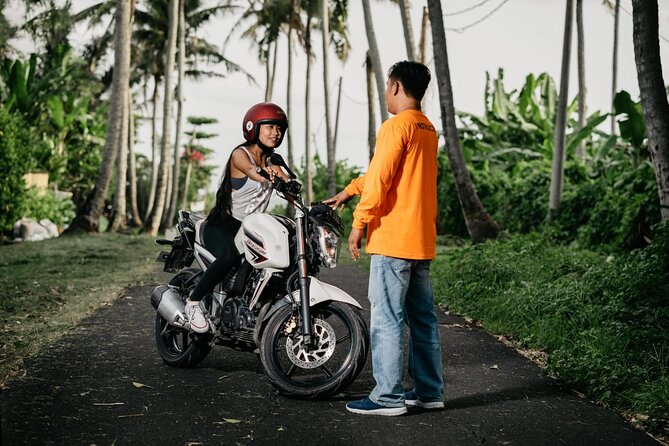
Two hours can change your Bali ride. This manual motorbike lesson in Canggu turns first-gear panic into a calmer plan, starting on a quiet village street before you head out to practice. It’s a private session, built around theory, slow skill drills, and then street work once you’re ready.
I really like how the class is structured. You get a basics-first approach: clutch and gears, hill starts, and emergency braking are taught before you do anything more “real road.” You also get practical add-ons like knee and elbow protectors, plus a helmet and bottled water, so you’re not hunting gear on your own.
One thing to think about: this is not a scooter-only class. The lesson is manual, and you’re required to have experience riding a scooter and to have a valid license. If you’re missing either, you’ll likely spend the session trying to catch up instead of building confidence.
In This Review
- Key highlights you’ll feel fast
- Why a Canggu manual lesson is such a smart move
- Meeting point, timing, and the practical setup
- What happens during your 2 hours (the real flow)
- The skills that matter most: clutch, gears, hill starts, emergency braking
- Why learning on a quiet street first is not “small detail”
- Gear and safety: what’s included (and what that signals)
- Price and value: what $35 buys you in Bali terms
- Who this lesson fits best (and who should think twice)
- Booking, weather, and timing: small things that affect your success
- Should you book Canggu Motorbike Lessons?
- FAQ
- Where is the meeting point for Canggu Motorbike Lessons?
- What time does the lesson start?
- How long is the motorbike lesson?
- Is this lesson for a scooter or a manual motorbike?
- Do I need scooter riding experience?
- What do I get included in the price?
- Do I need a valid license?
- Is it a private lesson or shared with other people?
- What happens if the weather is bad?
Key highlights you’ll feel fast
- Manual lesson, not a scooter refresher: clutch, gears, and hill starts are the focus.
- Theory first, then controlled practice: you won’t rush onto a street until you’re ready.
- Safety gear included: helmet, knee protectors, and elbow protectors are part of the price.
- Private session: it’s just your group, with breaks allowed if you need them.
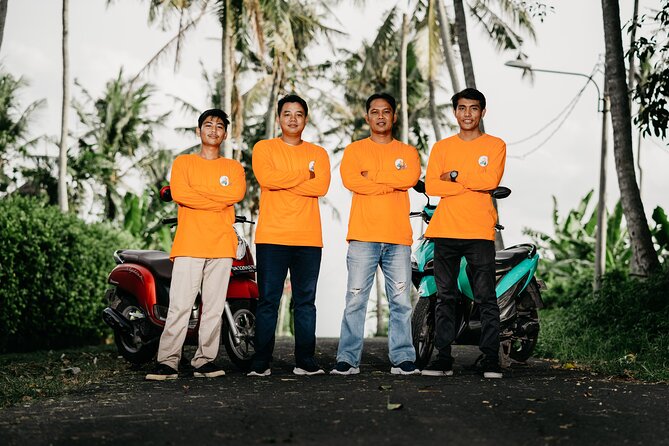
- Instructors praised for reassurance: names like Rico, Dino, and Gede are associated with calm, slow training.
Why a Canggu manual lesson is such a smart move
If you’ve spent any time around Bali, you’ve probably noticed the same pattern: lots of two-wheelers, lots of motion, and not a lot of patience for beginners. That’s exactly why learning on a manual motorbike in a controlled way matters. Riding a manual isn’t just “holding the bars.” It’s clutch timing, smooth gear changes, and knowing what to do when traffic decisions force you to brake right now.
This lesson starts with the reality that you need confidence, not just instructions. You meet on a quiet village street, so you can focus on your hands and feet without feeling like you’re already in the busiest chaos. Then the training moves in stages: theory about how the bike works, a foundation of core skills, and street practice only when you’re comfortable.
There’s also a big value win here: the session is private. At $35 per person for about two hours, you’re paying for time and attention. In a place where group riding lessons can feel like you’re waiting your turn, private coaching is easier on your nerves and better for your progress.
You can also read our reviews of more tours and experiences in Seminyak.



Meeting point, timing, and the practical setup
The lesson begins at 9:00 am and ends back at the meeting point. The start location is listed as C.S.L Meeting Point, 94GX+FX7, Canggu, Kuta Utara, Badung Regency, Bali 80351, Indonesia. Even though the experience is described with Seminyak as the location, the actual meeting point is in Canggu, which is close enough that it usually feels like the same area when you’re planning your day.
The experience is also described as a private tour/activity, meaning only your group participates. That matters because manual riding is the kind of skill where you benefit from a clear coaching voice right when you’re practicing the clutch bite or getting the first gear smooth.
You’ll get a mobile ticket, and you receive confirmation at booking time. On average, this gets booked about 5 days in advance, so if you’re riding during a tight itinerary, it’s wise to lock it in sooner rather than later.
One more practical detail: you’ll be starting from a “quiet village street” and building from there. That’s not just a nice setting—it helps you learn without constant distractions, and it reduces the chance you’ll freeze while you’re still trying to remember what the clutch does.
What happens during your 2 hours (the real flow)
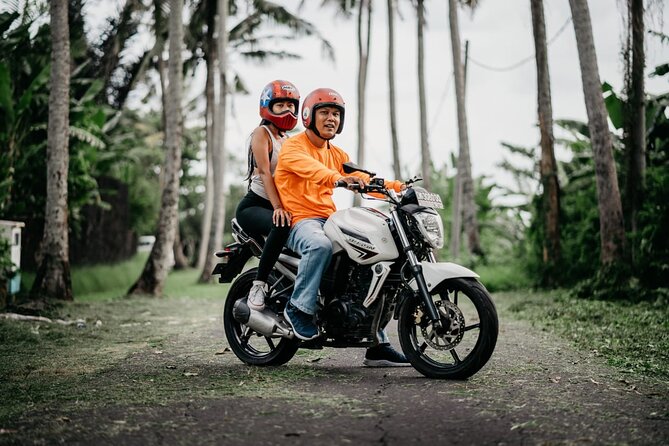
The lesson is built like a progression, not a one-shot “good luck” ride. Here’s the flow you should expect, in plain language:
1) Theory about the motorbike
First, you get a theory segment explaining how the motorbike works and what the main parts do. It’s not presented as a mechanics class. The goal is simple: you should understand what controls what, so the rest of the session makes sense fast. For a manual, that mental map is huge. If you don’t know what you’re trying to feel—clutch engagement, gear changes, throttle timing—you’ll waste practice time.
2) Core basics in training mode
Next comes the hands-on portion where you practice the fundamental movements. The lesson specifically calls out core skills like:
- using the clutch
- working through gears
- practicing hill starts
- learning emergency breaks
You’ll also do the basic setup needed to move smoothly without sudden jolts. The goal is that you can control the bike instead of reacting to it.
3) Checks for readiness
Only once you’re “completely confident” does the lesson continue onto a street. This is a key part of the value. Many beginner lessons jump you too quickly into real riding. Here, the instructor’s job is basically to confirm you can handle the key actions before traffic-style situations.
4) Street practice
When you’re ready, you move into street practice. This is where the training you’ve done—clutch timing, gear coordination, braking—gets tested in a more realistic setting.
5) Breaks if you need them
You can take break time as needed. I like that this isn’t treated as a weakness. Riding skill builds through repetition, and repetition breaks down when you’re stressed or tired. Short pauses can help you reset your focus and come back with better control.
The skills that matter most: clutch, gears, hill starts, emergency braking
Let’s talk about the specific skills the lesson emphasizes, because these are exactly the parts that separate confident riding from white-knuckle riding.
Clutch control
A manual bike isn’t controlled by the throttle alone. The clutch is the steering wheel for your smooth starts. In a beginner situation, the most common mistakes are stalling, grabbing too sharply, or jerking forward when you release the clutch. A good lesson forces you to feel the engagement point repeatedly until it becomes familiar.
In this class, clutch training is named right in the outline, which tells you they’re not skipping the hardest part. If your scooter background already gives you balance, the clutch will be the new skill you need to “install” into your muscle memory.
Gear shifting
Gears are where manual riding becomes real. It’s one thing to roll forward. It’s another to shift smoothly without over-revving or dropping the bike into a rough stall. When gears are taught early, you’re learning how to coordinate throttle, clutch, and gear changes together.
Hill starts
Hill starts are a high-stakes beginner moment, because you’re learning to prevent rollback while managing clutch and power. Even if your riding plans in Bali aren’t all on hills, you’ll encounter slopes and ramps. Hill-start practice is a confidence builder because it prepares you for situations that can otherwise feel scary.
Emergency braking
Emergency braking instruction is especially valuable in Bali, where traffic decisions can feel fast and unpredictable. Even though you can’t control other people’s actions, you can control your braking technique. Practicing emergency breaks gives you a response plan, not just a hope.
If you’re comparing lessons, I’d choose the ones that name these exact skills. This one does.
Why learning on a quiet street first is not “small detail”
The meeting location is described as a quiet village street. That sounds like a minor setting choice, but it has big effects on how you learn.
When you start in a calmer space, you can focus on the most basic question: can you control the bike without thinking about everything else at once? Manual riding demands attention. Your brain needs time to map the sequence: clutch in, engage, start moving, shift, and keep balance.
Then, when you transition to street practice, you’re doing it with muscle memory already in place. That’s what makes the session feel like training instead of improvisation.
This “stage gate” approach—basics first, street only after readiness—also helps you avoid the typical beginner spiral. You don’t start by failing publicly in traffic. You start by practicing privately (within the context of your group), building a feel for the controls, then moving up.



Gear and safety: what’s included (and what that signals)
This lesson includes:
- a motorbike and helmet
- knee and elbow protectors
- bottled water
That’s a strong package for $35. You’re not just paying for an instructor. You’re also paying for the safety setup and the equipment needed to practice. Knee and elbow protectors matter because they change your body confidence. They also give you permission to practice more without worrying as much about “what if I slip.”
The helmet is required and included, which is good because helmets in Bali aren’t always the same quality from place to place. Having the right gear supplied makes the session smoother from minute one.
You still need to bring yourself and your readiness. The experience notes a moderate physical fitness level. Also, it says travelers should have a valid license. So while the gear is handled, the responsibility to meet legal basics sits with you.
Price and value: what $35 buys you in Bali terms
At $35.00 per person for roughly 2 hours, this lesson prices like a practical skills class, not a fancy outing. The value comes from two things:
First: you’re learning manual riding basics step-by-step.
Many casual rental experiences focus on getting you moving, not getting you controlled. This lesson focuses on clutch, gears, hill starts, and emergency braking. Those are the exact skills you need if you want to ride with less fear.
Second: it’s private.
A private lesson makes the time count. If there’s just your group, the instructor can adjust pacing. That matters with manual riding because everyone picks up clutch timing at a slightly different speed.
Also, you’re provided protective gear and water. That reduces the small annoyances that can add up on a day with multiple activities.
One caution on value: this isn’t meant to convert people who are starting from zero on motorcycles. The requirement says you should already have experience riding a scooter. If you don’t, you may not get the full value because the manual basics will be harder to learn quickly.
Who this lesson fits best (and who should think twice)
This is best for you if:
- you already ride a scooter and want to graduate to a manual bike
- you want a structured approach (theory, basics drills, then street work)
- you prefer private coaching
- you want direct practice of real riding skills like hill starts and emergency braking
This is a tougher fit if:
- you don’t have scooter experience yet (manual is a bigger step)
- you don’t have a valid license
- you’re unlikely to manage moderate physical effort (the session involves active bike handling and practice)
It’s also worth noting something the reviews hint at through the instructor names. People seem to value instructors who teach slowly and reassure you when you’re nervous. Names like Rico, Dino, and Gede show up in strong feedback for calm, confidence-building instruction. So if you’re the type who gets tense when learning something new, that teaching style is likely part of what you’re paying for.
Booking, weather, and timing: small things that affect your success
This experience requires good weather. If it’s canceled due to poor weather, you’ll be offered a different date or a full refund. That matters for a riding lesson because wet roads make practice less about skill learning and more about survival mode.
Free cancellation is allowed up to 24 hours in advance for a full refund, and changes within 24 hours aren’t accepted. If you’re traveling with variable plans, aim to book with enough buffer that you’re not forced to commit to a specific day far in advance.
Also, confirmation comes at booking time, and the lesson starts at 9:00 am. Early starts are common for riding lessons because the conditions are usually more manageable. Plan to arrive with time to settle in rather than rushing.
Should you book Canggu Motorbike Lessons?
I’d book it if you meet the prerequisites and want real confidence-building. The manual focus, the staged progression (basics before street), and the inclusion of safety gear make this feel like a serious skills lesson rather than a casual try-it ride.
Skip it or think twice if you don’t already ride a scooter. Since the class assumes scooter experience, you’ll likely spend precious practice time learning too many fundamentals at once—clutch and gears on top of basic two-wheeler handling.
If you’re ready for that next step, this is one of the more practical ways to learn manual riding in Bali. You leave with a plan for clutch, gears, hill starts, and emergency braking—skills that keep you safer when roads get busy.
FAQ
Where is the meeting point for Canggu Motorbike Lessons?
The meeting point is listed as C.S.L Meeting Point, 94GX+FX7, Canggu, Kuta Utara, Badung Regency, Bali 80351, Indonesia.
What time does the lesson start?
The start time is 9:00 am.
How long is the motorbike lesson?
The duration is about 2 hours.
Is this lesson for a scooter or a manual motorbike?
It’s a manual motorbike lesson, not a scooter lesson.
Do I need scooter riding experience?
Yes. The lesson requires experience riding a scooter.
What do I get included in the price?
Included are the motorbike and helmet, bottled water, and knee and elbow protectors.
Do I need a valid license?
Yes. Travelers should have a valid license.
Is it a private lesson or shared with other people?
It’s a private tour/activity. Only your group will participate.
What happens if the weather is bad?
The experience requires good weather. If it’s canceled due to poor weather, you’ll be offered a different date or a full refund.