Laugh, chop, and eat Balinese breakfast magic. The class with Chef Bagus turns a morning into a working kitchen lesson, with 10 traditional dishes and a group meal you cook and eat right there. It’s upbeat, hands-on, and built for real food people, not just show-and-tell tourists.
I also like the market tour piece, because you’re not guessing where flavor comes from. You walk through fresh ingredients and then cook with what you picked, which makes everything taste more confident.
One consideration: the market visit doesn’t always play out exactly as described, so don’t treat it as your only market moment on Bali. If you care about markets, keep some flexibility in your schedule.
In This Review
- Key highlights you’ll feel fast
- Chef Bagus makes Balinese cooking practical (and funny)
- The morning timeline: when it starts, ends, and how long you’re gone
- Market tour: useful shopping, with one small reality check
- What you’ll cook: 10 Balinese dishes, including the ones you came for
- Transportation value: pickup and drop-off that makes sense
- Inclusions: what your $51.29 is really paying for
- The real learning: techniques you can use back home
- What to bring (and what to skip)
- Who should book Chef Bagus’ class in Kuta
- A quick heads-up on alcohol
- Should you book it? My honest call
- FAQ
- What time does the cooking class start and end?
- Is hotel pickup and drop-off included?
- What if my hotel is in Sanur, Nusa Dua, Uluwatu, or Pecatu?
- Do I get to visit a local market?
- How many dishes will I learn to cook?
- What dishes are mentioned as part of the menu?
- Is alcohol included?
- What’s the maximum group size, and do children need an adult?
- Is there a cancellation refund?
Key highlights you’ll feel fast
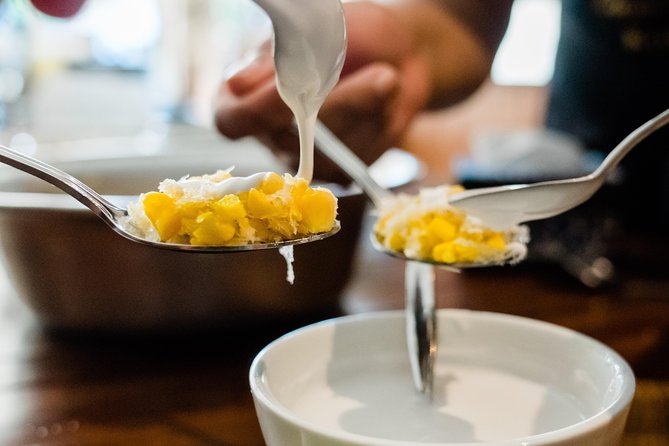
- Chef Bagus sets the tone: playful energy, but still structured enough to learn properly
- 10 traditional dishes with technique, not just recipes to copy
- Market tour for ingredients so your cooking has a real “why”
- Small group size (max 20) which helps you stay involved
- Free pickup and drop-off in key Kuta/Legian/Seminyak areas (with a clear pickup window)
Chef Bagus makes Balinese cooking practical (and funny)
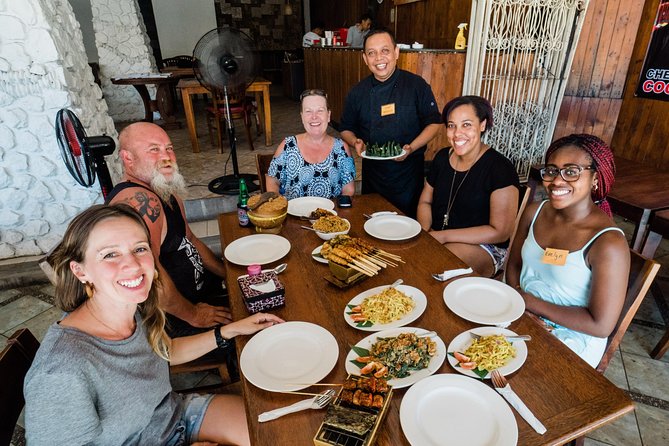
This is a Balinese cooking class that treats food like a skill. You’ll learn how dishes come together—spice mixes, texture, balance—so you’re not just collecting recipes you’ll never use.
A big reason people enjoy it is Chef Bagus. The tone is lively, with humor and a lot of energy from him and the team. Even if you’re not a confident cook, you’ll feel guided, and you’ll keep moving through tasks instead of standing around.
What I like most is the way the lesson is built around getting your hands dirty early. You’re cooking during the class, then eating what you made. That turns the experience into something useful, not just a meal you bought.
And yes, the food is the point. Expect classics like sate lilit (minced seafood satay), plus dishes that rely on Bali’s flavors—fresh herbs, fragrant spice blends, and smart wrapping and grilling techniques.
You can also read our reviews of more tours and experiences in Kuta.



The morning timeline: when it starts, ends, and how long you’re gone
The day is short, but it has a clear rhythm. Plan for a half-day experience with a full cooking-and-eating slot.
Here’s the schedule you should map to your morning:
- 8:30 am: cooking class begins
- 12:00 pm: class ends, and you enjoy what you cooked
- 1:00 pm: drop-off back to your hotel area
Pickup timing depends on where you stay, so your “start time” is really about the pickup window:
- Sanur, Nusa Dua, Kerobokan, Canggu: pick-up around 7:30 am
- Seminyak: around 7:40 am to 7:50 am
- Kuta, Legian: around 7:50 am to 8:00 am
One practical tip: the instructions ask everyone to be at the restaurant by 8:15 am, especially if you’re not using pickup or you didn’t include your hotel name. That’s early enough to avoid delays, but late enough to still sleep in a bit—if you’re organized.
Market tour: useful shopping, with one small reality check
The class includes a local market tour to source ingredients for the meal. That’s a smart setup. You’ll see and learn what goes into Balinese cooking—fresh produce, herbs, and the building blocks of flavor.
In a perfect world, you leave the market tour with ingredients you can point to and say: this is what makes the dish taste like Bali. Then the kitchen work reinforces it, because you cook with those same items.
Here’s the reality check: at least once, the market stop didn’t happen as expected. So if you’re booking this specifically for a market wander, keep your expectations flexible. If you really want guaranteed market time, I’d treat this as a bonus, not your main market plan.
What you’ll cook: 10 Balinese dishes, including the ones you came for
You learn 10 traditional Balinese dishes. The exact set is described with examples, and they’re the kinds of dishes that teach important techniques.
Some of the highlights mentioned include:
- Sate lilit: minced seafood satay, typically formed and cooked so you get flavor in every bite
- Chicken in banana leaf: a classic cooking method that keeps everything moist and fragrant
- Peanut sauce: a Bali-friendly flavor base that teaches you how to balance richness
- Green papaya salad: fresh, crunchy, and sharply seasoned—great for learning contrast
Even if you don’t memorize every ingredient ratio, you’ll come away with patterns: how sauces thicken, how seasonings behave, and how Bali uses freshness and fragrance to build flavor without relying only on heat.
Also, cooking classes can be either “watch and snack” or “work and eat.” This one is clearly the second. You may prepare different parts in turns—small teams handle sections of the meal, then everyone eats together. That keeps it social and keeps you involved.
And portion-wise, you should plan for a real lunch, not a tiny tasting. People note that the meal is more than enough. So skip the big breakfast before you go.
Transportation value: pickup and drop-off that makes sense
If you’re staying in Kuta, Legian, Seminyak, or Canggu, pickup and drop-off is included. That matters more than it sounds. Morning traffic can turn a 3-hour class into a half-day slog if you’re traveling on your own.
If you’re in Sanur, Nusa Dua, Uluwatu, or Pecatu, pickup is still available but with an additional charge of IDR 75,000. Before booking, check where you’re actually staying (not just the neighborhood name people throw around). It affects the morning timing and the cost.
One small plus: the meeting point is near public transportation. So if you’re the kind of person who hates waiting around in cars, you have a fallback.





Inclusions: what your $51.29 is really paying for
The price is $51.29 per person, and it’s not just for “a seat in a class.” Your money covers a full food experience:
Included:
- Hotel pickup and drop-off (for Kuta/Legian/Seminyak areas)
- Welcome drink and snacks
- Market tour
- Recipes (so you can recreate dishes later)
- Certificate
- Lunch (the meal you cook)
- Bottled water
That’s solid value for a short morning. You’re getting transport, ingredients, instruction, and a full meal—so the cost isn’t competing with paying for all those things separately.
Also, the group size is capped at 20 travelers. Smaller groups usually mean more attention and more chances to participate, and in a cooking class that’s everything.
The real learning: techniques you can use back home
Cooking classes often fail on one simple thing: you learn “what” but not “how.” This format leans toward technique.
When you’re making dishes like sate lilit and chicken in banana leaf, you’re learning processes:
- how spice blends are used (and why)
- how ingredients are prepared for texture
- how cooking methods change flavor and moisture
- how sauces and salads bring contrast to heavier dishes
And because you’re tasting along the way, you can adjust. You’ll notice when something needs more balance, or when your texture is off. That’s the part you’ll remember later when you cook at home.
Bring this mindset with you: don’t aim for perfection. Aim for understanding. If you can recreate the method, the rest gets easier.
What to bring (and what to skip)
This is a morning activity, and you’ll be cooking. The most practical “bring” is simple: wear clothes you’re okay with getting a little messy.
Also, don’t eat a big breakfast beforehand. The class includes lunch, and people specifically point out that it’s easier to enjoy the meal if you don’t arrive too full. You want your appetite for what you cook.
You’ll also have bottled water provided, so you don’t need to haul extra hydration, but it’s still smart to have a normal small day bag for your phone and essentials.
Who should book Chef Bagus’ class in Kuta
This is a great fit if you:
- want a hands-on morning activity instead of a long museum-style tour
- like cooking and want recipes plus technique you can actually use
- enjoy people-energy in a class setting (Chef Bagus brings humor and interaction)
- want something that ends with a proper lunch, not a snack and a goodbye
It can also suit mixed ages because the class format is built around group participation. Just note: children must be accompanied by an adult, and the group max is 20, so families often get a manageable experience.
A quick heads-up on alcohol
Alcoholic beverages are not included. The minimum age to drink alcohol is 21. So don’t build your plan around ordering drinks during the class.
Should you book it? My honest call
If you want a Balinese cooking class that feels fun, structured, and food-focused, I’d book this. The combination of Chef Bagus, a real ingredient hunt, and cooking 10 traditional dishes gives you an experience with payoff.
Also, the price feels fair because it includes transport (where applicable), the market stop, recipes, lunch, and even a certificate. For a morning that starts early and ends with a full meal, it’s a strong value play.
But if your top priority is a guaranteed market walk as your main Bali market experience, add a little flexibility. The market tour is listed as included, but you should assume the exact flow could change.
If you want hands-on cooking with good energy and a meal at the end, this one belongs on your shortlist.
FAQ
What time does the cooking class start and end?
The class starts at 8:30 am, and it ends around 12:00 pm. Drop-off is scheduled for around 1:00 pm.
Is hotel pickup and drop-off included?
Yes, hotel pickup and drop-off are included for the Legian, Kuta, and Seminyak areas. Pickup is also free from the Canggu area.
What if my hotel is in Sanur, Nusa Dua, Uluwatu, or Pecatu?
Pickup is available, but there’s an additional charge of IDR 75,000.
Do I get to visit a local market?
Yes. A market tour is included, and it’s part of the experience before you cook.
How many dishes will I learn to cook?
You’ll learn to cook 10 traditional Balinese dishes.
What dishes are mentioned as part of the menu?
Examples include sate lilit (minced seafood satay), chicken in banana leaf, peanut sauce, and green papaya salad.
Is alcohol included?
No alcoholic beverages are included. The minimum age to drink alcohol is 21.
What’s the maximum group size, and do children need an adult?
The class has a maximum of 20 travelers. Children must be accompanied by an adult.
Is there a cancellation refund?
Yes. You can cancel for a full refund up to 24 hours before the experience’s start time.