Two temple days, one smooth route. This private Bali tour pairs hotel pickup with air-conditioned transport, steering you from Tirta Empul and the Tegalalang rice terrace to Tanah Lot, Uluwatu, Nusa Dua, and an evening kecak fire dance. It’s door-to-door service, not a hop-on hop-off plan.
I love the hands-on feel of the art villages—Tohpati for batik, Celuk for gold and silver—plus the spiritual stop at Tirta Empul, where the sacred spring is used by Balinese for bathing. And the guidance can be excellent: names like Dede, Yanik, and drivers such as Ady and Ekka show up with a common thread—friendly service, solid English, and clear explanations of what to do in temple settings.
One possible drawback is the pace. Even when stops are short, they’re tightly scheduled, so you’ll be moving again before you fully settle into any single place. If you’re craving slow travel and long wander time, this two-day circuit may feel like a lot of highlights.
In This Review
- Key things to know before you go
- Why this 2-day Bali temple-and-crafts tour is such a smart setup
- Day 1: Tohpati batik, Celuk silver and gold, Tirta Empul, and the Batur-to-Tegalalang route
- Tohpati Village (batik) — first stop, easy start
- Celuk Village (gold and silver) — watch craft in motion
- Puseh Batuan Temple area — painting alongside the temple
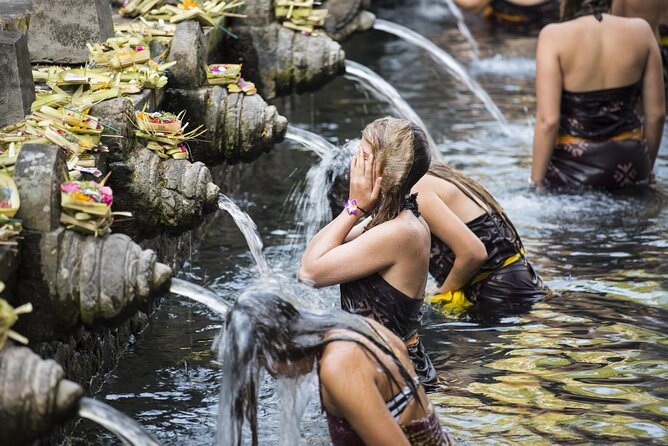
- Tirta Empul Temple — the holy spring bathing ritual
- OKA Agriculture Bali coffee plantation — learn the process and sample
- Mount Batur / Kintamani — caldera views in limited time
- Tegalalang Rice Terrace — the subak irrigation system and the postcard look
- Day 2: Taman Ayun, Banyumala, Ulun Danu Bratan, plus the coast at Tanah Lot and Uluwatu
- Taman Ayun Temple — the royal garden temple with a moat
- Banyumala Twin Waterfalls — a short walk to swimable scenery
- Ulun Danu Bratan Temple — water temple on Lake Beratan
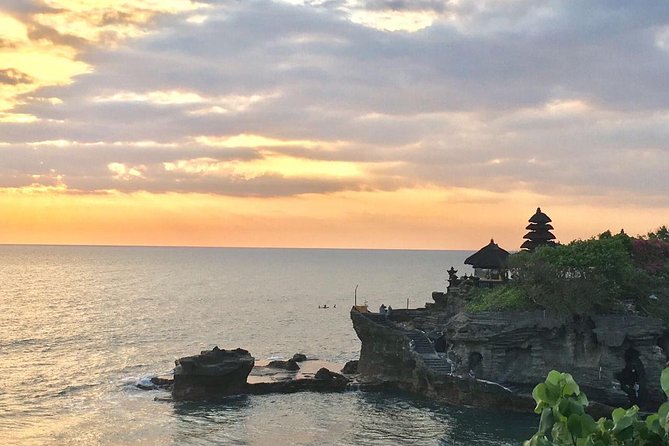
- Tanah Lot and Uluwatu — coast temples with big atmosphere
- Nusa Dua beach time and the kecak fire dance finish
- How the crafts and coffee stops add real value (not just shopping time)
- The private guide difference: English, safety, and temple etiquette that actually helps
- Price and value: what’s included, what costs extra, and why it still can be a good deal
- Who this tour fits best in real life
- Should you book this Bali 2-day private sightseeing tour?
- FAQ
- What does the tour price include?
- Is hotel pickup and drop-off included?
- Is the tour truly private?
- Are food and drinks included?
- Are temple entrance tickets included?
- Do I need to pay for the dance?
- Is there a minimum number of people required?
- How early do most people book this tour?
- What is the cancellation policy?
Key things to know before you go
- Private door-to-door transport: hotel pickup and drop-off plus air-conditioned minivan for both days.
- Art villages you can actually browse: batik at Tohpati, jewelry and metalwork in Celuk.
- Temple visits with practical guidance: your guide can explain temple protocols so you know how to behave.
- Signature Bali views in two bites: Mount Batur/Kintamani caldera views and the Tegalalang subak irrigation terraces.
- A coast finale with evening performance: Nusa Dua beach time paired with kecak fire dance (dance ticket not included).
- Water scenery on day two: Banyumala Twin Waterfalls plus a lake-temple stop at Ulun Danu Bratan.
Why this 2-day Bali temple-and-crafts tour is such a smart setup
If it’s your first time in Bali, the big problem is decision overload. You can spend days researching temples, rice terraces, artisan villages, and beaches—then still miss the best combination because distances are real. This tour’s big value is that it strings together a very usable mix of inland and coastal Bali, in an order that makes sense for two days.
The timing also matters. The tour is built for approx. two-day sightseeing, using a private driver/guide and a dedicated vehicle. That means no waiting around for other people, and no figuring out transport between far-flung sites. You’re also not left to piece together entrance tickets from scratch because the package includes entrance tickets.
At about $86.67 per person for two days, the price feels fair when you consider what’s bundled: private guiding, air-conditioned transport, entrance tickets, and insurance (PLI). Your main extra costs are the basics you’d expect on any full-day plan—food and drinks, plus the dance ticket.
You can also read our reviews of more tours and experiences in Kuta.


Day 1: Tohpati batik, Celuk silver and gold, Tirta Empul, and the Batur-to-Tegalalang route
Day one is the “culture and scenery hits” day. You start in Bali’s craft villages, then move into one of the island’s most meaningful temples, and end with the classic rice-terrace view.
Tohpati Village (batik) — first stop, easy start
You’ll begin at Tohpati Village, known for batik. Plan for about 30 minutes here, and the admission is listed as free. This is a good opener because batik is easy to recognize, even if you’re not sure what to look for yet. Your guide can point out what makes one pattern or style different from another, and you can browse what’s being made.
Celuk Village (gold and silver) — watch craft in motion
Next is Celuk Village, famous for gold and silver. You’ll get to see the making process and view a wide range of items—from smaller pieces to more expensive jewelry. You’ll have about 30 minutes. The key benefit is that you’re not just looking at finished souvenirs. You’re seeing how the craft works, which is part of why this tour feels more “hands-on” than a standard temple-only day.
Puseh Batuan Temple area — painting alongside the temple
After Celuk, you’ll head to the Batuan area near Puseh Batuan Temple. The focus here is art painting, with about 30 minutes set aside and admission listed as free. If you like visual art, this is a nice shift from metals and textiles, and it helps you see Bali’s creative side as more than one craft.


Tirta Empul Temple — the holy spring bathing ritual
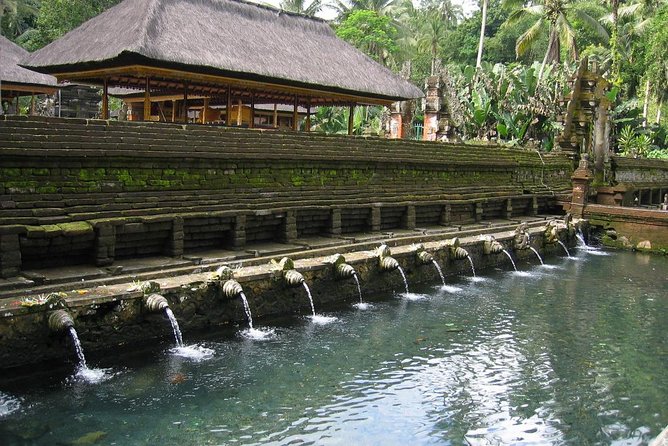
Then comes Tirta Empul Temple, also called the Spring Holy Temple, in Manukaya. You’ll spend about 1 hour here, and admission is included. The standout detail is the water source within the temple: Tirta Empul is where Balinese go to bathe in sacred waters.
This is the kind of place where having a guide makes the difference. You’re more likely to understand what you’re seeing and what’s appropriate. In practical terms, it turns a photo stop into a meaningful cultural moment.
OKA Agriculture Bali coffee plantation — learn the process and sample
You’ll continue to OKA Agriculture Bali in the Temen area for a coffee plantation visit. You’ll have about 30 minutes, and admission is listed as free. The plan is to learn the coffee-making process and sample a few different varieties. You might also be able to try luwak coffee, depending on what’s available at the time.
A coffee stop like this is useful on a temple day because it breaks up the pace with something lighter and sensory. It also gives you an easy “what did I learn today?” takeaway besides the views.
Mount Batur / Kintamani — caldera views in limited time
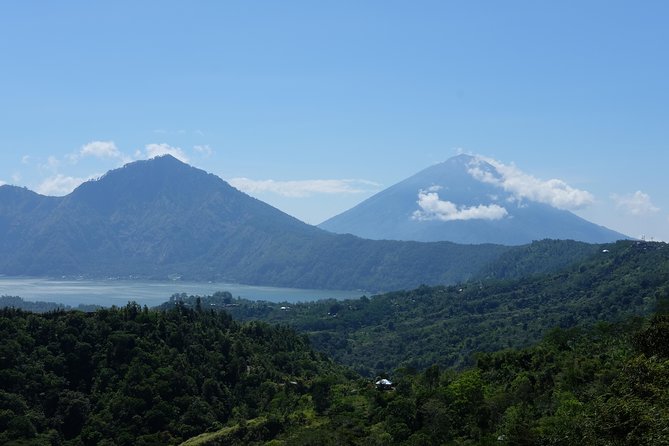
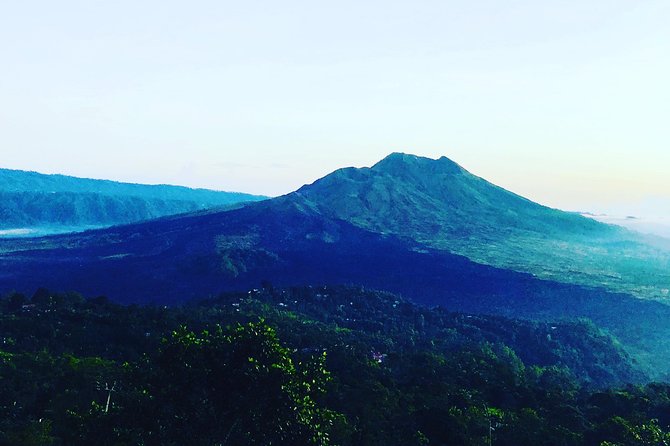
Next is Mount Batur, also known as Kintamani. You’ll spend about 30 minutes, and admission is included. This is a classic Bali viewpoint stop where the goal is the broader caldera view rather than hiking.
If clouds hide the view, you’ll still have a sense of why this region is so iconic—but it’s worth keeping expectations realistic. This is a quick look, not a long trek.
Tegalalang Rice Terrace — the subak irrigation system and the postcard look
Finally on day one, you’ll visit the Tegalalang Rice Terrace near Ubud. You’ll have about 45 minutes, and admission is included. This stop is famous for the traditional Balinese cooperative irrigation system called subak.
This is one of those places where you’ll understand the scene faster with a guide. It’s not just “pretty rice steps.” It’s a system tied to how water and farming work. By the time you leave, you’ll have context for what you’re seeing—not just a camera frame.
Your driver-guide returns you to your hotel after Tegalalang, which helps day one end cleanly.
Day 2: Taman Ayun, Banyumala, Ulun Danu Bratan, plus the coast at Tanah Lot and Uluwatu
Day two blends “water and gardens” with the coastal Bali most people picture on day one planning. It’s also the day where you’ll shift from inland temples toward the ocean.
Taman Ayun Temple — the royal garden temple with a moat
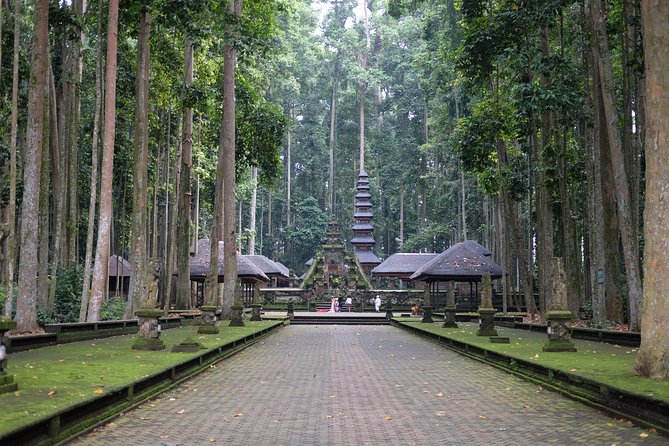
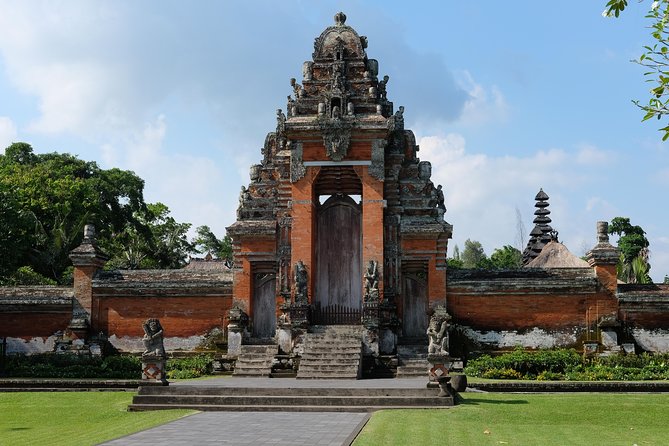
You start at Taman Ayun Temple, the royal family temple of the Mengwi Kingdom. It’s about 30 minutes and admission is included. The name translates to Beautiful Garden, and it was built in the 1600s. It’s surrounded by a moat, which gives the site a composed, almost self-contained feel.
This is a good temple choice for a second day because it’s different from the sacred-water theme of Tirta Empul. You’ll see how temple design varies across regions and kingdoms.
Banyumala Twin Waterfalls — a short walk to swimable scenery
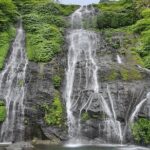
Next is Banyumala Twin Waterfalls. You’ll spend around 1 hour, with admission included. Access is a 10–15 minute walk from the parking area. The key feature here is the natural pool where you can swim, surrounded by green forest.
This stop works best if you like a little movement mixed into your sightseeing. It also offers a change of pace from stone temples and keeps the day from feeling like a nonstop photo route.
Ulun Danu Bratan Temple — water temple on Lake Beratan
After waterfalls, the tour heads to Ulun Danu Bratan Temple in Bedugul, located on Lake Beratan. You’ll have about 45 minutes, and admission is included. The temple is surrounded by mountains, and the area is known for cooler weather, plus it’s very popular for photos.
Even with limited time, this is one of those stops where the setting does half the work. You’re seeing a water temple in a dramatic setting, and it’s a strong contrast to the drier feel you may get at other coastal or lowland sites.
Tanah Lot and Uluwatu — coast temples with big atmosphere
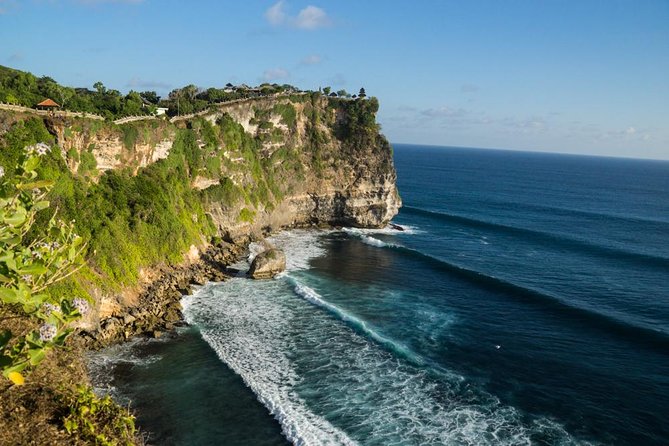
The second day also includes Bali’s famous coast temples: Tanah Lot and Uluwatu. These are the part of the plan that gets you out of the inland loop and into the ocean-and-cliffs Bali vibe.
Since the tour is private, the driver-guide can time things so you’re in the right place for the best viewing window. That flexibility is one reason a private tour often beats DIY if you don’t want to micromanage timing.
Nusa Dua beach time and the kecak fire dance finish
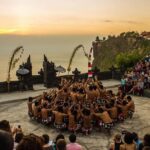
To round out day two, you’ll lounge on Nusa Dua beach and watch a kecak fire dance. Here’s the practical note: the package does not list the dance ticket as included. So budget for that separate cost if you want to guarantee seats.
This finish makes sense after two days of temples and craft. You get a calmer beach interlude, then an evening performance that feels like a cultural spotlight.
How the crafts and coffee stops add real value (not just shopping time)
This tour isn’t only about temples. The craft villages and coffee plantation are there for a reason: they give you a story beyond the buildings.
At Tohpati, batik is more than a souvenir pattern. You’re in the village setting, and you can connect designs to the craft process. At Celuk, seeing gold and silver work up close helps you understand why some pieces cost more than others, especially when you’re looking at the scale and detail.
Batuan adds painting, which rounds out the creative picture: textiles, metals, and visual art in one day. And the broader tour theme includes wood-carving too, which you can often spot in these craft-focused areas, with your guide pointing out what to look for.
The coffee stop, meanwhile, turns a common Bali attraction into something educational. You’re sampling different varieties after learning how coffee is processed. It’s a low-effort way to leave with a specific new knowledge hook.
The private guide difference: English, safety, and temple etiquette that actually helps
A private tour lives or dies by the guide. This one seems to do well here. Guides such as Dede and Yanik have been paired with drivers like Ady or Ekka, and the pattern is consistent: clear English, friendly interaction, and explanations that go beyond a basic description.
What I like about that approach is how it affects your experience at temples. When your guide explains cultural protocols, you don’t have to guess what’s allowed or how to move through sacred space. You can focus on observing and learning instead of worrying about accidentally doing the wrong thing.
Driving skills also matter on Bali. A private car means you’re not jumping between taxis while managing directions. You have one rhythm across both days.
Price and value: what’s included, what costs extra, and why it still can be a good deal
Let’s talk value in real terms.
Included in the tour:
- Private English-speaking driver/guide
- Private transport in an air-conditioned minivan
- PLI insurance
- Hotel pickup and drop-off (selected hotels)
- Entrance tickets
Not included:
- Food and drinks
- Souvenir photo services (sold separately)
- Ticket dance
So the math is mainly about whether you’d otherwise pay for all the entrances and accept the hassle of booking transport yourself. If you’d have to pay multiple ticket fees anyway, the fact that entrance tickets are wrapped into the tour price reduces friction and keeps day schedules smoother.
Also, you’ll want to note the minimum group size: a minimum of 2 people per booking is required. If you’re traveling solo, this can limit options.
Who this tour fits best in real life
This tour is a strong fit if:
- You want a classic Bali highlights sweep in two days without building your own route.
- You like mixing temples with scenic views and craft villages.
- You’d rather have one driver-guide handle the pace and explanations than manage everything yourself.
- You’re staying around Kuta and want easier logistics starting from hotel pickup.
It may be less ideal if:
- You hate an itinerary and prefer long, slow, unstructured wandering.
- You want deep time at one location (this tour works in shorter stop windows).
Should you book this Bali 2-day private sightseeing tour?
I’d book it if your goal is a clean, guided sampler of Bali: art villages first, then major temple stops, then the iconic rice terrace view, and finally the coast with beach time and kecak. The structure is designed to save you time and decision fatigue, and the private format gives your guide room to explain what you’re seeing.
Skip it if you’re the type who needs lots of quiet time in one place. This plan moves, and you only get short visits at most stops.
If you can handle a tight-but-fun pace, this is a practical way to see Bali’s best-known sides without getting stuck in logistics.
FAQ
What does the tour price include?
The price includes a private English-speaking driver/guide, private air-conditioned transport, PLI (public liability insurance), a 2-day private sightseeing tour, hotel pickup and drop-off for selected hotels, and entrance tickets.
Is hotel pickup and drop-off included?
Yes, hotel pickup and drop-off are included, but only for selected hotels.
Is the tour truly private?
Yes. It’s a private tour/activity, and only your group will participate.
Are food and drinks included?
No. Food and drinks are not included.
Are temple entrance tickets included?
Yes. Entrance tickets are included in the tour.
Do I need to pay for the dance?
Ticket dance is not included.
Is there a minimum number of people required?
Yes. A minimum of 2 people per booking is required.
How early do most people book this tour?
On average, it’s booked about 27 days in advance.
What is the cancellation policy?
Free cancellation is available. You can cancel up to 24 hours in advance for a full refund. Changes made less than 24 hours before the start time aren’t accepted, and refunds aren’t available if you cancel within 24 hours of the start time.