Cooking with Balinese herbs speeds up your flavor learning. I like the start at an organic farm backyard, where you choose fresh ingredients for your class, and I like that English-speaking chefs coach you step by step while you cook. It is the rare Bali activity that ends with you eating what you made, not just watching from the sidelines.
After a quick introduction to herbs and spices, you’ll move into an outdoor kitchen setting with a calm, garden-heavy feel. The meal is built around three classic dishes, and you get a recipe book so the flavors don’t vanish when you get back home. In the best sessions, chefs like Dewi and Melai add patience and laughs that make the learning stick.
Still, the whole experience is only 2 hours, and some ingredients are already pre-cut, so you won’t do every single task from scratch. If you want slow, hands-on practice for every step, you may wish you had more time.
In This Review
- Key highlights at a glance
- Where the class starts: the backyard organic farm to kitchen handoff
- Timing that fits your day: lunch at 11:00 or dinner at 17:00
- What you actually cook: spring rolls, chicken curry, and dadar bali
- Vegetable spring rolls: technique and texture first
- Chicken curry: the spice balance lesson
- Dadar bali: dessert that teaches a different side of cooking
- Meet the chefs: patient coaching that makes a difference
- Eating what you cooked: why the meal is part of the lesson
- Price and value: does $24 make sense?
- Practical tips so you enjoy the class more
- What to bring and wear
- Pickup, timing, and making it easy
- Language and comfort
- Who should book this class (and who might not)
- Should you book Cooking Class 3 Courses Balinese Dishes?
- FAQ
- What dishes are included in the class?
- How long is the cooking class?
- When does the class start?
- Do you pick ingredients before cooking?
- Is pickup included?
- Is the instruction in English?
- What’s included besides the food?
- What should I bring?
- Is it suitable for babies?
- Can I cancel and get a refund?
- Is reserve now, pay later available?
Key highlights at a glance
- Backyard organic harvest: Pick ingredients that match what ends up in your dishes
- Three Balinese classics: Vegetable spring rolls, chicken curry, and dadar bali
- Chefs guide, not just instruct: Patient teaching from local chefs, including Dewi and Melai
- Your meal is the finish line: Sit down and eat what you cook
- Take-home recipe support: A recipe book to help you repeat the dishes later
Where the class starts: the backyard organic farm to kitchen handoff
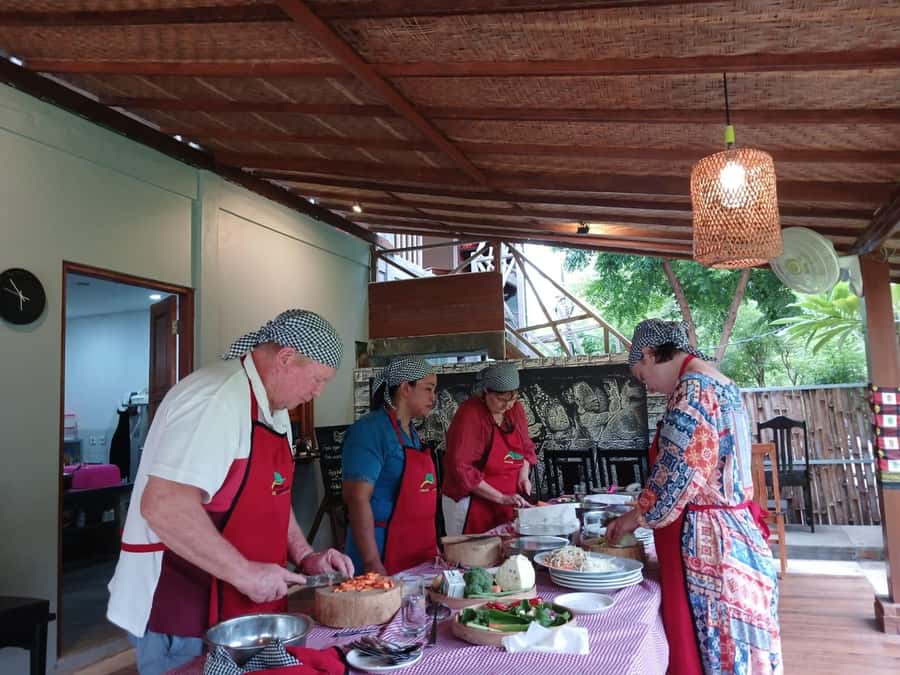
This class doesn’t start at a stove. It starts in the garden. You’ll visit the organic farm area at the backyard of the restaurant and accommodation, then pick fresh ingredients you’ll use in the kitchen. That first step matters more than it sounds because it links the dish to real Balinese cooking ingredients instead of a generic grocery-list lesson.
You’ll also get an early sense of the flavor logic. Before you cook, the chefs introduce the herbs and spices used in the recipes. You’re not just memorizing steps. You’re learning what each ingredient is doing in the final taste, so you can adjust later when you recreate the food at home.
The setting is part of the charm. Based on how people describe it, the cooking happens in an outdoor kitchen with a pretty garden atmosphere nearby. It keeps the mood relaxed and makes the class feel like a calm break from the traffic-and-tours rhythm that Bali can sometimes become.
One practical note: if you come ready to participate, you’ll get more out of this. The garden walk plus spice intro is short, but it sets the tempo for the actual cooking.
You can also read our reviews of more tours and experiences in Pemuteran.



Timing that fits your day: lunch at 11:00 or dinner at 17:00
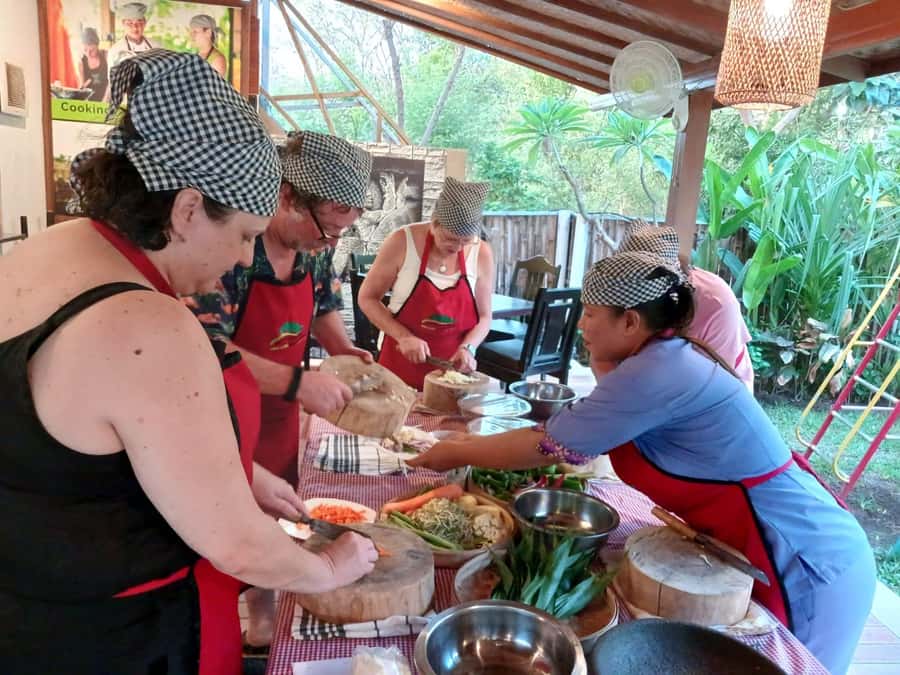
You can choose the 11:00 am start for lunch preparation or 17:00 for dinner prep. That choice helps you slot the class into almost any itinerary style, whether you prefer a lighter afternoon or a pre-dinner activity.
The total duration is 2 hours, so think of it like a focused workshop rather than a long meander around Bali. In practice, this means you’ll cover a lot of ground quickly: harvest or ingredient selection, spice talk, cooking for multiple dishes, and then eating together.
Pickup is included, which helps a lot if you’re staying in a hotel or villa that’s a bit spread out. You’ll be asked to wait in the hotel lobby or villa about 10 minutes before your scheduled pickup time, so build in a little buffer and don’t sprint out the door at the last second.
If you hate feeling rushed, aim for the schedule that matches your energy. A lunch class often works well if you want something productive earlier and then freedom later. A dinner class can feel especially satisfying because you end right where you started: hungry, then finished.
What you actually cook: spring rolls, chicken curry, and dadar bali
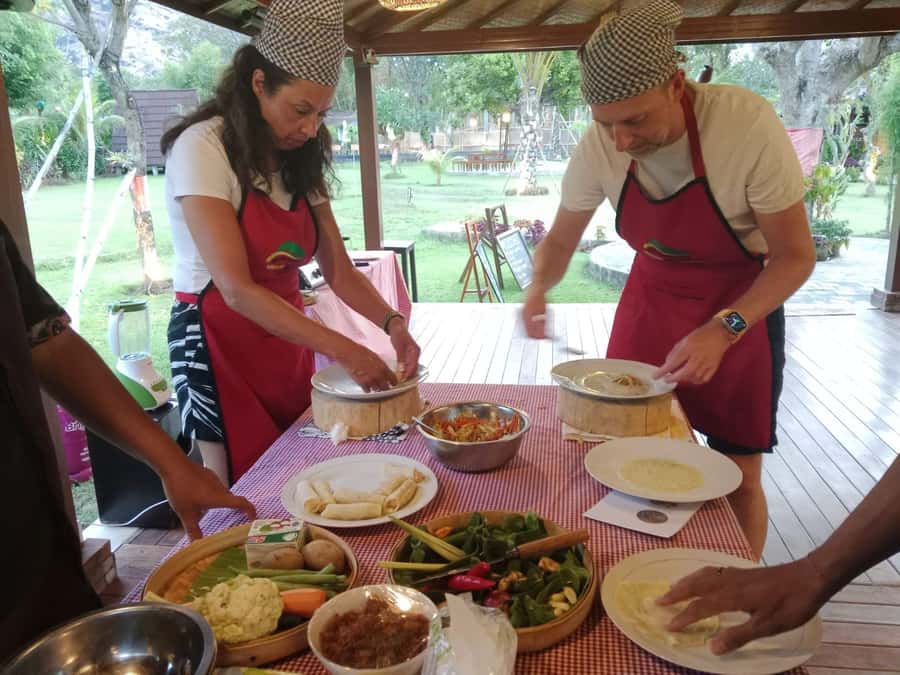
The menu is pleasantly straightforward and very Balinese. You’ll cook three dishes:
- Vegetable spring rolls (appetizer)
- Chicken curry (main course)
- Dadar bali (dessert)
The big win here is variety. You’re not stuck doing one dish for two hours. You’ll handle a starter with a crispy structure, a main that teaches spice blending and balance, and a dessert that adds a sweet, coconut-forward rhythm to the meal.
Vegetable spring rolls: technique and texture first
Spring rolls teach you more than rolling. They teach you the idea of building a savory filling that tastes good on its own, not just because it’s wrapped and fried. Since the class is structured for a smooth 2-hour flow, you might find that some ingredients are already pre-cut or prepped. That’s not a failure point. It lets you focus on seasoning, assembly, and cooking technique without spending the whole session chopping.
When you make these yourself, you’ll understand the difference between a filling that is bland and one that’s properly seasoned. That’s the kind of skill you can reuse later with other fillings.
Chicken curry: the spice balance lesson
Chicken curry is where the spice intro becomes practical. You’ll work through the recipe process while being guided by the chef, which is ideal if you’ve ever cooked curry before but felt like the flavor never quite matched what you tasted in restaurants.
Even without extra kitchen jargon, you’ll learn what to pay attention to: how spices smell when heated, how seasoning shows up in the curry sauce, and how the final dish should taste before it’s served. This is the main course, so it’s also the one you’ll likely want to recreate at home first.






Dadar bali: dessert that teaches a different side of cooking
Dadar bali is a dessert that rounds out the meal. While curry is all about savory depth, dessert is about sweetness and texture, and it usually requires a different pace. People describe the overall class as fun and relaxed, and the dessert portion is often where that experience feels the most rewarding because you can see the final payoff on your plate.
This is also a helpful reminder: Balinese meals often treat dessert as part of the full meal experience, not an afterthought.
Meet the chefs: patient coaching that makes a difference
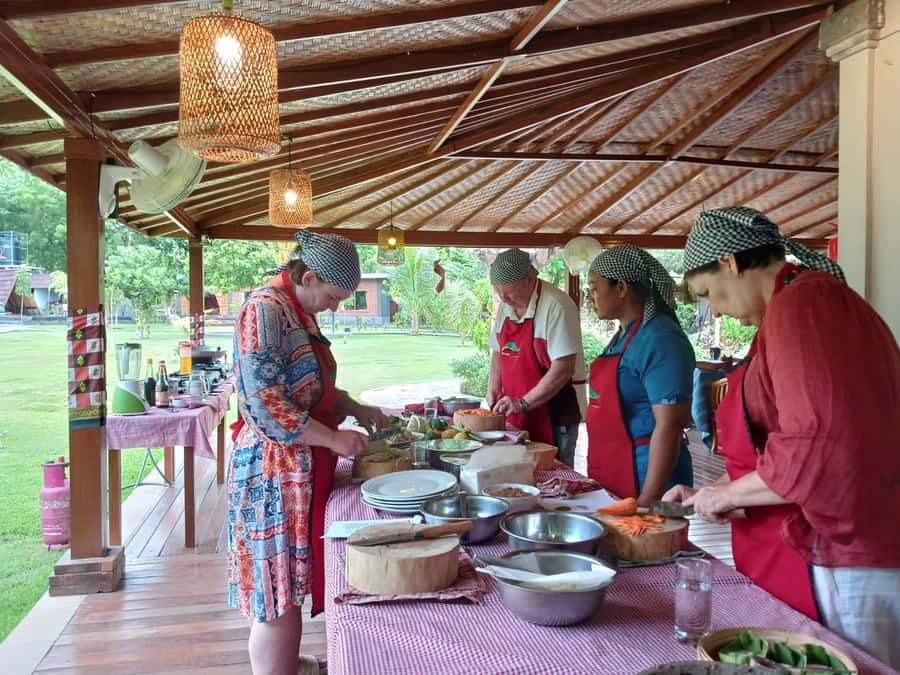
This class feels best when you’re learning with a chef who knows how to teach. Many participants highlight the patience and kindness of the instructors, and two names come up again and again: Dewi and Melai. When you’re nervous about cooking, that kind of calm coaching can turn the whole thing from stressful to fun.
Because the instruction is in English, you’re not stuck guessing during the steps. That matters for spice-based cooking, where small changes can shift the flavor quickly.
Another detail worth noting: the class is set up so it works even if you’re a beginner. You’ll be guided through the process in the kitchen, and you’ll have the chance to practice your cooking skills rather than just watching. One of the best parts is that you don’t just get a meal; you get the confidence to cook it again later.
Also, you’re not alone at a table once the cooking starts. You’ll have a local chef and support from the team as you go dish by dish, which helps keep things moving without making you feel rushed.
Eating what you cooked: why the meal is part of the lesson
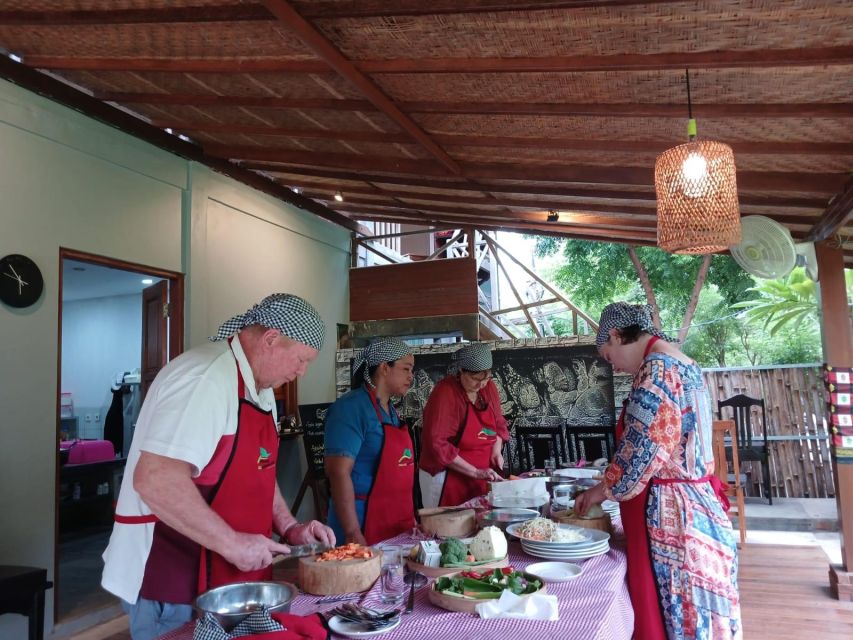
You don’t finish with a takeaway box. You finish by eating.
That’s important because it turns the class into a feedback loop. After you cook the spring rolls and curry, you can taste and adjust your understanding of seasoning and texture. Then when the dessert lands, you get the full arc of flavors that a Balinese meal aims for.
People also mention the premises feel calm, like you’re at a garden-focused property rather than an industrial kitchen. That mood helps you enjoy the meal while it’s still warm and fresh, which is when you get the clearest sense of what the dish should taste like.
If you’re the kind of traveler who likes to bring home edible memories, this is a stronger option than a pure cooking demo. You get the practical skill plus the immediate reward.
Price and value: does $24 make sense?
At $24 per person for a 2-hour class, the value is mostly in what’s included. This isn’t a bare-bones instruction session.
You’re provided with:
- Cooking ingredients (chicken meat, vegetables, herbs, and spices)
- Cooking equipment
- Recipe book
- Mineral water
- Local chef
When you price it out as a traveler, that inclusion matters. Ingredients and equipment are often the hidden cost of cooking workshops. Here, you’re not responsible for buying a bunch of produce you might not know how to use, and you’re not expected to bring your own pans and tools.
The other value piece is time. You’re spending 2 hours instead of booking half a day for trial-and-error. You get coached steps, you cook multiple dishes, and you still sit down for the meal you made.
If you’re in Bali and you want a hands-on cultural experience that doesn’t balloon in cost, this is one of the more straightforward deals in the food category.
Practical tips so you enjoy the class more
A few simple things will make your experience smoother.
What to bring and wear
Bring a camera if you want photos of the garden and the cooking process. Wear comfortable clothes you don’t mind getting a little warm or splashed. Cooking can be hands-on, and even if you’re careful, you’ll be working close to heat.
If you’re the kind of person who likes to look tidy, pack a change of clothes for later. The class is short, but you’ll likely work up some activity.
Pickup, timing, and making it easy
If pickup is included for your location, plan to be ready. Waiting in the lobby or villa 10 minutes early helps avoid last-minute stress. Bali traffic can be unpredictable, so arriving early is one of those small habits that makes the day feel calmer.
Also, there’s mention of skipping ticket line, which usually means less waiting time at the start. In a 2-hour workshop, less waiting is a good thing.
Language and comfort
The class runs in English. If you’re traveling with a friend and one of you speaks better than the other, you’ll still both be able to follow the instructions and understand what the chefs explain.
Who should book this class (and who might not)
This experience suits you if you want:
- A hands-on food activity in Bali that ends with a real meal
- A beginner-friendly introduction to Balinese dishes
- A chance to learn herbs and spices, not just a set of memorized steps
- A practical take-home plan via the recipe book
It’s also a solid fit if you like calmer, garden-style atmospheres. Reviews describe the setting as gorgeous and calming, and the garden harvest adds a nice, grounded feeling to the whole day.
You might want to think twice if:
- You want a long training course where you repeat each dish multiple times. This is 2 hours, and parts of the prep may be pre-done to keep the schedule smooth.
- You’re traveling with an infant. It’s not suitable for babies under 1 year.
Should you book Cooking Class 3 Courses Balinese Dishes?
Yes, if you want the best kind of Bali souvenir: a skill you can actually use. For a $24 class, you get three classic dishes you can name and cook, plus a recipe book that helps you repeat the flavors later. The garden start and ingredient picking make it feel authentic, not staged.
Book it if you’d enjoy cooking with friendly local chefs and you like the idea of practicing while learning spice logic. Names like Dewi and Melai showing up in glowing feedback is a good sign that the teaching style is patient and welcoming.
If you’re the type who needs to do every step from raw yourself, you might find the class a bit structured and time-efficient. But that’s also what keeps it from dragging, and it’s what lets you end with spring rolls, chicken curry, and dadar bali on your plate.
FAQ
What dishes are included in the class?
The class includes cooking a vegetable spring roll appetizer, chicken curry as the main course, and dadar bali for dessert.
How long is the cooking class?
The duration is 2 hours.
When does the class start?
There are two starting times: 11:00 am for preparing lunch, or 17:00 for preparing dinner.
Do you pick ingredients before cooking?
Yes. At the beginning, you’ll visit the organic farm at the backyard of the restaurant and accommodation and pick fresh ingredients.
Is pickup included?
Yes. Pickup is included. You should wait in the hotel lobby or villa about 10 minutes before your scheduled pickup time.
Is the instruction in English?
Yes. The instructor teaches in English.
What’s included besides the food?
It includes cooking ingredients, cooking equipment, a recipe book, mineral water, and a local chef.
What should I bring?
Bring a camera and wear comfortable clothes.
Is it suitable for babies?
No. It is not suitable for babies under 1 year.
Can I cancel and get a refund?
Yes. Free cancellation is available up to 24 hours in advance for a full refund.
Is reserve now, pay later available?
Yes. You can reserve now and pay later, meaning you can book your spot without paying today.