Morning light hits Bali fast. This full-day Gate of Heaven tour runs early into East Bali, stacking four very different sights into one smooth circuit: a temple on a mountain slope, two royal water palaces, and a working salt-mining village. I especially like how the route is built around photo-ready moments, not just check-the-box stops, so you get time to actually look.
What I like most is the mix of “holy” and “worldly” in one day. Tirta Gangga brings calming fountains and garden paths you can walk through, while Ujung Water Palace shows a rare Balinese-and-European architectural flavor that’s both elegant and strange in the best way. One practical drawback: it’s an 8–10 hour day with a long drive from Seminyak, and lunch isn’t included, so you’ll want to plan your budget.
There’s also one Bali-specific rule to take seriously: this itinerary includes temple entry, and if you’re menstruating you’re strictly not allowed in. If that happens after booking, the operator can reschedule or swap the temple stop for a non-temple alternative.
In This Review
- Key highlights to know before you go
- Why this East Bali circuit starts so early from Seminyak
- Lempuyang Temple: the Gate of Heaven viewpoints and temple rules
- Tirta Gangga water palace: fountains, koi ponds, and tiered garden paths
- Lereng Agung lunch: Balinese flavors with a view (and what’s not included)
- Ujung Water Palace: Balinese and European styles in a reflective garden
- Kusamba salt mining: watching sea salt production in a working village
- Price and logistics: does $76.40 feel like good value?
- Getting the most from a long 8 to 10 hour day
- Who should book this tour—and who might prefer something else
- Should you book this Gate of Heaven day tour?
- FAQ
- What’s the duration of the Full Day Gate of Heaven Bali Instagram Tour?
- Is pickup included?
- Are entrance fees included in the price?
- Is lunch included?
- Is this tour private?
- What happens if I’m menstruating and the tour includes a temple?
- FAQ
- Can I cancel for a full refund?
- Can I choose transport only instead of entrance fees?
Key highlights to know before you go
- A very early start that helps you catch the famous Lempuyang views when the light is at its best
- Two water palaces in one day, with gardens, fountains, and reflective pools for slow strolling
- Entrance fees handled for you, so you’re not scrambling at each ticket booth
- Kusamba salt mining gives you a real, working look at how sea salt is made using old methods
- A driver who plans and helps with photos, with Wayan mentioned as a strong example of that style
- Private transport in an air-conditioned vehicle, which matters on a long East Bali route
Why this East Bali circuit starts so early from Seminyak
This is the kind of tour that treats time like a travel tool. You’re leaving Seminyak early enough that the day feels efficient, not rushed. One of the biggest wins is that Lempuyang Temple is best when the weather cooperates and when you’ve got enough daylight to get those classic sightline photos.
The schedule also helps you avoid the most common tourism problem on Bali: doing the “popular” stuff later in the day and watching everything become hotter, busier, and more tiring. With an early start, you spend your energy where it matters—at the viewpoints and gardens—then you can move on without feeling like you’re sprinting between stops.
If you get a driver like Wayan, you’ll likely appreciate the extra planning energy. In at least one example, he’s described as organizing the day end-to-end and helping with photos, while sharing explanations about local life, religion, and rituals as you ride.
You can also read our reviews of more tours and experiences in Seminyak.



Lempuyang Temple: the Gate of Heaven viewpoints and temple rules
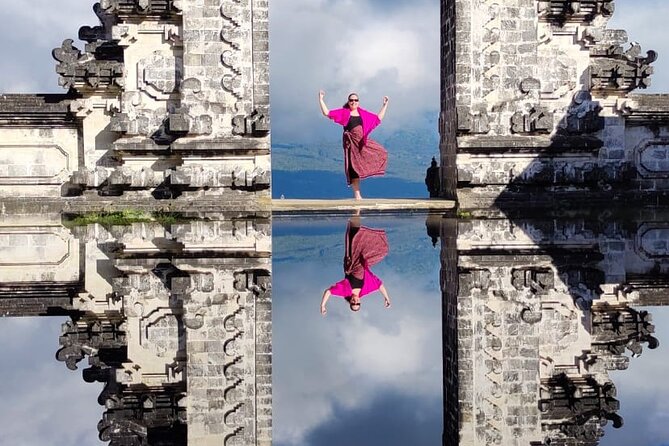
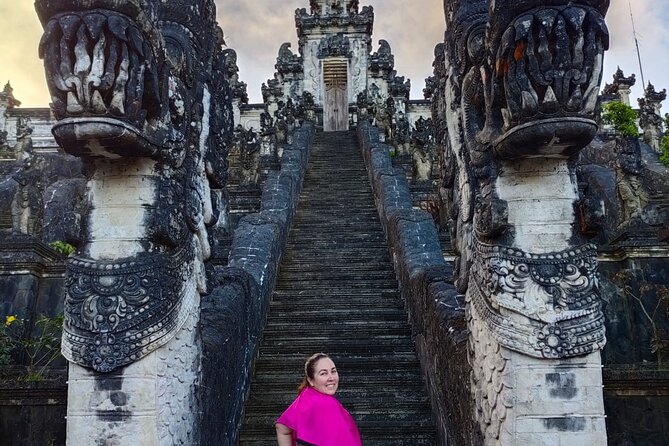
Lempuyang Temple is often called the Gate of Heaven for a reason. It sits on the slopes of Mount Lempuyang, and the signature split gate frames Mount Agung when the skies are clear. The atmosphere is spiritual, but the views are what get most people to pause and keep looking.
You’ll have about 2 hours here, which is enough time to climb up, find a good spot, take photos, and still have a little breathing room. The temple is also weather-dependent. If the conditions are right, you’ll get that “wow” effect where the gate looks almost unreal against the volcano backdrop.
Two things to plan for:
- You’ll be walking on temple grounds and pathways with a real incline, so comfortable footwear matters.
- Temple entry rules are strict. This tour notes that menstruation means you’re not allowed to enter temples in Bali. If that applies to you, you’ll want to plan ahead—if it comes up after booking, they can reschedule or swap the temple destination for a non-temple stop.
Tirta Gangga water palace: fountains, koi ponds, and tiered garden paths
After the temple height and open views, Tirta Gangga gives you a totally different pace. This royal water palace was built in 1946 by the late King of Karangasem, Anak Agung Anglurah Ketut Karangasem. The name Tirta Gangga translates to Water of the Ganges, tied to the sacredness of the water flowing through the palace pools.
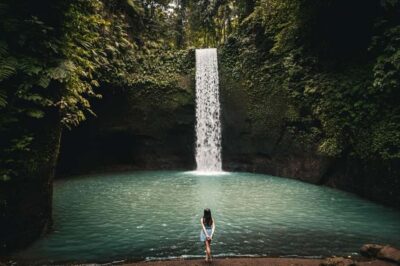
The central visual is the tiered fountain system—designed with mythical creatures and symbolic statues. It’s the kind of place where you stop without realizing you’ve been standing still for a while, because every angle looks composed.
You’ll also get stepping-stone moments. The stepping stones across the ponds make it feel less like museum walking and more like exploring a living garden. You’re there for photos, yes—but it’s also genuinely pleasant to slow down because the setting is calm and the water features do the relaxing for you.
Expect about 2 hours for this stop, which is helpful because you can:
- Take your time with fountain views
- Walk the terraced garden areas
- Sit for a minute if the sun is strong
Lereng Agung lunch: Balinese flavors with a view (and what’s not included)
Lunch at Lereng Agung is built into the flow after Tirta Gangga, so you get a proper break before the final two major sights. The menu is described as blending traditional Balinese flavors with international influences, using fresh ingredients. In other words, it’s not only for people who want local food, and it’s not only for people who want “safe” options.
What I like about this setup is the dining choices:
- You can eat indoors, or
- Choose the terrace for views over greenery and terraced rice fields
That terrace option can make the pause feel like part of the experience, not just a reset button.
One big “note to self”: lunch is not included in the tour price. The itinerary assigns about 2 hours here, but you’ll still pay for your meal. If you’re trying to keep the overall day cost predictable, check the menu prices in advance (or just plan with a small buffer).
Ujung Water Palace: Balinese and European styles in a reflective garden
Ujung Water Palace, also known as Taman Soekasada Ujung, is one of the most beautiful historic landmarks in Bali. Built in 1919 under the King of Karangasem, I Gusti Bagus Jelantik, it served as a royal retreat and a place to host important guests.
Here’s the detail that makes Ujung interesting: the architecture reflects a blend of Balinese and European influences. That mix can feel surprising at first, but it’s also what makes the place visually memorable once you start noticing the edges, forms, and how the structures sit alongside the water.
You’ll have about 2 hours to roam the gardens, reflective pools, and elegant structures. The gardens are landscaped, and the pools add that mirror effect when the light is right. This is also a good stop for slower travel—less of a “pose-and-go” vibe compared to the temple framing shot.
If you’re sensitive to heat or sun, plan your time wisely. This stop rewards you when you take breaks and let the setting cool you down a little.


Kusamba salt mining: watching sea salt production in a working village
The day ends in a place that feels grounded and real: Kusamba Traditional Salt Mining, a coastal village in Klungkung Regency. Instead of royal gardens and dramatic gates, you get a working view of how sea salt is produced using centuries-old methods.
The tradition in Kusamba is described as largely manual and environmentally sustainable, passed down through generations. That matters because it’s not just “watch a process.” You’re seeing a community practice that’s tied to the land and sea in a way modern industries often lose.
This stop is also one of the best for connecting with daily life. The tour description says you can engage with local salt farmers and may even participate in harvesting, depending on what’s happening when you arrive. Even if you don’t join in, it’s the kind of moment that changes your perspective from tourist sightseeing to how people actually make a living here.
You’ll have about 2 hours for this stop, which is plenty to:
- Understand the steps of production you can see
- Take photos thoughtfully (and without blocking people)
- Ask questions about the process and what tools are being used
Price and logistics: does $76.40 feel like good value?
At $76.40 per person, this tour can feel like strong value if you were already planning to visit all four major sites. The big reason is that entrance fees are included, and the tour also includes an air-conditioned vehicle, private transportation, and bottled water.
Here’s the value math in plain terms:
- You’re not paying separate tickets at Lempuyang, Tirta Gangga, Ujung, and Kusamba.
- You’re also not hiring multiple rides to cover East Bali efficiently.
- Because it’s private, you’re not trapped into rigid group movement at each stop.
Two costs to remember:
- Lunch is not included, so that’s an extra day expense you’ll control.
- Personal expenses are also on you (souvenirs, snacks between stops, and any optional extras).
Also, there’s an option for transport only (not including entrance fees). If you’re the type who likes to buy tickets yourself, you can choose that route—but if you want less hassle, the bundled version is the smoother way to go.
Finally, the tour mentions pickup and group discounts. In practice, that can mean better per-person value if you’re booking with friends or family.
Getting the most from a long 8 to 10 hour day
This route is structured, but your comfort still depends on you. Since it’s an 8–10 hour day, with walking at multiple stops, I’d pack and plan like you’re doing a full outing, not just sightseeing.
My practical checklist:
- Wear comfortable shoes with grip. You’ll walk temple pathways and move through water-palace gardens, including stepping-stone areas at Tirta Gangga.
- Bring a hat and sunscreen, because the early-morning light can still turn into strong sun once the day warms up.
- Bring a light layer for morning air near higher elevations and for temple areas where conditions can feel cooler.
- Budget for lunch at Lereng Agung, since it isn’t included.
Camera-wise, this tour is ideal for people who like framing shots. Lempuyang’s split gate is the main “Instagram” moment, but Tirta Gangga fountains and Ujung’s reflective pools also deliver strong visuals without requiring special angles.
If you want the most from your driver, ask simple questions during the ride. A driver like Wayan is known for organizing the day and sharing context about local religion and rituals, which helps you understand what you’re seeing once you step out of the car.
Who should book this tour—and who might prefer something else
This tour fits best if you want a single day that covers:
- A major Bali temple viewpoint (Lempuyang)
- Two different water palace styles (Tirta Gangga and Ujung)
- A working coastal craft experience (Kusamba salt mining)
It’s also a good choice for people staying in Seminyak who don’t want to deal with separate transport arrangements across East Bali.
You might hesitate if you hate long days or dislike early departures, because the schedule is built around starting early and packing the day tight. And if temple rules are a concern for you personally, make sure you’re comfortable with the tour’s menstruation policy before booking.
Should you book this Gate of Heaven day tour?
If you’re excited by the idea of seeing Lempuyang Temple, then following it up with water-palace gardens and ending in Kusamba’s salt-mining village, I’d say this is a solid booking. The entrance fees being included plus private, air-conditioned transport is the kind of convenience that makes a long route feel more manageable.
Book it if you want maximum variety in one day: sacred viewpoint, royal water gardens, then real-world village work. Consider something different if you’d rather go slower, spend less time in transit, or you’d rather skip temple entry entirely.
FAQ
What’s the duration of the Full Day Gate of Heaven Bali Instagram Tour?
The tour runs about 8 to 10 hours.
Is pickup included?
Yes, pickup is offered, with the tour based in Seminyak.
Are entrance fees included in the price?
Yes. The tour states that all entrance fees are included in the pricing.
Is lunch included?
No. Lunch is not included.
Is this tour private?
Yes. It’s a private tour/activity, so only your group participates.
What happens if I’m menstruating and the tour includes a temple?
The tour notes that menstruating travelers are strictly not allowed to enter any temple in Bali. If you menstruate after booking, the operator can reschedule the booking or replace the temple destination with another non-temple destination.
FAQ
Can I cancel for a full refund?
Yes. You can cancel for a full refund if you cancel up to 24 hours in advance of the experience’s start time.
Can I choose transport only instead of entrance fees?
Yes. There’s an option for transport only that does not include entrance fees.