One morning cycling route can feel like three trips at once. This FUN Cycling Tour De Temples mixes temple stops with countryside riding through rice fields and local villages, so you’re not just staring at stone—you’re seeing how Yogyakarta lives around it. I especially like the early start vibe and the way the guide keeps things relaxed and fun.
What I like most is the practical setup: comfortable bikes, a helmet, and a quick briefing so you’re moving without stress. You’ll also get lunch, bottled water, and snacks, which matters on a 4–5 hour loop. One consideration: entrance fees for some temples (notably Plaosan and Sambisari) are not included, so you’ll want a bit of cash ready.
In This Review
- Key highlights you’ll feel right away
- Temple cycling in Yogyakarta: a smart way to see more than the main sights
- Price and value: what $27 really buys (and what doesn’t)
- Starting at Izzati Jogjatour: briefing, bikes, and getting rolling early
- Between temples: fields, villages, rivers, and the parts most people miss
- Sari Temple: a calm introduction with farm-country views
- Plaosan Temple: the Twin Temple feel with Hindu-Buddhist architecture
- Sambisari Temple: the small underground site that makes the day memorable
- Lunch, snacks, and water: the comfort detail that makes cycling tours work
- Timing and ride feel: what to expect from 4–5 hours
- Who should book this cycling temple tour?
- Should you book FUN Cycling Tour De Temples?
- FAQ
- How long is the Cycling Tour De Temples experience?
- Is pickup available?
- What’s included in the price?
- Do I need to pay temple entrance fees?
- What’s the meeting point and where does the tour end?
- Is it a private tour?
- What if I need to cancel?
Key highlights you’ll feel right away
- Early-day riding to dodge the worst heat
- Scenic countryside stretches between temple stops
- Real comfort basics included (bike, helmet, guide)
- Lunch plus snacks and water during the ride
- Temple variety: Buddhist past, Hindu-Buddhist blending, and an underground site
- Private group experience with your own pacing
Temple cycling in Yogyakarta: a smart way to see more than the main sights
If you’ve only got limited time in Yogyakarta, it’s easy to get stuck in the usual pattern: arrive, look at a temple, snap photos, shuffle to the next one. This tour gives you a different pace. You ride out from the Izzati Jogjatour base and spend your time between sights, which turns the journey itself into part of the experience.
The route also gives you a fuller sense of the region around Prambanan—you’re passing fields, villages, and rivers instead of cutting straight from one ticket booth to another. That’s a big deal because temples in Java aren’t isolated objects; they sit inside working landscapes and local routines.
And because it’s a private tour with a guide, you’re not stuck in a loud parade. You can ask questions, slow down when the scenery is better, and keep the day from feeling rushed.
You can also read our reviews of more tours and experiences in Yogyakarta.

Price and value: what $27 really buys (and what doesn’t)
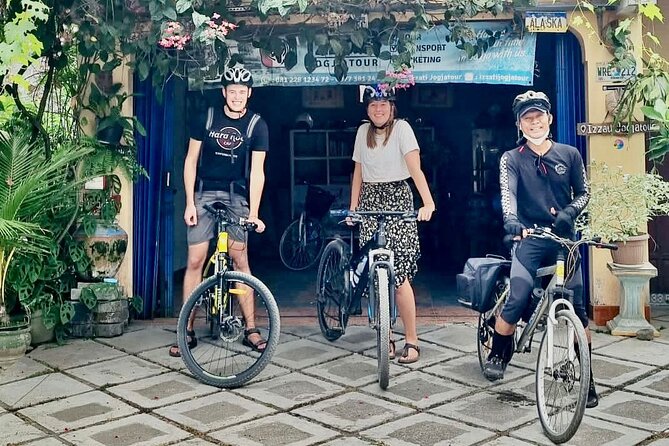
At $27 per person, this is one of the more budget-friendly ways to combine cycling with guided temple time—especially because several essentials are included. You get lunch, bottled water, snacks, private transportation, and a guide. The bike and helmet are also part of the experience at the base camp, so you’re not paying extra for rental gear.
The part to watch is temple entry. The tour covers only certain admission items as listed, while other temples charge separately:
- Plaosan Temple: IDR 50,000 per person (not included)
- Sambisari Temple: IDR 25,000 per person (not included)
- Sari Temple: admission is listed as not included (no fee amount provided in the details you have)
So yes, the base price is low, but the total cost will rise a bit depending on which entrances you pay. I’d treat the $27 as the foundation price, then mentally add the temple tickets at the start of planning.
Starting at Izzati Jogjatour: briefing, bikes, and getting rolling early
The tour begins at the Izzati Jogjatour base camp, where you’ll pick up a comfortable bike plus a safety helmet. Before you ride, you get a briefing and a warm-up. That kind of setup matters more than it sounds. On a temple route, the goal isn’t speed—it’s smooth navigation, safe stops, and knowing what to expect at each turn.
You’ll also have guidance for the route (the info mentions Google), so you’re not wandering. Then you set off toward your first temple stop, with the day organized around a simple flow: ride, pause for the site, ride again.
One small but important practical tip from how the tour is described: it’s scheduled in the morning window (and also noted as an early departure to reduce heat). If you’re sensitive to sun and humidity, that early timing can make the ride feel dramatically easier.
Between temples: fields, villages, rivers, and the parts most people miss
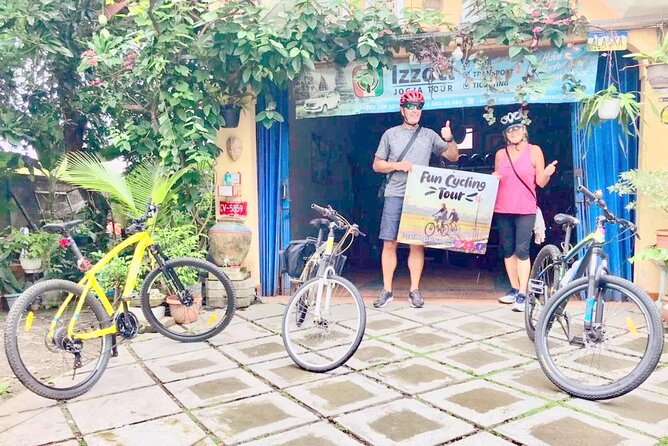
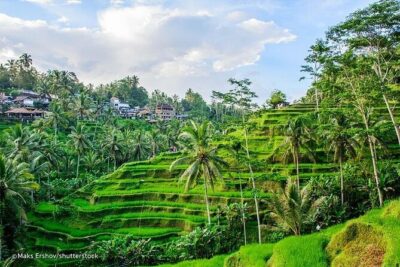
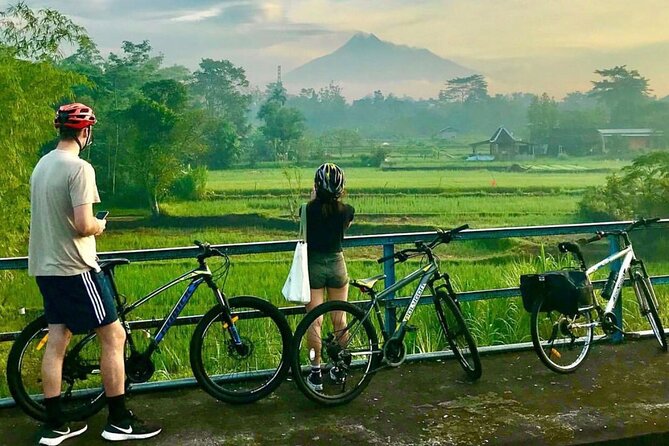
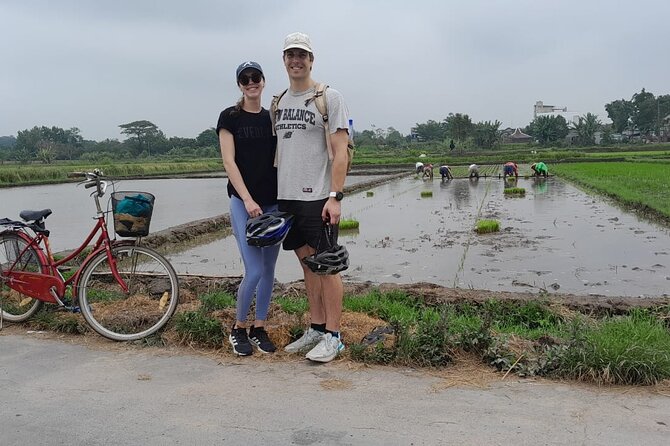
This route isn’t just about the temples—it’s about the in-between scenes. You’ll cycle through rice fields, corn/vegetable fields, villages, and rivers along the way. That means you get a real sense of the working landscape around the monuments, not just the monuments themselves.
This is also where the tour earns its “fun” label. When you’re moving by bike, the scenery changes continuously. A quick stretch can turn into a photo-worthy view, then right after into a quieter road where local daily life is happening. It’s the kind of travel that feels like you’re in the area, not just passing through.
And because there’s a guide, you don’t need to figure out what you’re seeing. You can focus on riding, then listen for context when you stop.
Sari Temple: a calm introduction with farm-country views
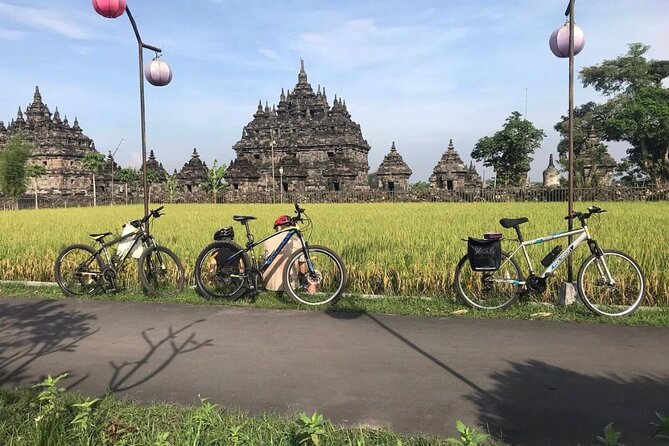
Your first major temple visit is Sari Temple. The ride leading into it is part of the payoff: you’ll pass through agricultural areas—rice fields plus fields used for other crops where farmers work.
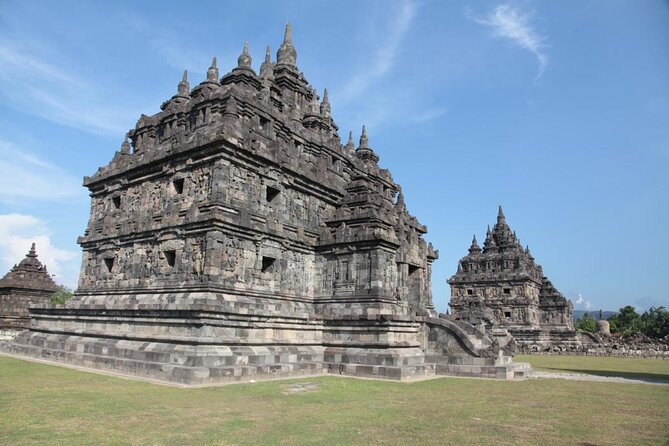
At Sari Temple itself, you’ll explore the site for about 30 minutes. The key story here is what Sari Temple used to be: it was used as a Buddhist monastery. That history angle is a nice contrast to the Hindu-Buddhist blend you’ll see later, so you don’t just tick off a temple name—you understand how the religious layers of the region shifted over time.
Entrance for Sari isn’t included based on your details. So if you want to budget precisely, plan for at least one ticket expense at Sari, even though only Plaosan and Sambisari have explicit IDR amounts provided.
Practical tip: give yourself a little time at the start of Sari to orient your eyes before focusing on smaller details. The site feels calmer than the more famous ones, so slowing down works.

Plaosan Temple: the Twin Temple feel with Hindu-Buddhist architecture
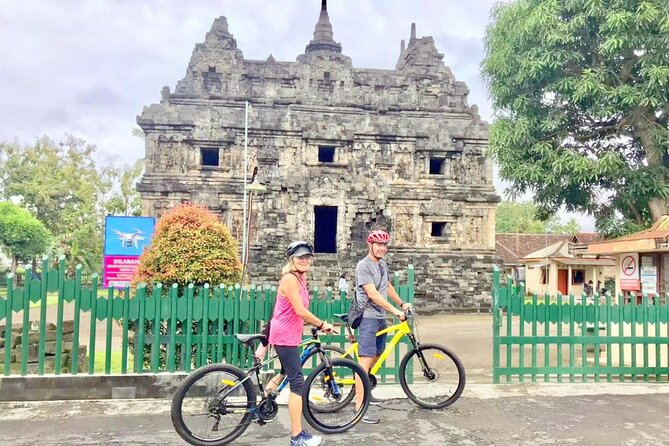
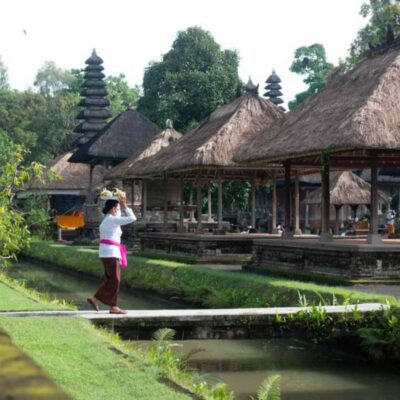
Next up is Plaosan Temple, known as the Twin Temple and described as having a romantic, symmetrical vibe. This stop is about architecture and blend. The site is noted for combining Hindu and Buddhist elements, and your guide leads you through what to notice as you walk the area.
You’ll spend about 30 minutes here. That’s enough time to catch the main layout, understand what makes the structures special, and still have time to step back for overview shots.
If you’re the type who likes to compare styles—like how design can shift with religious influence—Plaosan is a strong middle stop. It keeps the day interesting because it isn’t just “another temple photo.” It’s a chance to understand a visual idea: different traditions expressed through similar space.
Entrance for Plaosan is not included, and the fee is given:
- Plaosan Temple: IDR 50,000 per person
Sambisari Temple: the small underground site that makes the day memorable
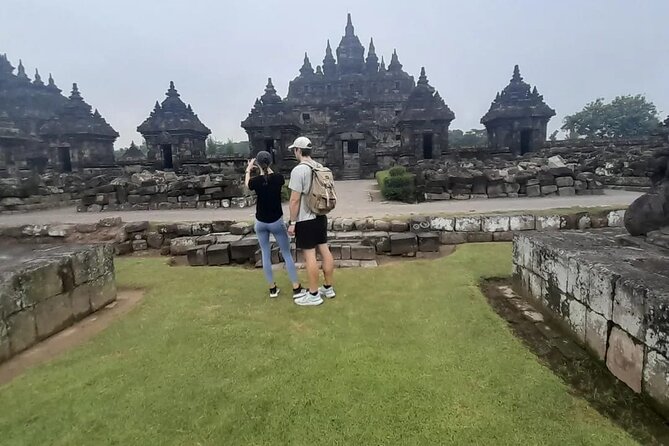
Your last temple stop is Sambisari Temple, described as one of the Hindu underground temples in Yogyakarta. It’s small, but that’s exactly why it sticks in your mind. Underground sites often feel more intimate—less about scale, more about atmosphere and story.
You’ll spend about 30 minutes exploring, and the description emphasizes that it’s beautiful and unique, with a lot of stories tied to it. A guide-led visit helps here because underground temples can be visually subtle if you don’t know what you’re looking for.
Entrance is not included, with a clear fee provided:
- Sambisari Temple: IDR 25,000 per person
If you’re deciding where to focus your attention on the cycling day, I’d give Sambisari your best listening. The “underground” angle is a hook, but the real value is understanding how that place fits into the broader landscape of the region.
Lunch, snacks, and water: the comfort detail that makes cycling tours work
Cycling tours can go one of two ways: you either feel taken care of, or you end up hungry, thirsty, and irritated by logistics. Here, the included care is spelled out clearly: lunch, bottled water, and snacks.
That means the ride isn’t just sightseeing. It’s also a full half-day with real sustenance. I like this because temple routes often involve heat, sun, and short walks—none of which pair well with an empty stomach.
The guide also brings snacks along the way (mentioned in feedback you provided), which is a small thing that can completely change the experience. You’re not waiting until the end to refuel; you get little breaks that keep energy steady.
Timing and ride feel: what to expect from 4–5 hours
The total experience runs about 4 to 5 hours. That duration is a sweet spot. It’s long enough to feel like a real excursion out of town, but short enough that you’re not spending your whole day commuting and waiting.
It’s also operating in a window listed as Monday to Sunday, 6:00 AM to 4:00 PM. In practice, the tour is described as leaving early to avoid the heat for as long as possible. That’s not just a nice bonus—it’s one of the best practical reasons to choose this style of temple visit.
Because there’s a moderate physical requirement, your pacing matters. You don’t need to be an athlete, but you do need to be comfortable riding at least at a steady level for parts of the route. If you’re not feeling well on the day, the details say you should not join.
Who should book this cycling temple tour?
This tour is a great match if you want:
- A guided day that connects temples with countryside scenery
- An experience that feels active without being punishing
- A private group format where you can move at your pace
- A food-and-drink plan that’s already handled with lunch, water, and snacks
It’s also a strong pick for people who’ve already done the big-name temple highlights and want a different angle—more local roads, more fields, more variety in what you see between sites.
On the other hand, if you prefer strictly indoor or extremely slow sightseeing, or if you don’t enjoy cycling at all, you might find the “ride between stops” part less appealing. The value relies on you liking that in-between movement.
Should you book FUN Cycling Tour De Temples?
Yes, if you want a half-day that blends temples + working landscapes and you like the idea of getting a guide, a helmet, and food included for a low base price. I think the best reason to book is simple: you’re not paying just for temple entry time. You’re paying for the full experience of getting there—by bike—plus the comfort details that keep the day enjoyable.
Before you confirm, do two quick checks:
- Budget for temple entrance fees where required, especially Plaosan (IDR 50,000) and Sambisari (IDR 25,000), plus Sari which is listed as not included.
- Be honest about fitness on the day. The ride requires moderate comfort, and the rules ask you to come fit and symptom-free.
If that works for you, this is one of those Yogyakarta tours that feels practical and genuinely fun, not just a box-checking temple circuit.
FAQ
How long is the Cycling Tour De Temples experience?
It runs about 4 to 5 hours.
Is pickup available?
Yes, pickup is offered, and private transportation is included.
What’s included in the price?
Lunch, bottled water, snacks, private transportation, and a guide are included.
Do I need to pay temple entrance fees?
Some do. Plaosan Temple entrance is IDR 50,000 per person and Sambisari Temple entrance is IDR 25,000 per person, and Sari Temple admission is listed as not included.
What’s the meeting point and where does the tour end?
The tour starts at the Izzati Jogjatour base camp and ends back at the meeting point.
Is it a private tour?
Yes. It’s private, so only your group participates.
What if I need to cancel?
You can cancel for free up to 24 hours before the experience’s start time for a full refund.