Few places teach Java like these temples. This Borobudur and Prambanan day pairs two UNESCO icons and explains how ninth-century builders used design, geometry, and spirituality to map the universe. You get a guided pass at Borobudur, plus Prambanan timing that can include sunset views and time near the arts-and-crafts market.
I especially like how the tour is structured to make the architecture feel logical, not random. Borobudur is presented in its three-part idea of base, body, and temple structure, tied to Buddhist cosmology in three spheres. I also like the human scale: a small group limited to 15, with an English-speaking guide and an English-capable driver who helps keep the day moving.
The main drawback to consider is the pace. With a 10-hour schedule, you won’t have a slow, all-day wander at each site. Also, the tour is not suitable for people over 70, so plan accordingly if mobility or stamina is a concern.
In This Review
- Key things that make this tour worth your time
- Why Borobudur and Prambanan belong together
- The Borobudur stop: 1.5 hours with the right focus
- What to watch for at Borobudur
- Prambanan: Hindu architecture and a sunset-minded schedule
- Why the structure hits harder than you expect
- The market stop: useful, not required
- How the small-group setup improves your day
- Pickup and timing: what you need to plan around
- Price and what you truly get for $15
- One practical consideration about meals
- Logistics that make the tour smoother
- Best for whom (and who should skip it)
- Should you book this Borobudur and Prambanan tour?
- FAQ
- Do I need to buy entrance tickets myself?
- How long is the tour?
- Is there an English guide?
- Can I skip the ticket line?
- What are the pickup and drop-off locations?
- How big is the group?
- Is the tour wheelchair accessible?
- What’s the itinerary like at Borobudur?
- What’s the itinerary like at Prambanan?
- Are there any items I’m not allowed to bring?
- When do I need to message the operator?
Key things that make this tour worth your time
- UNESCO heritage, explained in plain language: You’re not just taking photos; you’re learning what the design means.
- Borobudur’s cosmology, step by step: Base, body, and structure are linked to kamadhatu, rupadhatu, and arupadhatu.
- Prambanan’s temple origin and purpose: You hear how it relates to Mataram/Medang and the Trimurti offering.
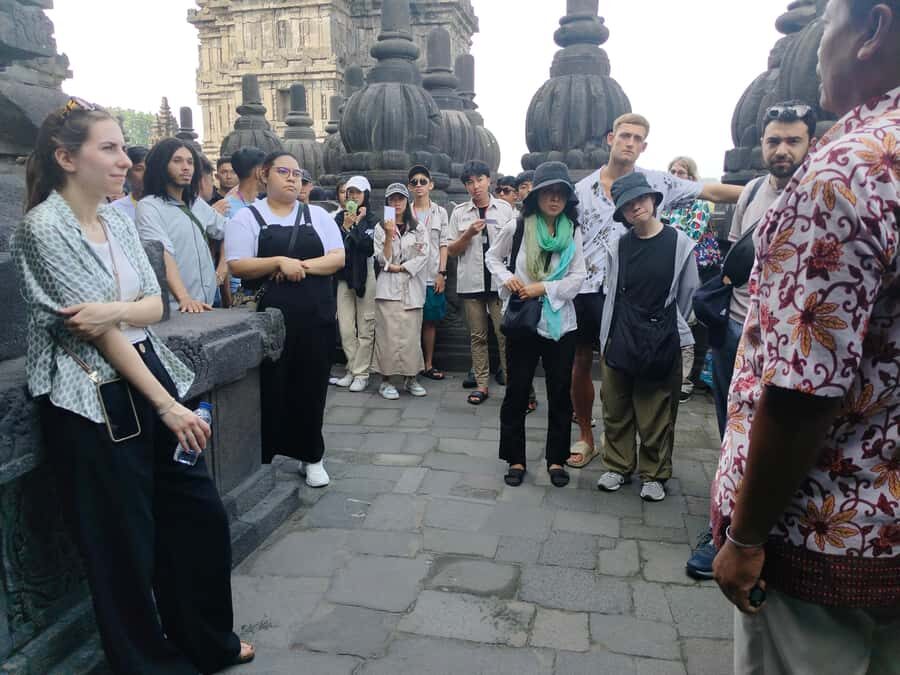
- Small group feel (15 max): Easier conversations with guides like Holly and Hari, and smoother movement through crowds.
- Sunset-friendly timing at Prambanan: You get a chance to see the temple in softer light.
- Ticket help included: You get assistance buying/booking entrance tickets, and you can skip the ticket line.
Why Borobudur and Prambanan belong together
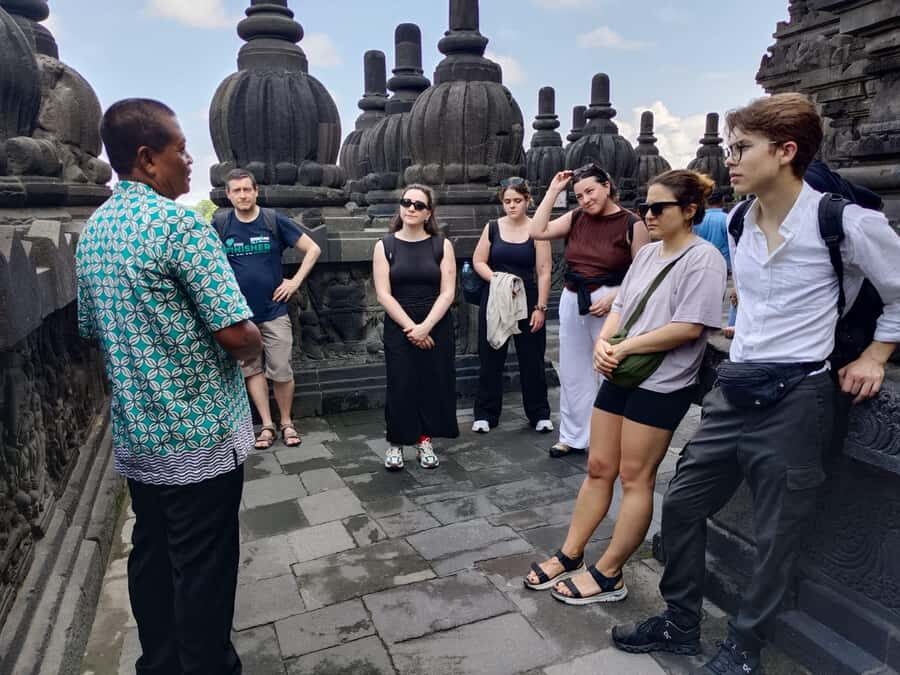
Java can feel like two different stories at once. Borobudur leans Buddhist, built with a careful architectural logic that turns walking into a kind of visual journey. Prambanan is Hindu, built later as a statement of devotion—big, bold, and unmistakably sacred. Put them on the same day and your brain starts connecting patterns: the way builders used levels, symbolism, and alignment to say, this is how the world works.
This tour is built for that connection. It’s not just a transport service. The day’s value is the mix of guided context plus enough time to actually look, take photos, and feel the scale. And because it’s capped at 15 people, you’re less likely to get swallowed by the group.
You can also read our reviews of more tours and experiences in Borobudur.
The Borobudur stop: 1.5 hours with the right focus
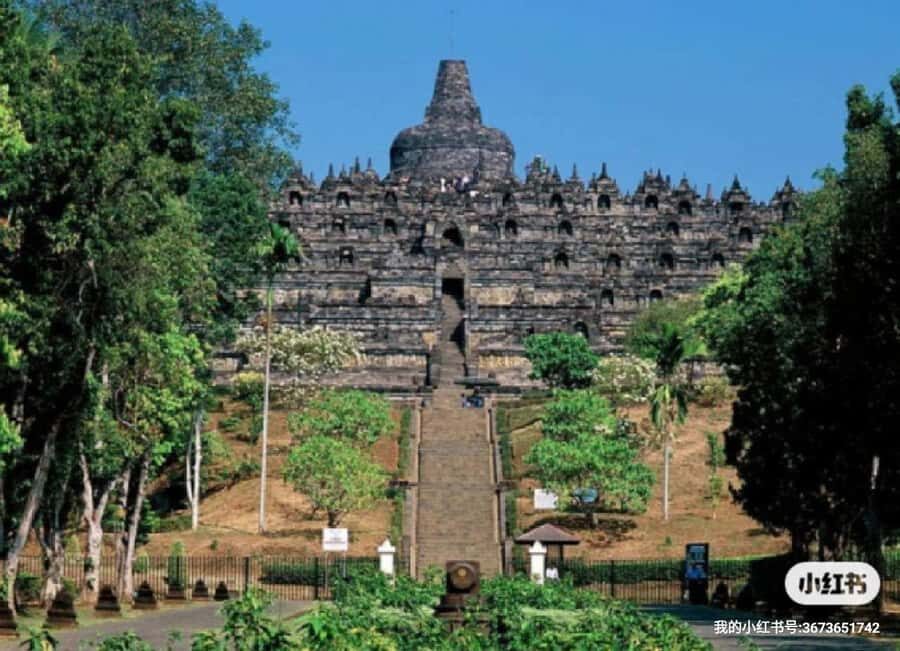
You’ll start at Borobudur with a photo stop and then a guided visit. The total time on site is about 1.5 hours, plus a scenic drive approach with views along the way.
What makes the Borobudur visit special is that the tour explains how the temple’s design works like a map. Borobudur was built in the era of the Syailendra dynasty in central Java, linked to old Mataram. You’ll hear how it follows Javanese Buddhist architecture and is arranged into three major parts:
- A pyramid-like base made of five concentric square terraces
- A conical trunk with three circular platforms
- A top level with a monumental stupa
Here’s the practical takeaway for you: Borobudur makes more sense when you notice the transitions. The guided approach encourages you to see why square terraces become circles as you move upward. It’s not random “more platforms.” It’s a structured idea of rising from ordinary life toward something more spiritual.
And the science angle? The tour ties the vertical design to Buddhist cosmology: three superimposing spheres—kamadhatu, rupadhatu, and arupadhatu. Even if you don’t read temple theory, you can feel it: the structure is communicating order.
A helpful historic detail: Borobudur was restored in the 1970s under UNESCO recognition. That matters because it explains why you’re seeing a site that’s both ancient and carefully maintained. You’re not viewing a ruined curiosity. You’re seeing a world heritage masterpiece that’s been protected so it can still teach.
What to watch for at Borobudur
Because you only have about 1.5 hours, you’ll want to arrive mentally ready to choose. If you love close-up carvings, you might skip some wide views to prioritize details. If you prefer scale and layout, focus on the terraces and keep an eye on the way the design rises. Either choice works, but you’ll get more out of the visit if you decide what you want most.
Prambanan: Hindu architecture and a sunset-minded schedule
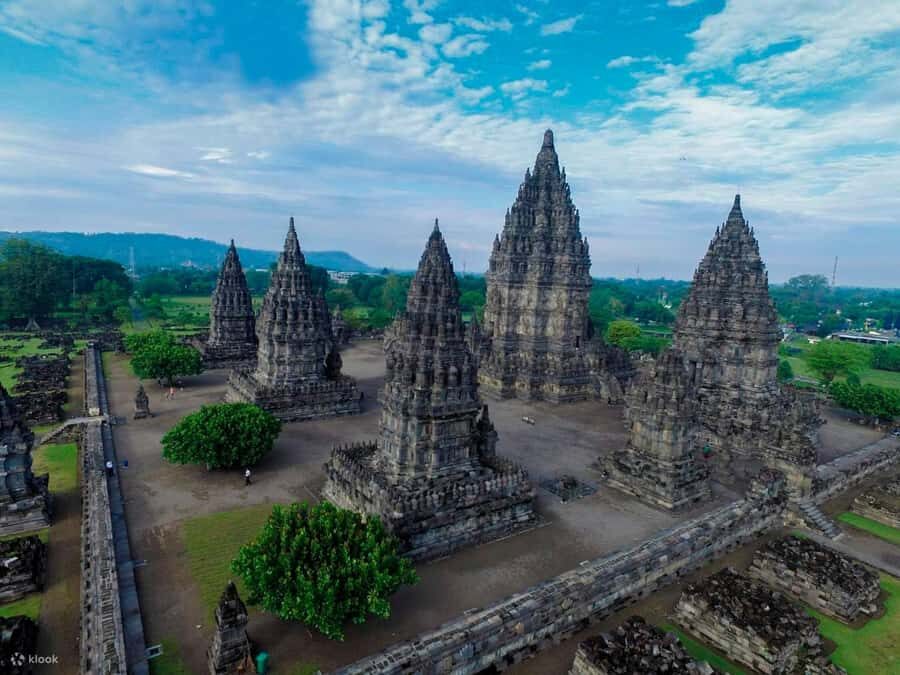
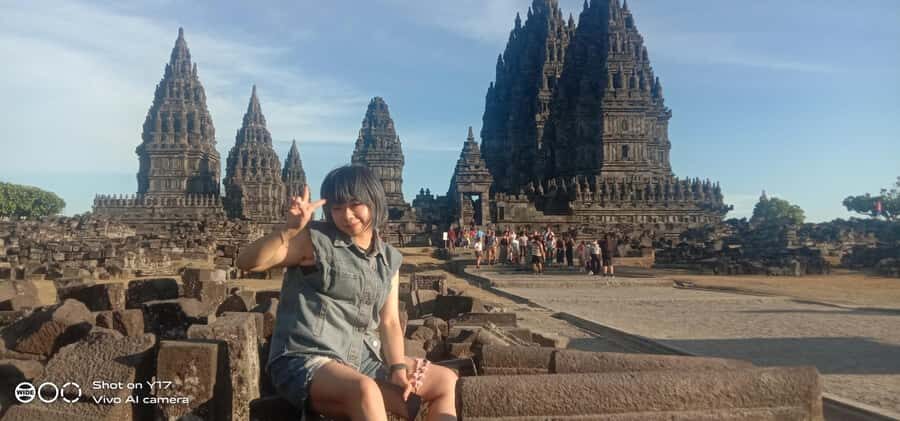
After Borobudur, the day shifts to Prambanan in Sleman, Yogyakarta. This stop runs about 2 hours, with a photo stop and time that includes sightseeing and a sunset slot. You’ll also have a self-guided period, plus a visit to an arts & crafts market.
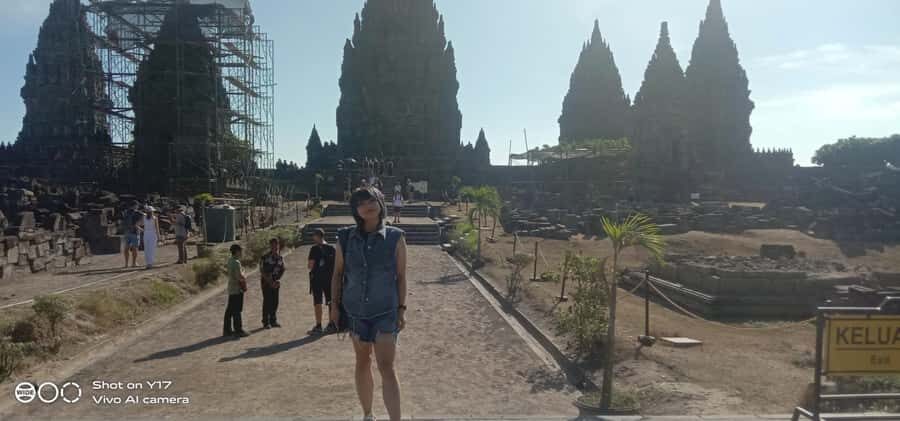
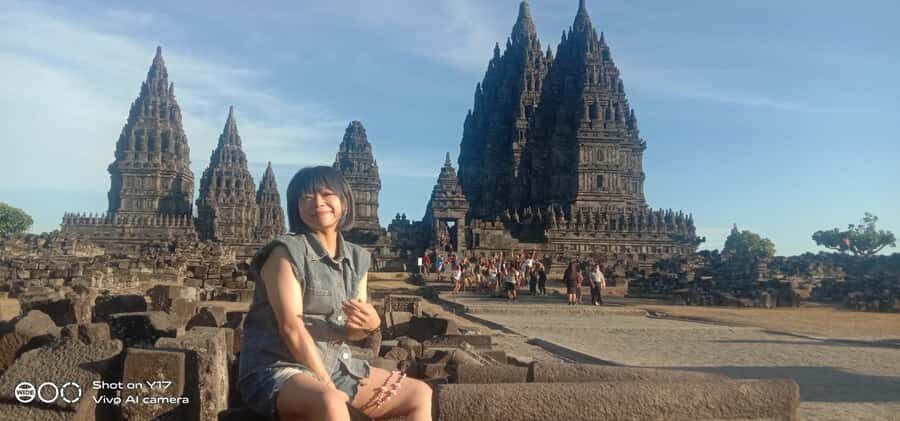
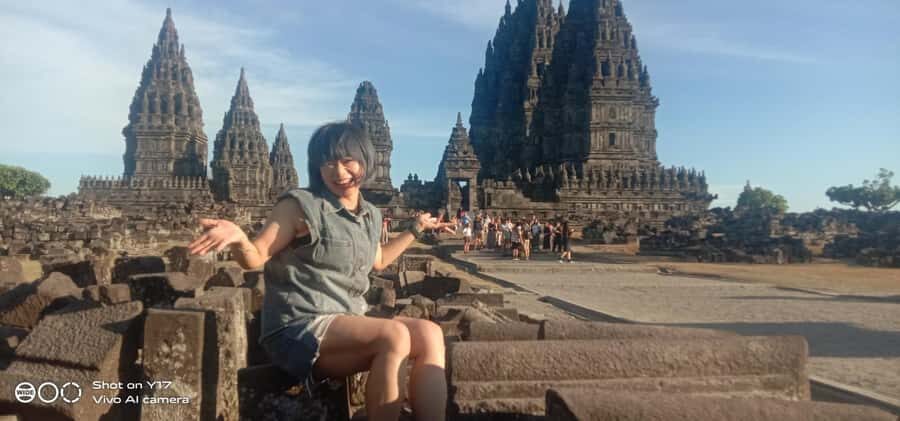
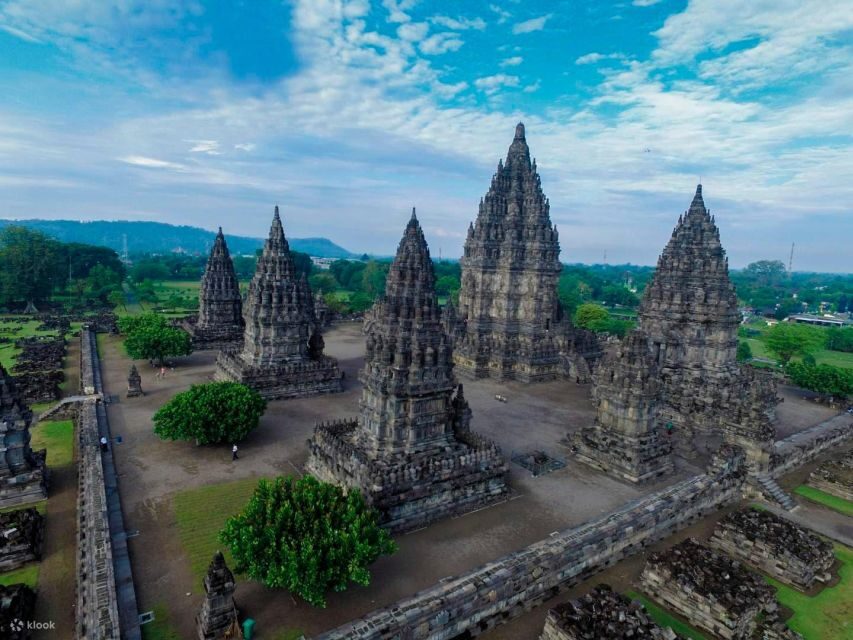
Prambanan is also known as Rorojonggrang Temple, and it’s the largest Hindu temple in Indonesia. You’ll get context that it was built in the ninth century during the Mataram or Medang kingdom.
One of the most useful bits of information you’ll hear is about the temple’s original name. According to the Siwagrha inscription, the original name was Siwagrha, meaning Shiva house. That’s valuable because it stops the visit from feeling like a generic “temple complex.” You’re looking at a place created as an offering to the Trimurti—the three primary Hindu gods: Brahma, Vishnu, and Shiva.
Why the structure hits harder than you expect
Prambanan’s real impact is the way it feels like a statement in stone. The tour doesn’t just point at buildings. It helps you understand why the architecture is dramatic: it’s meant to express devotion at a grand scale.
And the timing is smart. If sunset is included on your day, you’ll likely get that soft light that makes the edges and reliefs more readable. Even if clouds show up, the change in light is still the best natural “enhancer” for temple viewing.


The market stop: useful, not required
The arts & crafts market visit can be a nice way to connect the temple experience to modern local life. It’s a practical stop, too: if you want a snack, water, or a small souvenir, it’s a convenient moment. Don’t expect it to replace exploring on foot around town later. Think of it as a short cultural add-on.
How the small-group setup improves your day
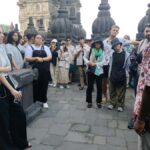
This tour is limited to 15 participants, which changes the vibe. You can actually hear the guide. People can ask questions without feeling rushed. It also tends to keep the “getting there” part from dragging.
You’ll travel in an air-conditioned vehicle, with mineral water included. That sounds basic, but on a day built around outdoor temples, it matters. The schedule is built for movement: pickup, scenic drive, a guided temple block, then a second temple block.
The driver and guides also come through in the reviews. Names that stood out include Holly and Hari, both praised for English ability and responsiveness to requests. One review even flagged that the driver was punctual and communication the day before was fast and efficient.
That’s the kind of thing that makes the day easier. If you’re asking where to stand for the best views or how to pace your photos, having a guide who can respond quickly keeps you from losing time.
Pickup and timing: what you need to plan around
You’ll be picked up from one of two places:
- New Yogyakarta International Airport Railway Station
- MALIOBORO JOGJAKARTA
Drop-off happens at the same style of locations afterward. In practice, that means you can plan your evening without needing complicated transport.
The itinerary itself is simple:
- Borobudur: photo stop, guided tour, sightseeing, walking time, and scenic drive views (about 1.5 hours at the temple)
- Prambanan: photo stop, visit, sightseeing, sunset, self-guided time, scenic views on the way, and a quick arts & crafts market visit (about 2 hours)
Because the stops are limited to these blocks, this is best for people who want a strong “see it and understand it” day, not a slow-day temple retreat. If you’ve got only one full day in Yogyakarta, this format gives you two UNESCO hits with guided explanation.
Price and what you truly get for $15
At $15 per person for a 10-hour, two-temple tour, the value is the balance of sightseeing plus guidance plus transport. The price alone is hard to ignore, but what matters more is what’s included and how flexible the ticket options are.
Ticket inclusion can vary by your chosen package:
- Option 1: includes all tickets
- Option 2: includes Prambanan tickets
- Option 3: sharing entrance ticket (not included, based on the package choice)
The tour also includes assistance to buy/booking entrance tickets and provides a specific ticket website reference for the Borobudur park. You also get skip-the-ticket-line, plus support to reduce the stress of figuring out ticket steps on the spot.
So the real value isn’t just the temples. It’s removing friction—money stress, ticket stress, and “how do I structure this day” stress.
One practical consideration about meals
In at least one review, the request was to improve lunch suggestions. That tells you something useful: don’t assume you’ll be handed a perfect lunch plan. If food matters to you, have a backup idea in mind before the day starts (or ask your guide what’s nearby and easy).
Logistics that make the tour smoother
A few operational points you should know so you can get the most out of the day:
- The tour includes hotel pickup and drop-off same place (based on your selected pickup spot).
- There’s English live tour guidance.
- It’s listed as wheelchair accessible, which is important if you need that kind of support.
- Small group means less chaos and more personal attention.
- Drones are not allowed, and alcohol and drugs are not allowed.
There’s also a clear “contact before you go” expectation. You need to inform the operator 24 hours before the tour starts via WhatsApp so they can manage your ticket booking properly. That’s not just paperwork—it directly affects how smoothly the day runs.
Best for whom (and who should skip it)
This tour is a great fit if you want:
- A one-day plan connecting Borobudur and Prambanan
- Guided explanations that help you understand what you’re looking at
- A small group experience with English support
- A manageable pace that still covers two major UNESCO sites
It might not be ideal if:
- You want hours of free time at each temple without any structure
- You’re expecting long, detailed stops for photo hunting at every corner
- You fall into the listed limitation: the tour is not suitable for people over 70
Should you book this Borobudur and Prambanan tour?
If your goal is to maximize meaning in a limited time window, I think this one is worth booking. For the money, you’re getting two UNESCO landmarks, guided context at Borobudur, and a sunset-friendly second stop at Prambanan, all with a small group and ticket help.
Book it if you like your day organized and you want to learn why the temples are built the way they are—not just where they are. The guide names Holly and Hari in reviews are a good sign that English communication is a priority, which matters a lot when you’re trying to understand Buddhist cosmology and Hindu temple purpose in one day.
Pass or rethink it if you want a slow, flexible schedule or you’re traveling with needs that require more than the listed suitability. Also plan around meals, since lunch guidance may not be as strong as you’d like.
FAQ
Do I need to buy entrance tickets myself?
It depends on the package option you choose. One option includes all tickets, another includes Prambanan tickets, and another mentions shared entrance tickets with not-included entrance tickets. The tour also provides assistance to help you buy or book tickets.
How long is the tour?
The duration is listed as 10 hours.
Is there an English guide?
Yes, there is a live tour guide in English.
Can I skip the ticket line?
Yes, the tour includes skip-the-ticket line.
What are the pickup and drop-off locations?
Pickup and drop-off options include New Yogyakarta International Airport Railway Station and MALIOBORO JOGJAKARTA.
How big is the group?
The group is limited to 15 participants.
Is the tour wheelchair accessible?
Yes, it is listed as wheelchair accessible.
What’s the itinerary like at Borobudur?
You get a photo stop and then a guided visit, with sightseeing and walking time at the site for about 1.5 hours, plus scenic drive views on the way.
What’s the itinerary like at Prambanan?
You get a photo stop, visit, sightseeing, and time that can include sunset, plus a self-guided period. There’s also time for an arts & crafts market visit. The temple portion is about 2 hours.
Are there any items I’m not allowed to bring?
Drones are not allowed, and alcohol and drugs are not allowed.
When do I need to message the operator?
You need to inform the operator 24 hours before the tour starts using WhatsApp, so they can manage your booking.