Kuta makes surfing feel doable fast. With 90 minutes of 1-on-1 coaching at 27 Surf School, I love how instructors coach your timing and stance step-by-step, with real-time fixes as you improve. I also love the included soft, safe boards and rashguards, so you can focus on learning instead of scrambling for gear. One catch: lessons depend on ocean and weather conditions, so the wave lineup isn’t guaranteed every day.
You’ll start right at Kuta Beach with a clear on-land rundown—how to paddle, where to position yourself, and how to pop up without panicking. Then your coach stays close in the water, helping you catch the right “starter” waves. From past sessions, instructors like Tito, OJ, Las, Reza, and Ardian get praised for patience, humor, and keeping first-timers calm when the surf gets a little chaotic.
In This Review
- Key highlights before you book
- Kuta Beach surf lessons: why this spot works for beginners and improvers
- The 90-minute plan: how your lesson time is structured
- One-on-one coaching: what makes it feel fast instead of frustrating
- Safety skills you’ll practice before you ride
- Equipment and what to wear: make it easy on your body
- Meeting point and getting there: Kuta Beach with optional pickup
- Price and value: why $13 can be a smart move in Bali
- Who should book this private lesson (and who should skip it)
- Photos, encouragement, and what happens after you surf
- Should you book 27 Surf School’s 1-on-1 Kuta lesson?
- FAQ
- Where do I meet for the lesson?
- How long is the surf lesson?
- What equipment is included?
- What language is the instructor?
- Is pickup available?
- What should I bring?
- Is insurance included?
Key highlights before you book
- Real 1-on-1 coaching means corrections that match your exact problem (not a generic group lecture).
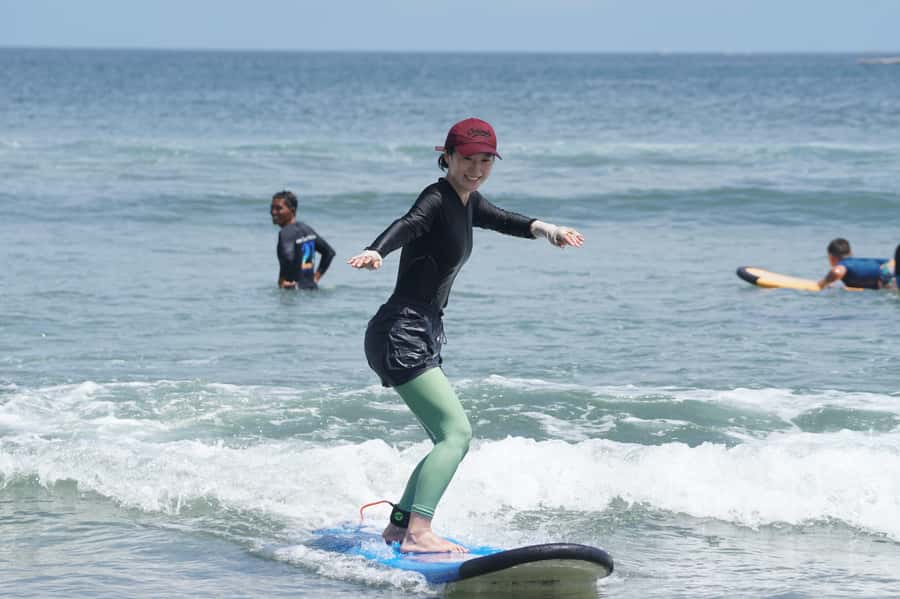
- Soft, beginner-friendly boards reduce the fear factor and help you build balance faster.
- Safety-first technique is taught before you stand, so you learn how to move with awareness.
- English-speaking local instructors guide you through paddling, positioning, and wave selection.
- Equipment included (board + rashguard + all surfing gear) makes the lesson easy to pack for.
- Great value for Bali when you want progress fast without a big price tag.
Kuta Beach surf lessons: why this spot works for beginners and improvers
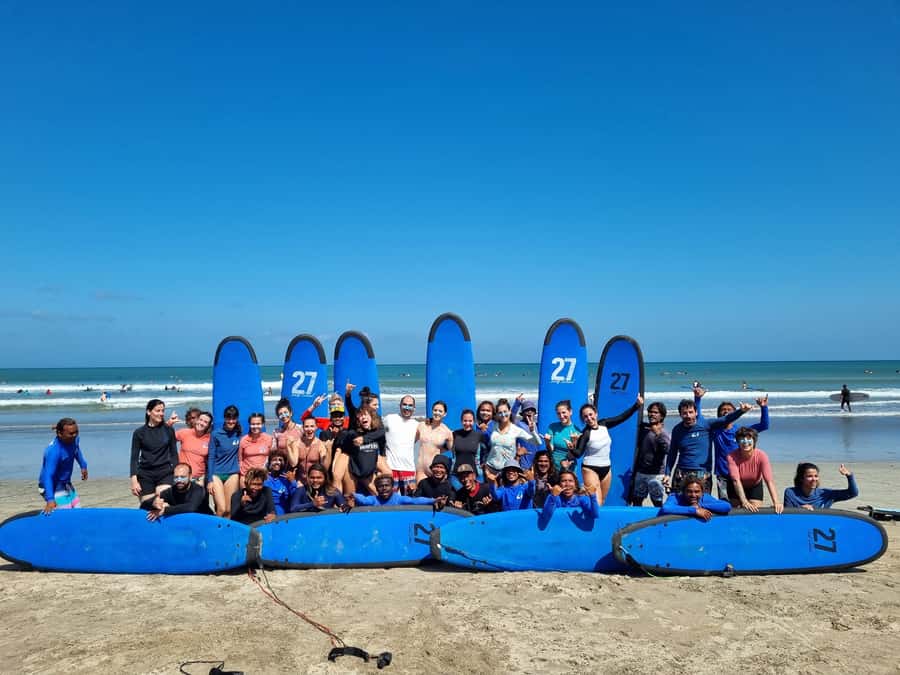
Kuta Beach is popular for a reason: it’s one of the places in Bali where you can expect a learning-friendly setup. For beginners, that matters because surfing is already awkward enough—your body needs reps, not a stressful “sink or swim” situation. With a private lesson, you’re not just hoping you’ll get a good wave. You’re learning how to find the right moments on the water.
For intermediate surfers, Kuta can still be useful, especially if you want technique notes you can apply right away. The surf can be busy, and that’s normal here. You’ll likely spend part of your time adjusting to that reality—staying aware, timing your paddling, and choosing which waves are worth going for.
The biggest practical win: the instruction is designed around the goal of getting you on the board quickly. Several instructors referenced in past lessons—like Las, Reza, and OJ—are described as calm and step-by-step. That’s the difference between “watching others surf” and actually feeling your own progress by the end of the session.
You can also read our reviews of more tours and experiences in Seminyak.



The 90-minute plan: how your lesson time is structured
This is a short, focused session (about 1.5 hours total), so the lesson has to run on purpose. Here’s how your time typically gets used.
1) Welcome and gear setup at 27 Surf School (Kuta Beach)
You’ll find the 27 Surf School surfboard sign at the beach meeting point. From there, your instructor gets you suited up and ready with the lesson equipment.
2) On-land basics: safety, paddling, and positioning
Before you hit the water, you’ll get a beach introduction. You’ll learn core safety guidance, plus the paddling technique and how to position your body on the board. This is where private lessons pay off: you can ask questions before you’re tired and confused.
3) Standing mechanics: how to get your body into place
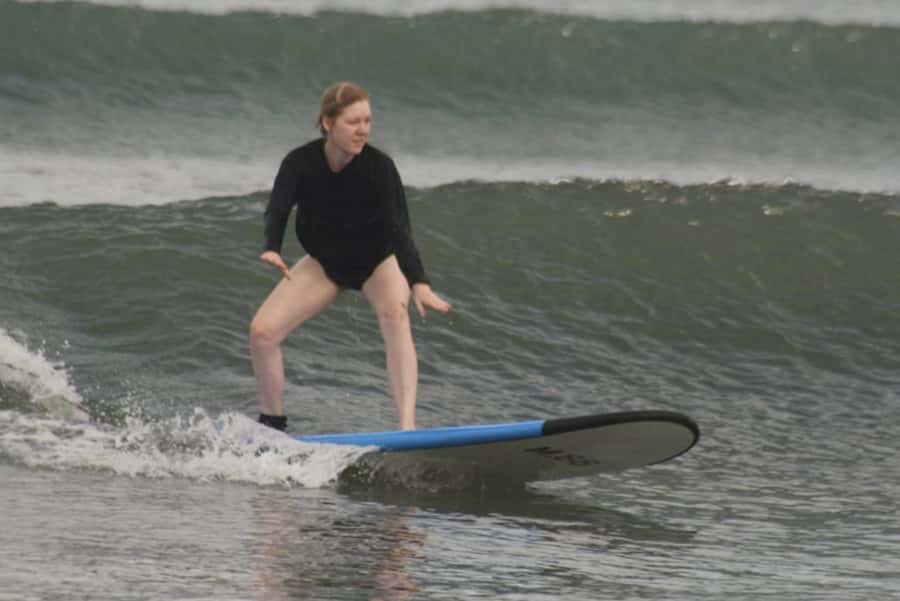
Your instructor will demonstrate correct standing technique and positioning so you can maximize time catching waves. You’ll likely practice the “pop-up” idea until it feels less random.
4) In-water coaching: catch waves with real-time feedback
Once you’re comfortable, it’s time to surf. Your coach stays close and gives constant, practical feedback—timing your paddle, telling you when to try to stand, and helping you balance as you ride.
5) Wrap-up and decompress
After you’re done, you’ll be able to relax on the beach. A lot of people then grab a cold drink (and yes, coconut is a classic move here) and enjoy Kuta Beach for a bit longer.
One-on-one coaching: what makes it feel fast instead of frustrating
Group lessons can be fun, but they also have a built-in problem: the coach can’t watch your balance, timing, and fear level at the same time. The private format fixes that.
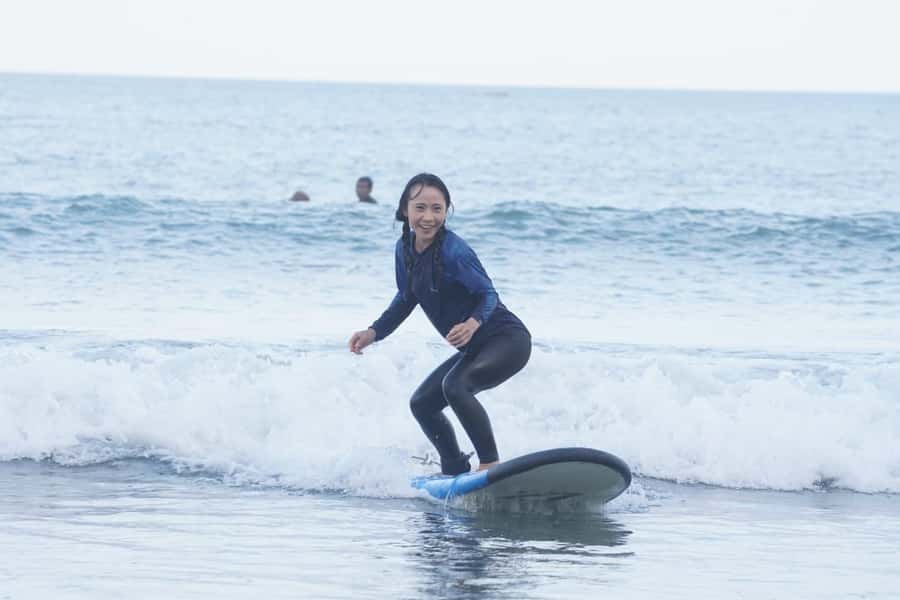
In past sessions, instructors praised for this kind of coaching include Tito, OJ, Las, Ardian, and Reza. The recurring theme in the feedback is simple: they’re patient and they coach the exact thing that’s holding you back. If you’re paddling too early, you get told. If you’re trying to stand before you’re set, you get corrected. If you hesitate, you get reassurance and encouragement.
You’ll also notice coaches actively help you connect with the wave. Some lessons are described as including support so you’re not just thrown into the deep end of timing. That means you get more successful rides, which builds confidence—and confidence matters more than people think.
Practical takeaway for you: if you want to improve quickly, choose the private lesson over “more hours alone.” Surf learning is about feedback during the moment you need it.
Safety skills you’ll practice before you ride
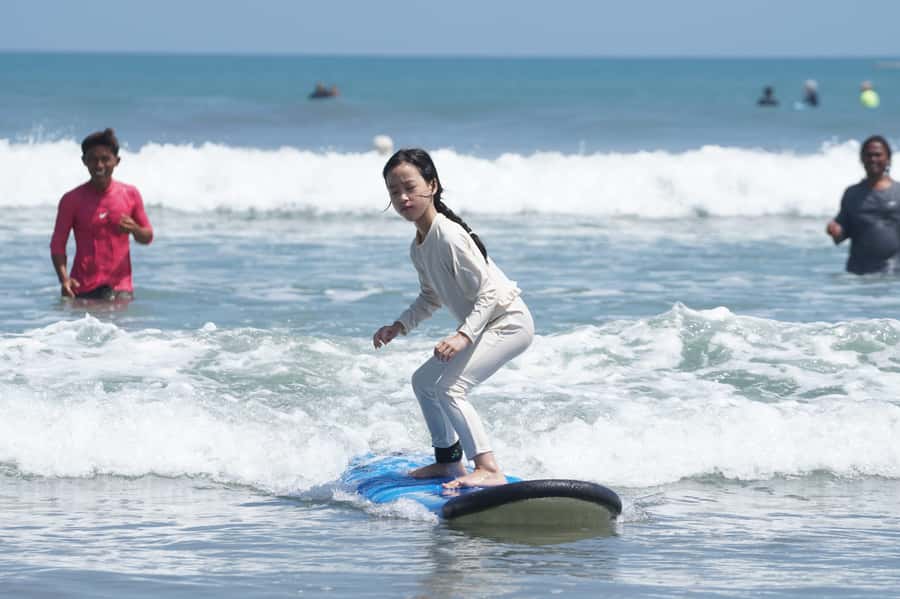
Surfing has risk, even when conditions are beginner-friendly. The good news here is the lesson emphasizes safety techniques and awareness from the start.
On land, you’ll cover essential safety tips, plus paddling technique and body positioning. That might sound basic, but it’s the foundation that prevents sloppy decisions once you’re in the surf. It also reduces the common beginner issues: losing your board, getting tangled, or panicking when a wave doesn’t go your way.
In the water, your instructor’s job is partly teaching and partly coaching decision-making. You learn how to respond when you’re tired, and how to keep your body calm enough to execute the next step. That’s why so many comments focus on instructors watching closely and adjusting the plan in real time.
And yes, Kuta can be busy. Learning to be aware of the crowd and the set patterns is part of becoming a safer surfer. Your coach should guide you toward that mindset during the session.
Equipment and what to wear: make it easy on your body
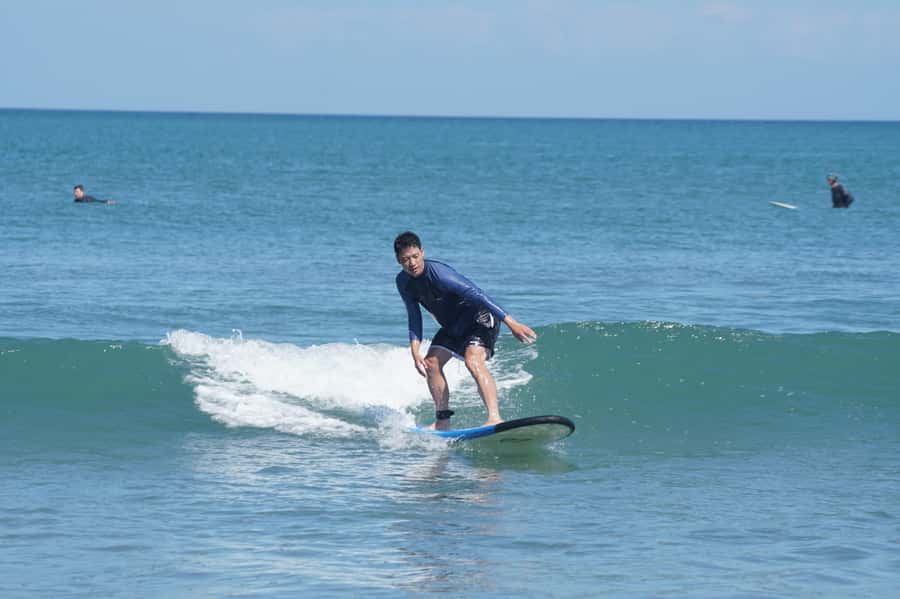
This is one of the biggest “value wins” of the lesson: you don’t need to bring a board or buy a rashguard. You’ll get:
- a soft, safe surfboard
- a rashguard (sun shirt)
- all surfing equipment
Soft boards change the first-session experience. You’ll still fall (surf is surf), but the board is more forgiving for balance and first attempts at popping up. Combined with the rashguard, you’re more comfortable when the sun and salt start doing their thing.
What you should bring:
- comfortable shoes
- change of clothes
- towel
- sunscreen
- comfortable clothes and beachwear
One small practical note: plan to dry off and reset after you’re done. A few past lessons mention showers nearby for a small fee, which can be handy if you’re heading out afterward.
Also, follow the simple rule: don’t litter. It keeps the beach scene clean for everyone.




Meeting point and getting there: Kuta Beach with optional pickup
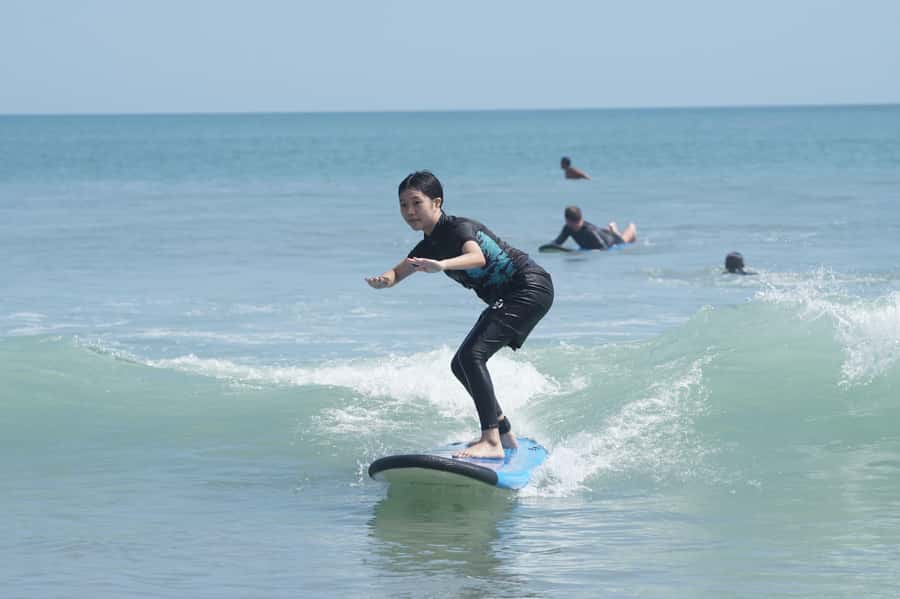
Your meeting point is straightforward: 27 Surf School, at Kuta Beach. Look for the 27 Surf School surfboard sign.
If you want pickup, it’s optional and covers parts of the south coast: Legian, Seminyak, Kuta, and Petitenget. If you’re farther out, additional scooter pickup fees are listed:
- 80,000 IDR from Jimbaran, Canggu, Sanur
- 50,000 IDR from Batu Belig, Umalas, Kondangan
- 100,000 IDR from Nusa Dua area
Pickup/drop-off is by scooter if you’re traveling with less than 6 pax. Transport has strong feedback, with 91% of reviewers scoring it perfect, so it’s worth choosing pickup if you don’t want to hunt for the sign at first light.
Practical tip: even if you use pickup, give yourself buffer time. Surf sessions can be affected by ocean conditions, and you’ll want to arrive ready—not already wiped out from logistics.
Price and value: why $13 can be a smart move in Bali
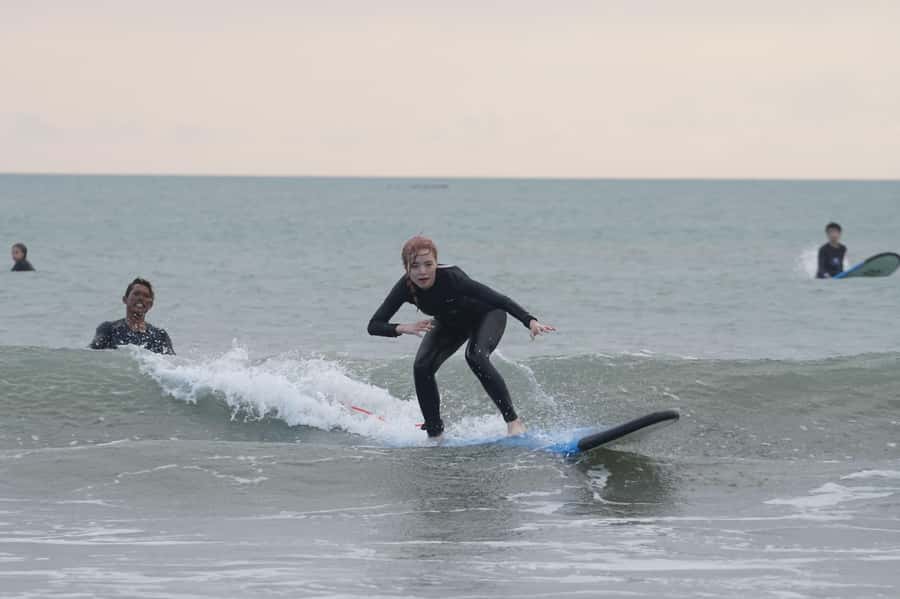
$13 for a 90-minute private surf lesson is eye-catching, and the value comes from what’s included—not just the low price.
You’re getting:
- 1-on-1 instruction
- an experienced local instructor
- soft board + rashguard
- all surfing equipment
- optional hotel pickup in key beach areas
So you’re not paying separately for gear rental, and you’re not splitting attention across a group. In Bali terms, that can be the difference between spending your morning “trying” and leaving with clearer technique you can build on.
There is one extra potential cost: insurance is an add-on. If you want it, you can add it for an additional fee. If not, you still get a lesson run with strict safety measures.
One consideration: since lessons depend on weather and ocean conditions, day-of wave quality can vary. The instructor experience matters here, and the feedback repeatedly highlights coaches who keep you progressing even when conditions are less than perfect.
Who should book this private lesson (and who should skip it)
This lesson is suitable for ages 7 and up, and it’s designed for both beginners and intermediates. If you’re bringing kids, the private format helps a lot, because a coach can guide a younger surfer through paddling and standing at a pace that matches them.
It’s also a good fit if:
- you want fast feedback rather than trial and error
- you’re nervous about surfing and want reassurance
- you’d rather spend 90 minutes learning the right way than 2 hours wandering in the waves
Not suitable for:
- pregnant women
- people with back problems
- people with altitude sickness
- babies under 1 year
- people over 70 years
If any of those apply, it’s worth choosing a different activity. Surfing is physical, and the lesson’s safety framework is aimed at specific participants.
Photos, encouragement, and what happens after you surf
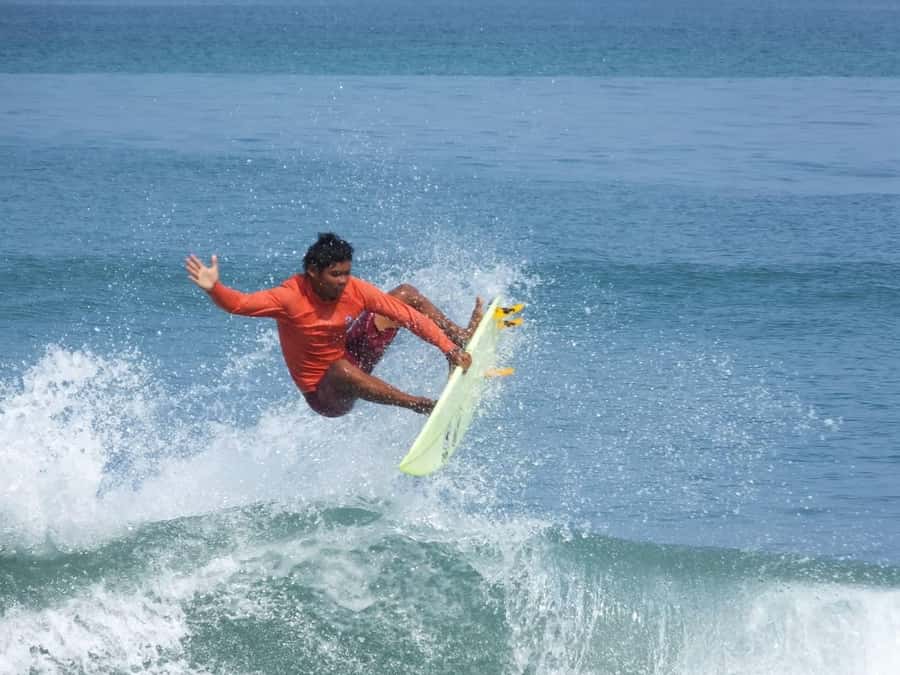
A bonus that shows up in multiple sessions: photos. People report getting pictures after the activity, and that can be genuinely useful—not as a souvenir only, but as a way to remember what your coach told you about stance and timing.
As for your mood afterward: beginners usually leave with a huge confidence boost. The lesson is built around catching waves and building skill with support. Even when someone doesn’t ride the “perfect wave,” they often still walk away feeling like they understand the process.
Afterward, you can stay on Kuta Beach. Many people slow down with a cold drink or coconut, then watch the ocean until sunset. It’s the easiest way to turn a single lesson into a full half-day without overplanning.
Should you book 27 Surf School’s 1-on-1 Kuta lesson?
I’d book this if your goal is simple: learn to surf with focused attention at a beginner-friendly beach, with gear included and instruction that corrects you while you’re actually trying. The private format is the main reason it’s worth it, especially if you’re a first-timer or you want to tidy up technique without wasting time.
Skip it if your schedule is fragile and you can’t handle weather-related changes, or if any of the listed health restrictions apply. And if you hate uncertainty, keep a little flexibility: ocean conditions can shift quickly in Bali.
If you can handle that small reality of the sea, this lesson is a strong value play. It’s one of the easier ways to get real surfing reps on your first trip to Bali.
FAQ
Where do I meet for the lesson?
Meet at 27 Surf School at Kuta Beach. You should look for the 27 Surf School surfboard sign at the beach.
How long is the surf lesson?
The lesson lasts about 90 minutes (approximately 1.5 hours).
What equipment is included?
You get a soft, safe surfboard, a rashguard (sun shirt), and all surfing equipment needed for the session.
What language is the instructor?
The instructor speaks English.
Is pickup available?
Pickup is optional. It covers Legian, Seminyak, Kuta, and Petitenget area. Other areas have additional fees: 80,000 IDR (Jimbaran, Canggu, Sanur), 50,000 IDR (Batu Belig, Umalas, Kondangan), and 100,000 IDR (Nusa Dua). Pickup/drop-off is by scooter if less than 6 pax.
What should I bring?
Bring comfortable shoes, a towel, sunscreen, a change of clothes, comfortable clothes, and beachwear.
Is insurance included?
Insurance is not included by default; it’s available as an add-on for an additional fee.