First-time surfing can feel chaotic, until the plan is solid. I love that this is a private beginner lesson with hands-on coaching and close attention, plus the safety-first coaching that starts before you even hit the water. The only thing to keep in mind is that Kuta’s conditions can change with weather and tide, so some days feel rougher than others, especially at higher tide.
You get a structured 2 hours that moves from surf theory to beach practice, then two separate water sessions with a break in the middle. It’s also popular and well reviewed, with a 99% recommendation rate and a 5-star average that comes up for patient instruction and steady progress. If you’re aiming to stand up and ride your first wave without guessing, the pacing does a lot of the heavy lifting for you.
One more practical note: it’s a private setup for just your group, so you will get more individualized attention than you would in a big mixed class. The meeting point is right on Kuta Beach, so you can keep your day simple and focus on learning.
In This Review
- Key things I like about this Kuta surf class
- Why Kuta Beach works so well for first-timers
- Price and what the $25 lesson really includes
- Meeting right on Kuta Beach: the practical logistics that save your time
- The first 20 minutes: surf safety and theory that lowers the panic
- Beach practice first: how you get comfortable before paddling out
- Round one in the ocean: 45 minutes paddling, catching waves, standing
- Mid-lesson break: water, rest, and a reset for your second round
- Round two: another 45 minutes to practice and build real progress
- Choosing the right tide and timing for your best first day
- Who should book this private Kuta lesson (and who might want to pick another option)
- Should you book Bali Surf Class in Kuta?
- FAQ
- What is the duration of the surf lesson?
- Is this lesson for complete beginners?
- What’s included in the $25 price?
- Is the lesson private?
- Where do we meet for the lesson?
- What happens during the 2-hour session?
- What if weather or beach conditions make the lesson unsafe?
Key things I like about this Kuta surf class
- Private coaching for complete beginners, including step-by-step guidance and constant check-ins
- Begin with safety and theory for the first 20 minutes, so you understand what to do before paddling out
- Two water rounds (45 minutes each) with a break to drink water and reset
- Beginner-friendly beach learning in Kuta, often chosen for first-timers due to easier learning conditions
- Gear is provided: surfboard, rash vest, and bottled water
- Instructor names show up for good reason, including Harman and Jerry in past experiences
Why Kuta Beach works so well for first-timers

Kuta has a reputation for being a good place to learn, and the practical reason is simple: it’s set up for teaching. You’ll see why quickly once you’re standing there gearing up. It helps that the beach is commonly described as beginner-friendly, with less stress for new riders compared to reefier areas.
What matters for you is not just the surf spot, but the vibe and the teaching flow. A good first lesson needs a setup where you can fall safely, reposition fast, and keep trying without feeling like you’re fighting the ocean from minute one.
Also, Kuta is easy to reach, with public transportation nearby. That helps if you’re trying to keep this activity from turning into a whole day of logistics. You can plan around the surf itself instead of getting stuck in transit, waiting, and guessing how long everything will take.
You can also read our reviews of more tours and experiences in Kuta.



Price and what the $25 lesson really includes
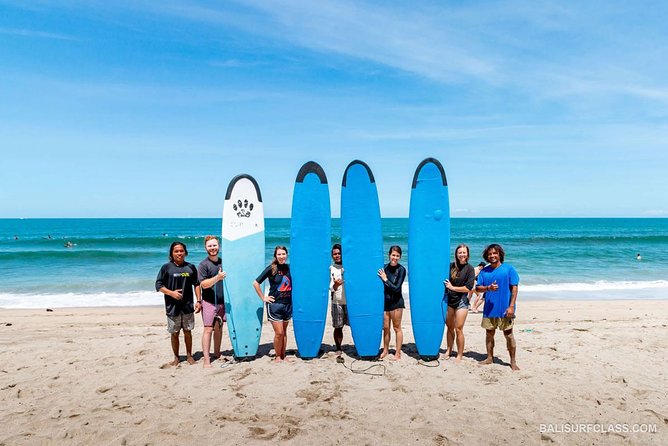
At about $25 per person for a 2-hour private lesson, the value comes from what’s wrapped into the price. You’re not paying extra for the basics. The surf school provides the surfboard and rash vest, and you also get one 500ml bottled water per person. That’s a big deal for a first-timer, because you avoid the awkward start where you have to figure out gear on the spot.
You also get the structure of coaching time: you’re on the water in two blocks. That matters more than people think. One long session often turns into fatigue and frustration. Here, the break lets you reset, drink water, and come back with fresher energy.
One cost to note: public showers and toilets are available on the beach, but they come at an additional cost. It’s not a deal breaker, just plan for it.
Meeting right on Kuta Beach: the practical logistics that save your time
Your meeting point is in front of ROSSO VIVO Italian Restaurant on Jl. Pantai Kuta, Kuta. The activity ends back at the meeting point, so you’re not stuck with a complicated return plan.
You’ll use a mobile ticket, and confirmation is received at booking time. That makes it easy to show up without digging through paper or worrying about printing.
Because it’s near public transportation, you can arrange your day without needing private rides. And since it’s a private tour/activity, only your group participates, so you won’t get squeezed into a crowded class where instruction turns generic.
The first 20 minutes: surf safety and theory that lowers the panic
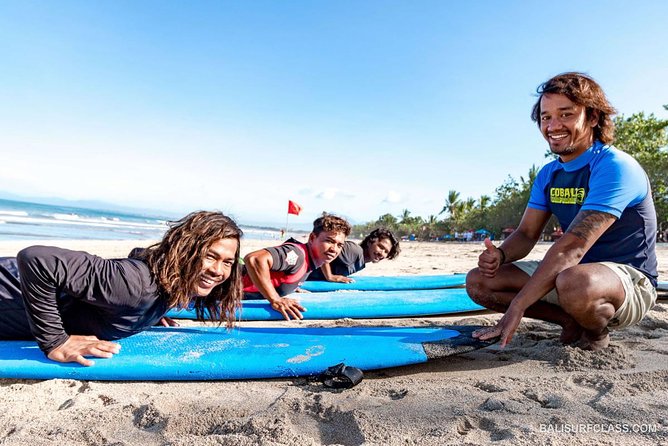
This lesson starts with about 20 minutes of surf safety and theory. That time is not “extra talk.” It’s the difference between guessing and understanding.
For a complete beginner, the ocean is confusing fast. Currents, wave timing, and what to do when you wipe out can make people freeze up. By covering safety and core theory up front, you start the water session with a mental checklist. You know what you’re meant to try, and you’re less likely to feel overwhelmed when things get busy.
You’ll also notice that the instruction style gets praised a lot for clarity and patience. In past experiences, instructors like Harman have been described as giving clear direction and making sure you’re okay the whole time. Others like Jerry have been described as staying patient even when someone spends more time falling than standing in those early attempts.
Beach practice first: how you get comfortable before paddling out
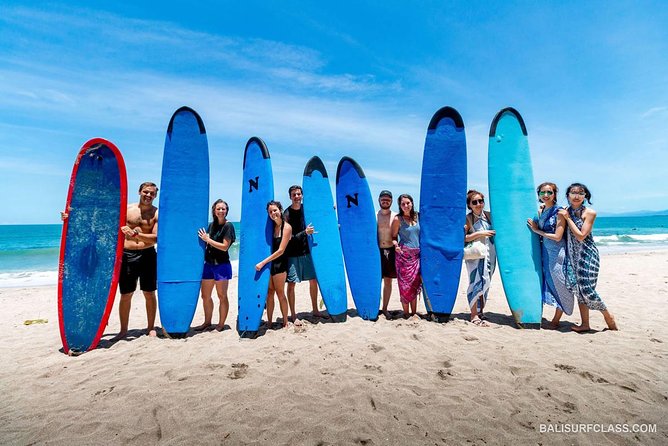
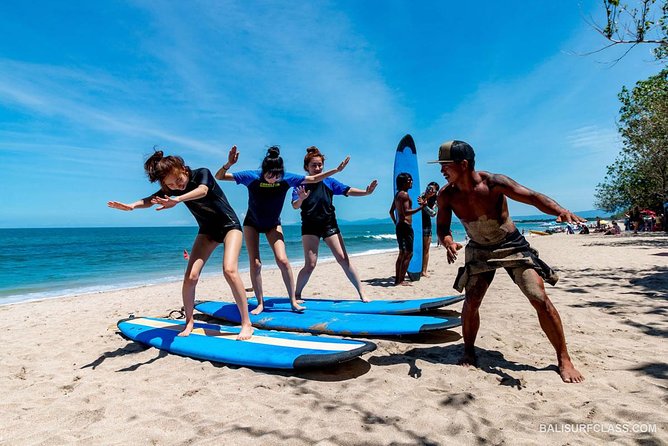
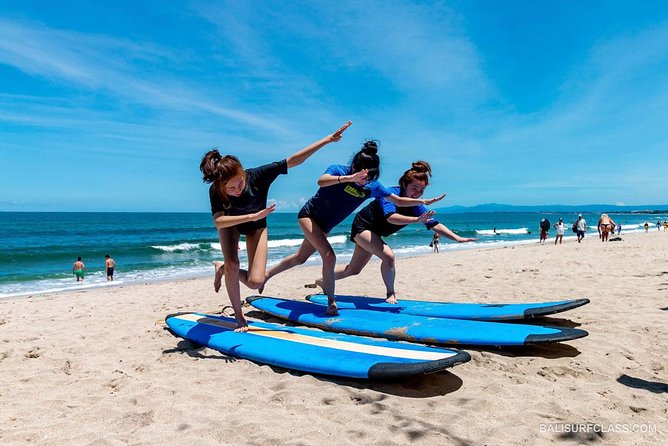
After the safety/theory portion, you get a few minutes of beach practicals. This is where you map the lesson to your body.
Beach practice is underrated. You learn the basic movements and board handling without fighting surf conditions yet. That means when you’re finally in the water, you can focus on paddling and timing instead of trying to figure out where your feet should go.
For older beginners, this part can help a lot too. One account notes that the team managed to get two beginners in their 50s onto boards, which usually comes down to giving people a doable progression they can follow.





Round one in the ocean: 45 minutes paddling, catching waves, standing
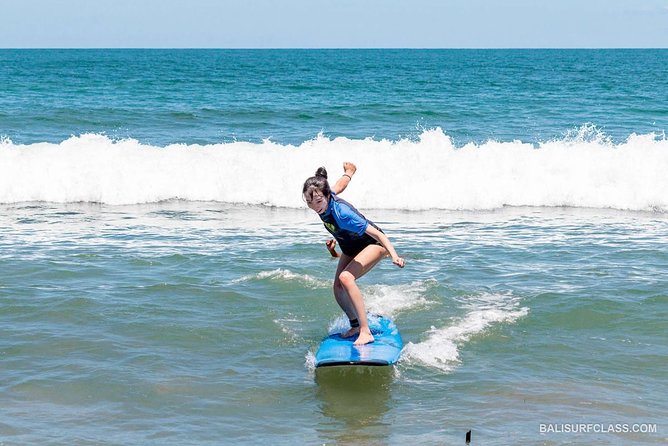
Then the lesson moves into the water: about 45 minutes for paddling, catching waves, and (hopefully) standing. This is where the private coaching really pays off.
In Kuta, conditions can shift. You might hit the ocean when it feels calm, or you might start during higher tide when it gets a bit rougher. The key is that your instructors stay with you the whole time and match the wave choices to your experience level. That’s a recurring theme: even when the water feels tougher, you’re guided toward the waves you can manage.
This is also where you’ll likely start building confidence quickly. The goal for beginners isn’t instant long rides. It’s getting comfortable with the board under your feet, learning how to catch a wave, and linking that to a safe stand.
Mid-lesson break: water, rest, and a reset for your second round
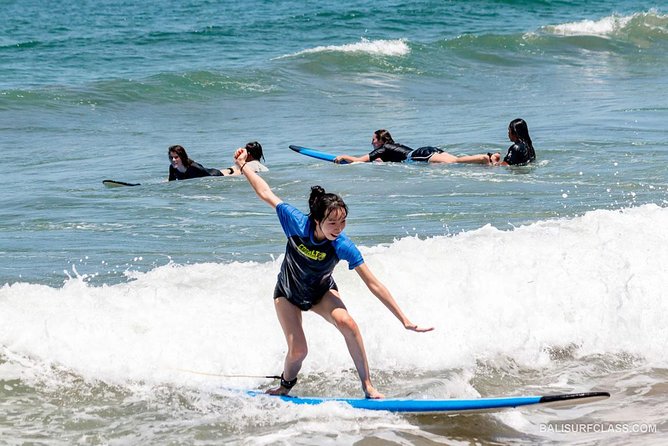
After the first water session, you head back for a quick break. You drink water, rest a little, and reset mentally.
Because you get bottled water included, you don’t need to hunt for refreshments while your energy is dropping. This break helps you avoid the classic beginner trap: burning out early, then spending the second session just trying not to feel exhausted.
It also gives the instructors time to adjust what you work on next based on what you handled in round one.
Round two: another 45 minutes to practice and build real progress
Once you’re ready, you get a second 45-minute stretch in the water. Think of this round as repetition with upgrades.
By now, you’ve been through the hardest part: getting into the rhythm of paddling, timing a wave, and dealing with wipeouts. The second session is where you try to improve that first success, even if it’s small. One more stand. A better position. A calmer wipeout.
This is also where many beginners feel the most progress. Accounts highlight how quickly people advance from never having surfed to being able to ride a wave by the end. That doesn’t mean you’ll all become experts in two hours. But it does mean the lesson is paced to help you leave with a sense of achievement rather than just a dramatic splash photo.
Some experiences also mention that instructors send photos and videos afterward via WhatsApp. If you’d like that kind of memory, it’s a nice bonus to look out for after class.
Choosing the right tide and timing for your best first day
The surf school is clear that timing matters. They recommend the best times and dates based on tide conditions, because tide can make the difference between an average first surf and an excellent first surf.
My practical advice: don’t treat the lesson like it happens no matter what. If you can choose between dates, ask for advice on timing. If conditions change, the instructors adjust. That flexibility is part of what you’re paying for.
Weather is also a factor you can’t control. They note that beach conditions can change throughout the year, and that it’s outside their control. The good news is that if the experience is canceled due to poor weather, you’ll be offered another date or a full refund.
Who should book this private Kuta lesson (and who might want to pick another option)
This is ideal for you if:
- You’re a complete beginner and want personalized attention
- You learn best with clear instructions and patient coaching
- You’re okay with moderate physical effort (paddling and getting up on the board takes work)
- You’d rather be with a small private group than in a bigger class
It’s also a strong match for couples and small groups. Since it’s private, you’re not competing for the instructor’s time with strangers.
You might consider a different day or spot if:
- You get motion sick easily in choppy water. (They do keep you safe and guided, but rougher conditions can still be uncomfortable.)
- You’re looking for a long advanced session. This is a beginner-focused two-hour intro that aims for early wins and “ready to practice on your own” next steps.
Should you book Bali Surf Class in Kuta?
I think you should book it if your main goal is a first surf session that feels guided, not random. The value is strong because you get gear, water, and a lesson plan built around safety first, beach basics, and two distinct ocean tries. The private format also matters. It usually makes the difference between feeling lost and feeling coached.
The one reason to pause is the weather/tide reality. Surf is nature, not a gym class, and conditions can change. Still, the team accounts for that by advising on tide timing and staying flexible if conditions shift.
If you want a clean, beginner-friendly way to get your bearings fast and leave with the confidence to try again, this Kuta class is a solid bet.
FAQ
What is the duration of the surf lesson?
The lesson is approximately 2 hours.
Is this lesson for complete beginners?
Yes. It’s designed for complete beginners, with surf safety, theory, beach practice, and time in the ocean.
What’s included in the $25 price?
The lesson includes a surfboard and rash vest, plus bottled water (one 500ml bottle per person).
Is the lesson private?
Yes. It’s a private tour/activity, and only your group participates.
Where do we meet for the lesson?
Meet at Bali Surf Class on the beach in front of ROSSO VIVO Italian Restaurant, Jl. Pantai Kuta, Kuta, Bali.
What happens during the 2-hour session?
You start with about 20 minutes of surf safety and theory, then a few minutes of beach practicals. After that, you go into the water for about 45 minutes, take a short break, and then go back into the water for another 45 minutes.
What if weather or beach conditions make the lesson unsafe?
If the experience is canceled due to poor weather, you’ll be offered a different date or a full refund.