A half-day in Ubud that hits the highlights. This tour strings together Ubud’s Sacred Monkey Forest plus two craft villages (Mas and Celuk), and then ends at the Ubud Traditional Art Market—so you get temple energy, hands-on shopping, and a real slice of everyday Balinese creativity. I love that the plan is tight and practical for limited time, and I also like having an English-speaking driver/guide to explain what you’re seeing rather than you guessing your way through. One thing to consider: the stops are time-boxed, so if you want to linger and bargain for hours, this pace may feel a little rushed.
You’ll get a smooth, south-Bali-to-Ubud schedule with pickup and an air-conditioned vehicle, plus admission to the Monkey Forest itself is included. I really like the craft-village focus—Mas for wood carving and Celuk for silver—because you’re shopping where the work is made, not just buying packaged souvenirs. The only potential snag is that lunch and tips aren’t included, so you’ll want to plan to eat on your own after the tour.
In This Review
- Key Things to Know Before You Go
- Why This Half-Day Ubud Loop Works for Limited Time
- Hotel Pickup and Transport: Less Guessing, More Wandering
- Sacred Monkey Forest Sanctuary: Temples, Statues, and Photo Opportunities
- Mas Village Wood Carving Center: Watching Craft Become Souvenirs
- Celuk Village for Silver Jewelry: How to Shop With Intent
- Ubud Traditional Art Market: Practical Souvenirs Near a Royal Palace Area
- Price and Value: Is $71 a Good Deal for This Half-Day?
- The Real Win: A Guide Who Makes It Make Sense
- Who This Tour Suits Best (and Who Might Prefer Something Else)
- Should You Book This Ubud Sacred Monkey Forest & Art Village Tour?
- FAQ
- How long is the Ubud Sacred Monkey Forest and Art Village tour?
- Where does pickup take place?
- What is included in the price?
- Are there entrance fees for Mas, Celuk, and the Art Market?
- Is lunch included?
- What’s the start time?
Key Things to Know Before You Go
- Sacred Monkey Forest admission is included, so your ticket time goes to the experience, not paperwork.
- Mas (wood carving) and Celuk (silver/jewelry) are each about one hour, which is great for a taster but not for slow browsing.
- Ubud Art Market is free to enter, and it sits near the Puri Saren Royal Ubud Palace area.
- Pickup is offered from south Bali and the Ubud area, which cuts down on navigation stress.
- You’re not stuck with a rigid script: a good guide can add context about Hindu sites and village crafts as you move.
- Guides like Kana and Dedy have been praised for safety and clear commentary, including small comforts like starting with water.
Why This Half-Day Ubud Loop Works for Limited Time
If you only have a half-day in Bali, it’s easy to waste it bouncing between far-flung sights. This format is designed to do the opposite: it keeps you in the Ubud orbit and strings together three money-can’t-buy “look at how it’s made” stops—monkey forest, then craft villages, then an art market.
You’ll feel the pacing right away. The tour runs about 4 hours, with roughly one hour per main stop. That’s enough time to enjoy the atmosphere, walk around, and shop, without the day ballooning into a full production. If you’re the type who wants a photo-heavy highlight tour but also wants meaning behind it, this is a nice match.
Still, the same tight schedule is the trade-off. You can’t expect to master the bargaining dance or deeply compare dozens of workshops in an hour each. Think of this as a great “first Ubud” visit—then, if you fall in love with a particular craft, you can always return later and go slower.
You can also read our reviews of more tours and experiences in Jimbaran.

Hotel Pickup and Transport: Less Guessing, More Wandering
The best part of the logistics here is that you don’t have to figure out routes or timing. Pickup is offered from south Bali and the Ubud area, and you travel by an air-conditioned vehicle with an English-speaking driver/guide.
This matters more than it sounds. Ubud traffic and local roads can be tricky if you’re unfamiliar. Having a chauffeur-guide who handles the driving means you can focus on what you came for—walking, looking, and asking questions.
In the past, guides on this kind of outing have also been described as personable and careful in the car. Some tours start with small touches like water and then keep moving with commentary along the way. Even if your guide isn’t chatty the whole time, you’ll still get the benefit of having someone who knows where you’re headed and what you should notice.
Sacred Monkey Forest Sanctuary: Temples, Statues, and Photo Opportunities
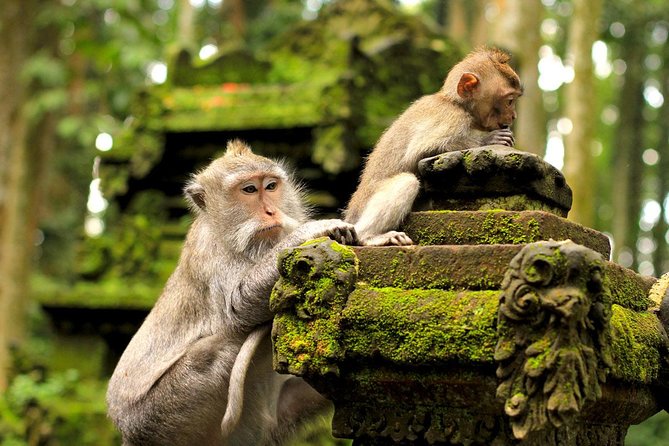
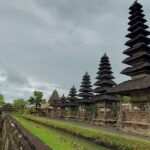
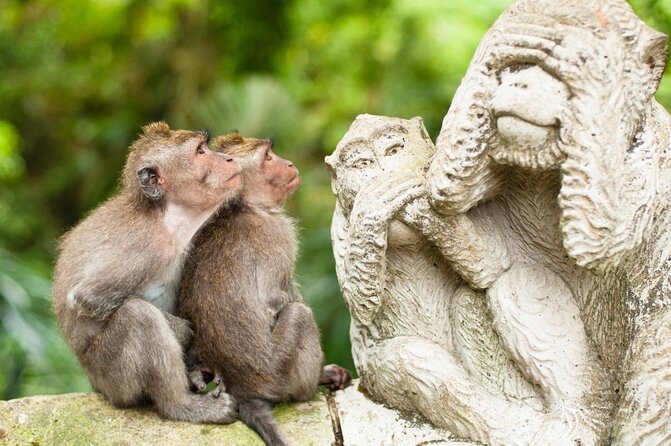
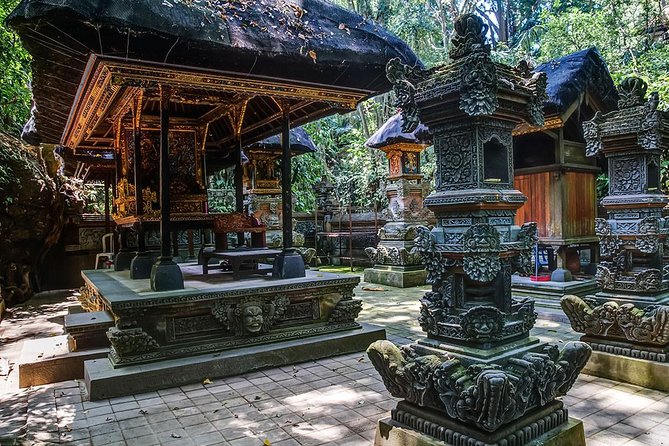
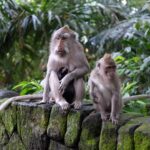
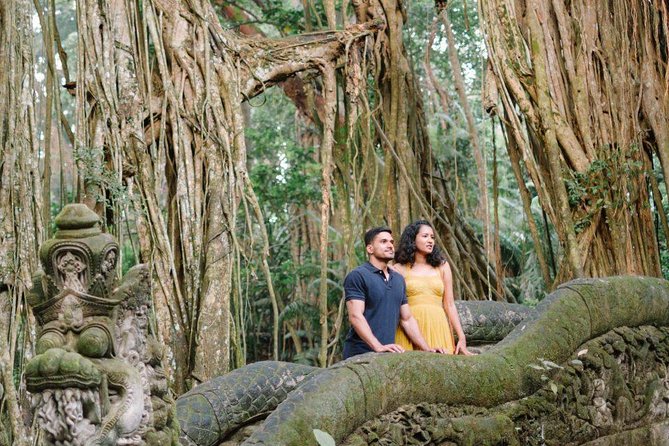
The tour’s first major stop is the Sacred Monkey Forest Sanctuary, also known as Mandala Suci Wenara Wana. You’ll be stepping into a protected forest area with three older temples inside it, connected to Hindu practice and use. In other words, this isn’t just a zoo stop. It’s a place with spiritual meaning, surrounded by the kind of dense, shaded scenery you want in Ubud.
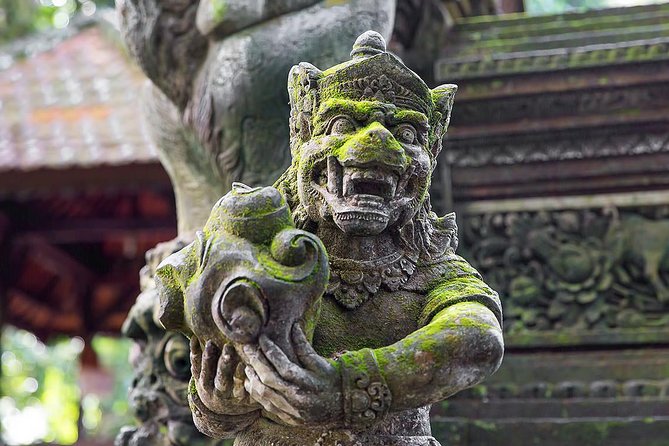
What you’ll enjoy most is the contrast: macaques up close, plus carved temple details and statues you can frame into photos. This is the kind of stop where a guide can help you understand what you’re looking at—like why the temples are there, and what function the sanctuary has.
A practical consideration: one hour can feel like “just getting started” if you’re planning to take lots of pictures. If you’re traveling for photos, arrive ready to shoot early and then slow down for the temple and statue areas. Wear shoes that handle uneven paths, and keep your eyes on your surroundings when you’re near monkeys.
Also, note that Monkey Forest entrance is included, so you can spend less time dealing with tickets and more time on the actual walk.
Mas Village Wood Carving Center: Watching Craft Become Souvenirs
Next up is Mas Village, described as one of Bali’s traditional villages where wood carving is a central art. This stop is aimed at the craft itself, not just the end product—so you can connect the carving you see in shops to the village identity and daily work.
You’ll spend about one hour here, and the admission is free. That makes it easy to treat as an on-the-ground introduction. You can look at carvings, see the styles that are popular, and then decide what fits your taste and budget.
What makes Mas valuable on this tour is the “shop where it’s made” angle. It’s one thing to buy a Bali carving from a random store. It’s another to realize you’re in a place known for the craft, where the shops and artisans are part of the village ecosystem.
The catch is the same as everywhere else on a half-day plan: you’ll be choosing fast. If you want to compare many workshop styles, focus on a shortlist. Pick one or two themes (animals, masks, religious motifs, furniture-style pieces) and stick with that, or you’ll burn time hopping from display to display.
Celuk Village for Silver Jewelry: How to Shop With Intent
Then you move to Celuk Village, widely associated with silver jewelry making. This stop is also about one hour, and admission is free, which helps keep the day balanced—your money goes to the things you actually choose to buy.
Celuk is near Ubud, in the Gianyar region. The village focus gives you a useful perspective: instead of treating jewelry as a generic souvenir category, you can think of it as a craft tradition with its own local identity.
How to shop smarter here: set a clear goal before you step into the stalls. For example, decide whether you want something for everyday wear, a gift, or a statement piece. Silver can be tempting because it looks good in photos and it’s easy to carry, but you’ll get better results if you shop with your real use in mind.
One more advantage of having your driver-guide: they can help you move efficiently and interpret what you’re seeing. Some guides are especially good at explaining how these crafts relate to the local communities, which makes your shopping feel less random and more grounded.
Ubud Traditional Art Market: Practical Souvenirs Near a Royal Palace Area
The day ends at the Ubud Art Market (often called Pasar Seni Ubud), located opposite Puri Saren Royal Ubud Palace and open daily. This part is great if you want to round out your trip with smaller, everyday items.
You can look for things like silk scarves, lightweight shirts, handmade woven bags, baskets, or hats. It’s also a good place to find lighter souvenirs you can pack without planning a special luggage strategy.
This final stop is helpful because it’s the least “high craft” and the most “browse-and-pick.” If you spent the first half of the tour focused on carving and silver, the art market is where you can say yes to the practical extras—things that feel like Bali but don’t require a deep craft explanation.
Since the tour allots about one hour, you’ll want to make a quick pass first. Walk the area, check price ranges in your mind, and then go back for what you actually want.
Price and Value: Is $71 a Good Deal for This Half-Day?
The tour price is $71 for about 4 hours, and several key elements are included. You get:
- Private transportation
- Air-conditioned vehicle
- English-speaking driver/guide
- All fees and taxes
- Entrance to the Monkey Forest
Mas, Celuk, and the Art Market are described as free to enter on the tour plan, so your paid portion largely covers the vehicle, the guide, and the main attraction ticket.
That’s the value equation: you’re paying mostly for time saved and access made simple, plus the Monkey Forest admission. If you were to do this on your own, you’d still likely need a car for the Ubud-area hops, and you’d spend time figuring out routes and entry details.
What’s not included is also clear: lunch and tips aren’t part of the price. That doesn’t make it “expensive”—it just means you should budget for food after. Treat that as part of the total cost of a half-day out.
The Real Win: A Guide Who Makes It Make Sense
A big reason this tour works well is the human layer. The driver/guide isn’t only driving—you’re getting explanation along the way.
In past experiences, guides like Kana have been praised for giving commentary throughout the trip and offering a perspective that helps a first-time visitor understand the people and communities behind the sights. Others, like Dedy, have been described as personable and focused on making you feel safe and comfortable in the car. Some tours start with a small welcome touch like a bottle of water, then keep the flow going with context as you move from stop to stop.
You don’t need a guide who talks constantly. You mainly need someone who can answer your questions in real time: What am I looking at in the temple area? Why is Mas known for carving? How should I think about the different kinds of silver pieces?
If you like a tour where you walk away with more meaning than just photos, this is a strong fit.
Who This Tour Suits Best (and Who Might Prefer Something Else)
This tour is best for you if:
- You have limited time in Bali and want a compact Ubud hit list.
- You care about craft shopping from places known for making the items.
- You like guided context and prefer not to manage logistics yourself.
- You want a half-day plan that stays practical and doesn’t swallow your whole afternoon.
You might skip it if:
- You’re a deep-dive shopper who wants to spend several hours at each craft location.
- You’re traveling with zero interest in markets or buying souvenirs.
- You strongly prefer a very slow, unstructured day.
Because the schedule is tight, it rewards focused visitors. Come with a few priorities—monkey forest photos, wood carving items you actually want, silver pieces you’ll wear or gift—and you’ll likely feel like you got your money’s worth.
Should You Book This Ubud Sacred Monkey Forest & Art Village Tour?
Yes, if you want a clean, efficient half-day in Ubud that mixes a standout nature/temple attraction with two craft villages and a real local market. The value is strongest in the combination: Monkey Forest admission included, plus private air-conditioned transport and an English-speaking guide who helps you connect the dots.
If you’re the type who hates time limits, go slower elsewhere in Ubud. But if you’re trying to make smart use of limited hours, this is one of the better-structured options for seeing the essentials without turning your day into a logistical headache.
FAQ
How long is the Ubud Sacred Monkey Forest and Art Village tour?
It runs for approximately 4 hours, with about 1 hour at each main stop.
Where does pickup take place?
Pickup is offered from south Bali and the Ubud area, and the driver/guide collects you from your hotel area.
What is included in the price?
The tour includes an English-speaking driver/guide, an air-conditioned vehicle, all fees and taxes, private transportation, and entrance to the Monkey Forest.
Are there entrance fees for Mas, Celuk, and the Art Market?
For this tour plan, admission to Mas Carving Center and Celuk Village is free, and the Ubud Traditional Art Market is also free to enter.
Is lunch included?
No. Lunch is not included, and you’ll want to plan for your own meal outside the tour.
What’s the start time?
The tour start time is 9:00 am.
If you want, tell me your travel dates and where you’re staying (south Bali or Ubud area), and I can help you sanity-check whether this timing will fit your day plan.