Sun, temples, and rice views in one long day. You’ll enjoy Tegalalang rice terraces for classic Ubud photos, then cool off at Tirta Empul’s holy spring pools. The only real tradeoff is that the schedule is full, so you’ll want comfy shoes and a good water plan for the heat.
I like that this is a private car day trip with an English-speaking driver and all the entry tickets included, so you spend less time figuring out gates and more time seeing what matters. The Ubud market and palace stop also gives you a quick look at daily life, not just scenic postcards.
If you want a structured Ubud day with time in a few big-name places, this fits. It’s private (just your group), so you can move at a sensible pace instead of being swept around like luggage.
In This Review
- Key highlights at a glance
- Ubud in a single day: why this route works
- Entering Ubud Traditional Art Market and Palace grounds
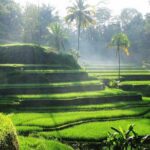
- Tegalalang rice terraces: the photos are the easy part
- Pulina Agro Tourism: coffee making with a view
- Tirta Empul: holy spring pools and the melukat atmosphere
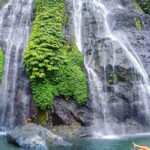
- Tegenungan Waterfall: swim time, or just cool air
- Price and logistics: is $45 good value?
- Who this tour suits best (and who should think twice)
- A realistic packing and timing checklist
- Should you book this Ubud day trip?
- FAQ
- Is pickup offered on this day trip?
- What time does the tour start?
- How long is the experience?
- Where does the tour operate from?
- What’s included in the price?
- What is not included?
- Is this tour private?
- What is the cancellation policy?
Key highlights at a glance
- Tegalalang rice terraces with coconut trees and valley views
- Tirta Empul holy spring temple and the melukat bathing setting
- Ubud traditional market + palace in one focused stop
- Pulina coffee plantation demo with rice-terrace backdrop
- Tegenungan waterfall where you can swim or just enjoy the natural spring showers
Ubud in a single day: why this route works
This day trip strings together five well-known stops that each give a different flavor of Ubud. You start with markets and palace life, shift to the famous rice-terrace look, then head into culture and ritual at Tirta Empul, finishing with a waterfall where you can cool down fast.
That mix is the main value. If you only chase rice photos, you miss the everyday side of Ubud. If you only do temples, you miss why people come for these green views in the first place. This route does both, with enough time at each place to actually enjoy it.
It also helps that the tour includes a private car plus parking and entry tickets. For a day like this, those add-ons are often where costs quietly pile up. Here, they’re handled for you.
You can also read our reviews of more tours and experiences in Seminyak.



Entering Ubud Traditional Art Market and Palace grounds
Your morning begins at Ubud Traditional Art Market, and it’s worth paying attention to how it’s split. There’s a traditional market on the west side that sells daily food and opens earlier. Next to it, the arts market leans into handicrafts, arts, and textiles.
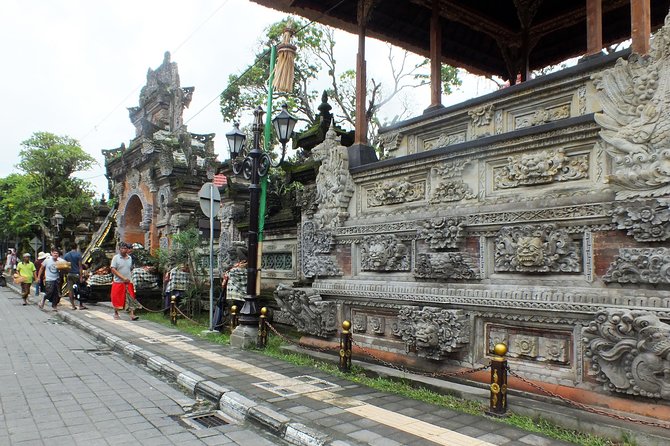
Then you’re right by the Ubud Palace, where the royal family lives. Even if you’re not there for evening shows, the palace area matters because it shapes how the whole neighborhood feels. In the evening, the outside yard is used for performances like Legong Dance, Barong Dance, Ramayana Ballet, and Mahabharata Ballet.
What to watch for: market areas move fast. If shopping is your goal, go in with a list so you don’t get pulled into random browsing for an hour. If you mainly want photos and atmosphere, be ready for a lot of activity around entrances and stalls.
Practical tip: dress in a respectful way for palace areas. Even when you’re just walking through, you’ll feel better covered up, and you’ll avoid awkward stops for guidance.
Tegalalang rice terraces: the photos are the easy part
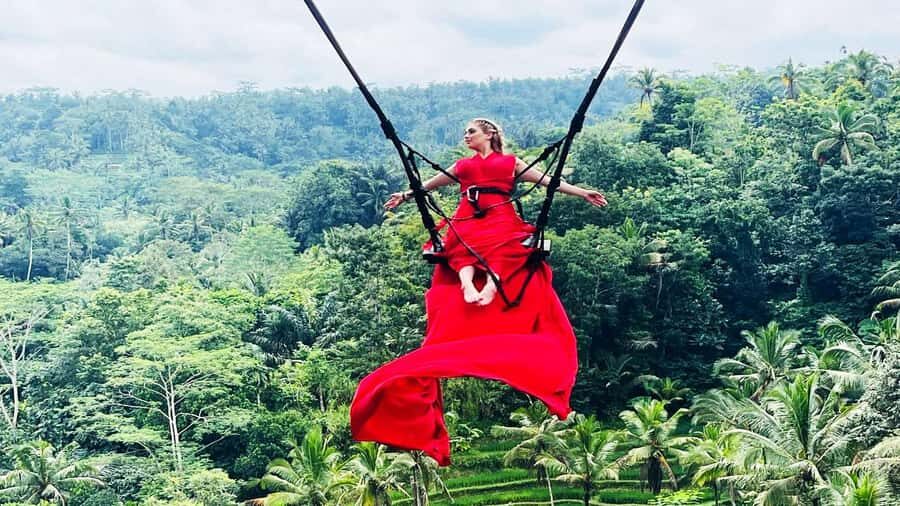
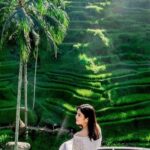
Tegalalang Rice Terrace at Tegallalang Village is the stop most people picture when they think of Ubud. You’ll get those layered views, plus the extra details that make it feel real: coconut trees and a small river valley running through the scene.
This area also works because it ties scenery to local craft. Tegallalang is known as a handicraft center, including wholesale and export. Along the road, you’ll see many shops selling painted woodcarving with colorful designs. The painted woodcarving is made from very light wood, and prices are often described as reasonable, with options for both wholesale and retail.
Here’s the real decision point for you: are you shopping, or are you soaking in views? There’s enough of both that you can do either. If you’re not planning to buy, still take a slow pass through a couple of shops so you understand what’s being made nearby. It gives the terraces a context beyond photos.
If you do plan to buy, set a budget before you start. When there are many similar-looking items in a row, it’s easy to lose track. Also, expect that the best viewpoints may involve uneven ground and stairs, so wear shoes you’re comfortable moving in.
Pulina Agro Tourism: coffee making with a view
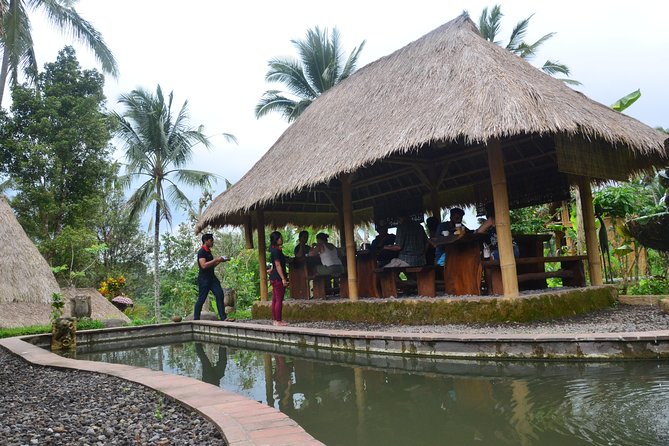
Next up is Pulina Bali Agrotourism (often listed as a coffee plantation stop). Even if you’re not a coffee person, this stop has two things going for it.
First, the setting. The view behind the farm is tied to the rice-terrace look, so you’re not just learning about coffee; you’re watching the greenery that supports local farming culture. Second, you get a coffee powder making demo, kept to about 30 minutes.
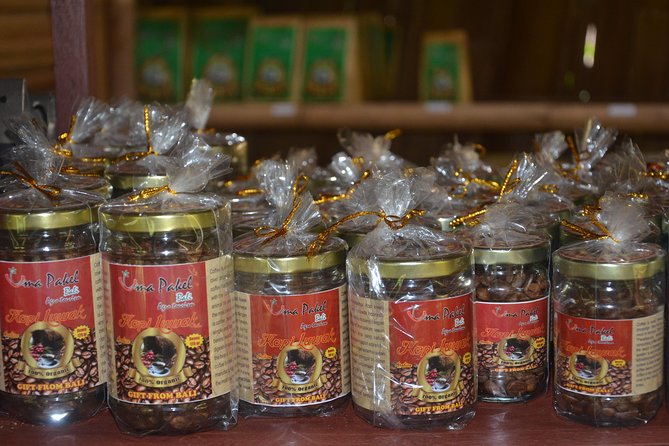
The demo itself is the key value here: you see the process, not just the final product. That turns a souvenir stop into something educational. You’ll still have time to look around and take photos, but the point is the small, hands-on-style explanation of how coffee powder is made.
What to consider: since this is a quick 30-minute slot, don’t expect a full tasting tour or a long workshop. If you want that, you’d need a separate coffee experience. For this day, the demo is the right length.
Tirta Empul: holy spring pools and the melukat atmosphere
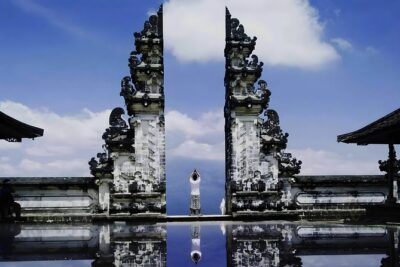
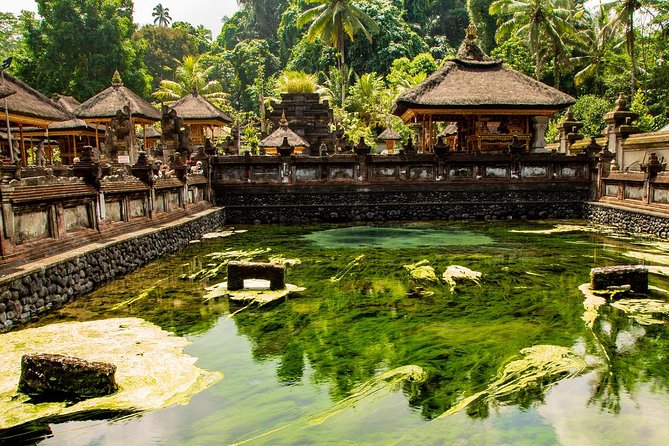
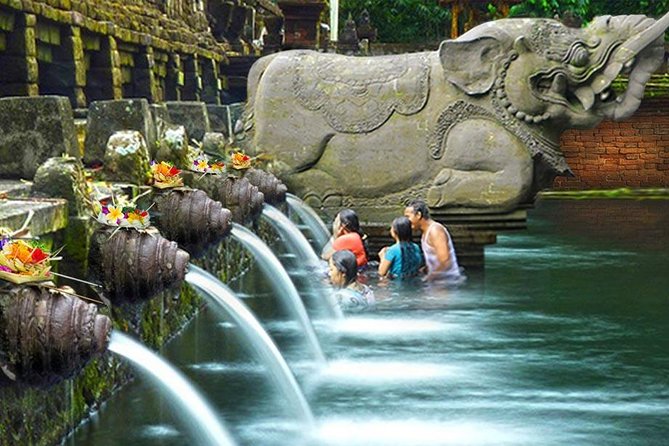
Tirta Empul Temple is the culture-and-ritual core of the day. It’s located in the Tampaksiring region near Gunung Kawi Temple, and the site is built around springs and special bathing pools.
Here’s what makes it more than a pretty temple: the spring water is clear and slate-blue, bubbling up into an enclosed rectangular pool through a sedimentary layer of black sand. The legend says the spring water was created by Indra God after a fight with the Mayadenawa King.
Today, it’s also a working spiritual site. The temple can get crowded, especially on the secret day for bathing rituals called melukat, when Balinese people come for body cleansing.
How to get the most out of this stop:
- Keep your movements respectful. People are there for ritual, not sightseeing.
- Bring a calm pace to your photos. If the area is busy, wait for space instead of pushing in.
- Notice the water architecture. The black sand detail is part of why the springs look the way they do.
If you’re curious, this is a stop where the English-speaking driver can help you understand what you’re seeing. A good guide makes Tirta Empul feel personal and clear, not like a checklist item.
One extra note from the operator’s reputation: Bali Bliss Tours has been praised for guides such as Gede and Komang, with mention of history and culture help. If your driver-guide has that knack, ask a couple of questions during the temple portion.


Tegenungan Waterfall: swim time, or just cool air
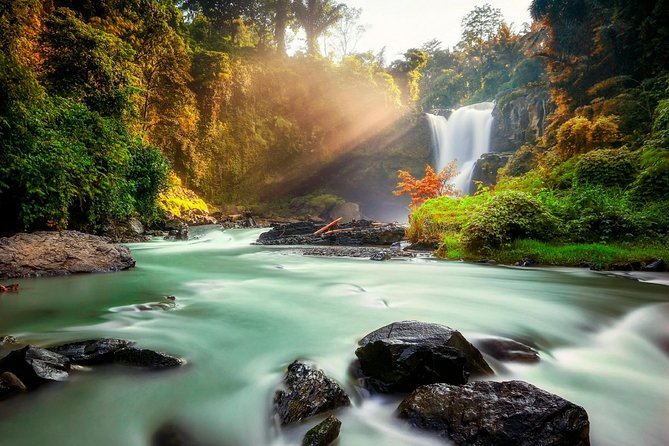
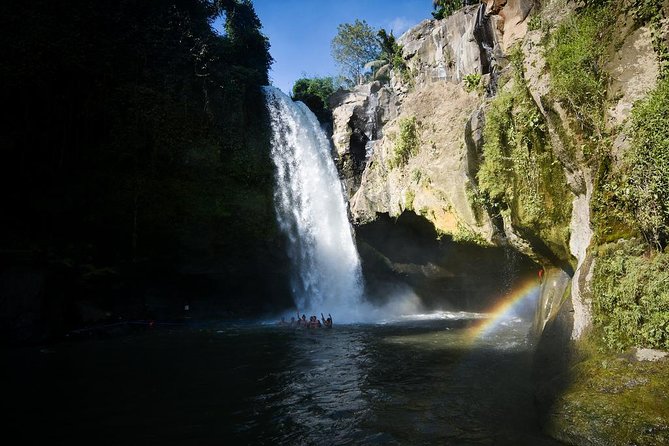
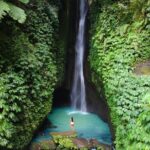
Tegenungan Waterfall is the last stop, and it’s where the day turns physical. The natural scenery around the falls is described as green and beautiful, and near the waterfall there are shower baths fed by natural springs.
Local residents use these baths to bathe and to fetch water for daily consumption, especially in the morning and afternoon. So even when it’s popular, it’s not just a theme-park waterfall. It has a real local function.
You can also jump and swim in the waterfall if you really want to. That’s a big part of why people choose this finale instead of ending the day at a viewpoint.
What to think about before you go for a swim:
- Water can be slippery around waterfalls, so move slowly.
- Keep your valuables secured or leave them somewhere safe.
- If you just want the experience without getting wet, you can still enjoy the area and the spring-shower concept.
Either way, this is your chance to cool down after Ubud’s heat and walking.
Price and logistics: is $45 good value?
At $45 per person for an 8 to 9 hour private day, the value comes from how many costs are bundled. Your price includes a private car, all entry tickets, parking fees, and an English-speaking driver.
That matters because a day trip like this often becomes expensive once you add:
- admission fees at multiple sites
- transport between them
- parking and logistics
Here, those are handled. The only clear gaps are lunch, alcoholic drinks, and personal expenses. That means you’ll want to budget for food on your own.
Private car logistics also help on a long day. You avoid the uncertainty of waiting for other groups, and you can typically spend more time where you want and less time stuck in transition.
One more practical note: this is a private tour/activity, meaning only your group participates. That’s a big deal if you’re traveling as a family or in a small group that wants a calmer pace.
Who this tour suits best (and who should think twice)
This is a strong fit if you want:
- a planned Ubud day with major highlights
- a mix of market culture, rice-terrace scenery, temple ritual, and waterfall time
- a private setup with tickets handled
It’s also a decent choice for families because the stops are straightforward. Markets, terraces, a plantation demo, a temple, and a waterfall are easy to understand as parts of one full day.
Where it may not fit as well:
- If you hate a packed schedule, this might feel busy. The day runs 8 to 9 hours, and you’ll move through several distinct environments.
- If you’re determined to swim at Tegenungan, be ready for a physical stop at the end of a long day.
A realistic packing and timing checklist
You’re covering temples, terraces, and a waterfall in one go. I’d treat it like a full-day field mission.
Consider packing:
- Comfy walking shoes for terraces and uneven paths
- A light layer for temple areas (respectful covering helps)
- Water for the day, especially before the waterfall
- If you plan to swim, a swimsuit and something to change into afterward
Timing matters too. Starting at 8:00 am helps you reach the morning atmosphere where it’s easier to breathe and focus. It also gives you a better chance of enjoying photos before the strongest midday crowds hit.
And because you’ll be in and out of ticketed places, you’ll want to keep your essentials easy to reach. Having everything handy saves time at each stop.
Should you book this Ubud day trip?
If you want one organized day that hits the Ubud classics—rice terraces, a major spring temple, and a waterfall—this tour makes a lot of sense. The best part is the way the day is stitched together: each stop has a distinct purpose, from shopping and palace life to farming views, ritual water, and cooling off at Tegenungan.
I’d book it if:
- you value private transport and ticket convenience
- you want both culture and scenery, not just one or the other
- you’re okay with a full 8 to 9 hour day
I’d think twice if you prefer slow travel or if you’re mainly interested in only one type of experience, like temples only or waterfalls only. In that case, you might get more enjoyment by splitting into smaller, less packed days.
FAQ
Is pickup offered on this day trip?
Yes. Pickup is offered.
What time does the tour start?
The start time is 8:00 am.
How long is the experience?
It runs about 8 to 9 hours.
Where does the tour operate from?
The listing location is Seminyak, Indonesia.
What’s included in the price?
The price includes a private car, all entry tickets, parking fees, and an English-speaking driver. A mobile ticket is also used.
What is not included?
Lunch, alcoholic drinks, and personal expenses are not included.
Is this tour private?
Yes. This is a private tour/activity, and only your group participates.
What is the cancellation policy?
You can cancel up to 24 hours in advance for a full refund.