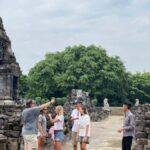
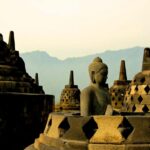
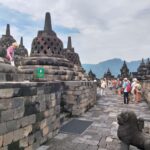
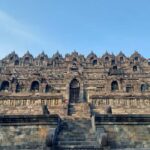
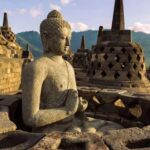
Stone steps, big meaning. This shared guided tour links two UNESCO powerhouses—Borobudur and Prambanan—with a guide who explains what you’re looking at as you go. I like the practical touch of how the guide helps with the process (tickets, timing, and the free sandals you’ll need for the Borobudur climb), and I like that English support keeps the day from feeling confusing.
Because it’s shared, you get real guidance, but you also accept that the schedule can shift. The biggest heads-up is that on Mondays the main temple complex isn’t accessible, so you’ll visit only the ground area, and Borobudur’s ticket limits can mean your order may reverse.
Still, this is an efficient, well-paced day: hotel pickup, an air-conditioned van, guided temple time, and a lunch break that keeps you from rushing. If you’re trying to do both temples in one shot without dealing with transport and temple logistics on your own, this is a strong fit.
In This Review
- Key things you’ll notice right away
- A full day between Yogyakarta’s two temple icons
- Pickup, van time, and how the group day actually feels
- Borobudur climb: carvings, stupas, and your guide’s practical lead
- The climb basics you should actually plan for
- What to focus on while you climb
- A consideration: Monday changes the access level
- Lunch break: a reset, not a meal plan
- Prambanan: spires, reliefs, and the Hindu story you can read
- What makes Prambanan different from Borobudur
- Time for photos, but don’t rush the story
- Transport timing and the day’s rhythm
- Tickets, the Monday rule, and why your order might swap
- Borobudur tickets are limited, and the tour handles it
- Monday access restriction changes what you see
- The $36 question: is it good value?
- Who this shared tour suits best
- The guide factor: why it makes the difference
- A few practical tips before you go
- Should you book this Borobudur and Prambanan shared tour?
- FAQ
- FAQ
- Is hotel pickup and drop-off included?
- How long is the tour?
- Are meals included?
- Do I need to buy tickets in advance?
- What happens if I’m traveling on Monday?
- What languages are the guide and support available in?
- Is the tour wheelchair accessible?
Key things you’ll notice right away
- Hotel pickup and drop-off from Yogyakarta-area accommodations, plus comfortable AC transport
- Temple guide for both sites, so you’re not just photographing stones in silence
- Borobudur climb logistics handled (including the free sandals step)
- Prambanan guided walk focused on Brahma, Vishnu, and Shiva, plus myth-and-relief storytelling
- Monday rule flexibility, since the main complex can be off-limits and the plan adapts
A full day between Yogyakarta’s two temple icons
At 8 hours, this tour is basically a “best-of” circuit done the practical way. You get guided time at Borobudur (including the climb to higher levels) and then guided time at Prambanan (the grand Hindu temple complex). The value here is not just that you see both places—it’s that someone gives you context so the carvings and architecture start to make sense fast.
You’ll also notice the pacing is designed around travel time. You’re not bouncing back and forth all day in slow chaos. Instead, the van handles the hops, and the guides handle the temple flow.
You can also read our reviews of more tours and experiences in Kota Magelang.
Pickup, van time, and how the group day actually feels
You’ll start with hotel pickup in the Yogyakarta region, with options that include Bantul Regency and Sleman Regency. The tour uses an AC van, which matters more than people think once you’re going from briefing mode into a hot temple circuit.
The shared part means your day runs on one timetable for everyone. You might wait briefly at the start while the van collects the group, and your exact order of stops can depend on ticket availability. The upside is that you’re not doing mental math about where to go next or how to connect transport between sites.
Tip that helps: keep your phone handy during the day and provide a WhatsApp number while booking, since communication is specifically mentioned as part of making pickup and coordination smooth.
Borobudur climb: carvings, stupas, and your guide’s practical lead
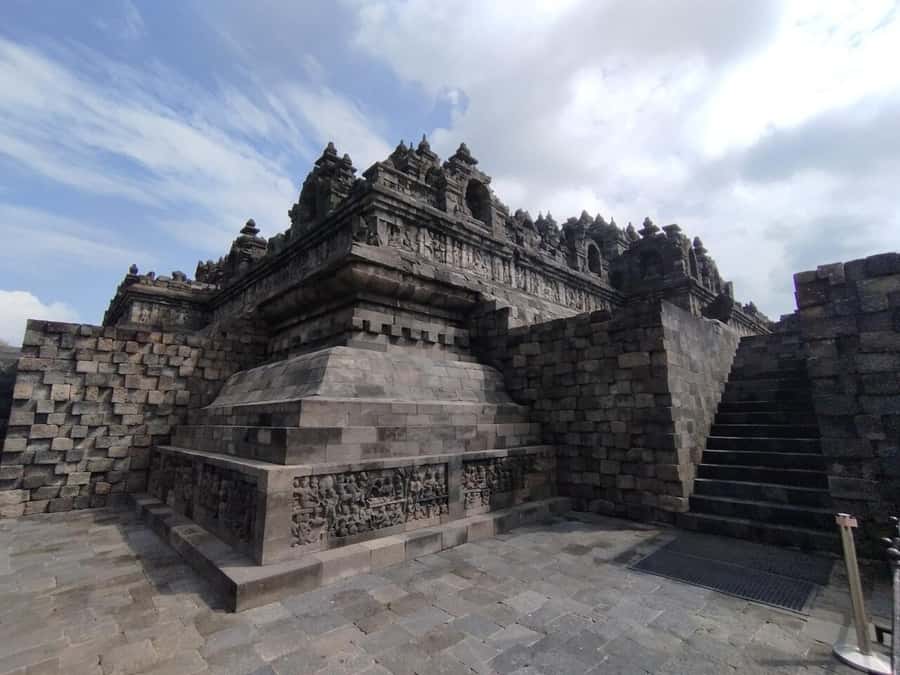
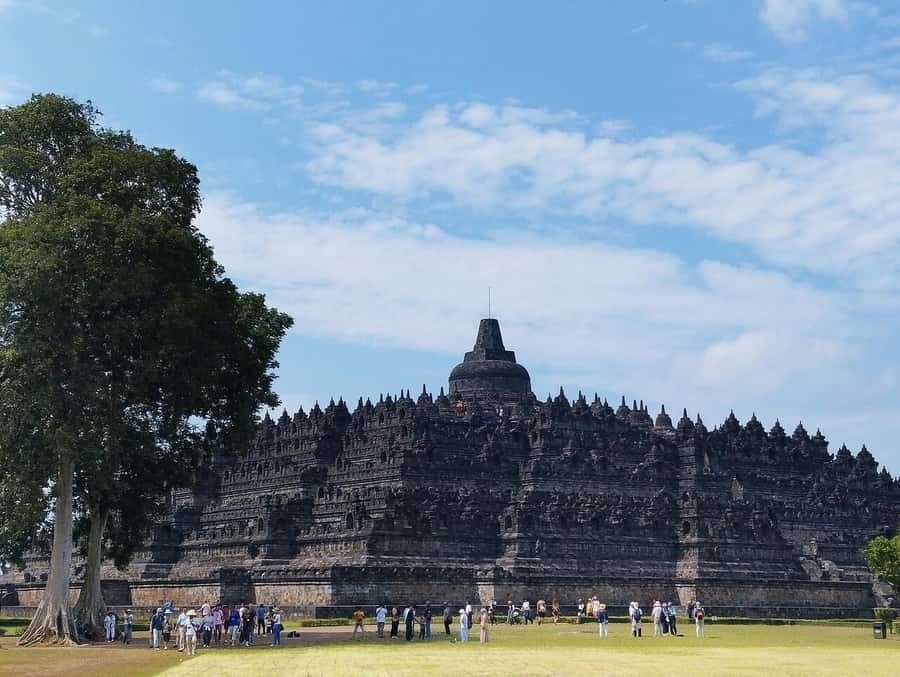
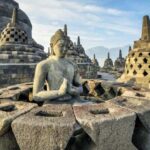
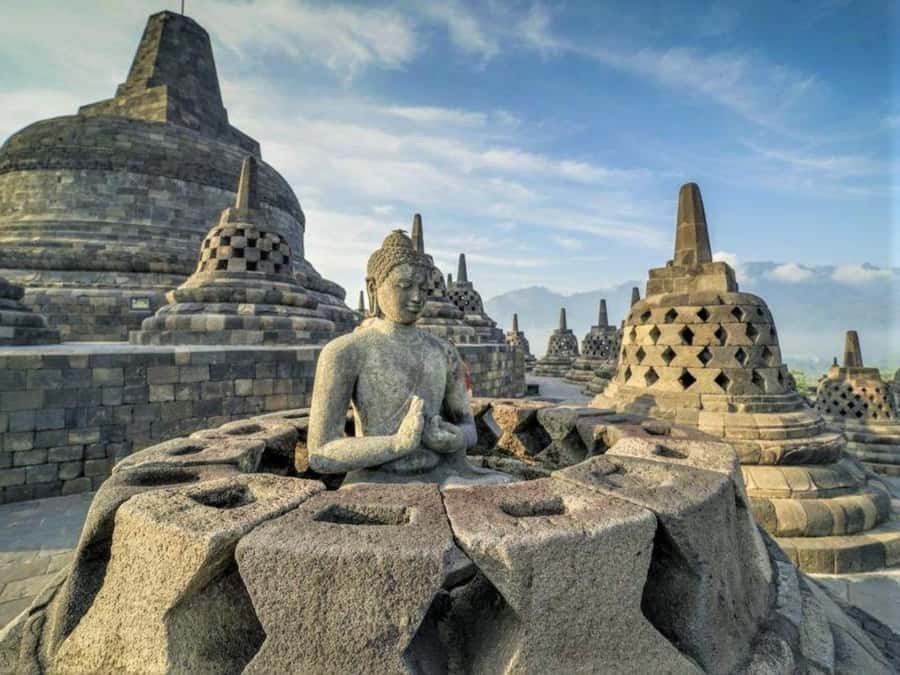
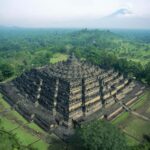
Borobudur is the headliner for a reason. It’s the largest Buddhist temple in the world, and the architecture is built to be read as a story—stone carvings, layered terraces, and countless stupas that feel like they’re arranged with intention.
Your Borobudur segment is guided for about 2.5 hours, and this is where the tour earns its keep. A good guide turns a temple into something you can follow: what you’re seeing, why it’s there, and how the symbolism connects across the levels.
The climb basics you should actually plan for
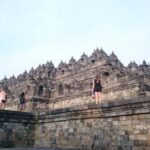
The tour includes the climb to the top. You’ll likely run into the temple’s practical clothing/shoe rules, and this is exactly the kind of detail a lead guide helps with. One traveler’s experience highlights how the guide got tickets sorted quickly and directed them to the right sandals setup for the climb.
A small but useful detail: there can be a short “wait-and-then-go” moment as you transition from the lead guide to a smaller group guide inside the temple area. It’s not a problem—just something you should expect so you don’t feel like you’re doing something wrong. When the small-group guide starts, you’ll have a clearer path and a tighter explanation flow.
What to focus on while you climb
If you want the day to feel rewarding (not just busy), aim for these kinds of moments:
- Pick one terrace level to slow down and really look at the carvings before you move on.
- Notice how the structure guides your eye upward, even before you’re at the highest points.
- Treat the top as a pause. The tour description calls out the serene atmosphere up there, and it’s one of the few times you’ll feel the scale of Borobudur instead of just processing details.




A consideration: Monday changes the access level
Borobudur’s rules affect your options. The tour notes that on Mondays, the main temple complex is not accessible due to temple rules, and you’ll visit the ground area instead. If you’re traveling on a Monday, adjust expectations. You’ll still see Borobudur, but you may not get the same “main complex” experience as on other days.
Lunch break: a reset, not a meal plan
After Borobudur, you’ll have a break for lunch at a local restaurant, with about 1 hour allocated. Meals are not included, so you’ll be choosing what to eat rather than getting a set menu.
In a long temple day, this stop is mostly about logistics and energy. It gives your legs a breather and gives you a buffer so you can handle the second temple without burning out early.
Practical note: since meals aren’t included, you’ll want a little cash/online payment readiness. The tour includes mineral water, but you’ll still control what you eat.
Prambanan: spires, reliefs, and the Hindu story you can read
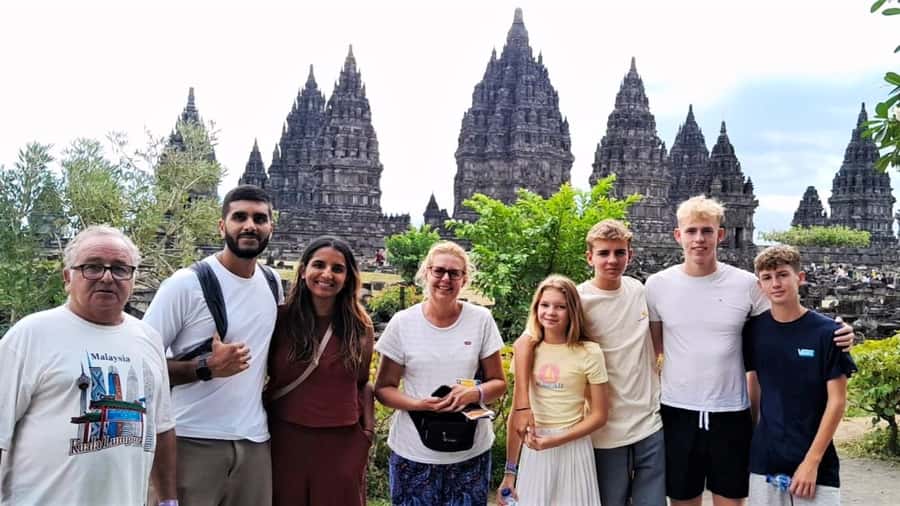
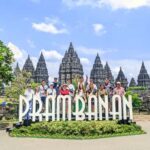
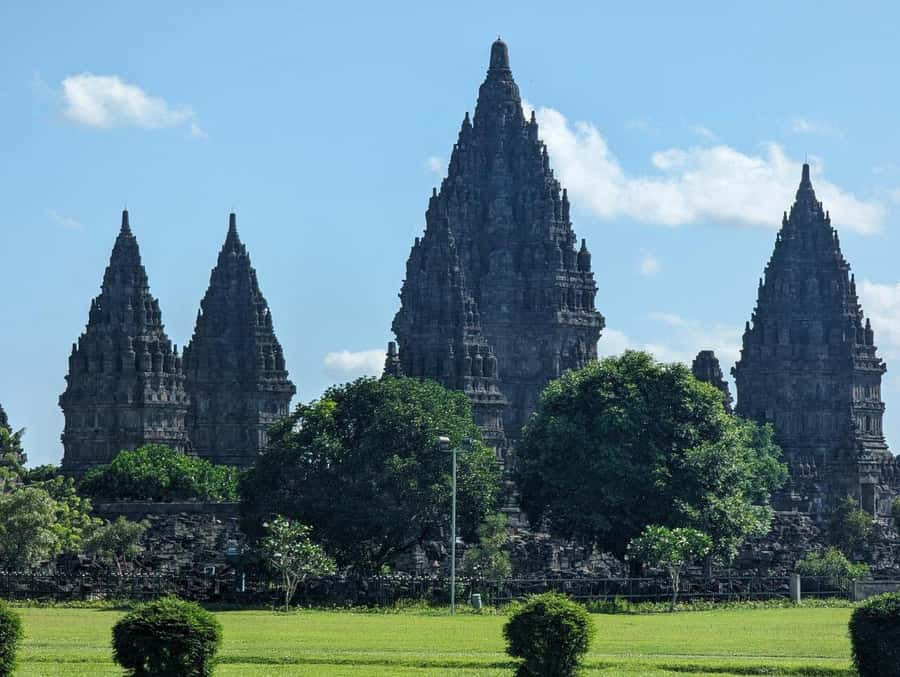
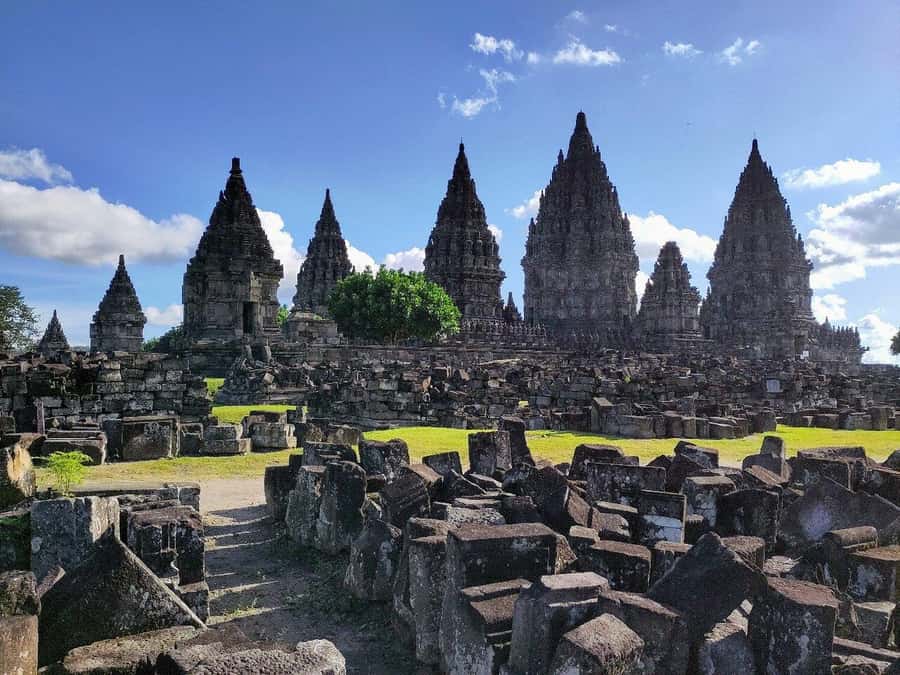
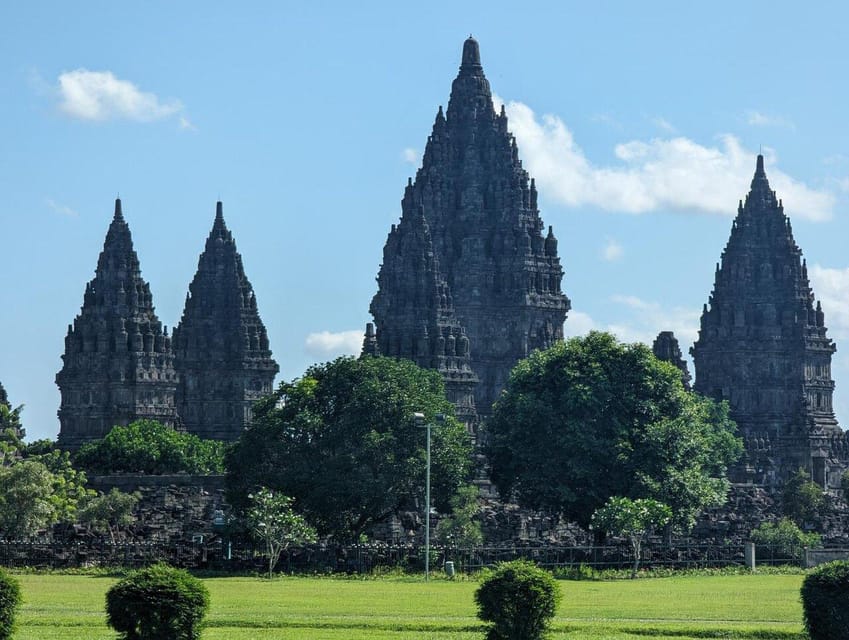
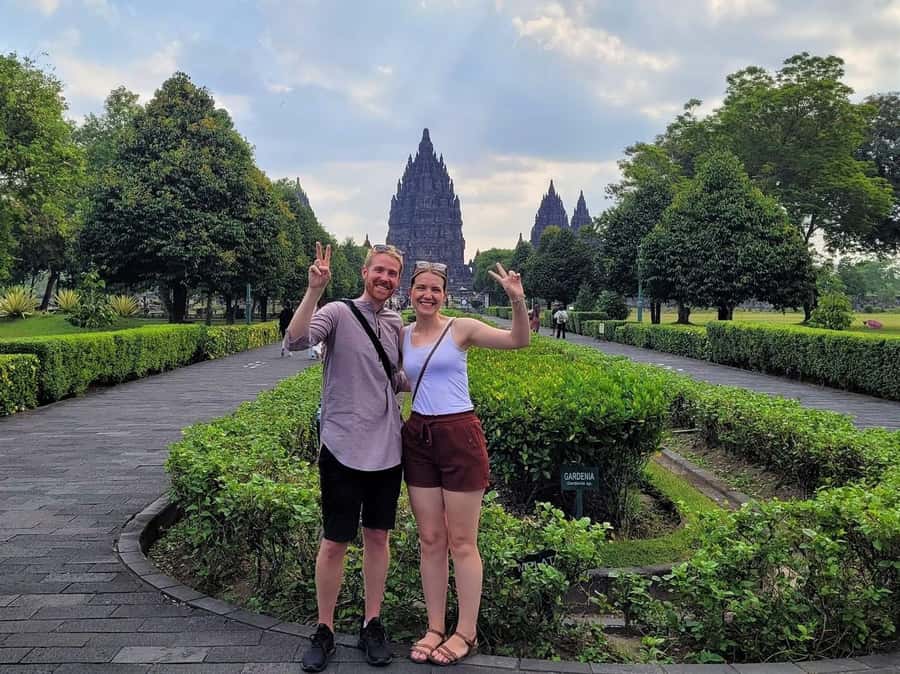
Prambanan is the other big “wow” in the day—Hindu architecture with towering spires and detailed reliefs. The tour focuses on the three main deities: Brahma, Vishnu, and Shiva, which is great because it gives you a framework while you walk.
Your Prambanan guided time is around 2 hours. That’s enough to move through the key areas without turning it into a sprint. Since you’re going with a guide, you don’t just see the temple mass—you learn how the stories are represented through the carvings.
What makes Prambanan different from Borobudur
Borobudur is layered and Buddhist in its visual logic. Prambanan feels more like a powerful vertical statement—spires reaching up, reliefs framing scenes, and the whole place surrounded by greenery and open space.
If Borobudur teaches you how to read a religious “map” through stone, Prambanan helps you read myth and devotion through architecture and decoration. You’ll feel the cultural shift clearly, and the guided portion keeps that shift understandable instead of overwhelming.
Time for photos, but don’t rush the story
You’ll have moments to photograph, of course. But the biggest win is the narrative. If you let the guide connect deity symbolism to what you’re seeing, the photos become reminders instead of random angles.
Transport timing and the day’s rhythm
The itinerary is structured like this:
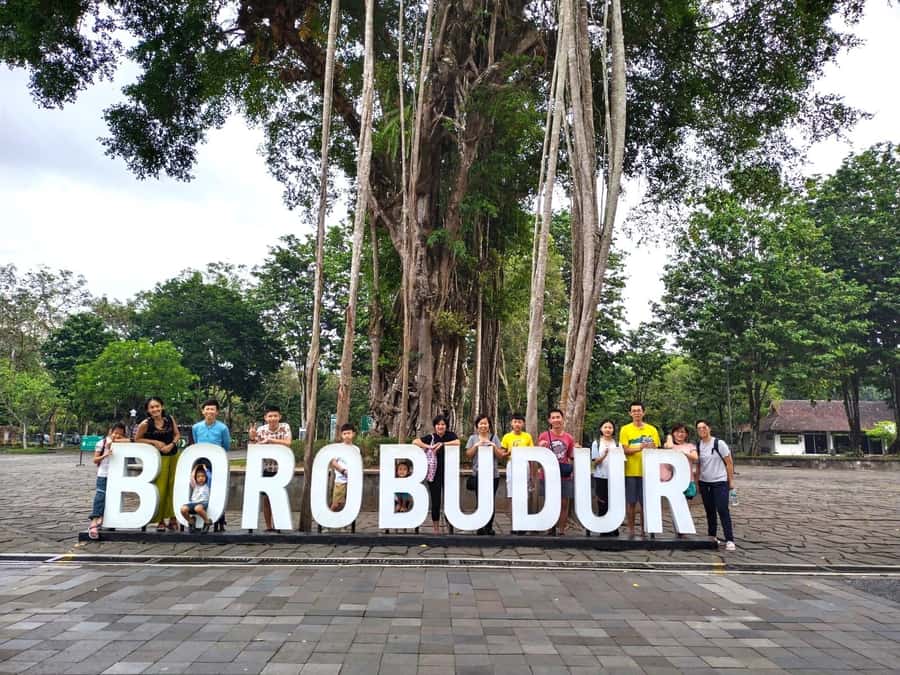
- Van time to Borobudur (about 1 hour)
- Guided Borobudur (about 2.5 hours)
- Lunch break (about 1 hour)
- Van to Prambanan (about 1.5 hours)
- Guided Prambanan (about 2 hours)
- Return van time back to Yogyakarta area (about 1 hour)
That rhythm matters. Temple visits punish rushed schedules—heat plus crowds plus stairs. Here, you’re given timed breathing space, so you’re not always sprinting to catch a bus.
Because it’s shared, you’re also protected from the worst-case scenario of figuring out transport mid-day. You just show up, follow the plan, and let someone else manage the clock.
Tickets, the Monday rule, and why your order might swap
Two practical realities come with this tour format: ticket limits and temple access rules.
Borobudur tickets are limited, and the tour handles it
Borobudur ticket availability is described as limited. The tour says tickets are bought in advance, and the team collects payment on the day if you chose the no-ticket option. There’s also a note that the itinerary can be reversed depending on Borobudur ticket availability—meaning you might visit Prambanan first, then Borobudur later.
That’s not a deal-breaker. It’s actually a sign the operator is working around a known bottleneck instead of leaving you to scramble.
Monday access restriction changes what you see
On Mondays, the main temple complex is not accessible due to temple rules, and you’ll visit the ground area. That means your experience could be more “see the site from ground level” than “go into the main complex.”
If your trip dates are flexible, you might consider avoiding Monday when possible. If not, plan your mindset accordingly.
The $36 question: is it good value?
For a price around $36 per person, you’re paying for more than entry gates. You’re paying for:
- Hotel pickup and drop-off
- AC transport across two sites
- English-speaking driver
- Guides for both temples
- Mineral water and parking fees
That’s the value equation. In Java, your biggest costs are often time and coordination. This tour pays those costs for you, so you can spend your attention on the temples instead of transport.
What about the tickets themselves? The tour offers options:
- If you book with tickets included, Borobudur and Prambanan tickets are handled as part of the package.
- If you book without tickets (the no-ticket option), the two-temple ticket is listed as IDR 900,000, and the team collects ticket payment on the day since Borobudur tickets are limited.
So when you evaluate the deal, don’t just compare sticker price. Compare what you’d pay and how much effort you’d spend doing the same day on your own. Two guided temple visits plus transport plus pickup is usually where this price lands as “fair,” not “cheap.”
Who this shared tour suits best
This is best for you if:
- You want one-day efficiency and don’t want to handle temple timing, transport, and ticket steps alone.
- You like architecture and history enough to enjoy guided explanations rather than just wandering.
- You’re traveling with a schedule that needs a clear plan.
It may be less ideal if you prefer total freedom to linger for long stretches without a group timetable. Since it’s shared, your pacing will be guided by the group and the day’s access rules.
The guide factor: why it makes the difference
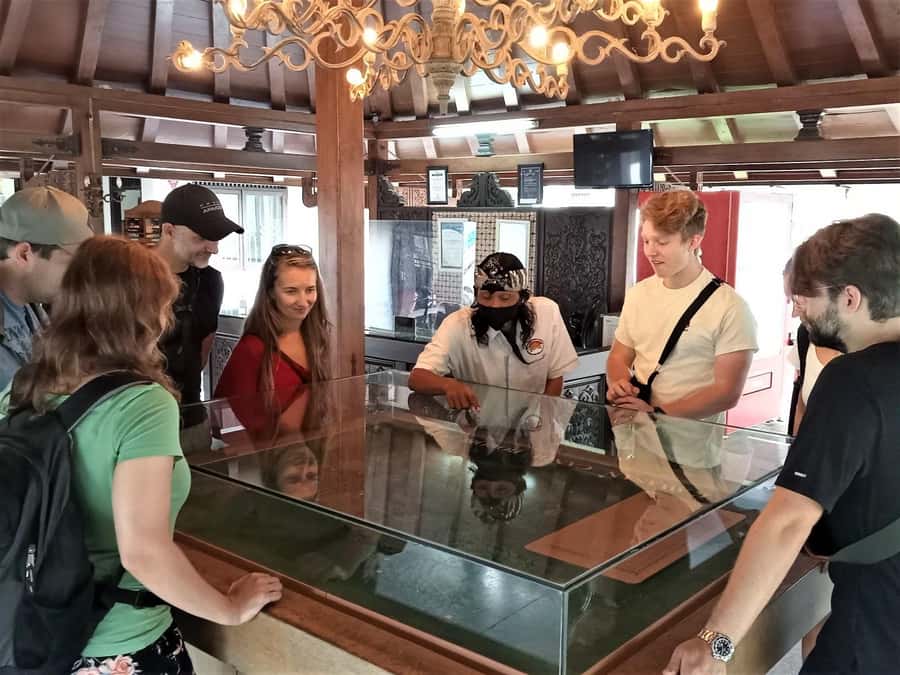
One of the strongest signals from an on-the-ground experience is how much the guide reduced stress at Borobudur. The guide, Jay Om (Jacky), reportedly arrived early, helped with tickets, and walked through the tour process including the required sandals and where to sit while the small-group guide began.
Even if you don’t get that exact guide, the tour’s approach is clear: the lead guide is meant to manage the “how this works here” steps. That matters at big temple sites in Indonesia, where language barriers can make you feel like you’re watching while everyone else understands.
If you take one thing into the day, make it this: show up, follow the guide’s instructions for sandals and waiting points, and pay attention to the explanations. The time is structured to reward that focus.
A few practical tips before you go
- Wear comfortable shoes for walking on temple grounds and stair climbs.
- Expect a rule-based footwear setup for the Borobudur climb (the tour mentions free sandals being provided/required).
- Keep your phone accessible for WhatsApp coordination.
- Plan for sun and a long day. Even with AC in the van, your time on foot is outdoors.
- Drones are not allowed, so leave it at your hotel.
Should you book this Borobudur and Prambanan shared tour?
If your goal is to see both temples in one day without playing logistics roulette, I’d book it. The guiding is the key. When you get context at Borobudur’s carvings and Prambanan’s deity symbolism, the places feel bigger and more meaningful than a photo session.
The main reason to pause is timing. If you’re traveling on a Monday, the main complex access rule can change what you experience, and if Borobudur ticket limits tighten, your order might reverse. If you can live with that, this tour is a good-value way to hit the highlights with expert help.
FAQ
FAQ
Is hotel pickup and drop-off included?
Yes. Pickup and drop-off are included from accommodations around Yogyakarta City, with options that also cover Bantul Regency and Sleman Regency. Airport-area pickup isn’t included.
How long is the tour?
The total duration is about 8 hours.
Are meals included?
Meals are not included. There is a lunch break at a local restaurant, but you’ll pay for your own food.
Do I need to buy tickets in advance?
You may have options. The tour includes tickets if you choose the ticket option. If you book the no-ticket option, the entrance ticket for both temples is IDR 900,000, and the team collects payment on the day since Borobudur tickets are limited.
What happens if I’m traveling on Monday?
Every Monday, the main temple complex is not accessible due to temple rules, and you’ll visit the temple ground area.
What languages are the guide and support available in?
The live tour guide is available in English, Malay, and Indonesian.
Is the tour wheelchair accessible?
Yes, it is listed as wheelchair accessible.