Ubud spices wake you up fast. This 6-hour Balinese cooking class pairs a traditional morning market with a chef-led workshop in the jungle-surroundings of Ubud, with hotel pickup and air-conditioned transport.
What I really like is how hands-on it feels. You’ll choose ingredients, then learn Balinese cooking techniques and make a sit-down meal from what you create, with guidance from instructors such as Wayan or Putu/Puthu. One heads-up: it’s a full morning, so it’s not a quick, casual snack stop.
In This Review
- Key highlights worth getting excited about
- Hotel pickup to market first: how the morning sets the tone in Ubud
- Choosing your ingredients at the traditional morning market
- Laplapan village welcome: the offering-making lesson that adds meaning
- The cooking workshop: jungle-surroundings, real technique, real hands-on
- What dishes and techniques you’ll actually practice
- Your sit-down meal: eating what you made (and why that’s the best part)
- Price and value: what $35 covers in real terms
- Who this cooking class is best for (and who should think twice)
- Should you book this Balinese market-to-kitchen class in Ubud?
- FAQ
- Where is the cooking class held?
- How much does the tour cost?
- How long is the experience?
- Is hotel pickup included?
- What is the group size limit?
- What happens during the morning market visit?
- Do you learn how to make Balinese offerings?
- What is included in the price?
- What is not included?
- What is the cancellation policy?
Key highlights worth getting excited about
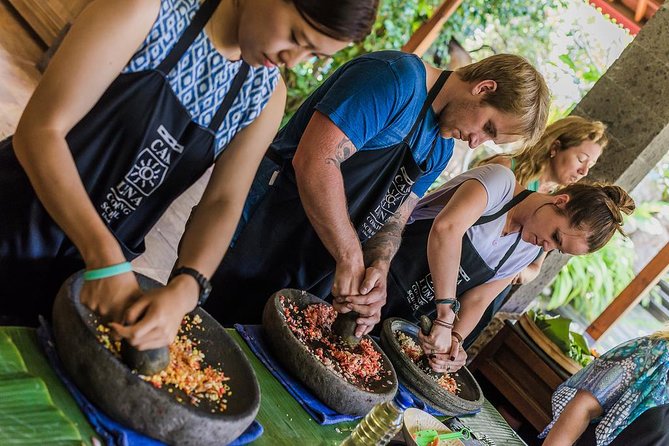
- Hotel pickup plus AC ride so you start cooking without the logistics headache
- Traditional morning market shopping where you select ingredients and even try some items
- Canang and offering-making before cooking to understand what’s going on in Balinese food culture
- Max 8 travelers for real interaction, not a crowded cooking demo
- You eat your own dishes at the end, plus a recipe book to recreate the flavors later
Hotel pickup to market first: how the morning sets the tone in Ubud
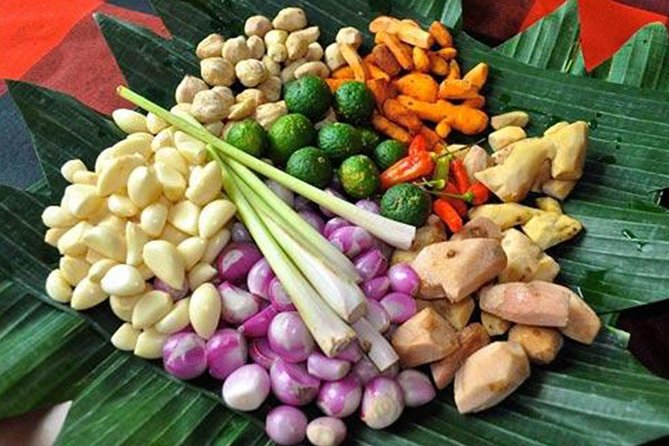
This starts with pickup from your hotel and then an air-conditioned ride toward Ubud’s traditional food scene. The schedule is built around the morning market, which matters more than it sounds. Early hours are when ingredients look best, smell strongest, and feel most alive.
Once you arrive, the market visit isn’t treated like a tourist walkthrough. You’re there to pick what you’ll cook later. That’s a big deal for value. A lot of cooking classes ask you to “watch” what’s happening. Here, you’re shopping, tasting, and learning what ingredients actually do in Balinese kitchens.
Also, the group stays small. With a maximum of 8 travelers, you’re more likely to get help when you have questions, not just nod along. That’s one reason so many people come away praising the teaching style and the friendly pace.
You can also read our reviews of more tours and experiences in Ubud.



Choosing your ingredients at the traditional morning market
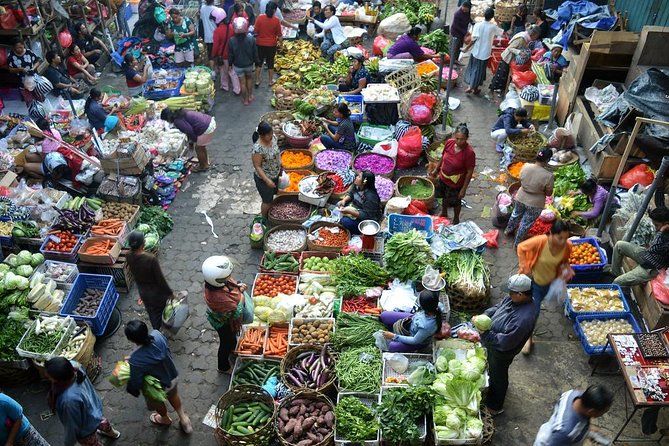
At the market, you’ll see the colors and shapes of Balinese produce in real life: vegetables, herbs, spices, and meats laid out where local cooks shop daily. What you should pay attention to is not just what looks pretty. Focus on what you’ll smell and what you’ll recognize later once you’re chopping.
I like that this part gives you context. If you know what galangal-like roots, fragrant leaves, chilies, or spice blends are used for, the cooking lesson becomes easier to follow. It also makes the meal at the end feel more personal. You didn’t just memorize steps. You built your menu.
You may also get quick tastings of certain items, which helps you understand flavor relationships fast. One review experience described trying unfamiliar fruits and small bites with explanation, including sweets tied to coffee later. Even if your exact menu differs, expect the guide to encourage questions.
One practical note: markets can be busy, and you’re usually on your feet for a bit. If you’re sensitive to crowds or need long breaks, plan for that. But the payoff is that you leave with a mental map of the ingredients behind Balinese flavors.
Laplapan village welcome: the offering-making lesson that adds meaning
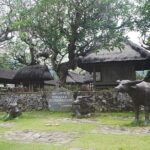
After the market, the tour continues to the traditional village of Laplapan. This is where the class widens from cooking into culture.
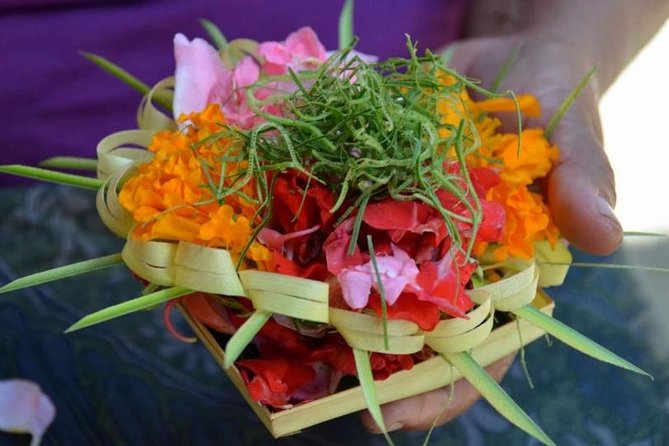
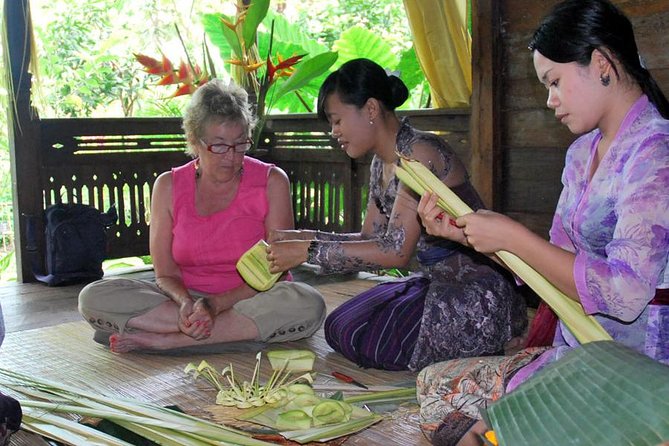
You’ll get a warm welcome on arrival, and before the main cooking begins, you’ll learn how to make Balinese offerings. The included focus is on canang (a common offering) and other offering equipment. This is more than craft time. It connects food to daily ritual.
Why this matters: Balinese cooking doesn’t exist in a vacuum. Spices aren’t just for taste. They’re part of offerings, ceremonies, and everyday life. Once you understand that, the whole class lands differently. You’re cooking inside a bigger system, not just following recipes.
In the reviews, people loved that they weren’t only shown the offering—they were asked to make one. That hands-on moment makes the lesson stick. It also adds a memorable “Bali-only” detail you can’t get from a generic cookbook.
The cooking workshop: jungle-surroundings, real technique, real hands-on
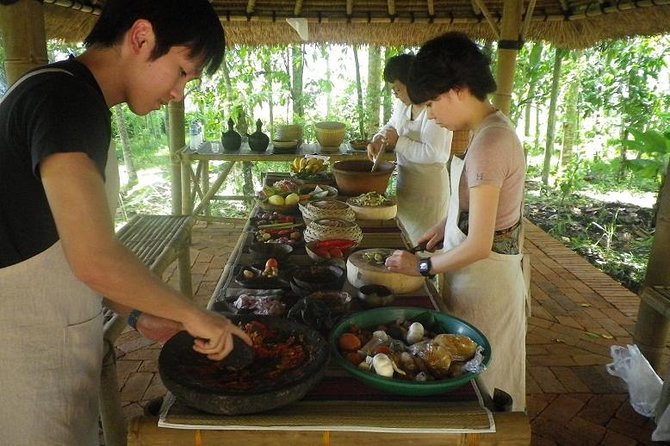
Now you shift from shopping and ritual into kitchen work. The workshop is hosted by a local chef, described as being in jungle-surroundings of Ubud, and the setting is part of the appeal. Reviews mention a beautiful, clean cooking place that feels efficient and well organized, without the chaos that sometimes comes with group activities.
This is where the “small group” advantage pays off. A max of 8 means you’re more likely to:
- get guidance as you chop, mix, and stir
- ask why something is added at a certain step
- move at a pace that fits your comfort level
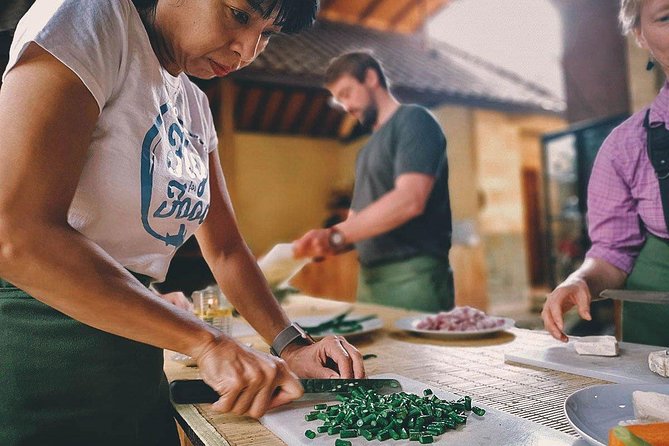
You’ll also cook multiple dishes. The format is structured around starters, mains, and an authentic dessert, with expert chefs providing assistance. Several reviews highlight that nothing felt rushed, even though you end up making a lot of food. That suggests the instructors balance hands-on work with smart prep behind the scenes.
It’s also common to see dietary flexibility. One set of notes specifically mentioned vegetarian options and adapting to dietary requirements. If your food needs are specific, don’t wait until the last second. Tell the guide early so they can adjust within the flow of what you’re doing.
What dishes and techniques you’ll actually practice
The tour information doesn’t list every exact recipe by name, but it does clearly promise multiple dishes plus dessert. Reviews describe cooking around nine dishes in one session, which tells me the class is built to be full and satisfying.
Here’s what you can expect in practice:
- You learn how spices and ingredients are used, not just tossed in
- You work through several steps of Balinese flavor-building
- You get instructor help while preparing starters and main courses
- You finish with dessert so the meal feels complete
Because you start with ingredient selection at the market, the techniques you learn feel targeted. You’ll likely go back to earlier market items when you’re cooking. That “I chose this, now I’m using it” loop helps you remember what each flavor does.
One more good sign from the reviews: people describe the teachers as patient and interactive. That matters for first-timers. If you’ve never cooked Balinese food before, the best class is the one that explains what’s happening and doesn’t assume prior spice knowledge.




Your sit-down meal: eating what you made (and why that’s the best part)
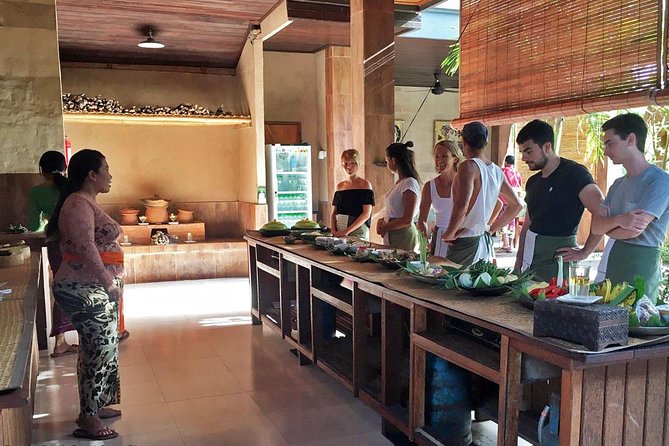
The tour ends with a sit-down meal where you eat the dishes you prepared. That’s not a small perk. It’s the payoff moment that turns the day from a class into a real experience.
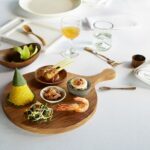
In reviews, the food gets praised as delicious and, in some cases, visually impressive. Even better, the meal seems organized so you’re not eating scraps standing up. You’re meant to sit, taste, and enjoy what you created.
Also look for the “take-home” piece. Multiple reviews mention receiving a recipe book so you can recreate the dishes later. That’s valuable because it helps you move beyond one-off memories. It’s one thing to enjoy lunch. It’s another to repeat it at home with ingredients you can actually source.
Price and value: what $35 covers in real terms
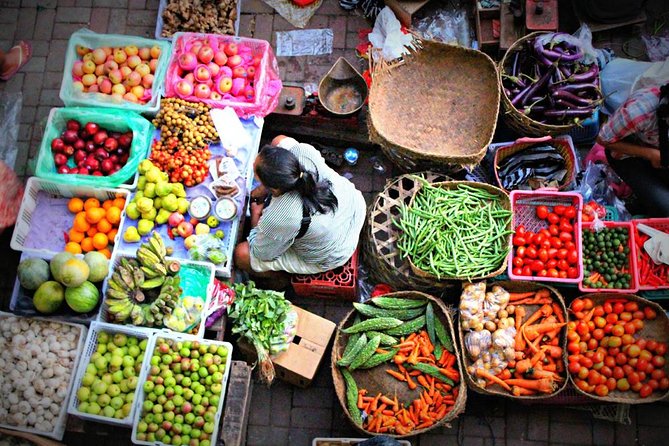
At $35 per person, this class is priced like a mid-range activity, but it includes more than you might expect.
You’re paying for:
- about 6 hours of structured programming
- pickup and air-conditioned transport
- the cooking class itself (fees included)
- cooking equipment
- taxes included
- the ingredient selection market visit
- offering-making instruction before cooking
In other words, you’re not just paying for the kitchen time. You’re paying for the full “market-to-table” flow with local guidance, plus the teaching needed to produce multiple dishes.
The small group size (up to 8) also influences value. When you’re in a larger group, it’s easier for instructions to become one-size-fits-all. Here, you’re more likely to get individualized help, which improves your learning and makes the meal better.
If you’re doing Bali on a budget, this is one of the stronger choices because it adds cultural depth without needing multiple paid tours. If you’re a food-focused traveler, it’s also a strong “skill + meal” combo.
Who this cooking class is best for (and who should think twice)
This fits best if you want:
- a deeper look at Balinese food culture, not just a cooking show
- a guided spice-and-ingredient experience with market context
- hands-on cooking in a small group
- a full meal you can enjoy right after cooking
- a chance to learn offering-making like canang
It may be less ideal if you:
- dislike early starts or long, structured blocks of time
- want a super relaxed activity with minimal effort (this one is hands-on)
- have very tight scheduling and can’t spare about 6 hours
That said, the overall reaction is extremely positive, with a 5-star average rating and 99% recommendation rate. The consistent theme is that people leave feeling fed, educated, and genuinely cared for by the host team.
Should you book this Balinese market-to-kitchen class in Ubud?
Yes, if you’re the type of traveler who likes food with a story. This class connects ingredients, ritual, and cooking skills in one smooth morning. The market visit makes the flavors personal. The canang offering lesson gives the cultural why behind Balinese cooking. Then you get to eat what you made in a sit-down meal.
Book it especially if you’re:
- visiting Ubud and want something more authentic than another photo spot
- curious about spices and want practical learning you can repeat later
- traveling solo or with a small group and like interactive activities
Before you go, think about one thing: you’re signing up for a real working session. If you’re okay with that, you’ll likely consider it one of the best food days in your Bali trip.
FAQ
Where is the cooking class held?
The experience takes place in Ubud, Indonesia.
How much does the tour cost?
It costs $35.00 per person.
How long is the experience?
The duration is approximately 6 hours.
Is hotel pickup included?
Yes. Pickup is offered, and an air-conditioned vehicle is included for transport to the market and workshop.
What is the group size limit?
The class has a maximum of 8 travelers.
What happens during the morning market visit?
You visit a traditional fresh food market to choose ingredients for your cooking class and get a look at local life.
Do you learn how to make Balinese offerings?
Yes. Before the cooking class, you learn how to make canang and other offering equipment.
What is included in the price?
Included are cooking equipment, air-conditioned vehicle, cooking class fees, and taxes.
What is not included?
Personal expenses are not included.
What is the cancellation policy?
You can cancel for free up to 24 hours in advance for a full refund. If you cancel less than 24 hours before the experience starts, the amount paid will not be refunded.