Market shopping sets the tone. This Yogyakarta Javanese cooking class pairs an English-speaking native chef guide, like Dewi, with a real traditional market walk—so the cooking makes sense, right down to the herbs, fish, and fruit. I really like that you buy ingredients with local guidance, not just watch a demo. I also like the local-home kitchen setup, where you learn techniques and then sit down to eat what you cooked.
One thing to keep in mind: the cooking portion is friendly and social, but it may not feel fully hands-on if you love cutting and prepping every step yourself.
In This Review
- Key things I’d bookmark about this Yogyakarta food experience
- Market morning with Dewi: why the ingredient hunt is the real magic
- Stall-to-stall shopping: spices, fish, fruit, and what you’ll actually learn
- Back to a Javanese home kitchen: how the class fits into 270 minutes
- What you taste matters: your meal is the proof of the lessons
- English instruction and the chef team: comfort without losing authenticity
- Price and logistics: how $53 stacks up in Yogyakarta
- Who should book this Javanese cooking class (and who should rethink it)
- Should you book? My quick decision guide
- FAQ
- How long is the Yogyakarta Javanese cooking class and market tour?
- Is the cooking class taught in English?
- What’s included in the price?
- Where can pickup happen?
- What should I bring, and what’s not allowed?
- Is it suitable for people with mobility impairments?
Key things I’d bookmark about this Yogyakarta food experience
- Market time first, with Dewi-style stall-to-stall guidance and ingredient tasting
- Learn what to find abroad, since you’ll identify items you can spot in Asian grocery stores
- Cook in a Javanese house setting, with neighborhood vibes and a local-feeling pace
- English instruction with a mentoring chef who explains ingredients and methods clearly
- A sit-down meal at the end, built from your own work (plus morning tea)
Market morning with Dewi: why the ingredient hunt is the real magic
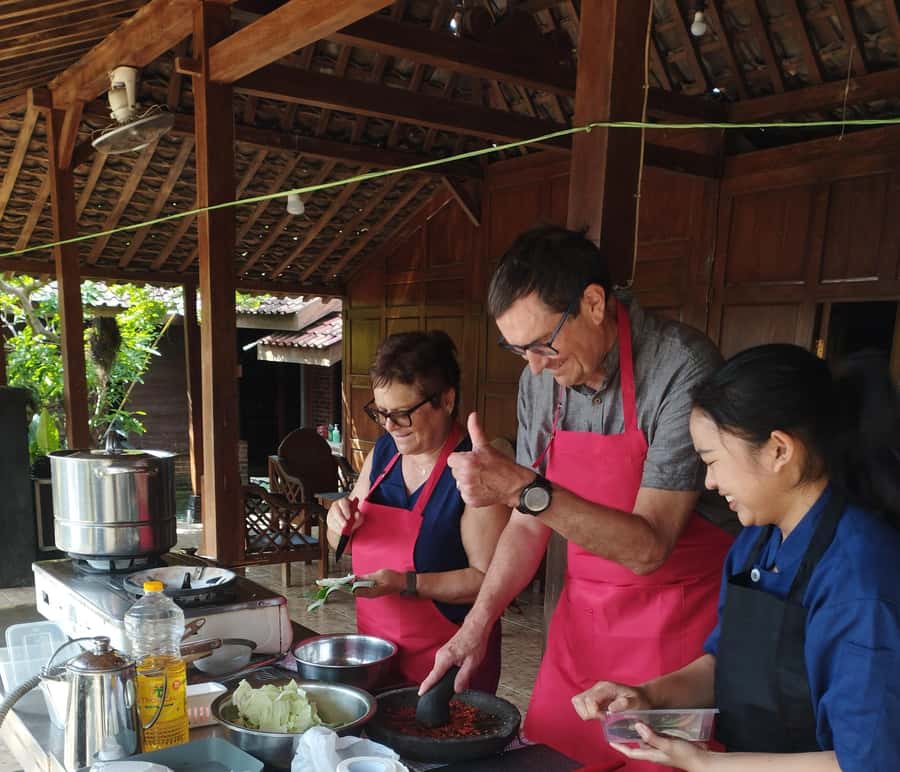
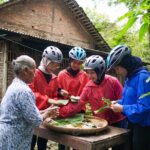
The best part of this tour starts before the stove. You’re picked up from your accommodation, then you head to a local market with your mentoring chef. This is not a quick drive-by. You move from stall to stall and you’re encouraged to pay attention to what’s fresh, what’s fragrant, and what locals choose for everyday cooking.
I like this format because it turns food into a story you can taste. When you understand why a spice matters or why one ingredient looks better than another, cooking stops being a random recipe exercise and becomes practical knowledge you can repeat later. The chef also helps connect the dots for non-Indonesian shoppers—what you’ll see in Yogyakarta, and what you might be able to buy outside Indonesia.
Dewi is singled out in many accounts as warm, attentive, and great at answering questions. One reason that matters: markets are sensory chaos. If you don’t know what you’re looking at, you can miss the whole point. With a guide like this, you get your bearings fast.
You can also read our reviews of more tours and experiences in Yogyakarta.



Stall-to-stall shopping: spices, fish, fruit, and what you’ll actually learn
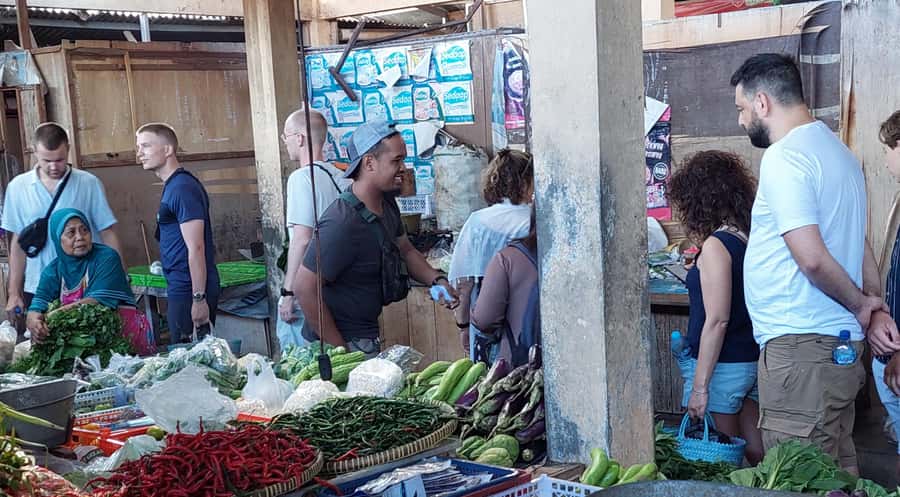
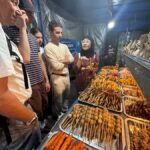
Once you’re at the market, the guidance is very hands-on in a learning sense. Your chef helps you identify and select herbs, spices, fresh fish, meats, vegetables, and fruits needed for the dishes you’ll cook later. You’ll also learn how ingredients work in Javanese cooking, not just what they’re called.
A standout value here is ingredient translation. The chef points out which local foods are easy to find abroad, especially in Asian grocery stores. That’s the difference between eating well today and being able to cook with confidence when you get home. You’ll come away with a shopping mindset, not just a meal memory.
You should also expect interaction at the stalls. Local sellers aren’t treated like background props. You’re guided in a way that makes it natural to ask, look closely, and taste what’s possible. If you’re the type who likes small surprises—new fruit, unfamiliar snacks, spice blends—you’ll likely enjoy the market part more than the average cooking class.
And yes, the market often leads to extra shopping. People have mentioned buying snacks and sweets during the visit that they could take home if they weren’t already eaten on the spot. That’s not “extra credit.” It’s part of learning how a market day works for locals.
Back to a Javanese home kitchen: how the class fits into 270 minutes
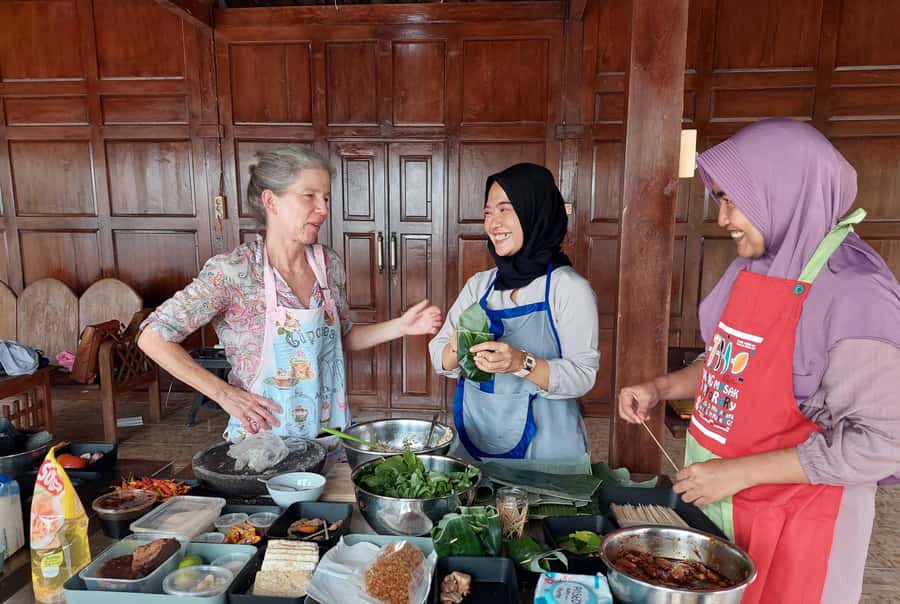
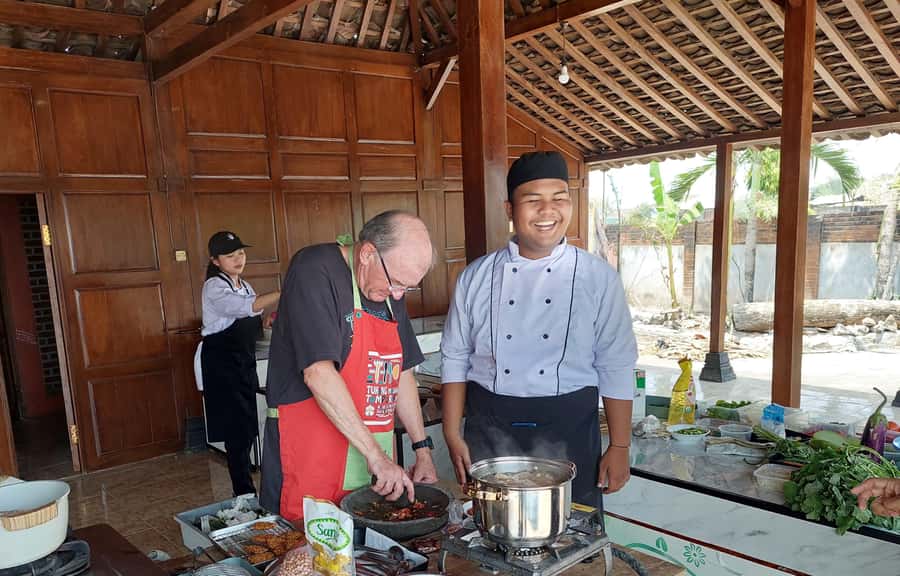
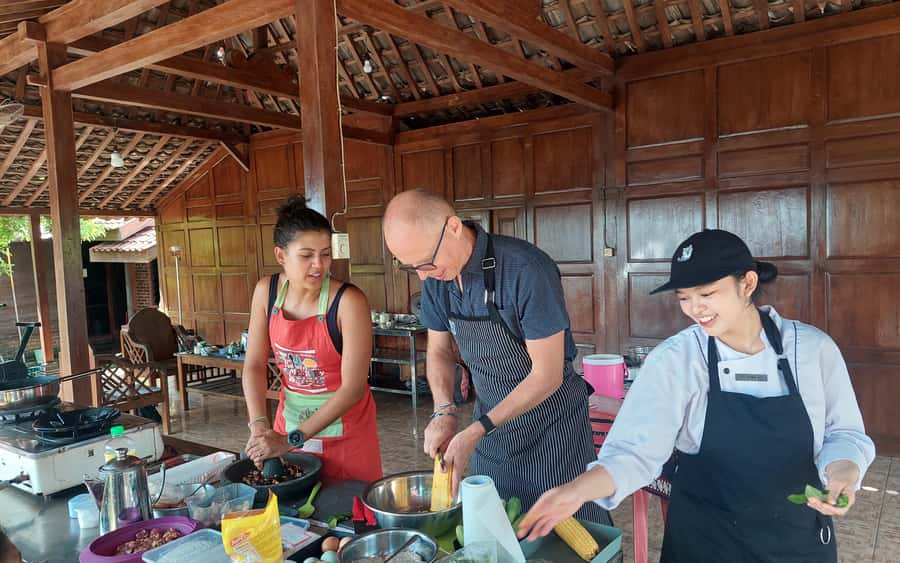
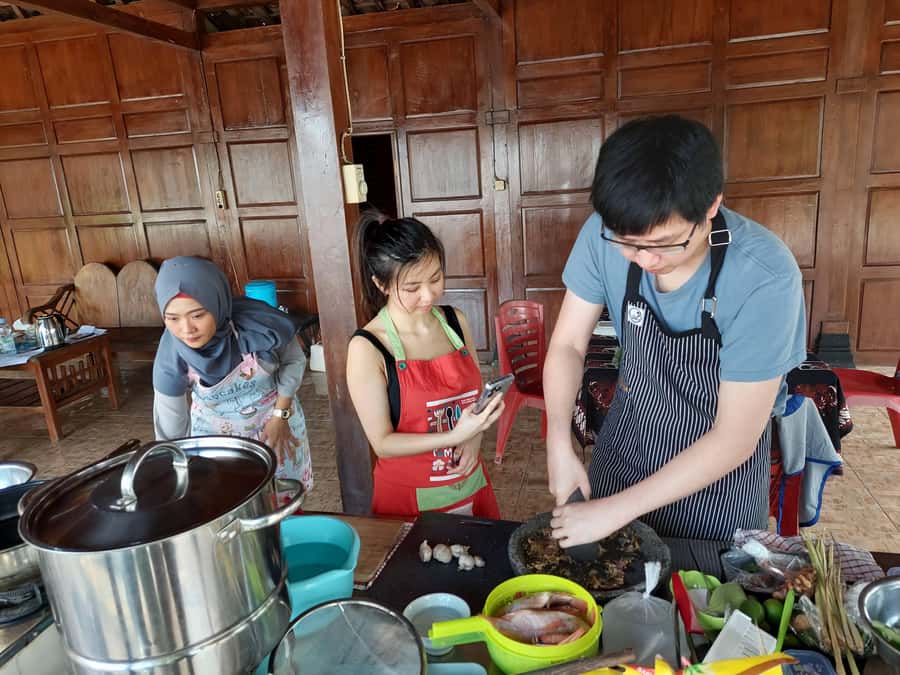
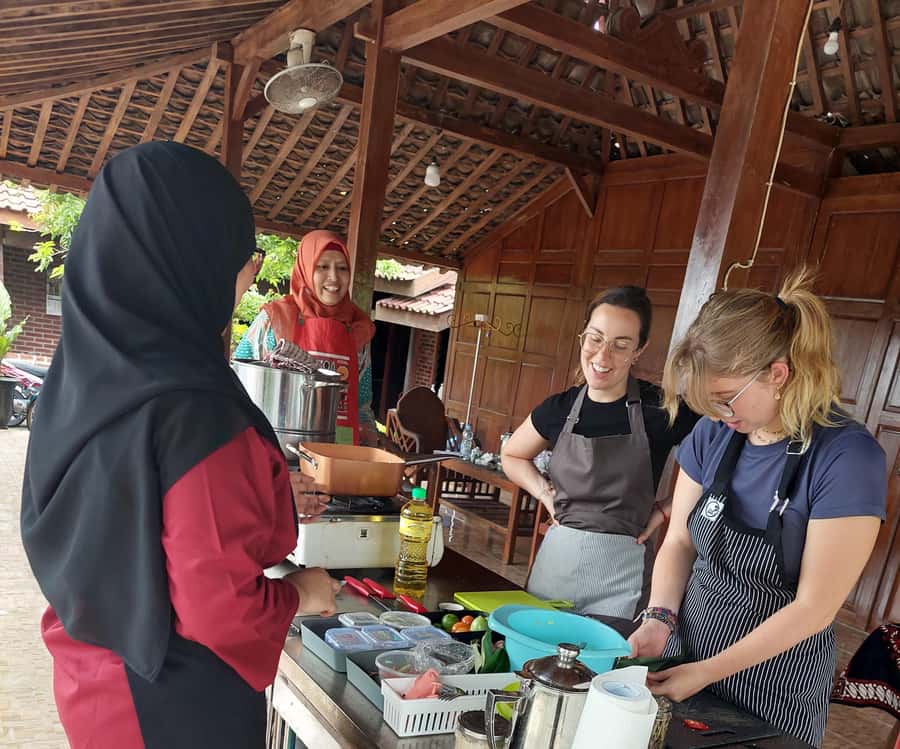
After the market, you return to the class venue in a Javanese house in a village neighborhood setting. The atmosphere is intentionally local—more family-house feel than glossy cooking studio. That matters. You’re not just learning cooking steps; you’re learning the rhythms of how people actually cook and share meals.
The overall duration is about 270 minutes, which is long enough to feel relaxed but short enough that nothing drags. You move from ingredient selection straight into preparation. The chef and cooking team guide you through the process so you can understand what each step is doing.
One real-world note: several people have said the team supports a lot of tasks for the group. That can be great if you want to learn flavors and techniques without stress. It can be less great if you booked specifically because you want to personally chop, scrub, and manage every prep detail.
For best results, go in with the right goal:
- If your goal is learning how Javanese flavors come together, you’ll likely love the pacing.
- If your goal is maximum hands-on time with every cutting step, bring that expectation and be ready to do what you can while still letting the team help.
What you taste matters: your meal is the proof of the lessons
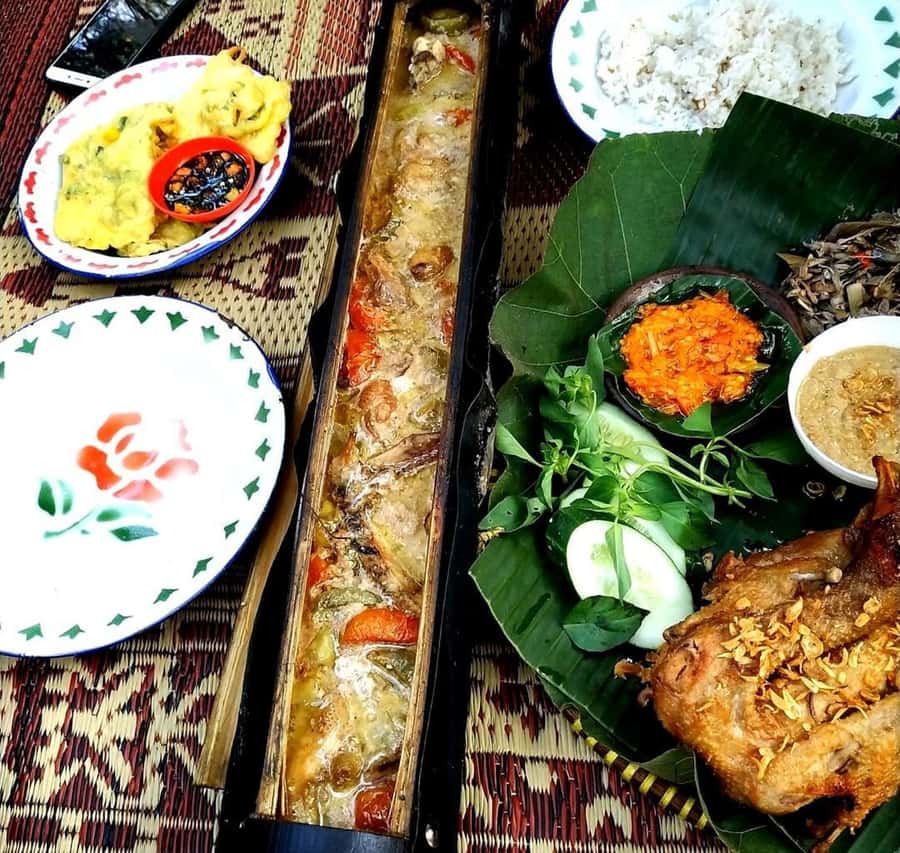
The experience doesn’t end with raw cooking demonstrations. You sit down and enjoy the meal you made. That’s when the market knowledge pays off. The flavors you picked out earlier—spices, aromatics, fresh produce—become obvious in the finished dish.
Most descriptions point to a very positive outcome: the food is repeatedly called delicious, with a friendly, rewarding atmosphere while you eat your results. It’s also a good chance to compare what you thought an ingredient would taste like versus what it actually tastes like after cooking.
If you’re cooking-minded, here’s what I’d pay attention to while you eat:
- How fragrant ingredients smell before they hit the pan versus after
- How sweetness and acidity show up (often through fruit or balancing elements)
- How savory flavors build rather than just “being salty”
Even if you’re not a cooking wizard at home, this kind of structured learning helps you recognize patterns you can reuse later.
English instruction and the chef team: comfort without losing authenticity
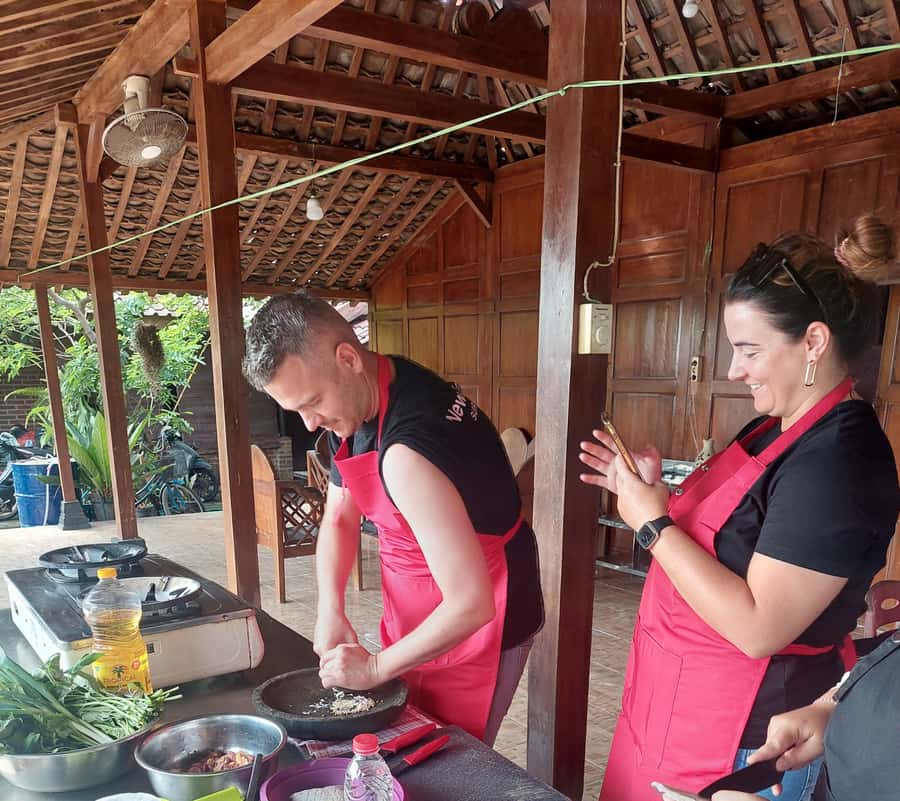
The instructor is listed as English, and the chef guidance is described as native Javanese. That’s a sweet spot for most visitors. You get explanations that are clear enough to follow, but you’re still using real local methods and local ingredients.
A number of accounts also highlight the team’s kindness and humor. People have mentioned teachers who were funny and quick to answer questions, which is a big deal in the market. If you’re unsure about an ingredient or why a certain choice is better, it helps when the chef doesn’t rush past your question.
You should also expect a support-heavy setup. One comment specifically mentions a team of multiple people assisting throughout the experience, including a chauffeur handling the transport. That kind of staffing is one reason the class can feel smooth and welcoming for different skill levels.




Price and logistics: how $53 stacks up in Yogyakarta
At $53 per person for about 270 minutes, this is one of those “reasonable if it includes the basics” food experiences—because it does. What’s included matters here:
- Hotel pickup and drop-off
- Market tour
- Cooking class
- All ingredients
- Morning tea
For many food tours, the ingredient cost gets messy fast. Here, you don’t have to figure out what you’re paying for while you’re hungry. That alone can make it feel like good value.
Pickup is also fairly broad. Service is listed as possible from Yogyakarta City, Kulon Progo Regency, Muntilan, Magelang, Sleman Regency, and Bantul. If you’re staying outside the tightest downtown area, that coverage is a practical win.
A couple of small logistical notes to plan around:
- You’ll want comfortable shoes and comfortable clothes
- Luggage or large bags aren’t allowed, so travel light
- It’s not suitable for people with mobility impairments, so if that applies, skip this one
On flexible planning: free cancellation up to 24 hours in advance and a reserve now, pay later option are included. That’s useful if your Yogyakarta schedule is still shifting.
Who should book this Javanese cooking class (and who should rethink it)
This tour is a strong match if you want:
- A market-first introduction to Javanese flavors
- A guided shopping experience that teaches ingredient logic
- A fun, educational session for individuals or small groups
- A cooking class that feels social and supported, not stressful
It’s especially good if you’re not trying to become a chef. You’re trying to understand the why behind the taste. The market segment does that job, and then the kitchen segment gives you the practical “hands on” feeling—just with more help from the team than some cooking purists might expect.
Consider rethinking if:
- You already cook a lot and want maximum personal prep time
- You’re looking for a class where you control every step end to end
- Mobility limitations are a concern
Should you book? My quick decision guide
Book it if you want a Yogyakarta food day that starts with real local shopping and ends with a satisfying meal you helped make. The price-to-inclusions ratio is solid: pickup, market tour, cooking class, ingredients, and morning tea all rolled together.
Don’t book it expecting a solo-level cooking workshop where you do everything yourself. The team support is part of the experience, and that’s great for learning—but it may not scratch the itch of a fully hands-on cooking drill.
FAQ
How long is the Yogyakarta Javanese cooking class and market tour?
The duration is listed as 270 minutes.
Is the cooking class taught in English?
Yes. The instructor language is English.
What’s included in the price?
Hotel pickup and drop-off, the market tour, the cooking class, all ingredients, and morning tea.
Where can pickup happen?
Pickup is possible from Yogyakarta City, Kulon Progo Regency, Muntilan, Magelang, Yogyakarta, Sleman Regency, and Bantul.
What should I bring, and what’s not allowed?
Bring comfortable shoes and comfortable clothes. Luggage or large bags are not allowed.
Is it suitable for people with mobility impairments?
No. The activity is not suitable for people with mobility impairments.