Komodo feels like a postcard you can swim in. This 3-day private cabin sailing trip from Labuan Bajo takes you across the Flores Sea into Komodo National Park’s big, iconic stops, with time for both viewpoints and water time.
I especially like the way the day mixes short land moments (like climbing up for the Kelor panorama) with snorkel-ready bays where the sea is calm and the scenery does not wait around.
Two things I’m glad you get for the price: first, the trip includes snorkeling equipment plus mineral water, soda, snacks, fruits, and full meals (breakfast, lunches, and dinners). Second, the itinerary is paced so you’re not just sitting on deck all day; you’re moving between places like Manjarite, Padar, and Kanawa, where the main attraction is right at the waterline.
One drawback to consider: boat and cabin quality can matter a lot. I’ve seen complaints about passengers not getting the exact cabin/boat class they expected, and about a cabin placed above the engine (noise overnight) plus reports of pests and basic equipment. If a truly “deluxe” cabin is a priority for you, it’s worth confirming the specific boat and cabin location before you go.
In This Review
- Key highlights you’ll feel on the water
- Komodo sailing from Labuan Bajo: what you’re really buying
- Day 1: Kelor viewpoint, Manjarite snorkeling, and Kalong bats at dusk
- Kelor Island: a short climb for serious views
- Manjarite Island: calm shallow water for snorkeling and drifting
- Kalong Island: the bat spectacle you time with the light
- Day 2: Padar’s three sand colors, Pink Beach pigment, and Komodo lizards
- Padar Island: the viewpoint that gives you the sand-color trick
- Pink Beach (Pantai Merah): the color isn’t random
- Komodo lizard area: the park’s most famous resident
- Day 2: Manta Point and Taka Makassar for big animal spotting
- Manta Point: where mantas pass by
- Taka Makassar: shallow swimming like a pool
- Day 3: Kanawa’s reef time, reef animals, and sunset over Sangeang
- Kanawa Island: reef snorkeling, white sand, and animal sightings
- Small resort and a quick hill climb for panoramic views
- Sangeang volcano sunset: a clean ending note
- Price and value for $585: what’s included, what’s not, and why it matters
- Best fit: who will love this, and who should think twice
- Practical tips to make your 3 days run smoother
- Should you book this Komodo private cabin sailing trip?
- FAQ
- Is the Komodo National Park entrance fee included?
- What snorkeling gear is provided?
- How long is the trip?
- Are meals included?
- Is pickup offered in Labuan Bajo?
- What happens if the tour is canceled?
Key highlights you’ll feel on the water
- Kelor viewpoints with a quick climb: a short hike leads to a big panoramic view over Flores.
- Manjarite snorkel setup: calm, shallow water and a pier make it easy to get in the water.
- Kalong’s bat show at dusk: mangrove-covered island, best watched as dusk turns into evening.
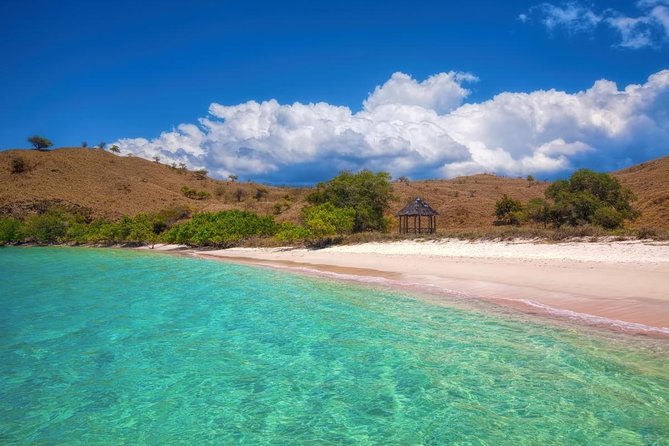
- Padar’s three sand colors: white, charcoal black, and rare baby pink in one surreal viewpoint area.
- Pink Beach science: the color comes from foraminifera and red pigment tied to the reefs.
- Kanawa reef time and sunset: white sand, snorkeling area, and sunset over Sangeang volcano.
Komodo sailing from Labuan Bajo: what you’re really buying
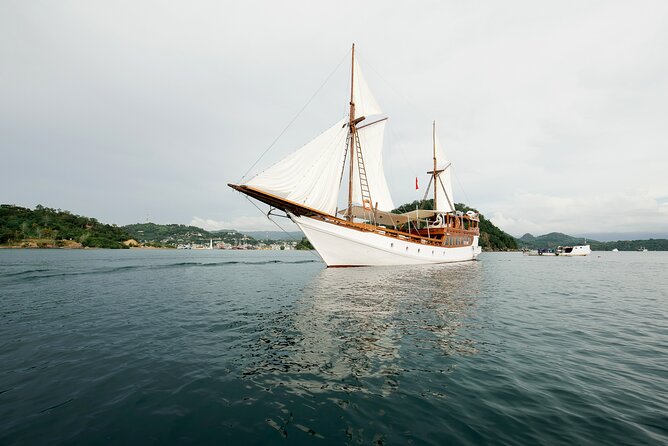
This is a 3-day cruise that starts at 8:00am in Labuan Bajo and runs on a traditional-style Indonesian Phinisi concept, using a modern “luxury” approach. The big idea is simple: Komodo is not a place you hop between quickly by land. A boat is the practical way to cover the islands in a sensible rhythm, and sailing adds a slower, more scenic feel than speedboats alone.
Price-wise, it’s $585 per person for the private-cabin experience. That price is not just for transportation. You’re also getting core “on-trip life” included: snorkeling equipment, drinking and small bites (mineral water, soda, snacks, fruits), plus a meal schedule (2 breakfasts, 3 lunches, and 2 dinners). The tradeoff is that the Komodo National Park entrance fee is not included, so you should budget for that separately.
Also notice the small scale: the max group size is listed as 20 travelers, which usually means less crowding at the stops than you’d get with huge day-tour fleets. And you get trip documentation, which can be handy if you want photos without trying to coordinate everyone yourself.
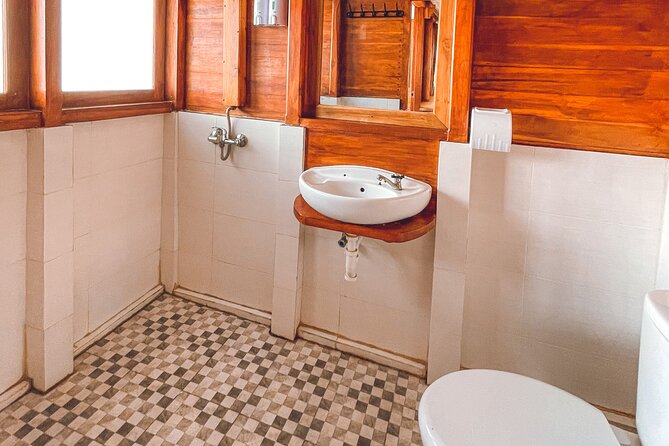
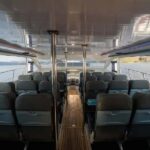
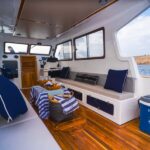
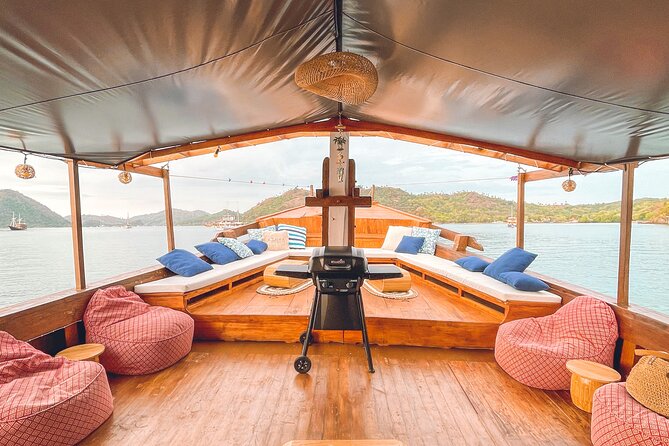
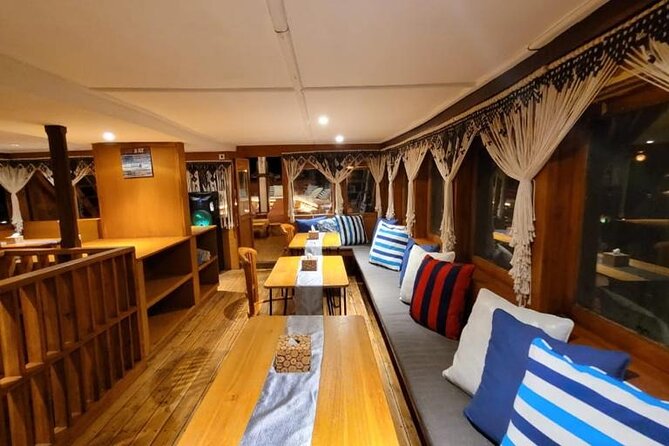
If you hate uncertainty, the only caution I’d underline is this: “deluxe” is the promise, but quality can vary by boat/cabin assignment. One report complained about getting a different boat than expected and not having a comfortable cabin situation. You can’t control everything, but you can reduce surprises by asking questions early.
You can also read our reviews of more tours and experiences in Labuan Bajo.
Day 1: Kelor viewpoint, Manjarite snorkeling, and Kalong bats at dusk
Day 1 is built around three different flavors of Komodo National Park: a high viewpoint, an easy-water snorkeling stop, and a natural spectacle.
Kelor Island: a short climb for serious views
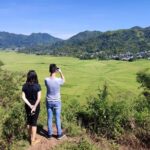
You’ll start with Kelor, a small island in front of Flores hills. The hike is described as about 15 minutes to the top, and the reward is a panoramic view that makes it a go-to for photos and selfies. What I like about this kind of stop is that you don’t need hours of trekking to get the “wow” angle.
You also get a straightforward beach break afterward: the island has two white sandy beaches where you can relax and swim. That’s a nice balance if you’re the type who wants both the view and actual water time without turning the day into one long workout.
Possible consideration: it’s a hike, even if it’s short. If you’re sensitive to heat or steep steps, pace yourself on the way up, and plan to enjoy the beach time after.
Manjarite Island: calm shallow water for snorkeling and drifting
Next is Manjarite Island, a stop that’s positioned near Rinca Island. It’s uninhabited and has a small wooden pier. The appeal here is the water conditions: the beach area is described as clear and greenish shallow water with about 3–5 meters depth, and minimum waves.
That combination usually makes snorkeling less stressful. You’re not fighting swells to see fish; you’re likely to enjoy an easier, more relaxed look underwater. From the top, you can also see different colorful fish like clownfish, scorpionfish, angelfish, and blue ribbon eels.
Small tip: snorkeling gear is included, so you can focus on where you want to spend your time—surface swims for quick views, or a slower pace if the water stays calm.
Kalong Island: the bat spectacle you time with the light
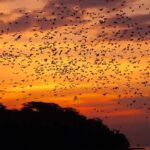
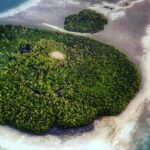
Finally on Day 1 you reach Kalong Island, named after the bat presence (kalong). This is a mangrove-covered island where bats fill the sky. The island can be adored from a distance, which means you get your best view from boat position rather than stepping into heavy terrain.
Timing is the key:
- Dusk is best, when bats fly off in a large group to search for food.
- You can also catch them early in the morning as they return.
I like that Kalong isn’t just another photo stop. It’s an animal behavior moment—dramatic and specific to the day’s timing. If you prefer wildlife that shows up on schedule, this is one of the stronger Day 1 choices.

Day 2: Padar’s three sand colors, Pink Beach pigment, and Komodo lizards
Day 2 is where the park identity gets loud—big view points, rare beach colors, and Komodo lizards in their home territory.
Padar Island: the viewpoint that gives you the sand-color trick
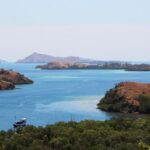
Padar is described as mostly savannah-covered with bright green-capped mountains in fairy-tale shapes. The central show is the way the island splits into three turquoise bays, and each bay’s beach has a different sand color:
- pearly white
- charcoal black
- rare baby pink
Even if you’ve seen photos before, seeing three sand colors from a viewpoint tends to hit differently in person. This is the kind of stop where you’ll spend time looking back and forth between the bays because your eyes keep asking how the colors can be real.
Possible consideration: bring comfortable footwear and expect uneven surfaces on the viewpoint area. The description emphasizes shapes and savannah areas, which often means you’ll be on ground that’s not perfectly flat.
Pink Beach (Pantai Merah): the color isn’t random
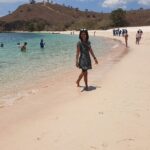
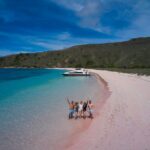
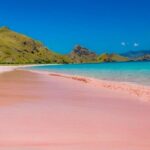
Pink Beach is one of seven pink beaches on the planet. Here’s the useful part: the color comes from microscopic animals called Foraminifera, which produce a red pigment linked to the coral reef environment. When red coral fragments mix with white sand, the shoreline turns that soft pink tone you see along the beach.
This means Pink Beach is more than aesthetic. It’s a place where the ecosystem is doing the coloring job. You’ll also find that a few small segments along Komodo’s eastern bay have a pinkish tint, so it’s not just one narrow strip.
Drawback to consider: the most striking color may depend on how the light hits the sand. Plan to enjoy it in more than one photo angle and not only one quick stop.
Komodo lizard area: the park’s most famous resident
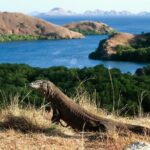
Komodo National Park’s headline species is the Komodo lizard (Varanus komodoensis), often called the Komodo dragon. You learn that it’s the largest living species of lizard, typically 2–3 meters long, and it’s found nowhere else in the world.
The tour notes that the park provides habitat for other terrestrial species too, including orange-footed scrub fowl, an endemic rat, and Timor deer. Even if you mainly care about Komodo lizards, it’s worth keeping your eyes open for the less-famous animals because the park is a full system, not a single-species attraction.
Practical mindset: Komodo lizards are wild animals. You’ll likely want to stay aware of where you’re standing and follow guidance so your photos don’t come at the cost of safety.
Day 2: Manta Point and Taka Makassar for big animal spotting
Day 2 keeps going with two water-focused stops. The main theme is clear: Komodo’s underwater highlights are often about one or two major attractions rather than endless coral scenery.
Manta Point: where mantas pass by
Manta Point is described as strategic for seeing manta rays, which often swim peacefully past the spot. Their size is given as about 3 meters. The tour notes an important safety point: manta rays can hurt you easily, even though they swim elegantly.
The other key detail is the water behavior. The sea is warm, but the current can be strong. The guidance here is straightforward: for beginners, go with an instructor.
What I take from this: don’t treat manta spotting like a guaranteed swim-without-conditions. You’re there for the mantas to show up and for your safety to be handled responsibly. Also, the sea is described as not having lots of corals, so your main focus is the mantas themselves.
Taka Makassar: shallow swimming like a pool
Taka Makassar is small—smaller than a soccer field, according to the description. Since it’s shallow, big boats can’t get near, so you use a smaller boat from Manta Point or Komodo Island (the smaller boat name given is Sail Komodo).
This stop is designed for comfort in the water: because it’s shallow, you can swim comfortably, and the color is described as clear toscа. The tour also compares the swimming experience to a swimming pool, because the area is narrow and calm enough for an easy entry.
If you want a “reset” after manta spotting—something simpler, lower-risk, and visually pleasing—Taka Makassar fits that role well.
Day 3: Kanawa’s reef time, reef animals, and sunset over Sangeang
Day 3 is more relaxed in feel. It’s about resting, reef time, and then closing the trip with a scenic payoff.
Kanawa Island: reef snorkeling, white sand, and animal sightings
Kanawa is one of the most famous spots in the Komodo National Park area, described as paradise-like with white sand beaches and coral reefs. It sits at the border of the park, and it’s close enough to keep Day 3 from dragging: the trip notes it’s about 35 minutes away from Labuan Bajo.
Most of your day centers on Kanawa for rest and snorkeling around the surrounding reef. The reef life listed includes dolphins, stingrays, turtles, and lots of starfishes. That’s a good lineup if your goal is to see a variety of marine animals rather than only fish schools.
Possible consideration: snorkeling time depends on conditions. The description doesn’t promise a particular visibility range, so keep expectations flexible and focus on the variety of life around the reef.
Small resort and a quick hill climb for panoramic views
Kanawa has a small resort on the southern part where you can stay longer, though this trip’s format is built for a short, three-day circuit. You can also climb a small hill for panoramic views and to meet local goats and birds on the island.
I like including a hill option because it gives you a change of pace. After days of boats and water, walking uphill—even briefly—can make the whole trip feel less like a schedule and more like a place.
Sangeang volcano sunset: a clean ending note
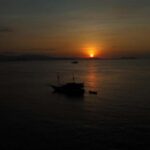
The final line you’ll appreciate is the sunset over Sangeang volcano. Even if you’ve seen sunsets around Indonesia before, the value here is timing: after your reef time, you’re not scrambling for your last photo stop. You can just settle in and watch.
Price and value for $585: what’s included, what’s not, and why it matters
At $585 per person for about three days, this is not a budget cruise. The value is best understood by subtracting what you’d otherwise pay and managing what you still need to budget for.
What you get included:
- Snorkeling equipment (so you don’t need to source rentals)
- Mineral water, soda, snacks, and fruits
- Meals: 2 breakfasts, 3 lunches, and 2 dinners
- Trip documentation
What you pay separately:
- Komodo National Park entrance fee is not included
Why this pricing can be fair:
- You’re paying for movement across islands over multiple days, not just one day trip.
- You’re also paying for structured access to prime stops: Kelor, Manjarite, Kalong, Padar, Pink Beach, Manta Point, Taka Makassar, and Kanawa.
- Food and water included reduces your daily planning stress.
Where you should be careful:
- If you want the “deluxe” cabin experience, confirm that your specific cabin matches what you’re expecting. One complaint mentioned a cabin above the engine and poor comfort, including noise overnight and pest issues. That kind of detail can turn an otherwise great itinerary sour fast.
Best fit: who will love this, and who should think twice
This trip is a strong match for you if:
- You want a private cabin feeling in a small group (max 20).
- You like natural variety: viewpoints on land, snorkeling in calm water, bats at dusk, and manta-ray spotting.
- You appreciate included meals and gear so you spend less time juggling logistics.
It might be a weak fit if:
- You’re very sensitive to sleep quality and noise, since engine placement can matter.
- You expect guaranteed WiFi or modern comfort as part of the “deluxe” label. One report said WiFi wasn’t available.
- You want equipment to be in top condition. One report mentioned rotten equipment.
If any of those are deal-breakers, ask specific questions before you pay. Otherwise, you’re likely to enjoy the rhythm of the cruise and the classic Komodo highlights.
Practical tips to make your 3 days run smoother
A few smart moves will help you enjoy the trip without overthinking it:
- Verify your exact boat and cabin location before you go, especially if you’re paying for a deluxe private cabin. Comfort can depend on placement.
- Plan for time-of-day wildlife. For Kalong, dusk is the key moment. Give yourself enough patience to wait for it.
- Treat currents as real, especially at Manta Point. The route is described as having strong currents, and beginner guidance with an instructor is recommended.
- Use snorkel time strategically. Some areas are built for easier swimming (like shallow Taka Makassar), while others are for specific wildlife spotting (like manta rays).
One more thing: the itinerary is packed with impressive stops. If you tend to rush when you see something famous, slow down once or twice. The best memories here often come from the calm moments between the big photo hits.
Should you book this Komodo private cabin sailing trip?
If you want the iconic Komodo mix—Padar’s sand-color viewpoint, Pink Beach’s rare color origin, bats at dusk, manta rays, and Kanawa reef time—this is a compelling format. The included snorkeling gear and the full meal plan are real value, and the small-group limit helps the experience feel manageable.
That said, I’d only book if you’re comfortable doing a quick reality check on the boat and cabin quality behind the deluxe label. If you can confirm cabin location and boat class, you reduce the risk of ending up with an uncomfortable setup.
My take: for travelers who want classic Komodo highlights with less day-trip juggling, it’s a solid choice. Just don’t ignore the cabin details.
FAQ
Is the Komodo National Park entrance fee included?
No. The Komodo National Park entrance fee is not included in the tour price.
What snorkeling gear is provided?
Use of snorkeling equipment is included, so you don’t need to arrange rentals separately.
How long is the trip?
The experience runs for 3 days (approx.), starting at 8:00am.
Are meals included?
Yes. Breakfast (2), lunch (3), and dinner (2) are included, plus mineral water, soda, snacks, and fruits.
Is pickup offered in Labuan Bajo?
Pickup is offered, and the meeting area is near public transportation.
What happens if the tour is canceled?
The experience is non-refundable and cannot be changed for any reason. If it’s canceled due to poor weather, you’ll be offered a different date or a full refund.
If you want, tell me your travel month and whether you’re mainly here for wildlife (manta rays and Komodo lizards) or for beaches and snorkeling. I can help you decide if this itinerary matches your style.