Sunrise yoga in Ubud resets your week. What makes this retreat stand out is the daily rhythm: sunrise yoga, meditation at sunset, and a calm setting surrounded by rice paddies. I also like that the pace leaves space to meet people without turning it into a nonstop schedule, and you get the added comfort of simple, clean rooms in a quiet spot.
You’ll also get hands-on with Balinese natural medicine through herbal medicine learning, jamu making, medicinal tea tasting, and cooking. The vibe feels welcoming and human, with organisers like Buda and Ariel keeping things warm and supportive. The main drawback to consider is location: it’s peaceful, but you’re about a 25-minute walk from Ubud, and there isn’t much nearby beyond nature and quiet.
In This Review
- Key highlights worth planning around
- Ubud’s calm base: rice paddies, a bamboo-roof shala, and a real reset
- What the week feels like: sunrise yoga, sunset meditation, and breathing room
- Day-by-day itinerary: what you do and why it matters
- Day 1 (Sunday): arrival, settling in, first introduction
- Day 2 (Monday): sunrise yoga, Balinese medicine walk, and canang offerings
- Day 3 (Tuesday): cultural excursion or sound healing at Pyramids of Chi
- Day 4 (Wednesday): cooking class in the morning, jamu making mid-day
- Day 5 (Thursday): medicinal tea tasting and chocolate making
- Day 6 (Friday): yoga again, then a quieter closing rhythm
- Day 7 (Saturday): departure (with a mid-day exit)
- Your meals: daily vegetarian organic food that keeps the week steady
- The Balinese massage: why that 1-hour treatment is worth protecting
- Learning Balinese culture the hands-on way: offerings, herbs, and tea
- Price and value: what $412 really buys you for 7 days
- Who this retreat is best for (and who should skip it)
- Practical tips before you go: pack smart for yoga + rain + walking
- Should you book this 7-day Bali solo yoga retreat in Ubud?
- FAQ
- What is the duration of the retreat?
- Where does the retreat take place?
- What is included in the price?
- What is not included?
- What kind of group is this retreat?
- What are the daily yoga and meditation times like?
- What happens on Tuesday?
- Is there a massage included?
- What should I bring?
- Is this retreat suitable for everyone?
Key highlights worth planning around
- Sunrise-to-sunset yoga flow: yoga at sunrise, then sunset yoga plus meditation most days
- Hands-on Balinese wellness: canang offerings, jamu making, and medicinal tea tasting
- Food as a class, not a side quest: Balinese cooking, plus chocolate making
- Flexible Tuesday choice: either a Balinese excursion or 1.5-hour sound healing at Pyramids of Chi
- Recovery time included: a 1-hour Balinese massage built into the weekly rhythm
- Quiet accommodations with pool access: infinity swimming pool and a wooden yoga shala with bamboo roof
Ubud’s calm base: rice paddies, a bamboo-roof shala, and a real reset
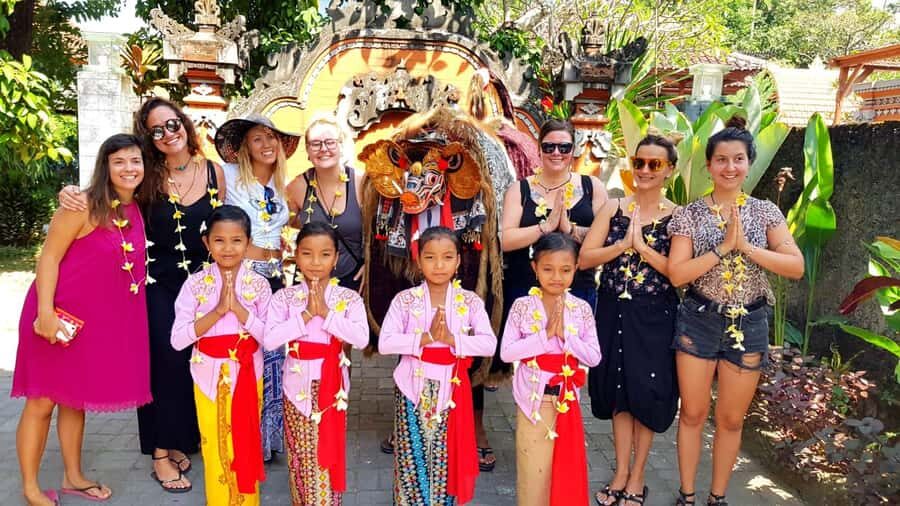
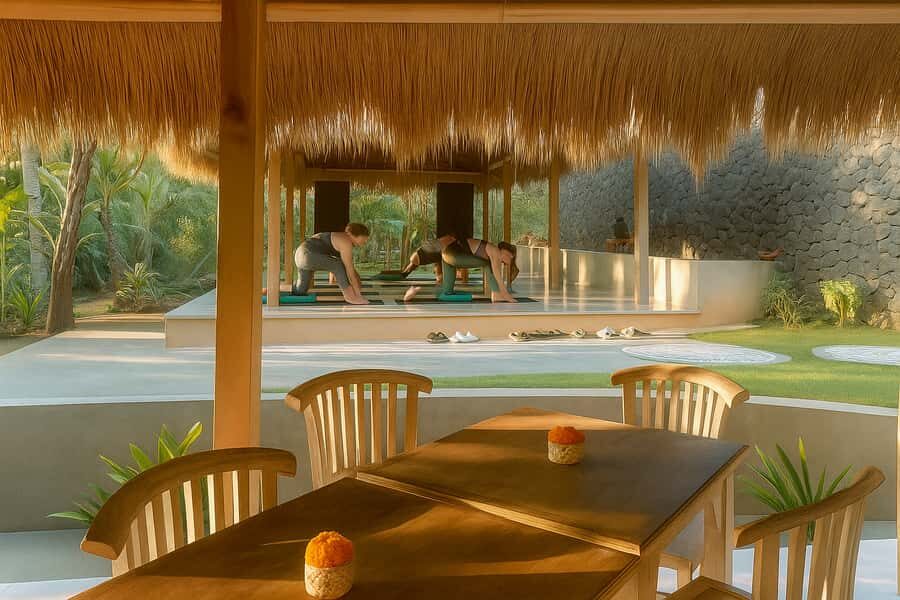
This retreat is designed for people who want quiet structure. You’ll stay in a serene area with jungle-and-rice views (think animals calling in the morning, not traffic noise). The property setup is simple, not fancy, but it works: a cozy dining area, an infinity swimming pool for downtime, and a yoga space that’s a wooden shala with a bamboo roof.
The yoga shala matters more than you might expect. When the roof is bamboo and the setting is open, you feel the weather. That can be great in the dry season, and it can mean you’ll want to plan for humid, rainy bursts too. One practical tip: bring sensible shoes. The ground can get slippery at times, and you’ll be walking for a morning walk and getting to activities around the area.
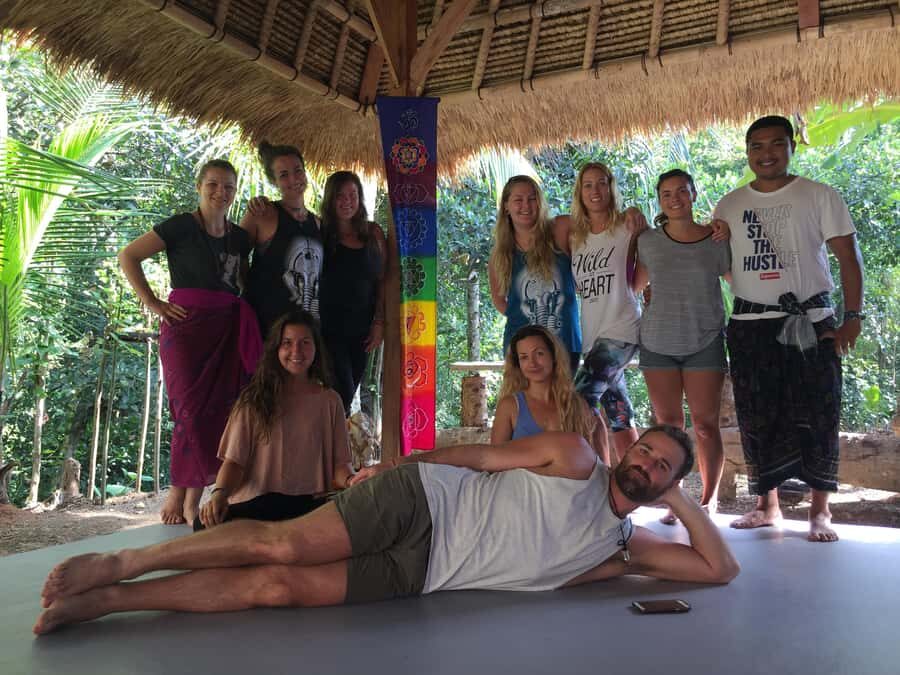
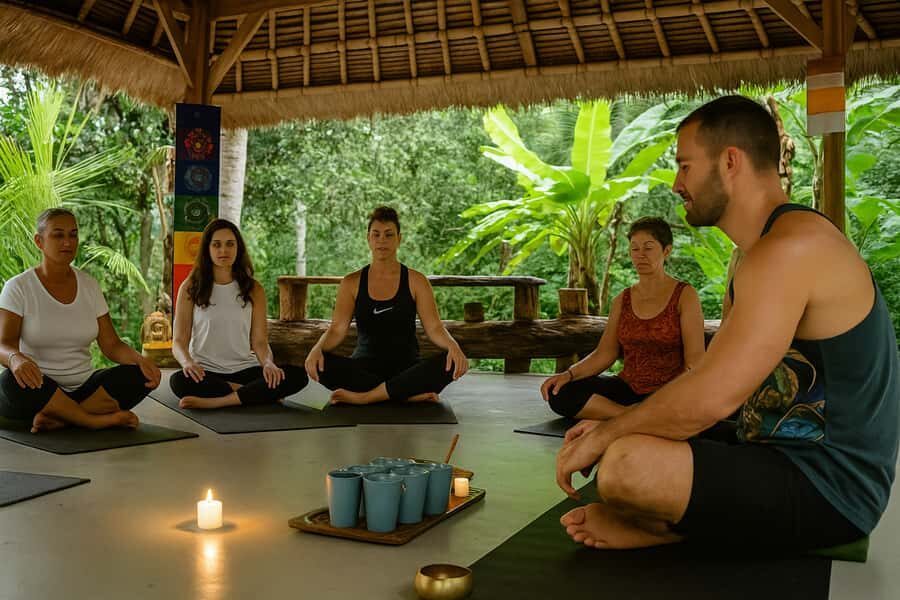
This is also a solo-friendly retreat in a very specific way. It’s not a silent retreat where you disappear into your room. You’ll meet fellow participants, form connections, and share the daily practice and classes. At the same time, the schedule has gaps, so your “new friends” time doesn’t crowd out your own thinking.
You can also read our reviews of more tours and experiences in Bali.



What the week feels like: sunrise yoga, sunset meditation, and breathing room
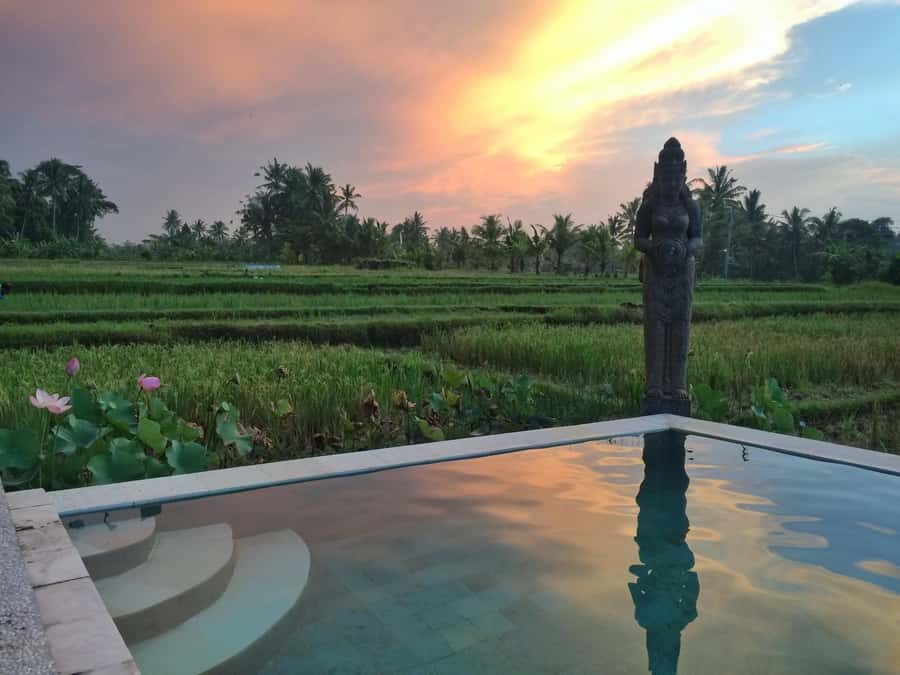
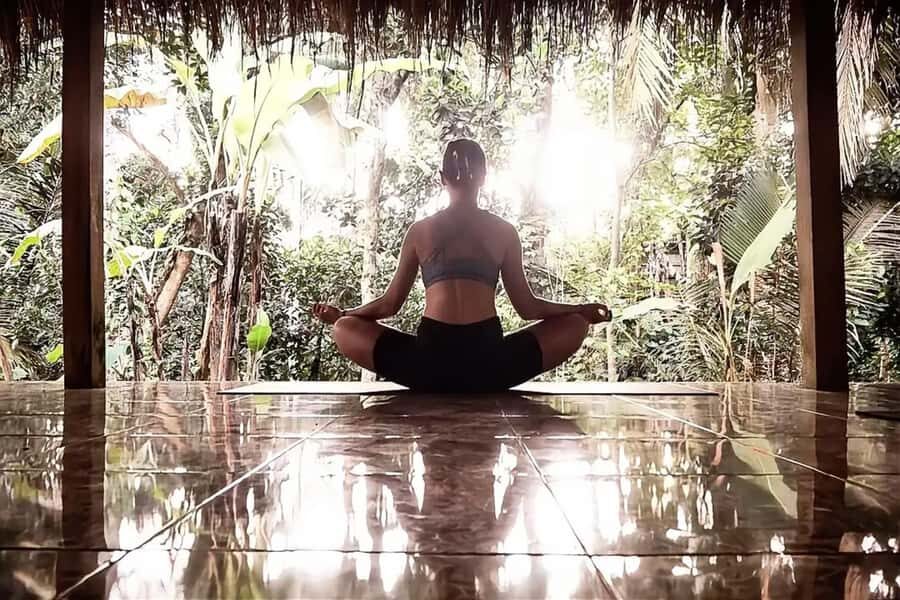
The most important thing here is the pattern. Each day tends to start with morning yoga and end with sunset yoga plus meditation. That means you’re not constantly guessing what’s next, and your body learns the routine fast.
Here’s the typical arc:
- Morning: yoga at or around sunrise, then a walk or a cultural activity
- Afternoon: workshops, classes, or a healing session option
- Evening: sunset yoga and meditation
This structure is great if you’re traveling alone and want companionship without social pressure. You’ll still have enough quiet time to read, journal, or just stare at the rice paddies while the day cools down.
It also helps you actually apply what you learn. For example, if you make canang offerings or jamu later in the day, you’re not mentally switching gears all night long. You settle into practice that already matches the theme—attention, gratitude, and calm.
Day-by-day itinerary: what you do and why it matters
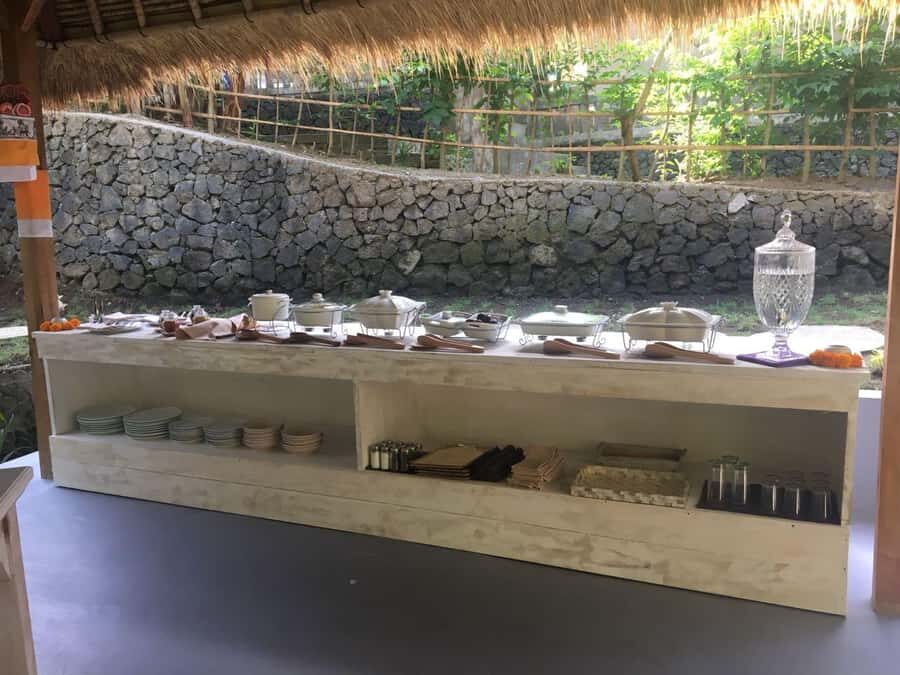
Day 1 (Sunday): arrival, settling in, first introduction
You arrive at 14:00 and settle into your accommodation. Then the day eases you in with a first introduction at 18:00.
That intro time is more useful than it sounds. It’s where you meet your group, learn the flow of the week, and get comfortable asking questions. If you’re the kind of person who needs a little orientation before jumping into yoga, this pacing helps.
Day 2 (Monday): sunrise yoga, Balinese medicine walk, and canang offerings
Monday starts with 07:00 sunrise yoga. After that, the morning walk and introduction to Balinese natural medicines begins at 09:30.
This is one of the best “why Bali” moments of the week. It’s not just chanting and yoga poses. You’re learning how locals think about healing and wellbeing—what goes into herbal practice and how plants show up in daily life.
Then comes canang making at 15:00. Canang offerings are part of Balinese daily spirituality, and making them gives you a physical understanding of something you’d otherwise only see from the roadside.
In the evening, it’s back to the rhythm:
- 17:00 sunset yoga
- 18:00 meditation
The practical payoff: by the time you’re meditating, you’ve already spent the day using your hands and your attention. You’re not arriving at meditation with a head full of sightseeing noise.






Day 3 (Tuesday): cultural excursion or sound healing at Pyramids of Chi
Tuesday has a built-in flexibility because of ceremonies. You’ll do one activity between 09:00 and late afternoon, and the choice will be either:
- a Balinese excursion, or
- a 1.5-hour sound healing session at Pyramids of Chi
This matters if you care about cultural alignment. Rather than forcing a fixed plan, the retreat adjusts based on what’s happening locally that week. It also means you should expect the day’s details to depend on the schedule around ceremonies.
For your planning style: if you love cultural seeing and local life, you’ll probably enjoy the excursion option. If you’re more drawn to inner quiet and sound-focused healing, the Pyramids of Chi session may feel more like what you came for.
Day 4 (Wednesday): cooking class in the morning, jamu making mid-day
Wednesday starts the same way with 07:00 sunrise yoga. Then at 11:00 you shift into a cooking class.
This is the day where I’d look closely at your motivation. Food classes can be great, but only if you actually like learning ingredients and methods, not just tasting. Since this retreat also includes herbal medicine and jamu, the cooking class likely connects food to wellbeing in a practical way.
At 15:00, you’ll do jamu making. Jamu is herbal practice you can literally taste and take home as knowledge. You get that hands-on “I made this” feeling, which tends to stick better than reading about it later.
Then again:
- 17:00 sunset yoga
- 18:00 meditation
The balanced design is smart. You’re active in the morning and late afternoon, and the evening practice helps your body settle after working with ingredients and getting your hands busy.
Day 5 (Thursday): medicinal tea tasting and chocolate making
Thursday morning starts at 07:00 sunrise yoga, followed by 11:00 medicinal tea tasting.
This is where you start connecting the dots between what you’re taught about herbal medicine and what you feel in your body. Tea tasting can be subtle, but it’s still education you can use at home.
Then at 16:00, you’ll do chocolate making. That’s a fun contrast to the medicine-focused learning. The best part is that it doesn’t feel random—it keeps the week from going too serious.
And you still end the day with 17:00 sunset yoga.
If you like variety, this day is a win. You get both mindset and treat energy.
Day 6 (Friday): yoga again, then a quieter closing rhythm
Friday begins with 07:00 sunrise yoga, and then you’ll have the sunset yoga at 17:00.
The schedule is slightly lighter than some days, and that can be a good thing. By now your body knows the routine. You can take a breath, revisit something you learned, or spend time swimming in the infinity pool without feeling like you’re “wasting” an hour.
Day 7 (Saturday): departure (with a mid-day exit)
Your departure is scheduled for 12:00.
That timing is practical. It’s late enough that you’re not rushing right after a morning push, but early enough to plan transport and avoid last-minute stress.
Your meals: daily vegetarian organic food that keeps the week steady
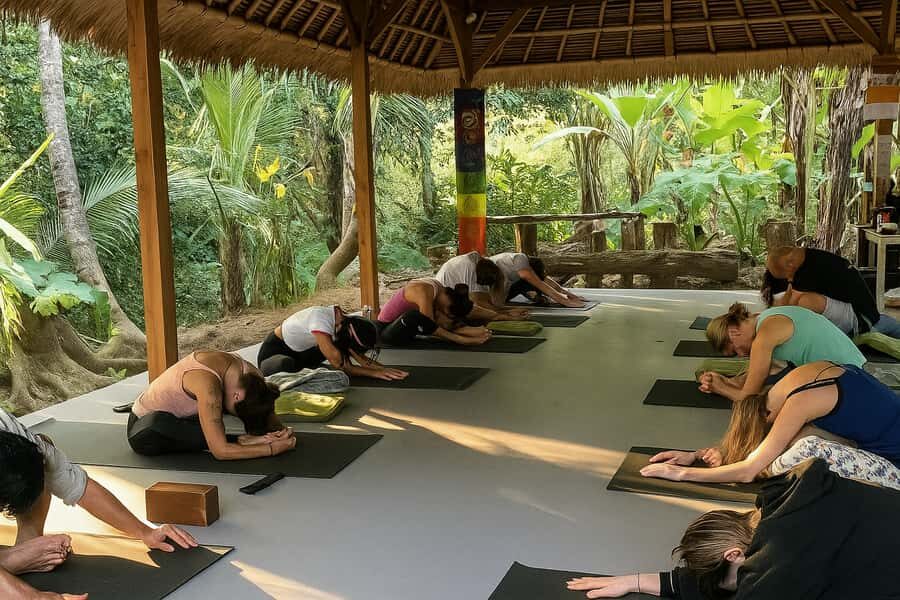
Food is part of the healing here. You’ll get daily vegetarian organic meals, and the retreat provides meals included in the price. From the on-the-ground feel, you also get a menu choice each day, which helps if you have preferences or you’re simply tired of repeating the same flavors.
For yoga retreats, meals usually fall into two categories: bland and boring, or balanced and thoughtful. This one leans toward tasty and consistent, which matters when you’re practicing morning and evening.
A good real-world note: since you’ll be active and outside, keep hydrated and pack sunscreen. Even if yoga is calming, the sun is still doing sun things.
The Balinese massage: why that 1-hour treatment is worth protecting
You’ll include a 1-hour Balinese massage for deep relaxation as part of the retreat experience. This is a built-in recovery moment, and I like that it’s scheduled inside the week rather than something you chase afterward.
The massage also fits the retreat philosophy: you’re not only working your mind and stretching your body. You’re also giving your muscles a proper exhale after days of yoga and walking.
If you tend to feel sore after travel, book your massage days like you would any important appointment—don’t let yourself stack extra activities. Save your energy for the practice.
Learning Balinese culture the hands-on way: offerings, herbs, and tea
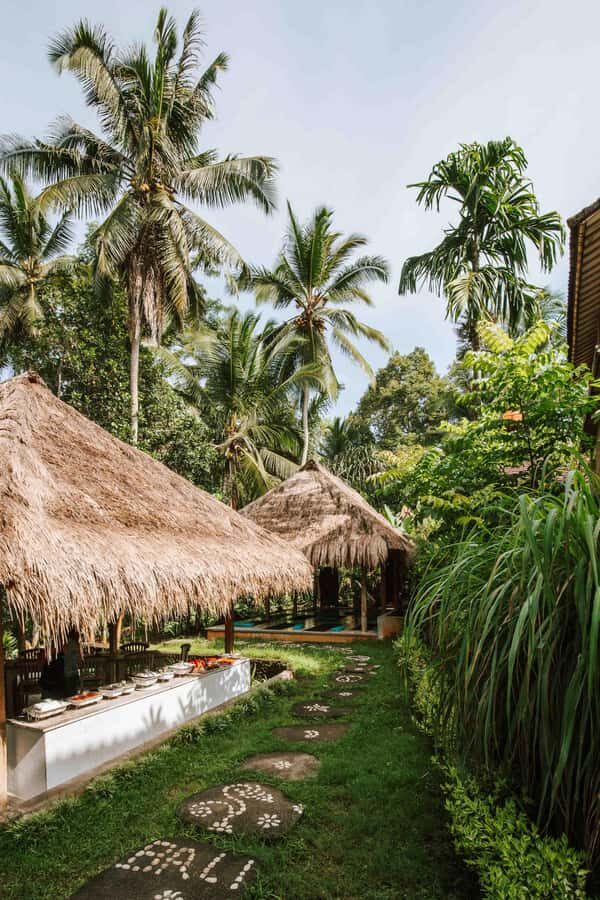
If you want Bali that isn’t just temples from a tour bus window, this week gives you tactile, everyday learning.
You’ll do:
- Canang making (a Balinese offering practice)
- Herbal medicine workshop and natural medicine introduction
- Jamu making
- Medicinal tea tasting
Why this works: you’re not only being told what something is. You’re shaping it, preparing it, tasting it, and hearing how it connects to daily life.
Also, the retreat programming seems guided by people who care about the tone of the experience. The organisational warmth—names like Buda and Ariel came up in feedback—matters because wellness retreats can be awkward when the host feels distant. Here, the vibe is supportive, and that makes it easier to ask questions and relax into the schedule.
Price and value: what $412 really buys you for 7 days
The listed price is $412 per person for 7 days.
To judge whether that’s good value, don’t just compare it to hotel prices. Compare it to what you’re getting:
- accommodation for a full week
- daily yoga sessions
- meditation sessions
- cultural workshops (including offerings and herbal medicine topics)
- cooking class
- jamu making
- medicinal tea tasting
- chocolate making class
- meals
- a 1-hour Balinese massage
Airfare isn’t included, and transportation isn’t included. That’s normal. But the on-the-ground takeaway is this: the retreat covers most of the “doing” costs. You’re paying for guidance, class structure, and cultural learning time—not just a room and an empty calendar.
Where value can vary is in your expectations for the accommodation. Rooms are described as simple but comfortable, and the setting is serene rather than urban. If you need lots of nearby dining, nightlife, and easy transit access, you may feel constrained. If you’re craving quiet and structure, the price makes more sense.
Who this retreat is best for (and who should skip it)
This is for you if:
- you want a solo-friendly retreat with a chance to connect
- you like yoga plus culture plus hands-on learning
- you want to meet like-minded people in a welcoming environment
- you enjoy vegetarian meals and a wellness pace
It’s not for you if:
- you have mobility impairments
- you have heart problems
- you’re traveling with children under 18
- you want nightlife or lots to do right outside your door
Also keep in mind: the retreat is often fully booked, so double-check room options carefully before you commit.
Practical tips before you go: pack smart for yoga + rain + walking
What to bring:
- swimwear
- sunscreen
- comfortable clothes
- insect repellent
A couple smart add-ons based on the real setting:
- pack a small towel or quick-dry layer for workouts
- bring sensible shoes for slippery patches
- plan for rain that comes and goes; the retreat environment can handle it, but your feet and clothes need to
And a firm note: smoking and alcohol and drugs aren’t allowed. This is part of keeping the space focused and calm.
Should you book this 7-day Bali solo yoga retreat in Ubud?
Book it if you want a retreat that feels grounded: sunrise yoga, sunset meditation, and real, hands-on cultural learning like canang offerings and jamu making. The inclusion of a full set of classes, meals, and a 1-hour Balinese massage makes it good value if you like structured wellness.
Skip it if you need an area full of shops and easy daily errands, or if walking from the retreat to Ubud sounds like a hassle. This place is about peace, not convenience.
If your goal is to leave Bali feeling calmer in your body and clearer in your mind, this is the kind of week that does that.
FAQ
What is the duration of the retreat?
The retreat is 7 days.
Where does the retreat take place?
It’s in Ubud, Bali, Indonesia. The meeting point is Firefly retreat Bali, Br Sakti, Jl Suweta, Ubud, Bali, Indonesia.
What is included in the price?
Accommodation, yoga classes, cultural workshops, meals, a cooking class, chocolate making class, and an herbal medicine workshop are included.
What is not included?
Airfare and transportation are not included.
What kind of group is this retreat?
It’s a small group and limited to 1 participant.
What are the daily yoga and meditation times like?
Each day includes yoga and meditation sessions such as sunrise yoga, plus sunset yoga and meditation. Specific times are listed for each day.
What happens on Tuesday?
Due to local ceremonies, Tuesday includes one selected activity: either a Balinese excursion or a 1.5-hour sound healing session at Pyramids of Chi.
Is there a massage included?
Yes. The retreat includes a 1-hour Balinese massage treatment for deep relaxation.
What should I bring?
Bring swimwear, sunscreen, comfortable clothes, and insect repellent.
Is this retreat suitable for everyone?
It is not suitable for people with mobility impairments, people with heart problems, or children under 18. Smoking and alcohol and drugs are also not allowed.