Stone mortar, cool market air, and your own feast. This Balinese Cooking Class in Ubud strings together a traditional morning market, an organic garden herb lesson, and a hands-on cooking session that ends with a 5-course lunch you make yourself in a home-style kitchen. You also get door-to-door pickup and drop-off, so the day feels easy even though you’ll be cooking.
Two things I especially like: you start with the real shopping and food rhythms of the area, then you learn the technique side that actually makes Balinese flavors work. The class is taught in small groups, typically four to 12 people, so your instructor can stay close while you grind spice and assemble dishes. One drawback to consider is that you’re signing up for an early start, with market time beginning around 7:30am and the full pickup-to-drop-off day running longer than the cooking lesson itself.
In This Review
- Key Highlights Worth Waking Up For
- A Traditional Ubud Market Is More Than Shopping
- Organic Garden Herbs, Coffee, and Cake-Style Fuel Before Cooking
- Stone Mortar and a Wooden Chopping Block: Learn the Paste
- The Traditional Open Kitchen and Your 5-Course Lunch
- Timing, Transfers, and Small-Group Attention in Ubud
- Price and Value: What You’re Getting for $58.16
- Who This Balinese Cooking Class Suits Best
- Should You Book This Ubud Cooking Class?
- FAQ
- Where does this cooking class take place?
- How long is the experience?
- What time does the market visit start?
- Is hotel pickup and drop-off included?
- What do you do at the traditional market?
- Do you get to cook and eat the meal?
- Is the group size small?
- Can I cancel for a full refund?
- Is a mobile ticket used?
Key Highlights Worth Waking Up For
- Traditional market time before you cook, when conditions are cooler and you’re guided on what to buy for your meal
- Guides who bring the culture to life, including explanations credited to Ron at the market and Nyoman escorting the visit
- Organic garden herbs plus a coffee and cake-style snack, so you learn flavors before you touch ingredients
- Two spice-prep methods you’ll practice, chopping on a wooden block and grinding in a stone mortar
- A true open-kitchen 5-course lunch, plus dessert, all made with your own hands
- Door-to-door transfers with punctual help, including an on-time driver noted by name as Yoga
A Traditional Ubud Market Is More Than Shopping
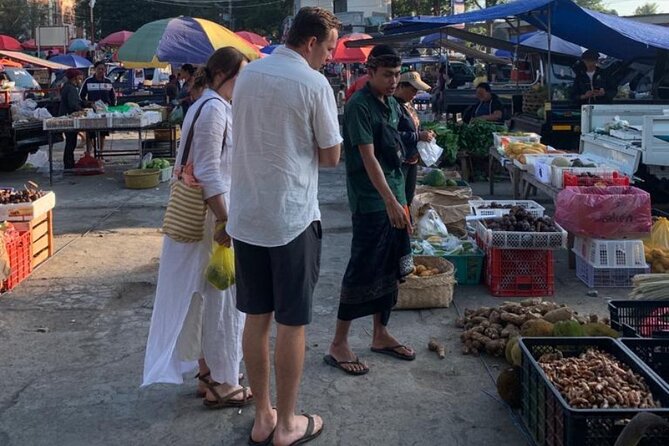
Your morning begins with pickup from your accommodation, then you head straight to a traditional market. The market visit typically starts between 7:30am and 8:00am, timed for the cooler outdoor hours. That matters in Ubud, because early mornings are when the market energy is easier to handle and you can actually pay attention to what’s in front of you.
Here’s what makes this stop useful: you’re not just looking at food. You’re seeing how Balinese people shop and prepare—what they buy, how they think about ingredients, and how daily life connects to cooking. You’ll also be able to take advantage of that moment to pick up the cooking needs for the class, guided by your instructor.
In one experience, Ron was specifically noted for explaining the different vegetables and fruit and sharing Balinese traditions during the market walk. Another guide, Nyoman, was credited with escorting the group through the market in a traditional way. The takeaway for you: if you enjoy understanding what you’re eating, this market portion gives context that the cooking alone can’t.
One practical tip from the vibe of this class: go a little hungry. Market time is great, but you’re heading into a full cooking session next, and you’ll want your energy for the hands-on work.
You can also read our reviews of more tours and experiences in Ubud.



Organic Garden Herbs, Coffee, and Cake-Style Fuel Before Cooking
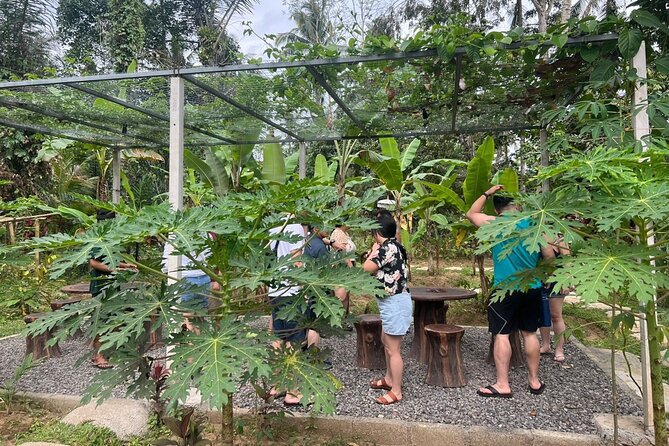
After the market, you move into the next learning stage: an organic garden where herbs and spices are introduced before you begin cooking. This is where the class transitions from culture to craft. You get a chance to connect ingredients to flavors, instead of treating spices like mysterious dust in a jar.
You’ll also receive a welcome drink and snack at the start of the experience. The class overview describes coffee and cake as part of this garden segment, so expect something light to tide you over while you learn what you’re about to prepare.
This garden stop is valuable for a simple reason: it changes how you cook. When you’ve learned what something is meant to taste like, chopping and grinding feel purposeful. And since the class is hands-on end to end, those early flavor cues help you follow along when you’re later building pastes and sauces.
If you’re the type who likes to ask questions, this portion is a good time to do it. You’re already standing in the ingredient world, not just staring at a cutting board.
Stone Mortar and a Wooden Chopping Block: Learn the Paste
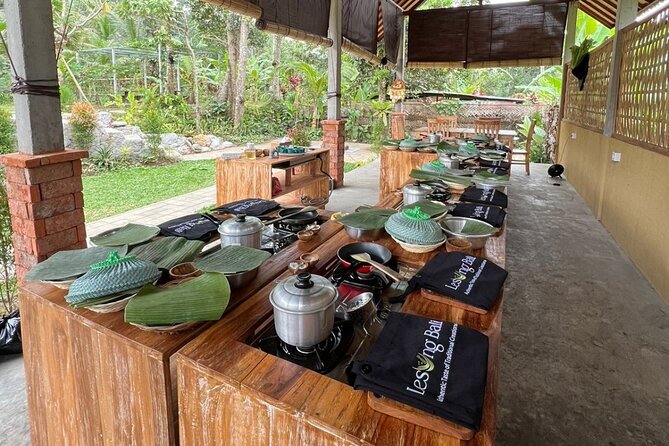
Now you get to the part that food people talk about: Balinese spice processing. The class teaches you how to work with traditional utensils and techniques, and it places special focus on paste and sauce preparation. That’s the beating heart of a lot of flavor in Balinese cooking, and the class makes sure you actually practice it, not just watch it.
You’ll work with two spice-prep styles:
- chopping spices on a wooden chopping block
- grounding spices in a stone mortar
The point isn’t trivia. It’s texture and control. You’ll feel the difference in how spice behaves once it’s ground versus chopped, and that’s why this class is so hands-on. Everything is performed by you as you go—prep work and cooking—so you’ll leave with muscle memory, not just recipes.
Also, since you’re cooking with traditional tools, don’t expect it to be like a quick kitchen demonstration. This class is full-on in the best way. In one note from a 5 out of 5 review, the cooking effort was described as hard work, rewarded by a lunch you might struggle to finish. Translation for you: if you like cooking, come ready to participate.
The Traditional Open Kitchen and Your 5-Course Lunch
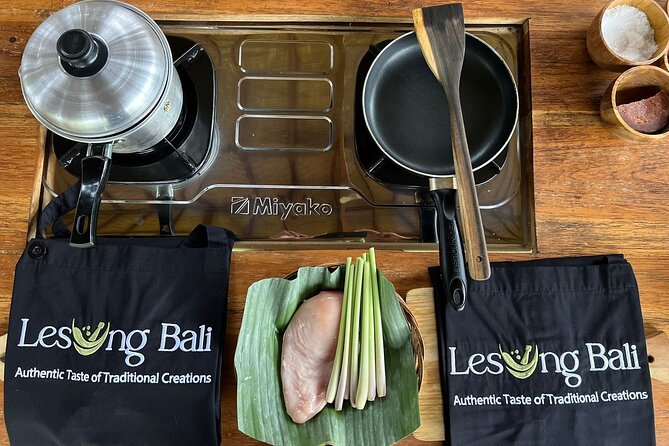
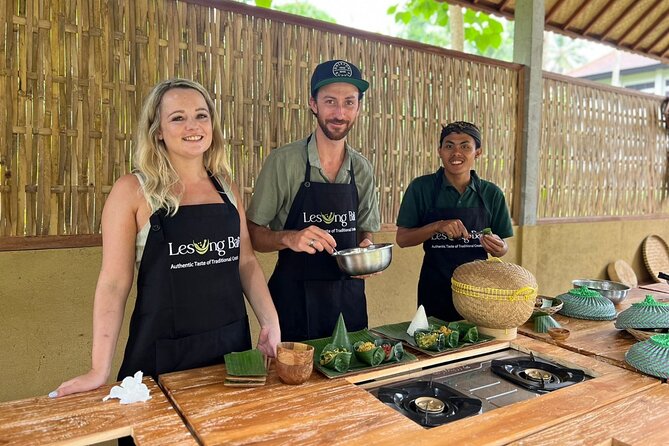
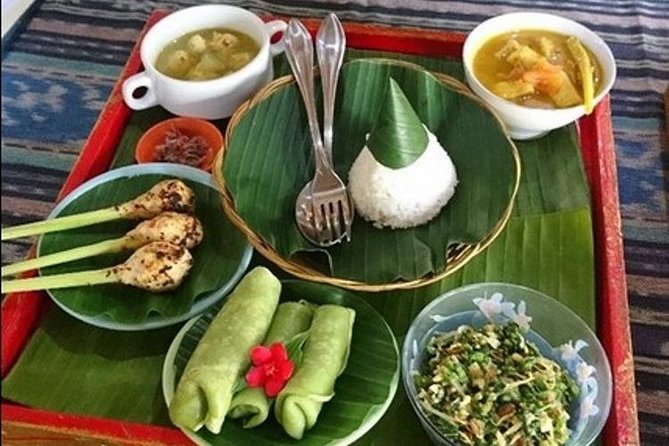
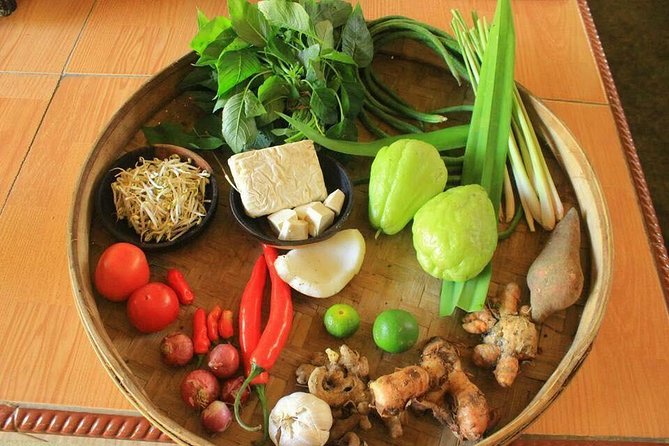
After the prep work, you shift into cooking mode in a traditional open kitchen. You’re preparing and cooking multiple dishes, then sitting down to eat the results. The class is built around a full meal experience: 5 dishes and 1 dessert, all made by you.
Here’s how this typically feels: you’ll be busy from the time you start processing ingredients until the meal is plated. The class structure is designed so you learn technique, then apply it immediately. When you finally eat, you’re tasting what you built—pastas, sauces, and finished dishes that reflect the steps you just practiced.
This is also where the class’s market-to-kitchen flow pays off. You’re not cooking in a vacuum. You’ve already seen the ingredients, learned about herbs and spices in the organic garden, and practiced the key spice-prep methods. So when something tastes right (or when you adjust and make it work), the lesson sticks.
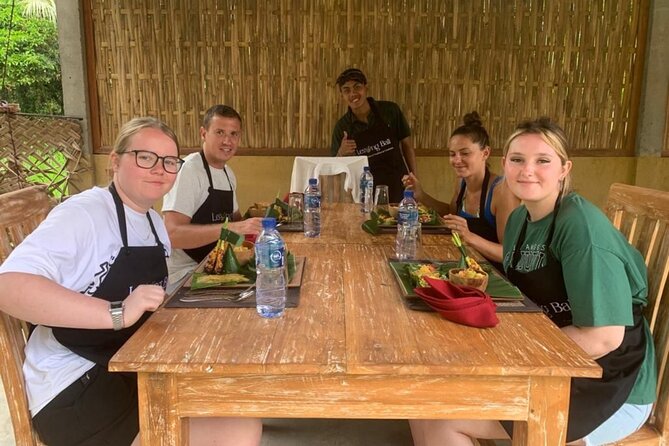
The included lunch is a major value point. One review explicitly urged people to come hungry because the meal is substantial. You’ll want to plan your day so you can enjoy it without rushing.
At the end, you’ll also receive a certificate of cooking class—a nice keepsake if you like collecting proof that you learned something real.
Timing, Transfers, and Small-Group Attention in Ubud
This experience is timed for a morning start. The market visit begins around 7:30am, and the cooking portion is listed as about 2 hours 30 minutes. But the overall schedule runs longer—around 6 hours total from pickup to drop off—because you’re moving between locations and spending time on each learning stage.
That timing matters for how you plan your Ubud day. You’ll likely want a quiet afternoon afterward. You’re cooking, you’ll eat a full lunch, and you’ll be getting back later than you might expect from a class that sounds like only a couple hours.
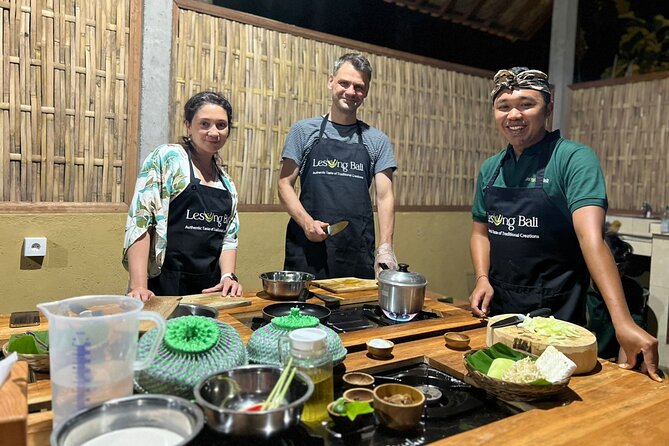
The class is set up for a small group: typically four to 12 people, with up to 6 per booking even though the class can accommodate 12. That size range is a sweet spot for hands-on cooking. You’re not stuck watching from the edge of the room, and your instructor can provide personalized attention while you work the stone mortar and chopping block.
Transport is a genuine comfort feature here. Hotel pickup and drop off are included, and you don’t need to figure out logistics in the morning. One review praised an on-time pickup and noted that driver Yoga spoke good English, which makes the start of the day smoother if you don’t have Balinese or Indonesian language skills.
If you hate early starts, this may be a tough fit. But if you like mornings—and want to experience a real local routine—this schedule works.





Price and Value: What You’re Getting for $58.16
The price is $58.16 per person, and it’s commonly booked about 21 days in advance. On paper, that can sound like a lot for a class. In practice, the value is in what’s included, and in how much of the day is real cooking rather than passive watching.
Here’s what you’re getting without extra costs:
- round-trip hotel pickup and drop-off
- traditional market visit
- welcome drink and snack
- cooking instructor
- lunch made entirely from what you cook
- certificate of cooking class
- bottled water
- 5 dishes plus 1 dessert
When a cooking experience includes the market stage, ingredient learning, the cooking work, and the full meal, you’re paying for an entire morning-to-lunch experience rather than a short demo. That’s why this can feel like good value, especially in Ubud where half-day tours can easily add up.
One more small win: the class lists group discounts, and a small group setup means you’re more likely to get real help when you’re grinding spices and assembling dishes.
If you’re deciding between a quick cooking show and something more hands-on, this one leans toward the serious practice side, and that tends to be the better payoff.
Who This Balinese Cooking Class Suits Best
This class fits you well if you:
- like cooking and want to practice paste and sauce prep
- want to understand ingredient choices by visiting a traditional market
- enjoy cultural context tied to daily food life
- prefer a small-group setting where you can ask questions while cooking
It might not be ideal if you:
- want a relaxed, purely observational activity
- don’t like early mornings (market starts around 7:30am)
- get frustrated with physical prep work like grinding spices by hand
Either way, I’d treat this as a do-and-learn experience. You’ll likely leave with both a stronger cooking routine and a clearer idea of how Balinese cooking connects to real life in the market and the garden.
Should You Book This Ubud Cooking Class?
I think you should book it if you want an authentic morning in Ubud that doesn’t stop at tasting. The best part is the sequence: market reality first, then herbs and spices in an organic garden, and only then the kitchen work where you practice the key techniques with a stone mortar and wooden chopping block.
It’s also a smart choice if you appreciate small-group attention and door-to-door convenience. The day is longer than just the cooking lesson, but the included lunch and full hands-on workflow make the schedule feel justified.
If you can handle an early start and you’re okay getting involved in real prep work, this is the kind of class that gives you more than a souvenir recipe. It gives you skill.
FAQ
Where does this cooking class take place?
It takes place in Ubud, Indonesia.
How long is the experience?
The cooking class itself is about 2 hours 30 minutes, and the total time from pickup to drop off is approximately 6 hours.
What time does the market visit start?
The tour starts with the traditional market visit at 7:30am–8:00am.
Is hotel pickup and drop-off included?
Yes. Hotel pickup and drop-off are included.
What do you do at the traditional market?
You visit a traditional market to buy the cooking needs and to see daily Balinese food culture before the cooking lesson.
Do you get to cook and eat the meal?
Yes. You prepare and cook the dishes, then enjoy a 5-course lunch plus dessert, all included.
Is the group size small?
Yes. The class offers personalized attention in a group of about four to 12 people, and it can accommodate up to 12 participants.
Can I cancel for a full refund?
Yes. You can cancel for a full refund if you cancel at least 24 hours before the experience’s start time.
Is a mobile ticket used?
Yes. The tour uses a mobile ticket.